
A busy restroom, kitchen, break room, or floor drain can hide a serious sewer problem until wastewater starts coming back up. This guide to commercial sewer inspections explains what a professional camera inspection can reveal, when your property needs one, and how it helps protect your building from avoidable closures, damage, and disruption.
For business owners, facility managers, landlords, and property decision-makers, the goal is simple: find the real condition of the line before a minor drainage issue becomes an emergency. A sewer camera gives you a clear look inside the pipe so decisions are based on evidence, not guesswork.
What a Commercial Sewer Inspection Actually Does
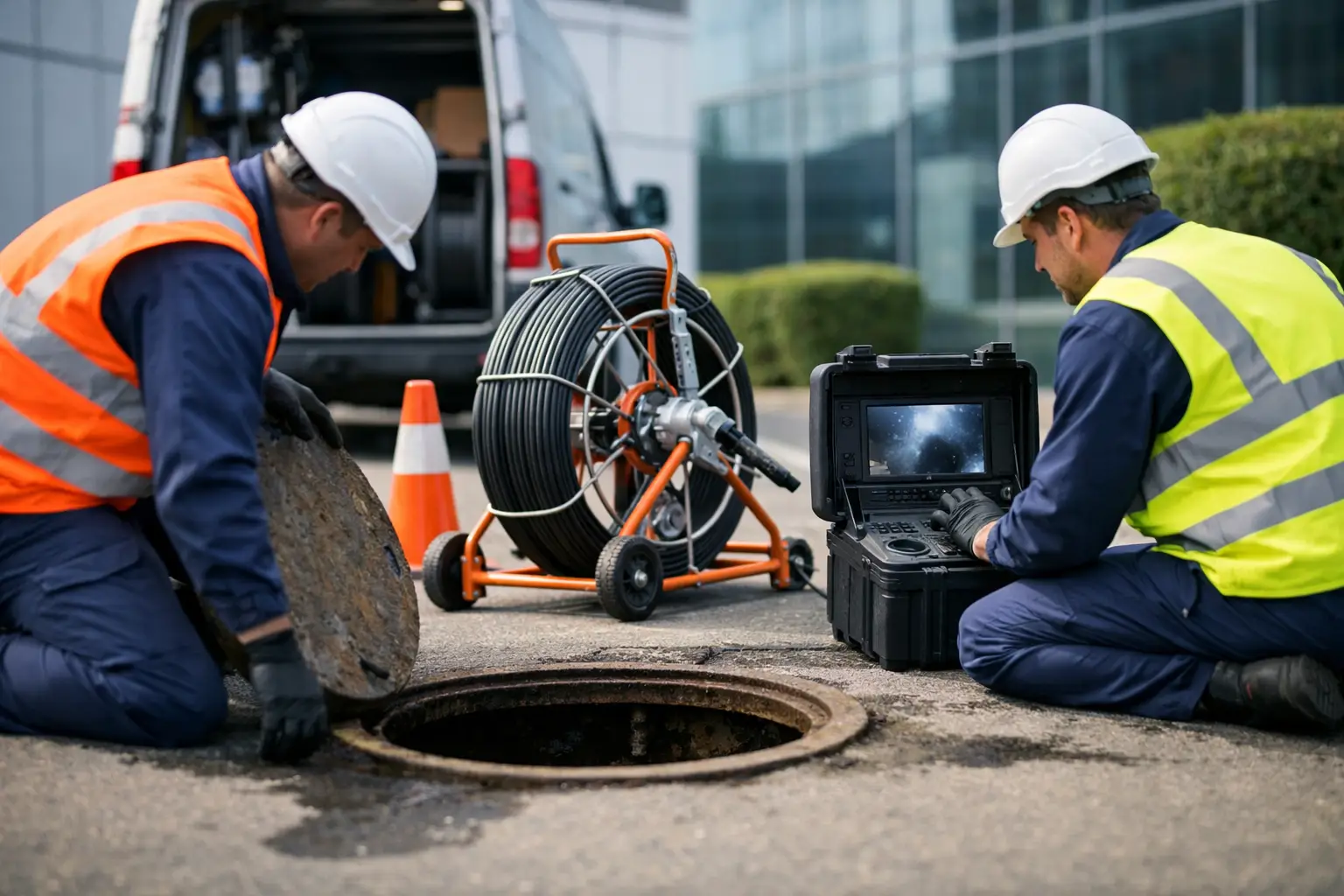
A commercial sewer inspection uses a specialized waterproof camera attached to a flexible cable. A trained technician feeds the camera through an accessible drain or cleanout and watches a live video feed as it travels through the line. The footage shows what is restricting flow, where the problem is located, and whether the pipe itself has damage.
That matters because the symptoms at a fixture rarely tell the whole story. A slow sink in a restaurant kitchen may point to grease buildup farther down the branch line. Repeated toilet backups in an office suite may be caused by scale, root intrusion, a low section of pipe, or a damaged sewer line outside the building.
The camera inspection separates a simple blockage from a larger pipe condition issue. It can also verify that a line is clear after cleaning. That final verification is one of the biggest advantages of professional diagnostics. You should not have to take someone’s word that the line is flowing properly when the inside of the pipe can be inspected directly.
When to Schedule a Commercial Sewer Inspection
A camera inspection makes sense during an active drainage problem, but it is also a smart preventive measure for properties with frequent use, older piping, or a history of backups. Restaurants, retail centers, offices, medical facilities, rental properties, and multi-tenant buildings all place different demands on their drain systems. The right inspection schedule depends on pipe material, usage, maintenance history, and what the camera has shown in the past.
You should arrange an inspection when drains keep clogging after service, several fixtures are draining slowly at the same time, wastewater backs up from a floor drain, or you notice sewer odors around restrooms and utility areas. Those signs can indicate a main line restriction rather than an isolated fixture clog.
An inspection is also useful before a tenant turnover, building purchase, renovation, or major equipment change. Adding a commercial kitchen appliance, expanding restrooms, or changing how a space is used can increase strain on existing drainage. Knowing the condition and capacity of the line beforehand gives you a chance to address trouble on your schedule.
Warning Signs That Should Not Wait
Some sewer issues move from inconvenient to damaging quickly. Call for professional help promptly if you see any of these conditions:
- Water or sewage coming up through a floor drain
- Multiple toilets, sinks, or drains backing up together
- A recurring clog that returns shortly after clearing
- Strong sewer odors inside the building or near exterior drains
- Gurgling fixtures when water is used elsewhere in the property
A backup can affect employees, customers, tenants, inventory, flooring, and operations. Fast diagnosis helps limit the mess and gets you closer to the right repair instead of repeating temporary clearing attempts.
What the Camera Can Find Inside the Line
Commercial sewer cameras are valuable because they show conditions that cannot be confirmed from above the floor. A technician may find grease buildup, hardened scale, debris, roots, offset joints, cracks, corrosion, or a pipe section that has shifted or collapsed.
Grease is especially common in food-service drain lines. Over time, fats, oils, and grease cling to pipe walls and catch food particles and debris. The opening inside the pipe gets smaller, flow slows down, and a blockage becomes more likely. Hydro jetting may be the right cleaning method when the pipe is structurally sound and heavy buildup needs to be removed from the walls.
Older cast iron lines often develop internal scale and corrosion. The rough surface catches paper and waste, which creates repeat stoppages even when a basic cable clearing restores flow for a short time. In those cases, descaling or another targeted cleaning method may be recommended after the camera confirms the pipe condition.
Not every camera finding means the entire line needs replacement. A localized root intrusion, a grease restriction, or a single damaged connection may have a focused solution. On the other hand, a camera can prevent money from being spent on cleaning alone when the real issue is a failing pipe. The right answer depends on what the footage shows and how the line is performing.
How a Commercial Sewer Inspection Should Be Performed
A dependable inspection starts with listening. The technician should ask where backups happen, how long the problem has been occurring, whether the issue is recurring, and what work has been done before. Those details help determine the best access point and whether the immediate priority is clearing a blockage, inspecting the line, or both.
Once access is available, the line is inspected with professional camera equipment. If standing water or heavy debris prevents a usable view, the line may need to be cleared first. This is not a shortcut. A camera cannot accurately evaluate a pipe wall through a solid blockage, and forcing an inspection through a restricted line can leave important questions unanswered.
The technician should explain the findings in plain language as the inspection is completed. Good diagnostics identify the issue, its approximate location, and the recommended next step. If cleaning is performed, a post-service camera check can confirm restored flow and show whether buildup remains.
For commercial properties, documentation matters. Video footage or inspection notes can support maintenance planning, landlord-tenant communication, insurance records, and decisions about repairs. It also creates a baseline. If the line is inspected again later, you have something concrete to compare against.
Camera Inspections and Preventive Maintenance
Waiting for a backup is rarely the best maintenance plan for a high-use property. A preventive inspection can identify gradual buildup before it causes a closure. This is particularly useful for kitchens, multi-unit buildings, older commercial spaces, and facilities where downtime creates immediate operational problems.
The best schedule is not the same for every business. A restaurant with heavy grease exposure may need more frequent drain cleaning and camera verification than a small professional office. A property with aging cast iron may benefit from scheduled monitoring after descaling. A newer building with clean footage and no recurring symptoms may only need an inspection when conditions change.
The key is to use inspection results to build a practical maintenance plan. Rather than guessing at a calendar interval, base service on the material in the line, how the property is used, and documented conditions inside the pipe.
Choosing the Right Sewer Inspection Partner
Commercial sewer work requires more than sending a camera down a pipe. You need a drain specialist who can diagnose the condition accurately, explain it clearly, and bring the right equipment if cleaning or repair is needed. The work should be clean, organized, and respectful of an active business environment.
Ask whether the company can provide camera diagnostics, hydro jetting, descaling, and verified post-cleaning results when appropriate. Just as important, make sure the technician explains what was found without pushing a one-size-fits-all solution. A clear line may need no further work. A dirty but structurally sound line may need professional cleaning. A damaged line may need a repair plan based on the location and severity of the defect.
Titan Jetters provides commercial camera inspections, drain cleaning, hydro jetting, and line diagnostics for businesses and property owners across Northern Virginia. The focus is straightforward: identify the problem, show you what is happening inside the line, and recommend the work that actually addresses it.
A sewer line does not need to become a full shutdown before it earns attention. If your commercial property has recurring clogs, slow drains, odors, or a history of backups, schedule an inspection while you still have room to plan the next move.
