
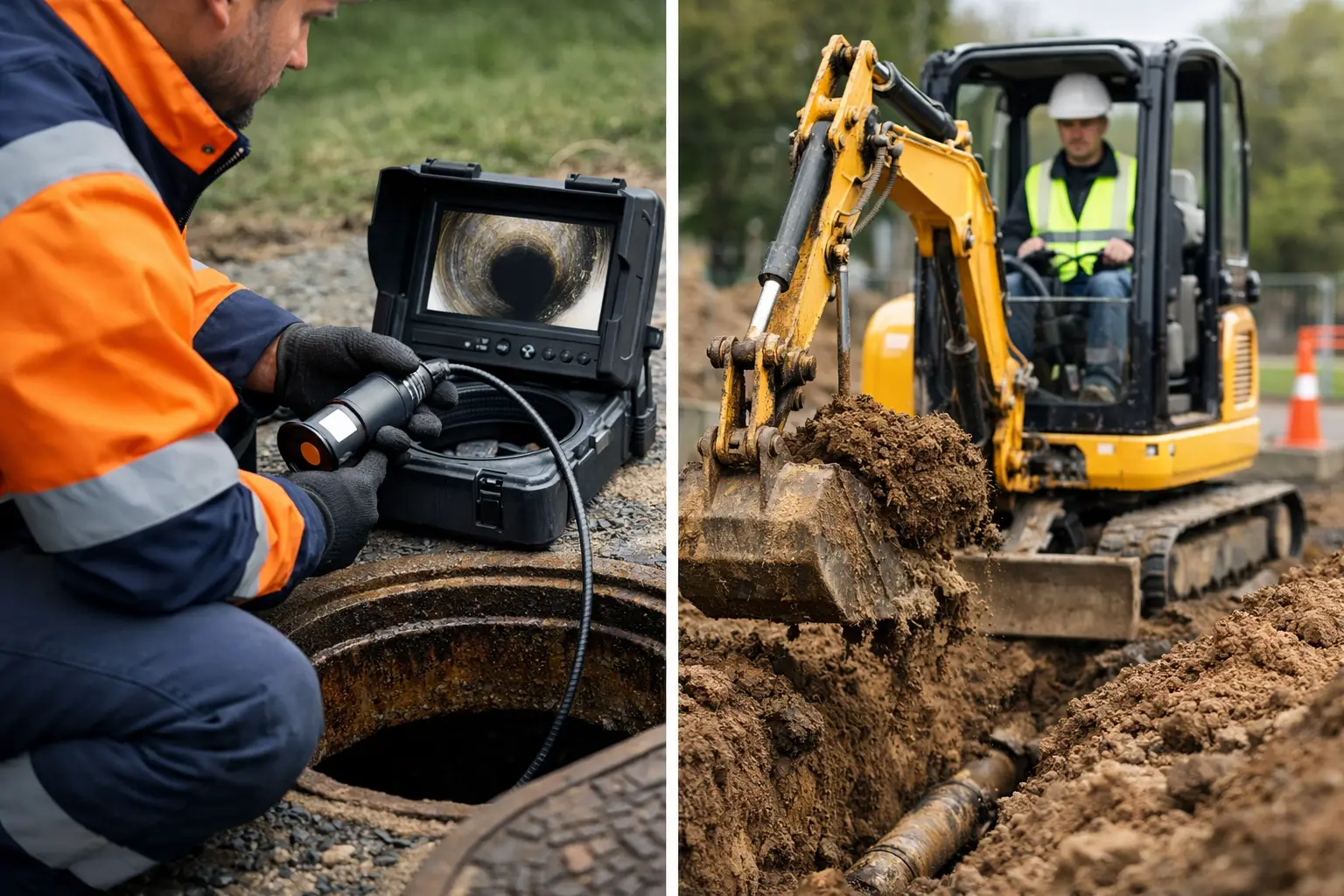
A sewer backup does not automatically mean your yard needs to be dug up. In the camera inspection vs excavation decision, the right first move is usually to see inside the line before anyone recommends a major repair. A professional sewer camera inspection replaces assumptions with real footage, helping identify where the problem is, what caused it, and whether excavation is actually warranted.
For Northern Virginia homeowners, landlords, and business owners, that matters. Sewer work can disrupt landscaping, driveways, flooring, and daily routines. A clear diagnosis helps keep the repair focused, clean, and appropriate to the actual condition of the pipe.
What a Sewer Camera Inspection Tells You
A sewer camera is a specialized waterproof camera fed through an accessible drain or cleanout. As it travels through the line, the technician can watch a live video feed and locate trouble spots. This is not simply a way to confirm that a drain is clogged. It is a diagnostic tool that shows the condition of the pipe from the inside.
Camera inspections can reveal grease buildup, heavy scale, roots, standing water, separated joints, cracks, bellies in the line, and sections that have collapsed or shifted. They also help identify whether the issue is in a branch drain serving one fixture or the main sewer line serving the property.
That distinction changes the next step. A kitchen sink that drains slowly may have grease buildup in its branch line. Multiple fixtures backing up, or sewage appearing at a lower-level drain, can point to a restriction farther down the main line. The camera gives the technician evidence to explain the problem in plain language rather than making a guess based on symptoms alone.
Camera Inspection vs Excavation: The Key Difference
Camera inspection is a diagnostic service. Excavation is a repair method. One shows what is happening underground; the other provides physical access to replace or repair damaged pipe.
A camera may show that the line is obstructed by roots, grease, scale, or debris. If the pipe itself remains structurally sound, professional drain cleaning, hydro jetting, or descaling may restore flow without digging. After cleaning, another camera pass can verify that the blockage is gone and that the pipe wall is in suitable condition.
Excavation becomes the better option when the footage shows damage that cleaning equipment cannot correct. A collapsed pipe, severe offset at a joint, badly broken section, or a line with significant deterioration will not be fixed by clearing the opening. The drain might flow temporarily, but the underlying failure remains. In those cases, exposing the affected section and completing a proper repair is the more dependable path.
The goal is not to avoid excavation at all costs. It is to avoid unnecessary excavation while acting decisively when a lasting repair requires it.
When a Camera Inspection May Be Enough
A camera inspection is often the right starting point when the issue is recurring clogs, slow drains, unexplained backups, or a concern about the condition of an older sewer line. It is especially useful after drain cleaning because it confirms whether the line is truly clear or whether a structural issue is waiting behind the blockage.
If footage shows buildup without serious pipe damage, a non-excavation solution may make sense. Hydro jetting can remove heavy grease, sludge, roots, and debris from compatible lines. Flex-shaft cleaning and descaling can address hardened scale, particularly in aging cast-iron systems where buildup has narrowed the usable opening inside the pipe.
The condition of the pipe matters. Aggressive cleaning is not a one-size-fits-all answer. A professional technician should assess the material, age, and visible condition of the line before selecting equipment. If the pipe is brittle, compromised, or already failing, the safest recommendation may be different than it would be for a sound PVC or clay line with a manageable blockage.
A camera is also valuable for documenting a line that has been cleaned successfully. Verified flow gives homeowners and property managers confidence that the work addressed the right issue, not just the symptom they could see.
Signs Excavation May Be Necessary
Some findings point clearly toward a repair that requires access to the damaged pipe. A full collapse is the most obvious example. If the camera cannot pass through a crushed or severely deformed section, cleaning will not restore the pipe’s shape or strength.
Major separations and offsets can create a similar problem. Pipes can shift over time because of soil movement, age, poor connections, or root pressure. When one section no longer lines up with the next, waste and paper can catch at the lip, creating repeat blockages. The camera may show this as a sharp ledge, a visible joint gap, or an area where flow repeatedly stalls.
Excavation may also be needed when a damaged section is localized and accessible from outside. Replacing that targeted area can be more practical than repeatedly cleaning a line that has a known structural failure. Location matters here. A problem under open yard is different from one beneath a finished basement, driveway, or mature landscaping. The repair approach should account for the pipe condition and the impact of gaining access.
In some cases, a camera cannot travel far enough to show the entire line because a blockage is too dense or the pipe has failed. That does not automatically mean digging is required, but it does mean the technician needs to use the available evidence carefully. Drain behavior, access points, locating information, and what the camera can show all help shape a responsible recommendation.
Why Starting With a Camera Protects Your Property
Excavation is sometimes necessary, but it is disruptive by nature. It can involve opening a trench, moving soil, working around utilities, and restoring the affected area after the repair. Starting with footage helps narrow the work to the actual failure point instead of treating the entire sewer line as a guess.
For landlords and commercial property operators, that diagnostic clarity can reduce downtime and make it easier to communicate the repair plan to tenants, staff, or customers. For homeowners, it means a technician can show you the issue rather than asking you to take a major repair on faith.
It also prevents the opposite mistake: repeatedly clearing a drain that has a deeper problem. If a sewer line has been snaked several times and the backup keeps returning, a camera inspection can explain why. The issue may be roots entering through a joint, scale reducing the pipe diameter, or a damaged section that catches debris every time the system is used.
What to Expect From a Professional Diagnosis
A reliable sewer diagnosis should be straightforward. The technician should identify the access point, inspect the line as conditions allow, explain what appears on the footage, and connect the finding to the symptoms you have experienced. If cleaning is recommended, there should be a reason it fits the pipe condition. If repair is recommended, you should understand what damage makes that repair necessary.
At Titan Jetters, the focus is on using camera diagnostics to verify the condition of the line before recommending the next move. That can mean clearing a blockage and confirming restored flow, or identifying a damaged section that needs a more permanent repair. Either way, the work starts with facts, not pressure.
Homeowners should also understand that a camera inspection has limits. The camera sees the inside of the pipe, but it cannot always determine every detail about soil conditions outside the line or reveal damage hidden behind a total obstruction. Good diagnostics combine the footage with the line’s behavior, the property’s history, and professional judgment.
Choose the Repair Based on the Pipe, Not the Panic
A backup is stressful, especially when wastewater is involved or a business cannot use its facilities. But urgency should not replace diagnosis. The best answer may be a thorough cleaning and verification, or it may be a targeted excavation to correct a failed section before it causes another backup.
If your drains are recurring, slow, or backing up across multiple fixtures, schedule a professional camera inspection. Seeing what is inside the line is the fastest way to move from uncertainty to a repair plan that protects your property and restores dependable flow.
