
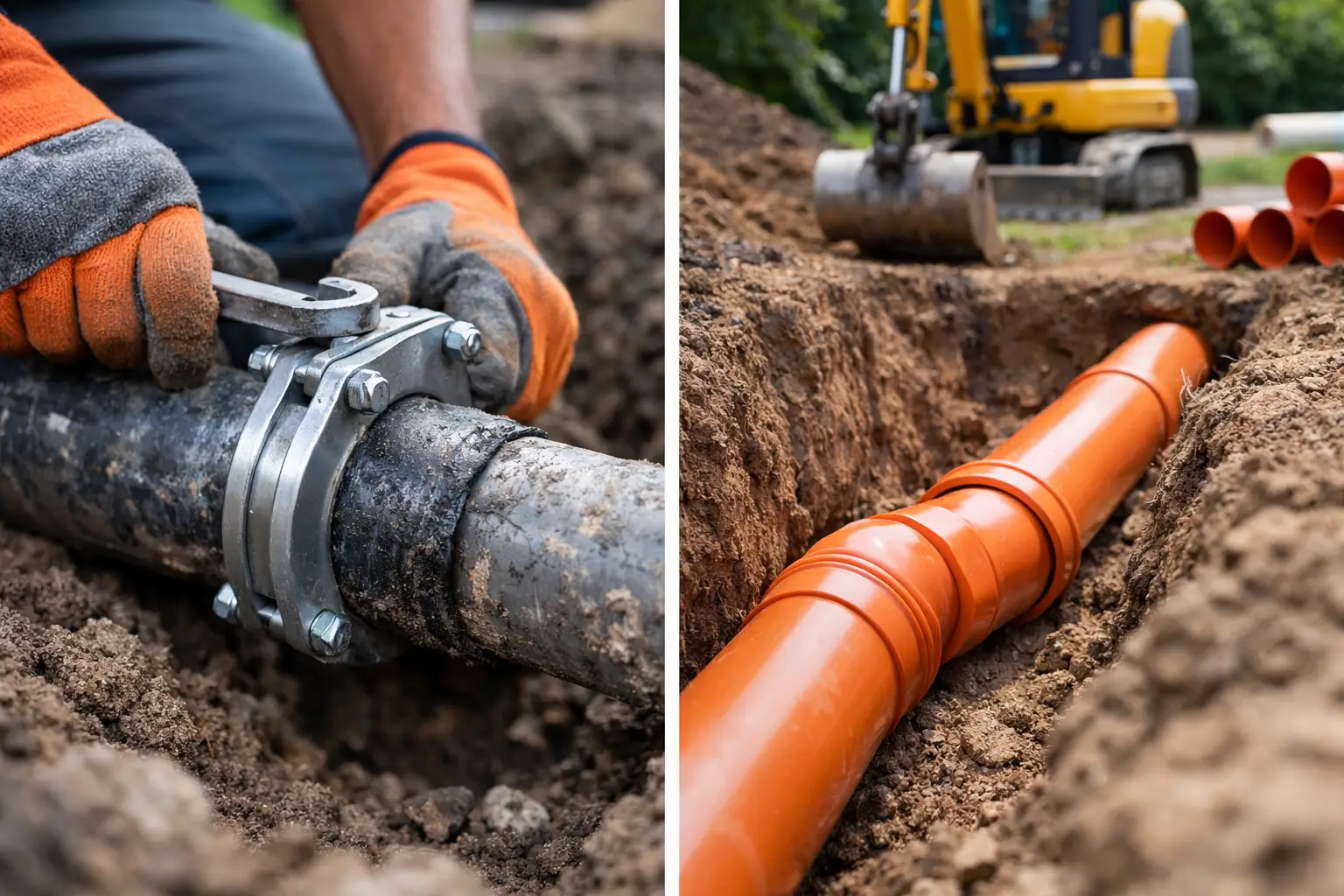
A sewer backup is not the time for guesses. When wastewater is slow to drain, appears in a tub or shower, or backs up into the home, the real question is whether the line has one fixable problem or has reached the end of its useful life. Sewer line repair vs replacement is a decision based on what is actually happening underground, not on the loudest symptom upstairs.
A professional sewer camera inspection gives that decision a foundation. It shows where the issue is, how far it extends, what the pipe material looks like, and whether the line can be restored with a targeted repair. That means less uncertainty, a clearer plan, and no recommendation based on guesswork.
Sewer Line Repair vs Replacement: Start With the Line Condition
A repair addresses a specific section of pipe. Replacement addresses a pipe that has widespread damage, repeated failures, or material that is no longer dependable. Neither option is automatically better. The right answer depends on the severity and pattern of the problem.
For example, a line may have one cracked section, a separated connection, or a concentrated root intrusion near a joint. If the rest of the pipe is sound and flowing properly, repairing that section can restore service without replacing pipe that still has years of life left.
On the other hand, a camera may reveal multiple breaks, heavy deterioration, widespread root entry, a collapsed section, or a sagging area that holds wastewater. In those cases, fixing one spot may only move the problem down the line. Replacement can be the more dependable decision when the pipe is failing in more than one place.
The key is evidence. A clear camera inspection lets you see the pipe condition and understand why a repair or replacement is being recommended.
When Sewer Line Repair Makes Sense
A targeted sewer line repair is often appropriate when the damage is isolated. The goal is to correct the failed area while preserving the rest of the functioning line.
Common situations include a single cracked pipe section, a bad connection between pipe sections, a localized offset, or roots entering at one joint. Roots are especially common in older sewer systems. They seek moisture, then grow through small openings and catch toilet paper, wipes, grease, and other debris moving through the line. Clearing the roots may restore flow temporarily, but a damaged joint may still need repair to prevent the roots from returning.
Repair can also make sense after a blockage is removed and the camera shows that the pipe walls remain in good condition. A heavy buildup of grease, scale, or debris can cause slow drains and backups without meaning the sewer line itself has failed. Professional hydro jetting, descaling, or mechanical cleaning may restore the pipe’s usable diameter, followed by a camera verification to confirm that flow has been properly restored.
A good repair recommendation should be specific. You should know where the issue is, what caused it, and why the remaining pipe does not need to be replaced. That is the difference between solving a verified problem and selling a broad solution for a narrow defect.
Signs Replacement May Be the Better Long-Term Fix
Replacement becomes more likely when the line has structural problems that are widespread or likely to keep getting worse. Older homes in Northern Virginia may have cast iron, clay, Orangeburg, or other aging pipe materials that can deteriorate in different ways over time.
Cast iron can develop internal scale and corrosion that restricts flow. Clay pipe often has joints that are vulnerable to root intrusion and separation. Orangeburg, a fiber-based pipe used in some older construction, can deform, blister, or collapse as it ages. A camera inspection helps identify these material-specific problems instead of treating every backup like a basic clog.
Replacement is worth serious consideration when there are repeat backups after proper cleaning, multiple damaged areas, a collapsed or severely bellying pipe, major corrosion, or a line that cannot hold its shape. A belly is a low area in the pipe where water and solids settle instead of moving fully toward the sewer connection. Cleaning may improve flow for a while, but it will not correct a pipe that no longer has the right slope or structure.
Frequent service calls are another warning sign. If the line repeatedly clogs in the same area, the cause may be more than buildup. A broken pipe, severe offset, roots, or ongoing deterioration can create a recurring catch point. Replacing the failing portion, or the line when damage is extensive, stops the cycle instead of continually reacting to the next backup.
A Clean Line Is Not Always a Healthy Line
This is where proper diagnostics matter most. A drain can appear to work after a cable machine clears an opening through a blockage. Water may go down, but that does not prove the pipe is in good shape.
Think of it this way: clearing a path through roots or scale is different from restoring the pipe itself. If roots are entering through damaged joints, they can grow back. If cast iron is heavily scaled, the inside diameter may still be restricted even after a basic clearing. If a pipe is cracked or offset, debris can continue to hang up at the damaged location.
That is why a camera inspection after cleaning is so valuable. It verifies the result, shows the condition of the pipe walls, and identifies whether the original issue was a blockage, structural damage, or both. It also gives homeowners, landlords, and business operators a record they can use to make an informed property decision.
What a Sewer Camera Inspection Should Answer
Before choosing a repair or replacement, the inspection should provide practical answers. You need to know the pipe material, the location of the problem, the condition of the remaining line, and whether there are multiple trouble spots.
It should also show whether the obstruction is grease, roots, scale, foreign material, or a structural failure. These causes require different solutions. Cleaning heavy grease from a commercial kitchen line is not the same as repairing a root-damaged residential sewer. Descaling deteriorated cast iron is not the same as correcting a collapsed pipe.
A thorough technician does more than say, “There is a problem.” They explain what the camera found in plain language, show you the affected area when possible, and lay out the options based on the line’s actual condition. That gives you control over a stressful situation and helps avoid work that does not address the underlying cause.
Consider the Disruption, Not Just the Immediate Backup
The decision also affects your property and daily routine. A localized repair can be less disruptive when the failure is confined to one accessible area. Full replacement can involve more work, but it may provide greater peace of mind when the entire line is compromised.
For landlords, repeated sewer interruptions can affect tenants, maintenance schedules, and property operations. For business owners, a sewer issue can mean downtime, sanitation concerns, and lost productivity. For homeowners, it can mean avoiding another weekend spent worrying about whether the next flush will trigger a backup.
The best choice weighs the pipe’s remaining life against the likelihood of repeat problems. A smaller repair is sensible when it has a strong chance of lasting. Replacement is sensible when another failure is not a remote possibility but a predictable outcome of an aging or damaged line.
Do Not Wait for a Full Backup
Slow drains throughout the home, gurgling toilets, sewage odors, water appearing at lower drains, and recurring clogs deserve attention before they turn into a major overflow. These symptoms often point to a developing main sewer line issue, especially when more than one fixture is involved.
Fast action can limit water damage, protect flooring and belongings, and reduce disruption. More importantly, it gives a technician the chance to inspect the line before an emergency forces a rushed decision.
Titan Jetters uses camera diagnostics, high-performance drain cleaning, hydro jetting, and proven repair solutions to identify the real cause of sewer trouble for Northern Virginia properties. When your line is backing up or showing repeat warning signs, schedule an inspection early. A clear view inside the pipe is the fastest way to move from uncertainty to the right fix.
