A kitchen line that used to drain fine suddenly gurgles. A basement toilet burps after the shower runs. Your tenants complain the same clog “keeps coming back,” even after snaking. When those symptoms show up in an older home or commercial building, there’s a good chance you’re not dealing with a simple blockage – you’re dealing with cast iron that has narrowed from the inside out.
Cast iron pipe doesn’t usually fail all at once. It slowly builds up scale, rust, and debris along the pipe walls until the line can’t carry water the way it was designed to. That is exactly where a cast iron pipe descaling service earns its keep: it removes the hardened buildup that a standard cable machine often can’t fully clear, then verifies results so you’re not guessing.
Why cast iron lines clog differently
PVC tends to clog because something got stuck. Cast iron tends to clog because the pipe itself changes over time.
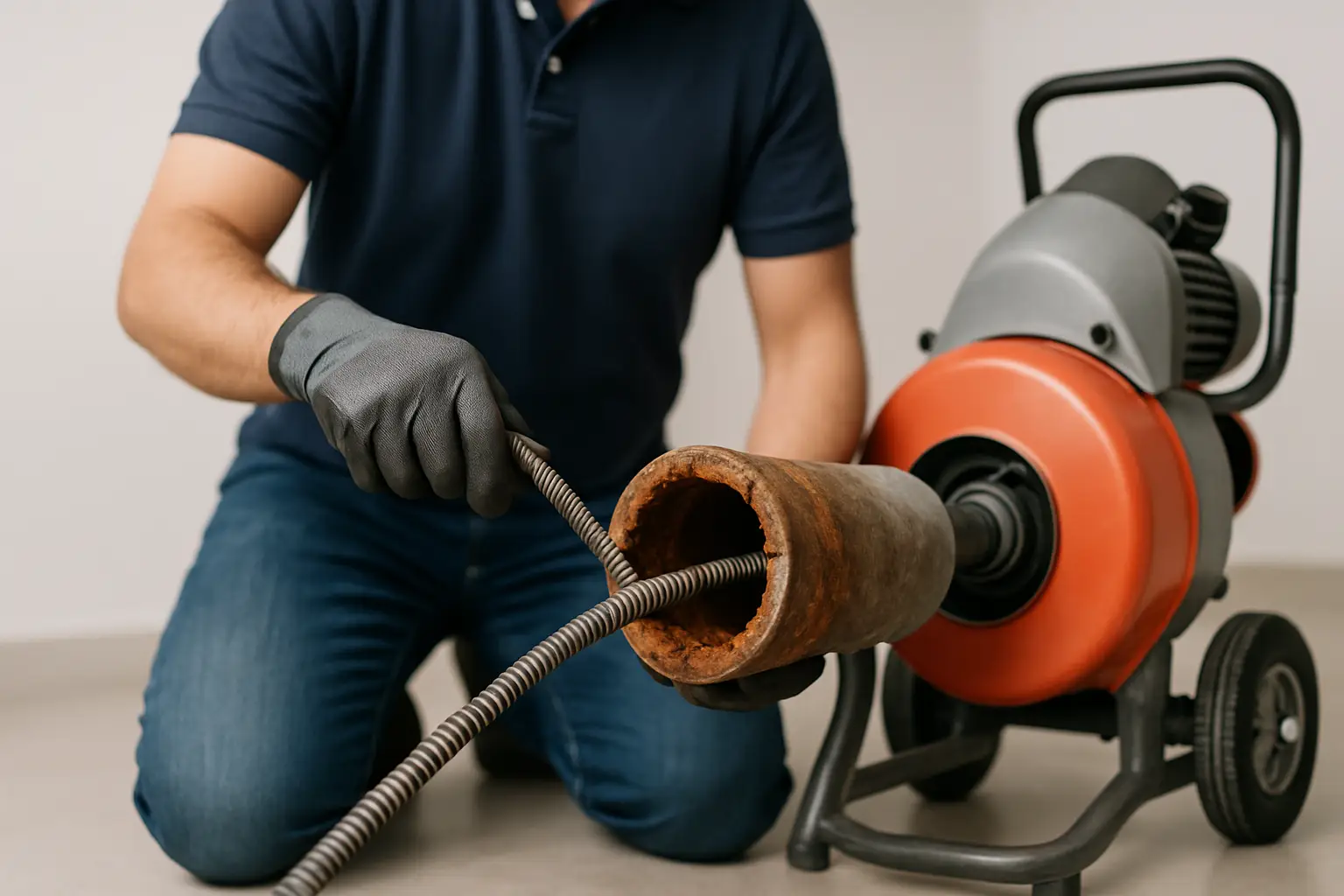
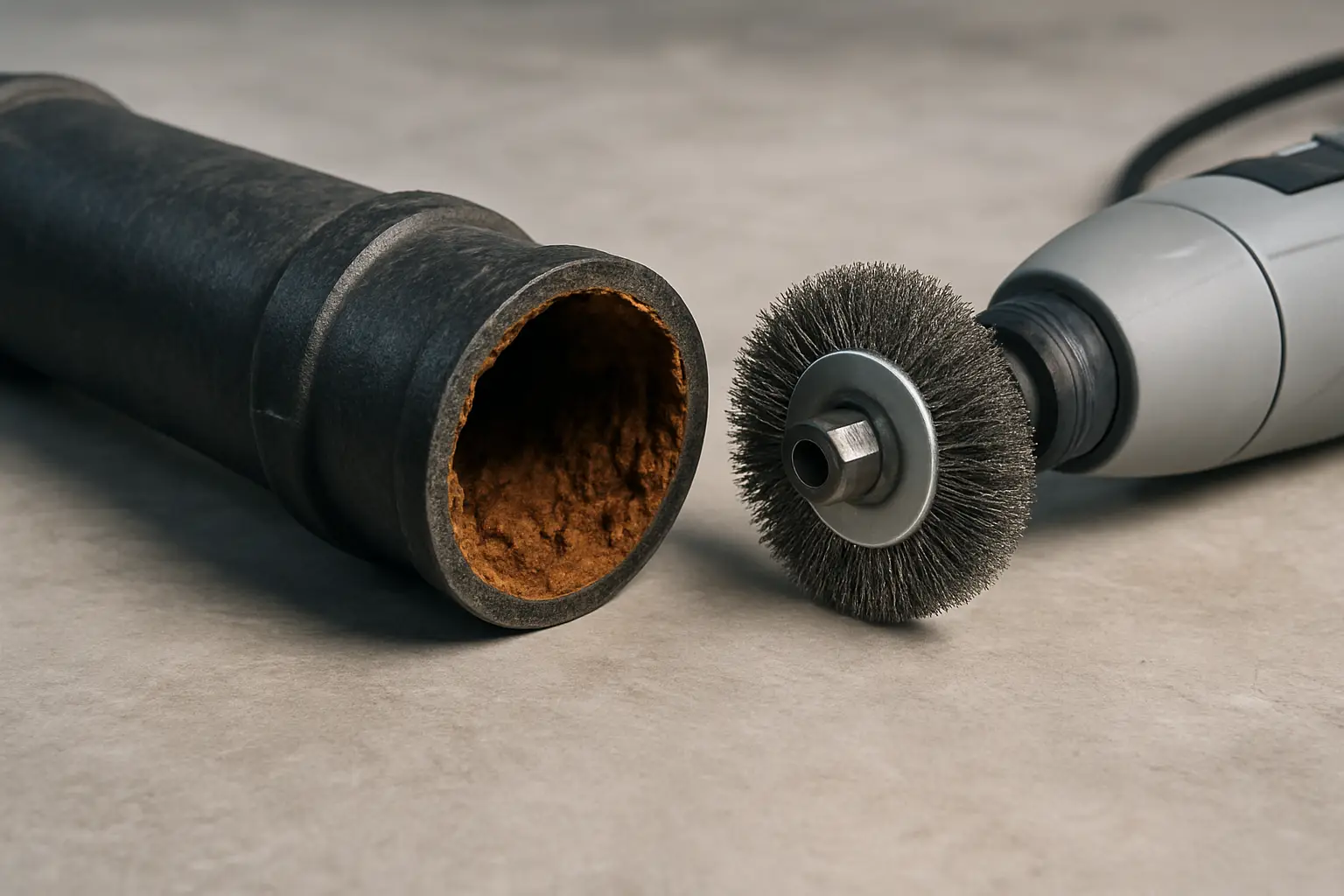
Inside older cast iron, you often get a rough, flaky surface from corrosion. That surface grabs grease, soap, paper, and food waste. Layer by layer, the pipe’s inside diameter shrinks. Eventually, what used to be a 4-inch drain line can behave like a 2-inch line – and everything downstream gets touchy.
This is why “we just had it cleared” is such a common story with cast iron. A snake might punch a hole through the middle and get things moving for now, but it can leave most of the scale on the walls. Flow returns, but the underlying restriction stays. The next heavy use day brings the problem right back.
What a cast iron pipe descaling service actually removes
Descaling is about removing the stuff that has become part of the pipe’s interior – not just pulling out a wad of wipes or pushing through a soft clog.
Most cast iron buildup falls into a few categories: mineral scale and rust scale that hardens like stone; grease and sludge that bonds to rough metal; and flaky corrosion that breaks loose and redeposits downstream. In some cases, there’s also construction debris or years of soap scum that has baked onto the walls.
A true descaling service targets those layers so the pipe can carry water properly again. It’s not cosmetic. You feel it in faster drain times, fewer backups, and less “mystery” behavior where one fixture affects another.
Descaling vs. snaking vs. hydro jetting
Homeowners and property managers usually hear these terms and assume they are interchangeable. They are not.
Snaking is great for opening a line quickly, especially when the goal is to restore flow during a backup. But on cast iron, it often creates a channel through the obstruction rather than cleaning the full diameter.
Hydro jetting uses high-pressure water to scour pipe walls and flush debris out of the system. Jetting can be excellent for grease, sludge, and many types of buildup – but the approach needs to match the condition of the pipe, the type of deposits, and the access points available.
Descaling is typically done with specialized mechanical tools such as a flex-shaft system that spins a chain or brush head at high speed to break hardened scale off the interior. In the right hands, that process can remove the hard “barnacles” that water pressure alone may not fully knock down.
In real-world work, the best result often comes from using the right combination: break the scale, flush the line, and confirm it on camera. That last part matters because cast iron problems are notorious for coming back when the cleaning is incomplete.
How professionals confirm it worked: camera verification
Cast iron is too unpredictable to clean on guesswork. The line can be heavily scaled in one stretch and relatively open in another. It can also have offsets, bellies, cracks, or root intrusion that change what “success” looks like.
That’s why sewer camera inspection is part of the professional standard for descaling. A camera shows the before condition, identifies the worst restrictions, and helps plan the cleaning so you don’t waste time attacking the wrong area. After descaling, the camera verifies what was actually removed and whether there are structural issues that cleaning cannot solve.
For property owners, this is the difference between “it seems better” and “we can see open pipe and restored diameter.” It also helps you make smart decisions if the camera reveals damage that calls for repair instead of repeated cleaning.
Signs you may need descaling (not just a quick clear)
If you’re seeing repeat problems, cast iron scale should be on your short list.
The most common pattern is recurring clogs that return weeks or months after being cleared. Slow drainage across multiple fixtures is another big one – especially if it’s worse during heavy use times. Gurgling, surging water in a toilet after running a sink, or backups that seem to “move around” the building can all point to a restricted main line.
In commercial spaces, you might notice floor drains that smell or bubble, restrooms that go down during peak hours, or chronic maintenance calls that never fully stop. For landlords, the signal is repeated tenant complaints even after you send someone out to “snake it again.”
None of these symptoms proves you need descaling, but they are strong indicators that the line is narrowed and needs more than a basic pass-through.
When descaling helps – and when it’s not the right fix
Descaling is powerful, but it’s not magic, and a good drain specialist will tell you when the pipe has crossed into repair territory.
Descaling is a strong choice when the pipe is structurally intact but restricted by scale, grease, or corrosion buildup. It can also help when roots are present alongside scale, since cleaning the walls makes it harder for debris to hang up.
On the other hand, if the camera shows severe deterioration, missing pipe bottom, major offsets, or sections that have collapsed, cleaning can’t restore the pipe’s structure. In those cases, descaling may be used as a short-term measure to regain flow or to prepare a line for repair work, but it won’t be a long-term solution by itself.
There’s also an “it depends” scenario: if the pipe is fragile, aggressive cleaning can create risks. That’s why professional judgment matters. The goal is to remove restrictive buildup while respecting the pipe’s condition.
What to expect during a professional descaling appointment
A professional descaling job is more controlled than most people expect.
First comes locating and accessing the right cleanout or entry point. Then the line is typically inspected with a camera to confirm the problem and map the run. The technician selects the appropriate tooling for the pipe size and deposit type and works the affected sections methodically.
During cleaning, debris is broken loose and flushed out so it doesn’t settle and re-clog farther down. Afterward, the camera goes back in to confirm results. That verification step is where you can see the improvement – smoother walls, open diameter, and fewer snag points.
For busy households and businesses, the practical benefit is less downtime. You’re not scheduling one call to clear it and another call when it backs up again. You’re addressing the root cause of repeat restrictions.
How long results last
Longevity depends on what’s going into the drain and the condition of the pipe.
In a well-used cast iron line with years of scaling, the first proper descale can be a major reset. Many customers see a noticeable improvement in drainage performance and a drop in emergency calls. If the building routinely sends heavy grease, food solids, or inappropriate paper products down the line, buildup can return sooner and a maintenance plan may make sense.
If the camera shows the pipe is heavily corroded, it may continue to roughen over time even after cleaning. In that scenario, descaling buys you time and stability, but long-term planning may involve targeted repairs.
Why speed matters when cast iron starts acting up
Cast iron restrictions rarely stay stable. Once the line is narrowed, it takes less and less to trigger a backup – a heavy rain day, guests over, a busy shift at a restaurant, or a tenant using more paper than usual.
Acting early usually means a cleaner job, less mess, and fewer after-hours emergencies. It also reduces the chance of wastewater damage, which is where costs and disruption escalate fast.
For Northern Virginia homes built decades ago, this is a common lifecycle issue. The good news is you don’t have to guess. A camera-backed descaling plan turns a chronic drain problem into a clear, verifiable fix.
Choosing the right team for descaling
Descaling is specialized work. You want a company that treats drain and sewer lines as a core service, not an add-on. The difference shows up in the equipment on the truck, the technician’s ability to interpret camera footage, and the willingness to confirm results instead of selling you a “maybe.”
If you’re looking for a cast iron pipe descaling service in the Bristow, Gainesville, Haymarket, or Manassas area, Titan Jetters handles descaling with professional-grade tools, sewer camera verification, and a clean, customer-first approach. You can learn more at https://www.titanjetters.com.
A good drain should be boring. When your cast iron line starts demanding attention, the best next step is the one that gives you proof, not promises – and gets your building back to normal without leaving you worried about the next backup.