If your drains keep slowing down, you are not imagining things. A lot of repeat clogs are not caused by one “bad” blockage – they are caused by years of buildup shrinking the inside of the pipe until there is barely room for water to move.
That is where pipe descaling comes in.
What is pipe descaling?
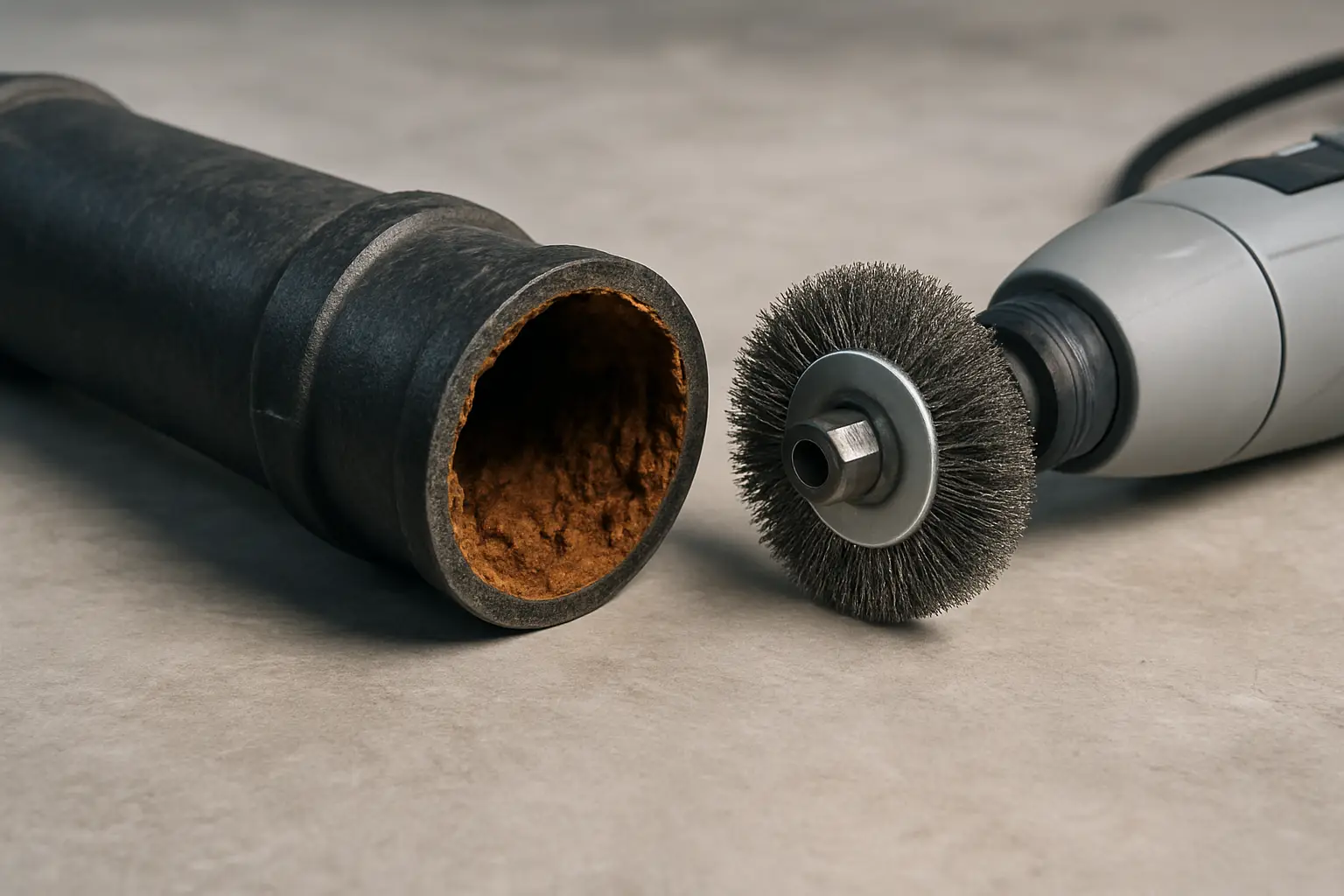
Pipe descaling is a professional drain and sewer cleaning process that removes hard, stuck-on buildup from the inside walls of plumbing pipes. “Scale” is the crusty layer that forms over time – often mineral deposits from hard water, corrosion byproducts, and hardened debris that normal drain cleaning does not fully remove.
Think of it like plaque inside an artery. A quick snake might punch a hole through the middle and get you draining again today, but the pipe can still be lined with rough, narrowed material that catches more debris next week.
Descaling is meant to restore the full inside diameter of the pipe as much as possible, smooth the pipe walls, and reduce the conditions that cause repeat backups.
What scale actually is (and why it forms)
Scale is not one single substance. In Northern Virginia homes and commercial buildings, we commonly see a mix of:
Mineral deposits from water (especially calcium and magnesium), which harden into a rock-like layer.
Rust and corrosion from older metal piping, which flakes and then compacts into rough “barnacles.”
Grease and soap scum that bonds to existing rough spots, turning a small patch into a thick lining.
In older cast iron and galvanized lines, the inside of the pipe can get so rough that it looks like the pipe is growing stalactites. Even if water still flows, the surface becomes a trap for toilet paper, food waste, and anything else moving through the line.
Descaling targets that hardened layer. The goal is not just to make water move again – it is to remove the conditions that make the same line clog over and over.
Pipe descaling vs “regular drain cleaning”
A lot of people hear “cleaning” and assume every service is basically the same. It is not.
Traditional snaking (cabling) is great for certain problems. It can break through a soft blockage, retrieve an obstruction, or clear a small section of line. But a cable head typically does not remove heavy scale uniformly from the pipe wall. It often leaves a ring of buildup behind.
Hydro jetting uses high-pressure water to scour the inside of the pipe. Jetting can remove grease, sludge, and many forms of buildup very effectively, especially in lines that are structurally sound.
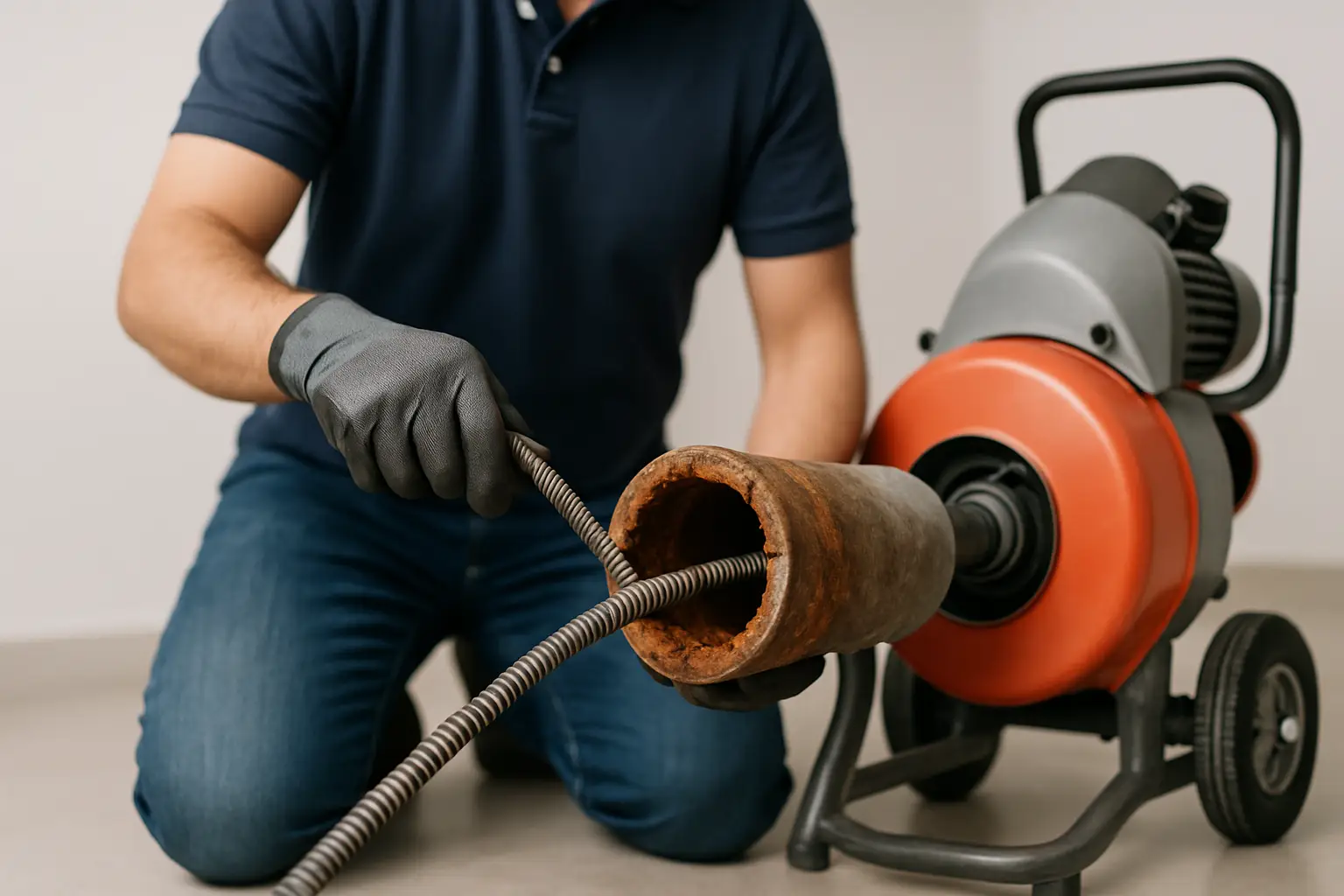
Descaling is specifically aimed at hardened mineral and corrosion buildup. In practice, professional descaling is often done with a flex-shaft style system that has a rotating chain or carbide head designed to knock scale off the pipe wall. In many cases, descaling and jetting work best as a one-two punch: mechanical removal first, then a jet rinse to flush the debris and leave the line clean.
What descaling looks like when it is done the right way
Descaling should not be treated as a “blind” service where someone shows up, runs equipment, and leaves. If you are trying to fix a repeat issue, you need proof the problem was actually addressed.
A professional process often starts with a sewer camera inspection. That camera does two important things. First, it shows where the buildup is and how severe it is. Second, it checks the condition of the pipe so the right method is chosen.
After that, the descaling equipment is run through the affected section. The rotating head breaks up and removes scale in a controlled way. Once the scale is loosened, the line is typically flushed so the debris does not just sit downstream.
A follow-up camera inspection matters. It verifies the results and shows whether the pipe has other issues that cleaning cannot solve, like a belly (sag), a crack, a separated joint, or a section that has deteriorated.
That before-and-after verification is what turns descaling from “we tried something” into a service you can trust.
Signs you might need pipe descaling
Most customers do not call asking for descaling. They call because the building is acting up. Descaling becomes the right solution when the pattern points to pipe wall buildup instead of a one-time clog.
If you are seeing slow drains that come back quickly after cleaning, that is a red flag. So is frequent toilet backing up with no clear cause. Gurgling, recurring sewer odors, or a main line that handles low flow but backs up during laundry or showers can also point to reduced pipe diameter.
For landlords and business owners, another common sign is repeated service calls on the same line. If you are clearing the same branch drain or main line every few months, the pipe is telling you the real issue is still there.
Older properties with cast iron are especially prone. Cast iron can last a long time, but as it ages, internal corrosion creates a rough surface that collects debris. Descaling can buy time, improve flow, and reduce emergencies – as long as the pipe still has structural integrity.
When descaling is a good idea – and when it is not
Descaling is not a magic wand. Like any professional service, it depends on the condition of the system.
Descaling is often a strong choice when a camera shows heavy scale buildup but the pipe is still intact and holding its shape. It is also a good fit when you want to reduce repeat clogs without jumping straight to a repair.
But if the camera shows the line is compromised, descaling may not be the right first move. A severely deteriorated cast iron pipe can have thin walls, holes, or sections that are already breaking apart. Aggressive cleaning in a pipe that is at the end of its life can expose weak spots. That does not mean “do nothing.” It means the plan may need to shift to targeted repair or replacement.
Another “it depends” scenario is root intrusion. If roots are the main problem, descaling alone is not the full fix. Roots can be cut back and the line can be cleaned, but if there is a cracked joint or opening letting roots in, the long-term solution often involves repair.
The right contractor will explain these trade-offs clearly instead of pushing one method for every situation.
Benefits you can actually feel (and a few you cannot)
The obvious benefit is restored flow. Sinks drain faster, tubs stop pooling, and toilets stop acting temperamental.
The less obvious benefit is fewer repeat clogs. When scale is removed, there is less for grease, paper, and debris to grab onto. That can reduce those frustrating “it was fine last week” backups.
Descaling can also improve the effectiveness of future maintenance. A smooth pipe is easier to keep clean with periodic jetting. In commercial settings, that can mean less downtime and fewer emergency calls during business hours.
What descaling does not do is make a broken pipe “healthy.” If the pipe is cracked, bellied, or collapsed, cleaning will not change the shape of the line.
How professionals keep descaling safe for your system
A good descaling job is controlled, not aggressive for the sake of speed. The contractor should match the method to the pipe material, diameter, and condition. Cast iron, clay, PVC, and ABS behave differently.
This is another place where camera diagnostics matter. Seeing the pipe first helps avoid surprises, and it keeps the service focused on the problem areas. It also sets the expectation for what “success” looks like. Sometimes the goal is a near-like-new interior. Other times, the goal is simply to remove enough scale to restore proper function and reduce risk.
Clean execution matters too. Descaling and jetting can be messy if the team does not protect the home or worksite. Professional crews use proper containment, keep the area clean, and leave the space the way they found it.
What to ask before you schedule a descaling service
You do not need to talk like a plumber to screen a contractor. A few straightforward questions tell you a lot.
Ask whether a camera inspection is included or recommended before and after. Ask what method will be used for your pipe type, and what they are looking for that would change the plan. You can also ask how they confirm the line is clear once they are done.
If the answers are vague, that is a sign you may get a quick pass-through instead of a true descaling.
A local note for Northern Virginia properties
In this area, we see a mix of newer neighborhoods with modern plastics and older homes and commercial buildings with cast iron. The older the line, the more likely internal corrosion and scale are driving the problem. If you are in a property with a history of backups, or if the plumbing has never been inspected on camera, it is worth getting eyes on the line before you spend money chasing the same clog again.
At Titan Jetters, descaling is typically paired with camera verification so customers can see the issue, understand the options, and know the result is real. You can learn more or book service at https://www.titanjetters.com.
A helpful way to think about it: if your plumbing keeps “almost” working, that is often when descaling makes the biggest difference – not as a last resort, but as the step that gets you out of the repeat-clog cycle.