
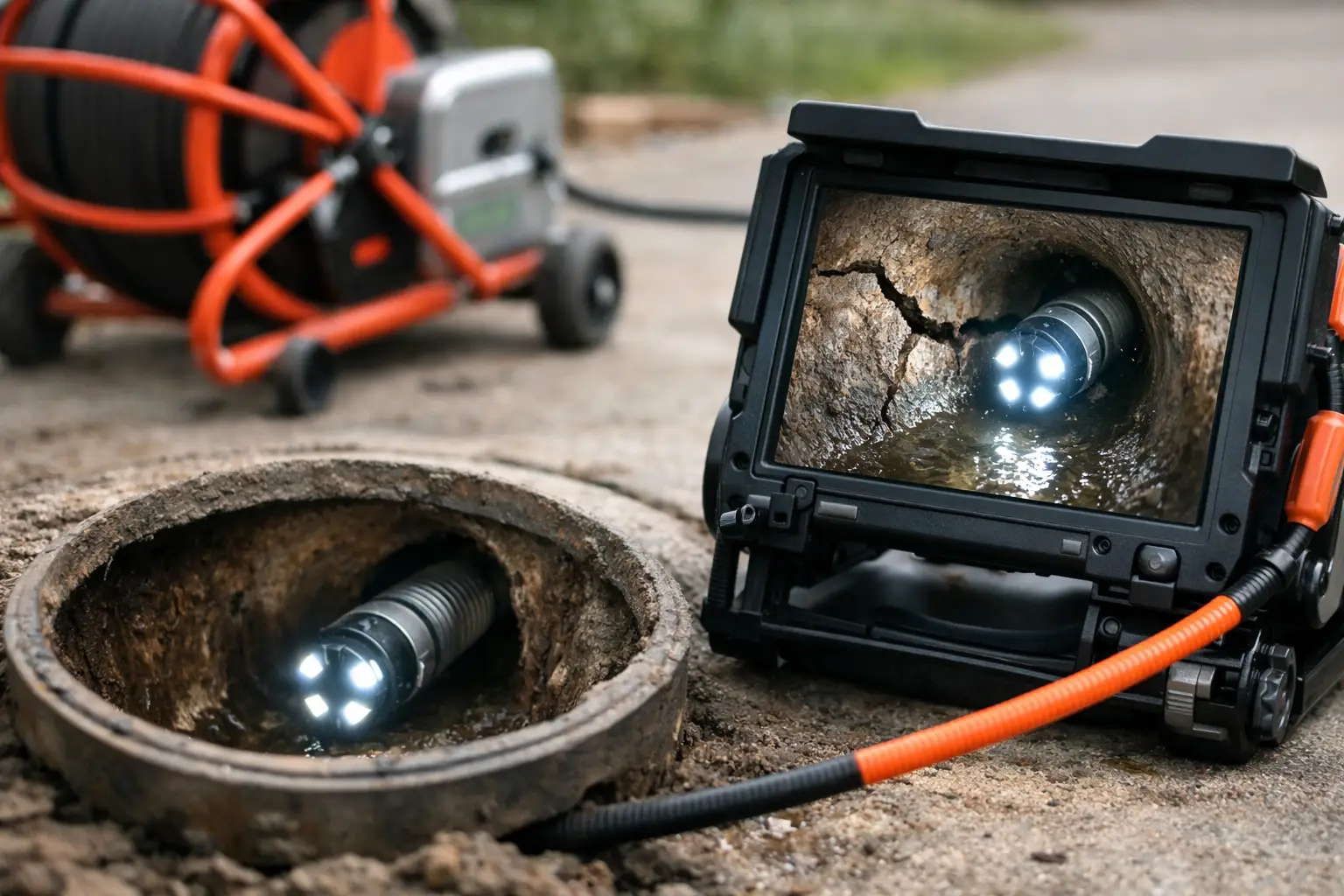
A sewer line can be damaged long before it turns into a full backup in the basement or a wet spot in the yard. That is why understanding how drain cameras find cracks matters. A professional camera inspection gives a technician a live view inside the pipe, helping identify damaged sections, root intrusion, shifted joints, buildup, and other issues without guessing or opening up floors and landscaping first.
For homeowners and property managers, the value is simple: you get a clear explanation of what is happening, where it is happening, and what needs attention now versus what can be monitored. That makes it easier to choose the right repair and avoid paying to clear the same recurring problem over and over.
What a Drain Camera Actually Sees
A sewer camera is a high-resolution, waterproof camera mounted on the end of a flexible push cable. The technician feeds it through an accessible cleanout, drain opening, or sewer line entry point while watching a live monitor above ground.
The camera head includes bright LED lights because sewer and drain lines are completely dark. As it moves through the pipe, it shows the interior wall, pipe joints, changes in material, standing water, debris, and any visible damage. Most professional camera systems also record the inspection, so the findings can be documented and reviewed with the customer.
The camera does not magically see through pipe walls or soil. It finds cracks by showing the signs that a crack leaves on the inside of the line. Those signs can be obvious, such as a visible split in the pipe, or subtle, such as roots entering through a joint that has started to separate.
How Drain Cameras Find Cracks and Line Damage
Technicians look for more than one type of defect during an inspection. The condition, age, and material of the pipe all affect what damage looks like on screen.
A clean, open crack may appear as a thin dark line, a jagged opening, or a separation in the pipe wall. In clay, cast iron, and older concrete lines, the edges may look rough or broken away. In PVC, a crack can be narrower and harder to spot, especially if the pipe is dirty or covered by water.
Roots are often one of the clearest warning signs. Tree roots do not usually break into a sound pipe for no reason. They follow moisture escaping through small openings at joints, cracks, or failed connections. On camera, technicians may see fine root strands, thick masses of roots, or dirt washing into the line. The roots may be the immediate cause of a blockage, but the opening that allowed them in is the larger issue.
A camera can also reveal a separated joint. This is where two sections of pipe have shifted apart enough to create a visible gap. Soil can enter through that gap, wastewater can escape, and roots can grow inside. Over time, a separated joint may lead to repeated clogs, a sagging section of line, or a partial collapse.
Other damage patterns include fractures, crushed pipe, offset joints, corrosion holes, and pipe bellies. A belly is a low area where the pipe has settled and holds water or debris. It is not technically a crack, but it can cause the same frustrating symptoms: slow drains, repeat backups, and frequent service calls.
The Camera Shows the Location, Not Just the Problem
Finding damage is only half the job. A good inspection also helps locate it accurately.
Professional camera systems can include a built-in transmitter, often called a sonde. While the camera is positioned at the damaged area, a technician can use a locator above ground to trace the signal. This identifies the approximate depth and location of the issue from the surface.
That information is useful when a repair is needed. Instead of excavating a large area based on an educated guess, the repair can be planned around the section of line that actually has the problem. It also helps determine whether the issue is under a driveway, landscaping, a slab, or an open section of yard.
Distance markers on the camera cable provide another reference point. If a crack appears 42 feet from the cleanout, that gives the technician a starting measurement. The final location is confirmed using the locator and the layout of the property.
Why Cleaning Often Comes Before the Inspection
A camera can only diagnose what it can see. Heavy grease, scale, sludge, wipes, roots, or standing wastewater may block the view and make a reliable inspection impossible.
For that reason, a technician may recommend clearing the line before running the camera or performing a second inspection after cleaning. Hydro jetting can remove grease and accumulated debris from suitable lines, while flex-shaft equipment may be used to cut through roots or descale certain pipe interiors. Once the pipe wall is visible, the camera can verify whether the line is simply dirty or actually damaged.
This is an important distinction. A blockage can be a one-time issue caused by buildup. But when roots return, the same drain repeatedly backs up, or cleaning only restores flow for a short time, a camera inspection helps determine whether a structural defect is allowing the problem to keep coming back.
At Titan Jetters, the goal is not to sell a repair before the line is properly evaluated. The goal is to clear what can be cleared, inspect the pipe, explain the findings plainly, and verify the result on camera whenever conditions allow.
What Can Make a Crack Harder to See
Camera inspections are highly effective, but they are not a substitute for good judgment. Some conditions can limit what the camera can confirm.
Standing water can hide the bottom portion of a pipe, where cracks and corrosion are common. Thick scale in cast iron can obscure the pipe wall and make the remaining opening look smaller than it really is. Heavy root growth may prevent the camera from moving farther down the line until the obstruction is removed.
A pipe that is fully collapsed may stop the camera completely. In that case, the stopping point, depth, and surface locating data still provide valuable evidence of where the failure is likely located. A camera may also show symptoms of damage without revealing every detail of the exterior condition. For example, soil entering at a joint strongly suggests a defect, but the full extent of the surrounding ground movement may not be visible from inside the pipe.
That is why the best diagnosis combines the live video, the cable distance, the locator reading, the pipe material, and the property’s drain history. A technician should explain what is confirmed, what is likely, and what additional work may be needed to make a final repair decision.
Signs You May Need a Sewer Camera Inspection
A single slow sink does not always point to a cracked sewer line. However, certain patterns deserve a closer look. Multiple fixtures draining slowly, sewage backing up at the lowest drain, gurgling toilets, recurring root clogs, and drains that clog again shortly after cleaning are all common reasons to inspect the line.
Outdoor clues can matter too. A persistent sewer odor, an unusually lush strip of grass, soft ground near the sewer route, or unexplained water around the foundation may indicate a leak or broken section. These signs do not prove a crack by themselves, but they are strong reasons not to rely on guesswork.
For commercial properties, camera inspections can reduce downtime when a kitchen line, restroom drain, or main sewer keeps causing interruptions. The camera helps separate a maintenance issue, such as grease buildup, from a pipe condition issue that needs a more permanent solution.
A Clear View Leads to the Right Next Step
The right next step depends on what the camera shows. A line with surface buildup may benefit from thorough cleaning and a follow-up inspection. A small root intrusion may need cleaning now and monitoring later. A cracked, offset, or collapsing line may require repair to stop repeat backups and protect the property.
The key is having proof before making that call. When your drains keep acting up, a camera inspection can replace uncertainty with a clear picture of the line and a practical plan for restoring dependable flow.
