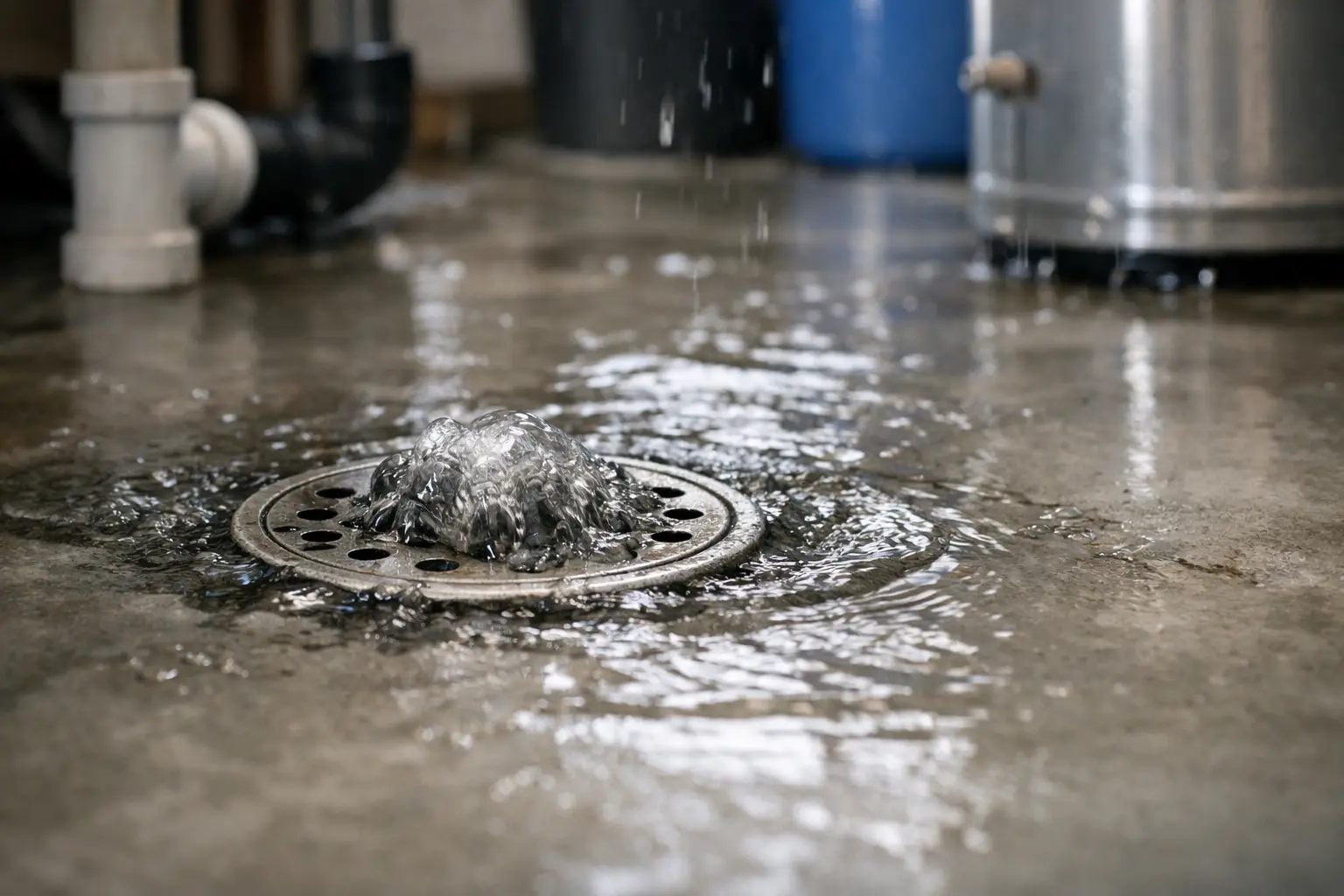
That sewer backup that keeps coming back after the drain is cleared is often where the real story starts. Sewer line belly symptoms and solutions usually come up when a home has repeat slow drains, sewage odors, or backups that never seem fully resolved because the pipe itself has dipped and started holding waste and water.
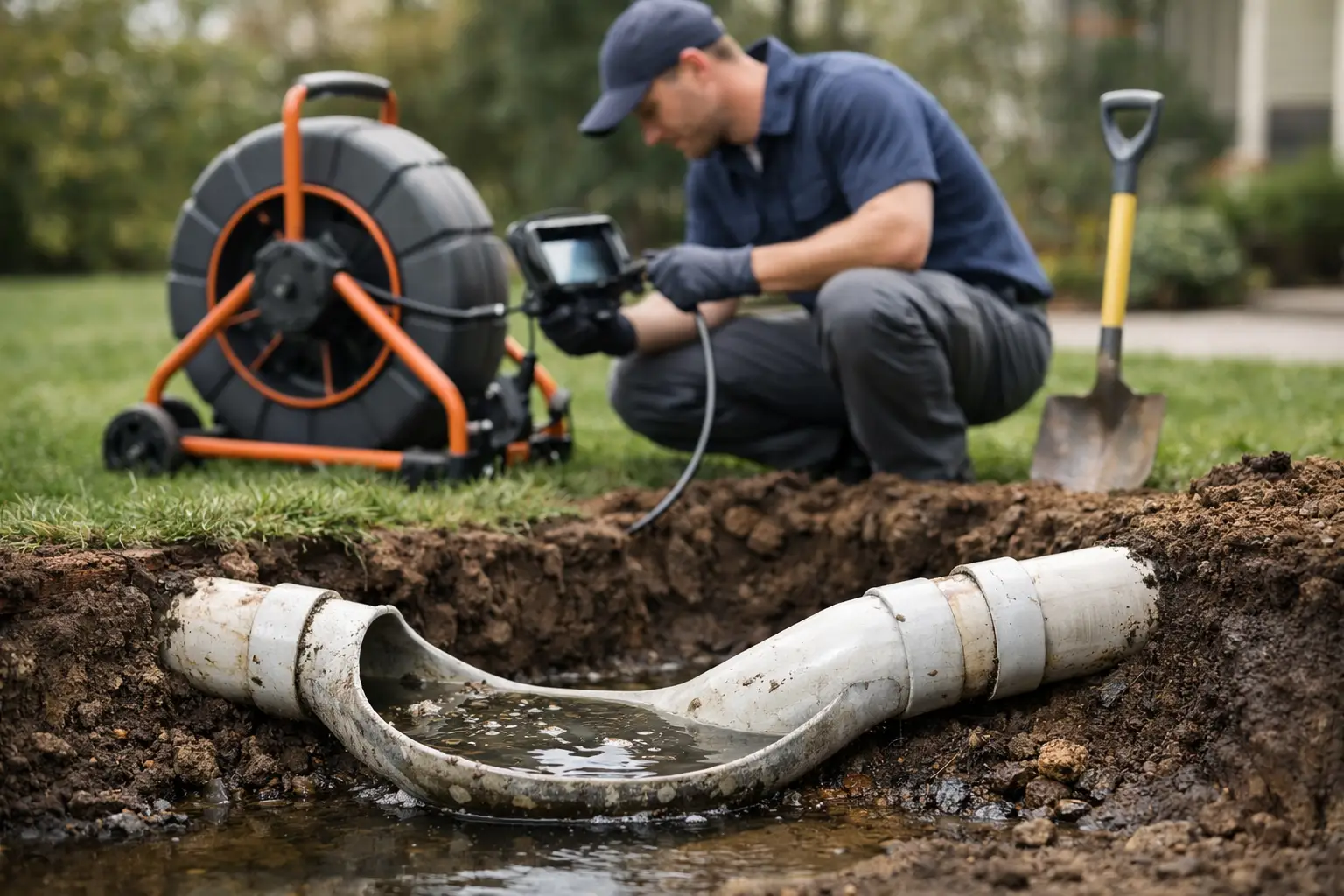
A sewer line belly is a low section in the underground pipe where the line no longer maintains the proper slope. Instead of wastewater flowing steadily toward the main sewer or septic connection, part of it settles in that sag. Solids can collect there, paper can hang up, grease can build faster, and eventually the line starts acting like it has a clog that never truly goes away.
For homeowners and property managers, this matters because the symptoms can look like an ordinary blockage at first. The difference is that a simple cleaning may restore flow temporarily, but the underlying grade problem is still there. If the belly is significant enough, the issue keeps returning.
What a sewer line belly really does
A healthy sewer line relies on gravity. The pipe needs the right pitch so wastewater keeps moving. When part of the line drops, even slightly, that section becomes a holding area.
Some standing water in a sewer line during a camera inspection does not automatically mean disaster. It depends on how much water is sitting there, how long the sagged section is, what kind of material the pipe is made of, and whether solids are getting trapped. A minor dip may be monitored for a while. A deeper belly that repeatedly catches debris is a repair conversation.
This is one of those problems where the trade-off matters. If the line can be cleaned and is still draining well with no history of repeated backups, immediate excavation may not make sense. If the line backs up every few months, affects multiple fixtures, or has started damaging floors or creating sanitation concerns, waiting usually costs more in disruption than acting sooner.
Common sewer line belly symptoms
The most common sign is recurring backup in lower fixtures. A basement toilet, floor drain, tub, or shower may be the first place you notice it because those fixtures sit closest to the main line. After a cleaning, things may improve for a bit, then the same symptoms show back up.
Slow draining across more than one fixture is another red flag. If a kitchen sink is slow by itself, that may be a localized drain issue. But when a toilet gurgles, a tub drains sluggishly, and a lower-level shower starts holding water, that points more toward the building drain or sewer line.
Sewage odor outside or in the basement can also show up with a belly. Wastewater that sits in a sagged section longer than it should can contribute to unpleasant smells, especially if the line is also collecting debris. The smell may seem stronger after heavy water use.
You may also hear gurgling or bubbling when water is discharged elsewhere in the house. That happens because the drainage system is struggling to move air and water through a partially obstructed line. In commercial properties, the pattern often shows up as repeat stoppages during peak business hours when wastewater volume increases.
Lush patches in the yard do not automatically mean a belly, but if a sagged section has progressed into a damaged line or leaking joint, you may notice wet soil, greener grass, or a persistent soggy area. That is where proper diagnostics matter, because several sewer problems can create similar symptoms.
Why this problem gets misdiagnosed
A sewer line belly is easy to confuse with a standard clog, root intrusion, or scale buildup inside older piping. In many cases, more than one issue is present. A line with a sag may also have grease buildup, wipes, roots, or heavy scaling that make the symptoms worse.
That is why a drain opening alone does not always answer the real question. If the line is simply snaked and flow returns, the immediate backup may be gone, but nobody has verified why the blockage formed in the first place. Without seeing the pipe, you are still guessing.
For older homes in Northern Virginia, material type plays a big role. Cast iron can scale heavily. Clay can shift or allow root intrusion. Orangeburg can deform over time. PVC can also develop a belly if the trench settles or if installation was poor to begin with. Different pipe materials fail in different ways, and the fix should match what is actually happening underground.
Sewer line belly symptoms and solutions start with camera inspection
If there is one step that separates guesswork from a real answer, it is a sewer camera inspection. A camera allows the plumber to see whether the line has standing water, where the low spot begins, how long it runs, and whether the belly is paired with cracks, root intrusion, offsets, or heavy buildup.
This matters because the right solution depends on the severity of the sag. A camera inspection also helps verify whether recent cleaning actually restored the line or if water is still hanging in the same section. When a company can show you what is going on inside the pipe, the conversation becomes much clearer.
A proper inspection is not just about finding water in the line. It is about reading the whole condition of the sewer. How much debris is collecting there? Are there signs the belly is worsening? Is the line otherwise structurally sound? Those details shape the recommendation.
The right solutions depend on severity
For a mild belly with limited symptoms, professional cleaning may buy time. If the line is structurally intact and the sag is not severe, clearing accumulated paper, sludge, grease, or scale can restore acceptable flow for a period of time. This is usually a management approach, not a permanent correction.
Hydro jetting can be effective when the issue includes sludge, grease, or soft buildup that repeatedly settles in the low area. In some systems, descaling may also help if interior pipe roughness is catching solids before they move through the sagged section. The key is being honest about what cleaning can and cannot do. It removes buildup. It does not regrade a pipe.
If the belly is substantial, or if backups keep returning even after professional cleaning, repair is usually the lasting answer. That often means replacing the affected section so the line has proper slope again. When the low spot is localized, the repair may be limited to one portion of the sewer. If the entire run has settlement issues or failing material, a larger replacement may make more sense.
There is no one-size-fits-all answer here. Some lines can be managed for a while with scheduled maintenance if symptoms are mild and the property owner understands the limitation. Others need prompt correction because the backups are frequent, the risk of property damage is high, or the camera shows the line is continuing to fail.
When to act sooner instead of later
If sewage is backing up into the home, that is no longer a watch-and-wait problem. Wastewater inside the property creates sanitation concerns fast, especially around flooring, baseboards, and lower-level bathrooms. The same goes for commercial spaces where downtime affects customers, staff, or tenants.
You should also move faster if the issue is becoming more frequent. A backup once every few years is different from a line that needs repeated service within months. That pattern usually means the system is not recovering fully between cleanings.
Another reason to act sooner is if the camera shows multiple defects in the same section. A belly combined with root intrusion, separated joints, or a deteriorated pipe wall usually points toward repair rather than repeated clearing. Temporary relief can still have value, but it should not be confused with a true fix.
What property owners should expect from a professional diagnosis
A good sewer assessment should be straightforward. First, the immediate blockage or restricted flow is addressed if needed so the line can be inspected. Then the line is camera checked to identify whether there is a belly, where it is located, and what else is happening in the pipe.
From there, you should get clear options. That may mean cleaning and monitoring, cleaning with a maintenance plan, or recommending repair because the line grade is no longer serviceable. The important part is that the explanation matches what was actually seen in the line, not a blanket recommendation based on symptoms alone.
This is where specialized drain and sewer companies stand out. With camera diagnostics, professional jetting equipment, and a focus on verified results, the goal is not just to get water moving for the moment. It is to identify why the problem happened and give you a practical path forward.
If your drains keep backing up and the same line keeps getting cleared without a lasting result, trust the pattern. A sewer line belly is one of those problems that rarely improves on its own, and the sooner you get a clear diagnosis, the sooner you can stop dealing with the same mess twice.