
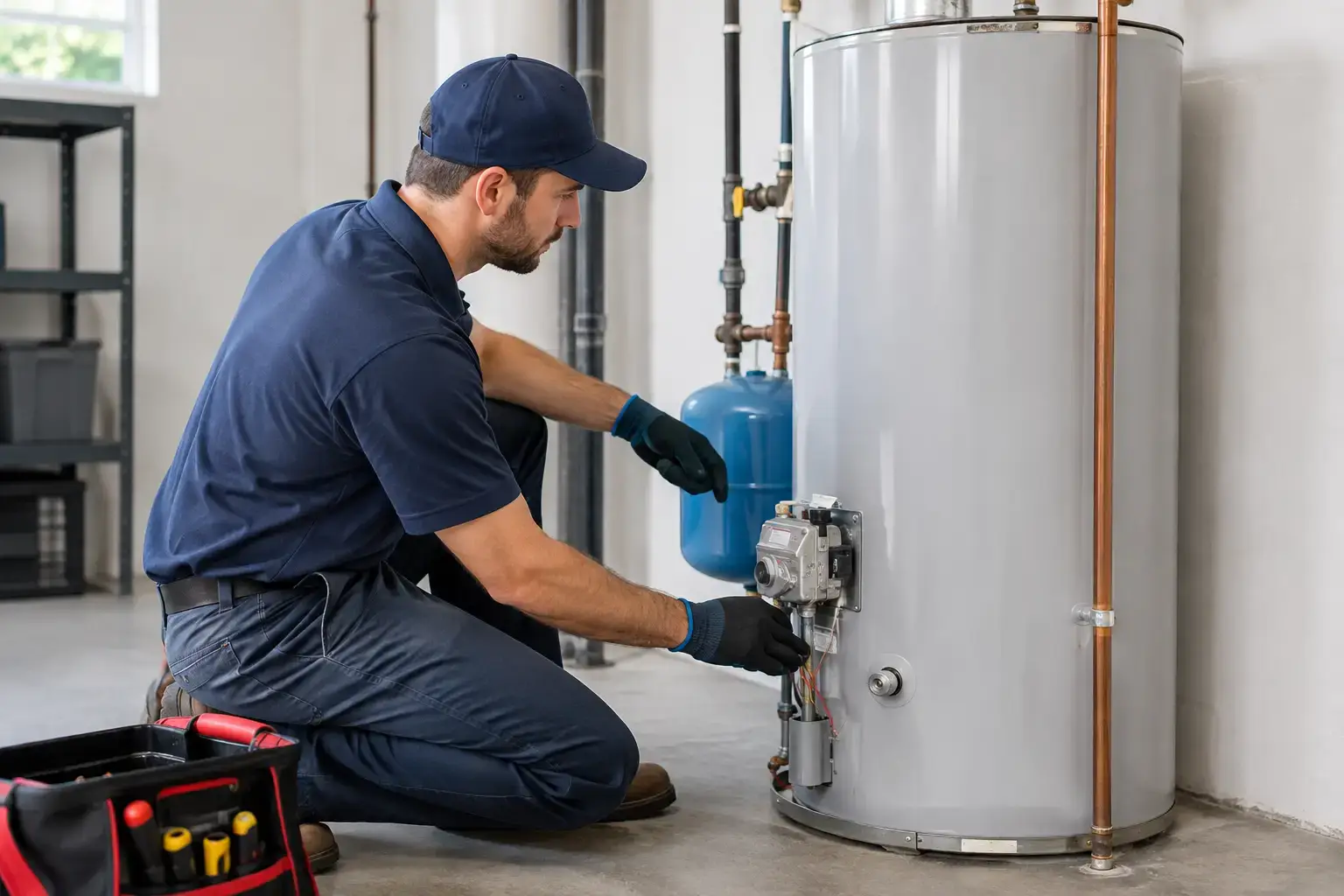
A cold shower is bad enough. Finding water around the base of your water heater, hearing it pop and rumble, or watching the hot water run out faster every week creates a bigger question: is this a repairable problem, or is the tank done?
Water heater repair versus replacement is not a decision that should be based on age alone. A newer unit can have a serious failure, while an older unit may only need a targeted repair. The right call comes from identifying the actual source of the problem, considering the condition of the system, and comparing the repair cost with the service life still left in the heater.
For homeowners, landlords, and property managers in Gainesville, Bristow, Haymarket, and Manassas, a clear diagnosis matters. Replacing a water heater that could have been repaired wastes money. Repairing one with a failing tank can lead to leaks, property damage, and another service call when you least need it.
Water Heater Repair Versus Replacement: Start With the Failure
Not every loss of hot water means the whole water heater needs to go. Electric models can develop problems with heating elements, thermostats, wiring, or electrical connections. Gas models may have issues involving the pilot, igniter, burner, thermocouple, or gas control valve. These components can often be evaluated and repaired when the tank itself is sound.
A leaking fitting, pressure relief valve, drain valve, or connection may also be repairable. The key is knowing exactly where the water is coming from. Water that appears near the heater is not always coming from the tank. Condensation, a nearby plumbing leak, or a faulty connection can create the same concern at first glance.
A professional inspection separates a component issue from a tank issue. That distinction is where good decisions begin. Guesswork can turn a straightforward repair into an unnecessary replacement, or worse, delay replacement when the tank is already failing.
When a repair makes sense
Repair is often the practical option when the water heater is relatively young, the tank has no signs of corrosion or leakage, and the issue is isolated to a serviceable part. A heater that is producing lukewarm water, tripping a breaker, struggling to ignite, or making new noises may still have a fixable cause.
The repair cost matters, but so does the expected result. A repair should restore dependable operation, not simply buy a few weeks before the next breakdown. If a single failed component is the cause and the rest of the system is in good shape, repair can be the smart, lower-cost path.
This is especially true for a water heater that has been maintained, has delivered consistent performance, and is not nearing the end of its expected service life. A technician should explain what failed, why it failed, and whether related parts show signs of wear.
Signs Replacement Is the Better Investment
The strongest reason to replace a water heater is a leaking tank. When the tank itself is corroded or cracked, it cannot be reliably repaired. Water pooling under the unit, rust-colored streaks around the tank body, or moisture coming from a seam can point to an internal tank failure.
Sediment buildup is another major factor. Mineral deposits settle at the bottom of a tank over time. As the layer builds, the heater can become less efficient and make popping or rumbling sounds as water heats beneath the sediment. Northern Virginia water conditions and household water use can affect how quickly buildup becomes a problem.
Sediment alone does not automatically require replacement. But heavy accumulation in an aging water heater can be a warning that the unit is working harder, heating less efficiently, and approaching a more expensive failure. If the tank is already corroded, leaking, or repeatedly losing performance, replacement is usually the more dependable choice.
Age also deserves weight in the decision. Many conventional tank water heaters provide roughly 8 to 12 years of service, though actual lifespan depends on water quality, maintenance history, installation conditions, and usage. A repair on a five-year-old unit may make perfect sense. The same repair on a unit near or beyond that range deserves a more careful cost comparison.
Repeated breakdowns change the math too. One failed part is normal wear. Multiple repairs in a short period can mean the system is becoming unreliable. For rental properties and businesses, the cost of repeated downtime, tenant complaints, or disrupted operations may outweigh the price of installing a new unit.
Do not ignore a leaking water heater
A water heater leak is not a problem to monitor for weeks. Even a slow leak can damage flooring, walls, stored belongings, or nearby equipment. It can also become a larger failure without much warning.
If water is actively leaking, limit exposure around the area and arrange for professional service promptly. A technician can determine whether the leak is coming from a replaceable valve or connection, or from the tank itself. That answer affects both urgency and cost.
How to Compare Repair Cost With Replacement Cost
A simple rule of thumb is useful: if a repair is expensive and the water heater is old or showing other signs of decline, replacement deserves serious consideration. But there is no one percentage or dollar amount that applies to every home.
A good comparison looks at the whole situation. Consider the unit’s age, the specific failed part, visible corrosion, leak location, repair history, capacity, and how well the heater meets your household’s hot water demand. If your family has already outgrown the current tank, spending money to extend its life may not solve the real problem.
Energy use belongs in the conversation as well. An aging water heater can lose efficiency as sediment accumulates and components wear. A new system may offer more reliable performance and lower operating costs over time, but those savings should be weighed realistically against installation cost and your plans for the property.
For landlords and property managers, reliability is often a deciding factor. A repair may be less expensive today, but a replacement can be the better business decision when recurring failures risk tenant disruption or emergency calls.
What a Proper Water Heater Diagnosis Should Include
The right recommendation should be based on what is found at the unit, not on a sales pitch. A professional evaluation should identify the type of water heater, confirm the age and condition of the tank, inspect for active leaks and corrosion, and test the components related to the reported problem.
The technician should also look at the surrounding plumbing connections and safety-related parts. A temperature and pressure relief valve, for example, serves an important purpose and should never be ignored when it is leaking or malfunctioning. Gas water heater concerns require careful attention to ignition, venting, and combustion-related components. Electrical concerns require safe testing of power and controls.
You should leave the visit knowing whether the issue is a repairable component failure, a tank failure, or a broader plumbing concern. You should also understand the available options and the likely trade-offs of each one.
That straightforward approach is how Titan Jetters handles plumbing problems: diagnose first, explain the findings clearly, and recommend the solution that fits the condition of the equipment. No guesswork and no pressure to replace equipment that can reasonably be repaired.
Questions to Ask Before You Approve the Work
Before choosing a repair or replacement, ask what specifically failed and whether the tank itself is still in good condition. Ask whether corrosion, sediment, or repeat repairs are likely to affect reliability soon. If replacement is recommended, ask why repair is not expected to provide dependable service.
For a replacement, confirm that the proposed capacity fits the property’s actual hot water needs. A household with multiple bathrooms, frequent laundry, or high-demand morning routines may need a different solution than a smaller home. For commercial properties, usage patterns and downtime concerns deserve the same attention.
Clear answers protect your budget and help prevent a rushed decision during an emergency.
If your water heater is leaking, making unusual noises, producing inconsistent hot water, or failing outright, do not wait for the problem to turn into water damage. Contact a qualified local plumbing professional for an honest diagnosis. The best outcome is not always a repair or always a replacement – it is dependable hot water and confidence that the problem was handled correctly.
