
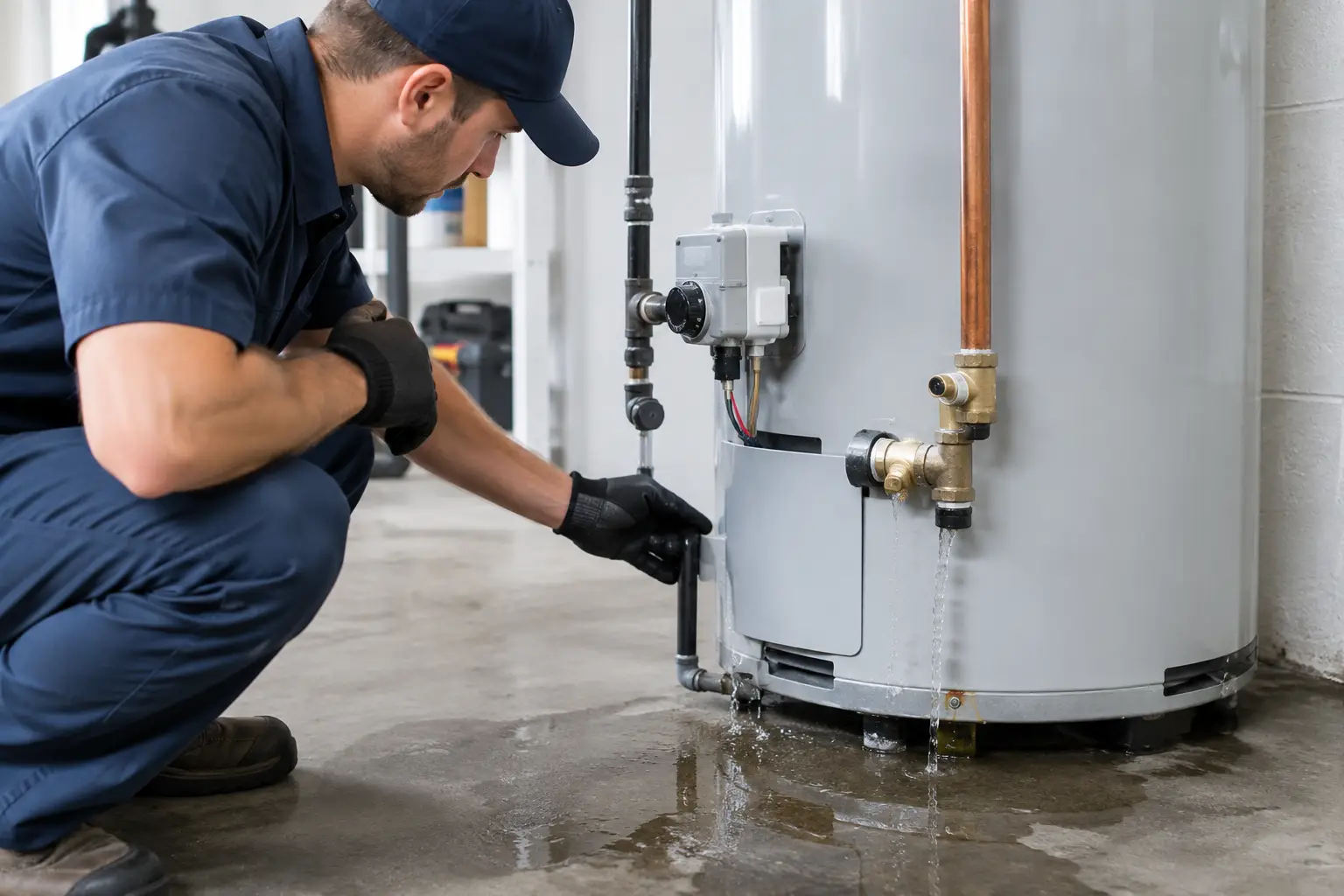
A water heater can leak slowly for weeks before it leaves a puddle big enough to demand attention. By then, moisture may have already damaged flooring, drywall, stored items, or the framing around the utility area. The best signs a water heater leaks are often small at first, but they are worth taking seriously.
For homeowners and property managers, the goal is not to guess at the source of the water. A leaking water heater may have a repairable connection issue, a failing valve, or internal tank corrosion that calls for replacement. Getting the cause identified early can limit damage and prevent a sudden loss of hot water.
8 Best Signs Your Water Heater Is Leaking
1. Water is pooling around the base of the tank
A puddle at the bottom of a water heater is the clearest warning sign, but it does not automatically mean the tank itself has failed. Water can run down from a pipe fitting, the temperature and pressure relief valve, or the drain valve and collect at the base, making the source hard to see.
If the area is wet more than once, treat it as an active plumbing issue. Drying the floor without finding the cause only gives the leak more time to damage the surrounding area. A professional inspection can determine whether the water is coming from an external part that can be repaired or from the tank itself.
2. Rusty streaks or corrosion appear on the tank or fittings
Rust around water connections, the top of the unit, the drain valve, or the bottom seam should not be ignored. Surface corrosion may point to a slow leak, condensation problem, or a fitting that has been exposed to moisture for too long.
The location matters. Corrosion on a threaded pipe connection may be isolated to that connection. Rust coming from the tank body or its lower seam is more concerning because it can indicate corrosion inside the tank. Once a steel tank is leaking through its wall, patching it is not a dependable long-term fix.
3. The temperature and pressure relief valve is dripping
The temperature and pressure relief valve, often called the T&P valve, is a safety component. It opens to release water if pressure or temperature rises too high inside the water heater. A small amount of discharge can occur under unusual conditions, but ongoing dripping or water coming from the discharge pipe needs attention.
The valve may be worn out, but it can also be responding to a pressure or temperature issue elsewhere in the system. Do not cap or plug a relief valve discharge line. A plumber should identify why it is releasing water and correct the underlying problem safely.
4. Hot water is rusty, discolored, or has sediment
Brown, reddish, or cloudy hot water can be a sign of internal corrosion or sediment buildup in the water heater. It can also come from aging water lines, so the pattern matters. If discoloration appears only when you run hot water, the heater is a likely source.
Sediment is common in tank-style heaters and can reduce efficiency, create popping or rumbling sounds, and add stress to the unit over time. Discolored water does not always mean an immediate leak, but it is a reason to have the system checked before corrosion develops into one.
5. You hear popping, cracking, or rumbling from the tank
A water heater should not sound like it is boiling a pot of gravel. Popping and rumbling are often caused by sediment collecting at the bottom of the tank. The burner or heating element has to work through that buildup, which can cause overheating at the tank bottom and reduce the unit’s useful life.
Noise alone is not proof that the heater is leaking. Still, it is a practical warning that the unit needs attention, especially when it comes with reduced hot water, rusty water, or moisture around the base. The sooner the condition is diagnosed, the more options you may have.
6. The hot water supply suddenly gets shorter
If showers turn cold faster than they used to, the problem may be more than an inconvenience. A failing heating element, burner issue, damaged dip tube, heavy sediment, or an aging tank can all reduce hot water capacity.
This sign is especially important when paired with visible moisture or corrosion. A heater that is losing capacity and showing leak symptoms may be nearing the end of its service life. A clear inspection helps you decide whether repair makes sense or replacement is the better value.
7. Moisture keeps returning in the utility area
Not every wet floor is a water heater leak. Condensation on cold water lines, a nearby HVAC drain issue, an appliance leak, or a plumbing line behind the unit can create the same symptoms. But if the floor around the heater stays damp or musty, there is a water source that needs to be located.
Watch for swollen baseboards, soft flooring, staining on drywall, mildew smell, or stored items that feel damp. These are signs that the issue may have been present longer than expected. In a finished basement, prompt leak detection can prevent a minor plumbing repair from becoming a much larger restoration job.
8. The tank is older and showing multiple warning signs
Age does not automatically mean a water heater is failing, but an older unit with corrosion, reduced performance, noise, or repeated leaks deserves a careful evaluation. The condition of the tank, local water quality, maintenance history, and the location of the leak all affect the right next step.
For example, a newer heater with a leaking supply connection may be a straightforward repair. An older heater leaking from its bottom seam is a different situation. The most useful answer comes from diagnosing the actual source rather than replacing parts based on a symptom alone.
Where Water Heater Leaks Usually Start
Water does not always appear directly beneath the failed component. It follows pipes, insulation, the outside of the tank, and even nearby framing before it reaches the floor. That is why a puddle can be misleading.
A plumber will typically check the cold and hot water connections at the top of the heater, the T&P valve and discharge pipe, the drain valve, and the tank itself. The surrounding plumbing should also be inspected when the source is unclear. In homes with recurring drain or sewer problems, a separate plumbing issue in the same utility space can sometimes make it harder to identify where moisture is coming from.
When a Water Heater Leak Needs Fast Service
Call for professional help promptly if water is actively pooling, the leak is getting worse, hot water has stopped, the relief valve is discharging continuously, or water is reaching electrical equipment, finished walls, or flooring. If you smell gas near a gas water heater, leave the area and contact the appropriate emergency utility resource and a qualified professional.
A small drip is still worth scheduling before it becomes an emergency. Water heaters are often installed in basements, utility closets, garages, and laundry rooms where a slow leak can remain hidden. Fast diagnosis protects the home and gives you time to make a practical decision instead of dealing with a failure on the worst possible day.
Get a Clear Answer Before Water Damage Spreads
Titan Jetters provides straightforward water heater leak diagnosis for homeowners and property managers in Gainesville, Bristow, Haymarket, Manassas, and surrounding Northern Virginia communities. The focus is simple: find where the water is coming from, explain what is causing it, and provide clear repair options without guesswork.
If you have seen moisture, rust, inconsistent hot water, or a puddle near your unit, do not wait for the leak to announce itself more loudly. Contact us today to book service and get a professional answer before a small water heater problem turns into damaged floors, walls, and downtime.
