
A restroom backing up during the lunch rush, a floor drain spilling into a stockroom, or a kitchen sink that will not keep up with service is more than a plumbing inconvenience. It can interrupt customers, employees, inventory, and revenue. Commercial sewer diagnosis finds out why the line is failing before a quick clearing turns into another call for the same problem.
For restaurants, offices, retail spaces, rental properties, and other commercial buildings, the right answer is not always the same tool. A blockage may be caused by grease, scale, roots, damaged pipe, a low spot in the line, or a problem farther downstream. Clearing the immediate stoppage restores flow. Diagnosing the condition of the line helps determine what will keep it flowing.
Why Commercial Sewer Problems Keep Coming Back
A drain that clogs once may have taken a one-time hit from debris. A drain that slows down every few weeks is sending a different message. Repeated backups usually mean material is catching somewhere in the system or the pipe itself has a condition that cleaning alone cannot correct.
In commercial kitchens, grease can coat pipe walls and narrow the opening over time. Food solids and cleaning products then collect on that buildup. In older buildings, cast iron can develop heavy internal scale and corrosion. What looks like a clear pipe from the outside may have a much smaller path for wastewater inside.
Outside the building, roots may enter through joints or cracks. Soil movement, aging connections, or pipe damage can create a separation where paper and debris hang up. A sag in the line can hold water and waste instead of carrying it away. These issues can produce the same surface symptom – a backup – but need very different solutions.
That is why repeated snaking without a clear diagnosis can become expensive. It may provide temporary relief while leaving the actual cause in place.
What Commercial Sewer Diagnosis Should Answer
A proper evaluation should give a property owner or manager clear answers, not vague guesses. First, where is the restriction or damage? A problem limited to one restroom branch is different from a main sewer line issue affecting multiple fixtures.
Next, the technician needs to identify what is inside the pipe. Is the line packed with grease? Is there hard scale on cast iron? Are roots entering the line? Is there standing water that suggests a belly or low area? The condition matters because each situation calls for a different approach.
Finally, the diagnosis should establish whether the line can be cleaned and maintained or whether it needs repair. Not every bad-looking camera image means immediate excavation. On the other hand, a broken, offset, or collapsed section will not be permanently fixed by repeated cleaning. Good diagnostics separate a serviceable line from one that needs a repair plan.
How a Commercial Sewer Diagnosis Is Performed
The process usually starts with the building’s symptoms and layout. Which fixtures are affected? Did the problem start suddenly or build over time? Does it happen during peak use, after heavy rain, or only in a certain area? These details help narrow down whether the issue is local, in the main line, or related to outside conditions.
Camera Inspection Shows What Is Happening Inside
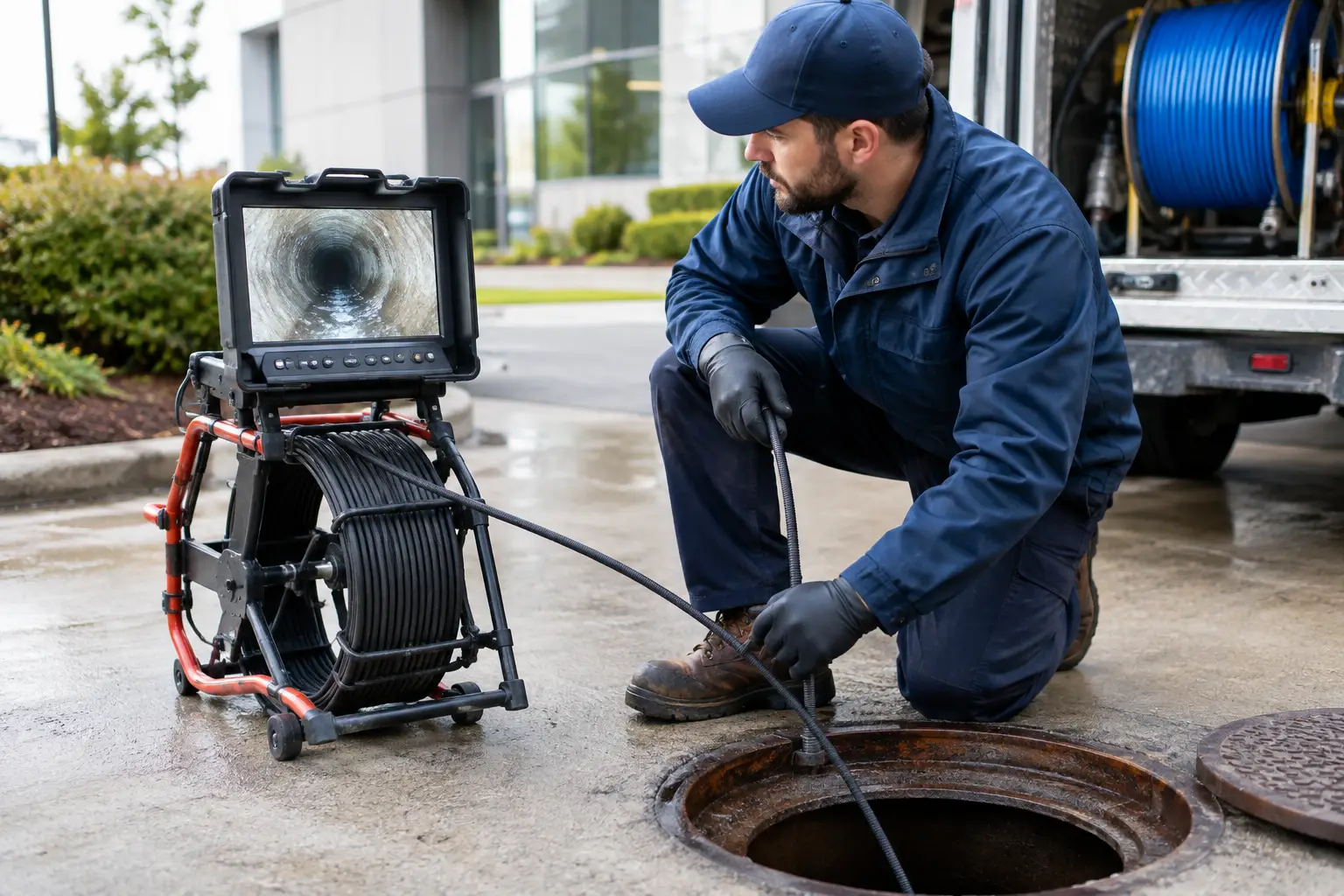
A sewer camera inspection is one of the most useful diagnostic tools for commercial properties. A camera is run through an accessible cleanout or drain line so the technician can see the pipe interior in real time. It can reveal grease buildup, scale, roots, cracks, offsets, standing water, and other conditions that cannot be confirmed from the surface.
Camera work is especially valuable after a recurring clog has been cleared. The line may be flowing at that moment, but the camera can show whether the pipe walls are still restricted or if structural damage is waiting to create the next backup. It also helps verify results after cleaning so the customer is not left wondering whether the problem was actually addressed.
Cleaning Can Be Part of the Diagnosis
Some lines are too blocked for a camera to travel through at first. In those cases, professional drain cleaning may be needed to open the line and allow a full inspection. The method depends on the material causing the restriction and the pipe condition.
Hydro jetting uses high-pressure water to break up grease, sludge, and buildup along the pipe walls. It can be a strong option for commercial kitchen lines and main sewer lines where accumulated material is the main issue. Flex-shaft cleaning and pipe descaling can be appropriate for certain scale-heavy cast iron lines. The goal is not to choose the biggest tool. It is to use the right method for the line in front of you.
A damaged or severely deteriorated pipe requires added care. Aggressive cleaning is not the right answer in every situation, which is why a diagnosis should guide the work instead of treating every blockage the same way.
Common Findings in Commercial Sewer Lines
Commercial properties often have patterns based on how the building is used. Restaurants and food-service operations commonly deal with grease and food debris. Offices and retail buildings may experience paper buildup, restroom misuse, or aging main lines. Multi-unit properties can have a mix of fixture-related clogs and larger sewer problems caused by shared usage.
Four findings deserve particular attention:
- Grease accumulation restricts flow gradually and can lead to sudden backups during busy periods.
- Cast iron scale creates a rough, narrowed surface that catches debris and makes repeat clogs more likely.
- Root intrusion can block flow and signal openings in the pipe that need continued attention or repair.
- Pipe damage or bellies can hold waste in the line, causing recurring stoppages even after cleaning.
The trade-off is straightforward. Cleaning is often the practical first move when the pipe is structurally sound and buildup is the problem. Repair becomes the better investment when the camera shows a condition that will keep trapping waste or allow roots and soil into the system.
When a Sewer Issue Needs Fast Attention
Some commercial drain problems can be scheduled before they become disruptive. Others need immediate action. A backup affecting customer restrooms, food-preparation areas, employee workspaces, or multiple fixtures at once should be treated as urgent. The same is true when wastewater is surfacing through a floor drain or cleanout.
Do not wait for the line to stop completely if you see warning signs such as gurgling toilets, slow drains across several areas, foul sewer odors, or a backup that returns shortly after service. Early diagnosis can reduce downtime and may prevent a messy interruption during your busiest hours.
For property managers, recurring sewer problems should be documented by location, affected fixtures, and timing. That information helps identify patterns across tenant spaces or buildings and gives the technician a better starting point when the issue returns.
Choosing the Right Commercial Sewer Solution
The best solution should match the evidence found in the line. If camera inspection shows grease and the pipe is in good shape, thorough cleaning and a maintenance plan may be the sensible route. If scale is reducing the inside diameter of old cast iron, descaling may improve flow where appropriate. If roots are entering through damaged joints, cleaning can restore service, but the damaged area may need repair to prevent a repeat problem.
Ask for a clear explanation of what was found, what was done, and what the next step should be. A professional should be able to show you the condition of the line, explain the options in plain language, and distinguish between work that is needed now and work that should be planned.
Titan Jetters helps commercial customers in Gainesville, Bristow, Haymarket, Manassas, and nearby Northern Virginia communities get past guesswork with camera inspections, professional cleaning, hydro jetting, descaling, and sewer diagnostics. The focus is simple: identify the cause, restore flow, and recommend the next step based on what the line actually needs.
A commercial sewer line rarely fails at a convenient time. When slow drains, odors, or repeat backups start disrupting your property, getting a clear diagnosis early can protect your operations and give you a practical path forward. Contact a local sewer specialist before the next busy day turns a warning sign into a shutdown.
