
A sewer odor in the basement, bathroom, kitchen, or near an exterior cleanout is not something to cover up with air freshener. Sewer smells often point to a drainage or venting issue that can get worse if it is ignored. The source may be as simple as a dry drain trap, but it can also signal a main sewer line blockage, a damaged pipe, or a plumbing problem that needs prompt attention.
For homeowners and property managers, the key is noticing when the smell occurs, where it is strongest, and whether it comes with slow drains, gurgling, or backups. Those details help separate a minor issue from a sewer problem that needs professional diagnostics.
What causes sewer smells in a home?
Your plumbing system is designed to move wastewater out while keeping sewer gas out. When every part of that system is working correctly, you should not smell the sewer at all. An odor means something in that barrier, drainage path, or venting system may not be doing its job.
A common cause is a dry P-trap. The curved section of pipe below a sink, shower, floor drain, or other fixture holds water. That water creates a seal against sewer gas. In a rarely used guest bathroom, utility room, basement floor drain, or vacant unit, the water can evaporate and allow odors to enter the room.
Other causes require a closer look. A partial clog can hold waste and organic buildup inside a drain line, creating an odor before the drain fully backs up. Grease buildup in a kitchen line can do the same thing, especially in restaurants, rental properties, and busy homes. Cracked pipes, failed seals around a toilet, improperly vented fixtures, and damaged sewer lines can also allow sewer gas to escape where it should not.
The location of the odor matters. A smell limited to one unused bathroom may point to that fixture or nearby drain. A sewer smell throughout the house, especially when multiple fixtures drain slowly, is more concerning. That pattern can indicate a problem in the main sewer line.
Sewer smells that need fast attention
Some odors are unpleasant but isolated. Others are an early warning that wastewater may soon have nowhere to go. Call for professional help promptly if you notice sewer smells along with recurring drain clogs, toilets that bubble when another fixture runs, water backing up into a tub or shower, or several drains slowing down at once.
These are common signs of a main line restriction. Tree roots, wipes, grease, heavy scale inside older pipes, and pipe damage can reduce the usable space in a sewer line. Water may still pass for a while, but the line is no longer flowing the way it should. Odor can be one of the first signs before a messy backup occurs.
Do not overlook outdoor odors either. A strong sewer smell near a cleanout, sewer line path, crawl space, or foundation can point to a leaking connection, break, or venting issue. If the smell is stronger after using water or after heavy rain, share that information with the technician. It can help narrow down the cause faster.
Sewer gas should be treated seriously, particularly when the odor is persistent or paired with a backup. Open windows if it is safe to do so, limit water use if drains are backing up, and arrange an inspection. The goal is not just to remove the smell. It is to find out why the plumbing system is allowing it into the property.
Why a recurring odor needs more than a quick drain clearing
A basic drain clearing can restore flow when a simple clog is the only problem. But recurring sewer smells call for a diagnosis, not guesswork. If a line keeps clogging or an odor returns shortly after it seems resolved, something may still be left inside the pipe or the pipe itself may have a defect.
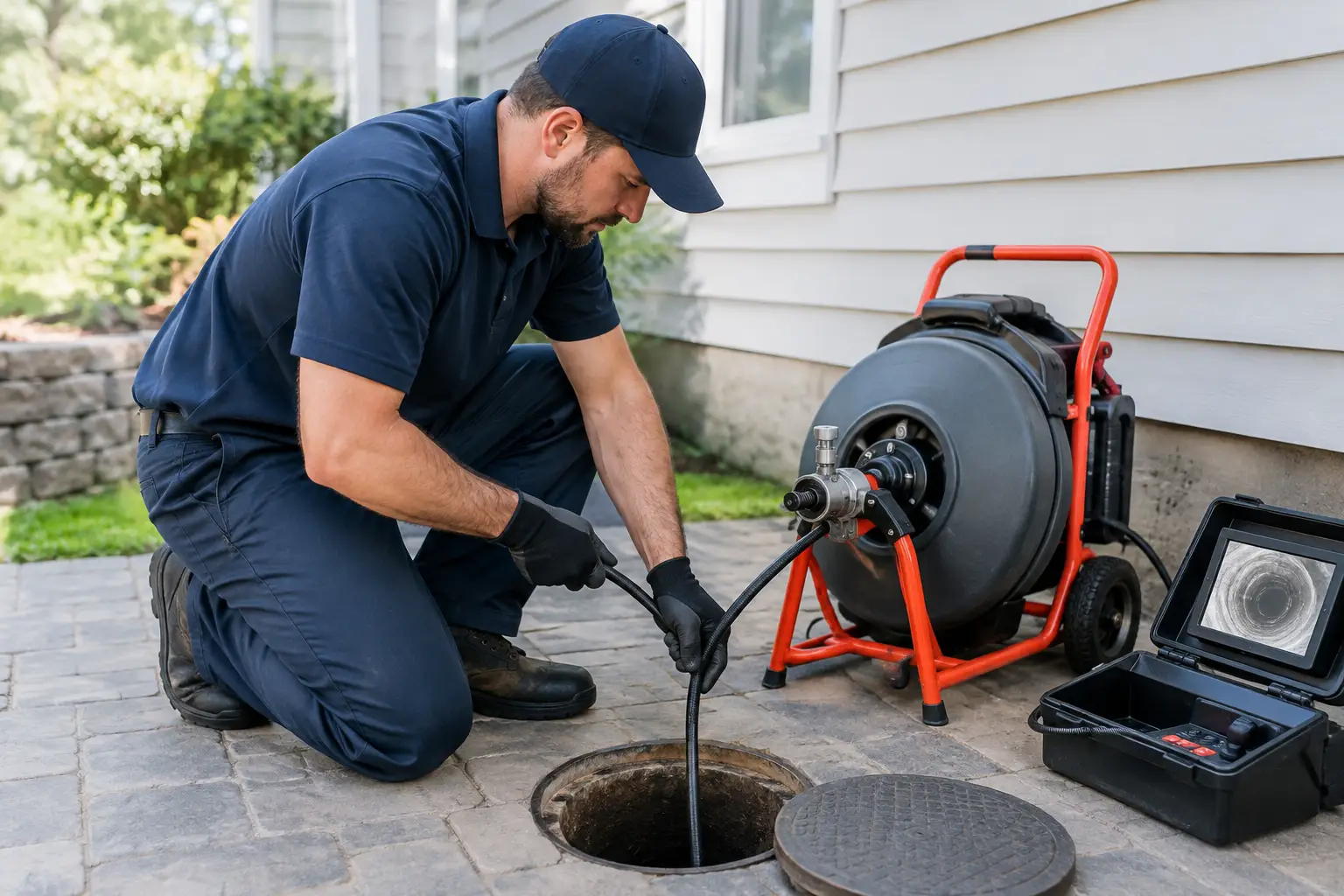
That is where a sewer camera inspection earns its value. A camera lets a technician see inside the line and identify the actual condition of the pipe. It can reveal roots, grease, scale, separated joints, bellies that hold waste, cracks, or a blockage farther down the line. Instead of assuming the problem is near the fixture where the odor is noticed, the inspection shows where the issue starts.
The right solution depends on what the camera finds. Heavy grease, sludge, and debris may call for hydro jetting to thoroughly clean the line. Scale buildup in cast iron piping may require pipe descaling or flex-shaft cleaning to restore pipe capacity. A damaged or offset line may need repair rather than repeated cleaning. The best option is the one that addresses the cause and gives you a clear picture of the line afterward.
There is a trade-off here. The least expensive short-term option is not always the best value if it only punches a small opening through a larger buildup. For a line with years of grease or scale, a more complete cleaning can reduce repeat clogs, odors, and emergency calls. For a pipe with structural damage, cleaning may improve flow temporarily but will not repair the defect.
What a professional sewer odor diagnosis looks for
A proper sewer diagnosis starts with the facts on site. Which fixtures smell? Does the odor come and go? Are there slow drains, gurgling toilets, standing water, or recent backups? A good technician uses those answers to determine whether the issue is local to one fixture or connected to the larger drain and sewer system.
From there, the inspection may include checking accessible drains, evaluating the main sewer line, and using a sewer camera when the symptoms point to a deeper problem. This approach avoids treating every smell as the same kind of clog.
For commercial properties, the stakes can be higher. A kitchen drain with grease buildup can create odors, slow operations, and eventually shut down sinks or floor drains during a busy shift. Property managers may face complaints from tenants before the underlying line problem becomes visible. Fast diagnosis helps minimize downtime and prevents a small odor issue from becoming a cleanup issue.
Titan Jetters helps homeowners and businesses in Gainesville, Bristow, Haymarket, Manassas, and surrounding Northern Virginia communities identify what is happening inside the line before recommending the next step. Whether the solution is drain cleaning, hydro jetting, descaling, camera inspection, or sewer repair, the work should be based on what the system actually needs.
When the smell may not be the sewer line
Not every unpleasant plumbing odor comes from a failed main sewer line. A garbage disposal with trapped food debris, a dishwasher drain connection, or buildup in a sink overflow can produce smells that seem similar at first. A dry floor drain is also common in utility areas that do not get regular use.
That is why location and timing matter. If the odor appears only when one sink runs, the problem may be in that branch drain. If it appears when laundry drains, a toilet flushes, or several fixtures are used, the issue may be farther downstream. A trained technician can sort out those differences without jumping straight to major work.
Avoid relying on harsh chemical drain products to mask a recurring odor or force a blockage through. They can be hard on certain piping, may not reach the true obstruction, and do not reveal whether roots, scale, grease, or pipe damage are behind the problem. If the smell keeps returning, the line deserves a real inspection.
Get ahead of the backup
Sewer smells are your plumbing system telling you something has changed. The sooner the cause is identified, the more options you usually have to correct it before wastewater backs up into the home or business. Pay attention to repeat odors, slow drainage, gurgling fixtures, and changes in how multiple drains behave.
If the smell is persistent or you are seeing signs of a main line issue, book a service call while the problem is still manageable. A clear diagnosis and the right cleaning or repair can restore proper flow, protect the property, and give you confidence that the odor is not coming back for the same reason.
