
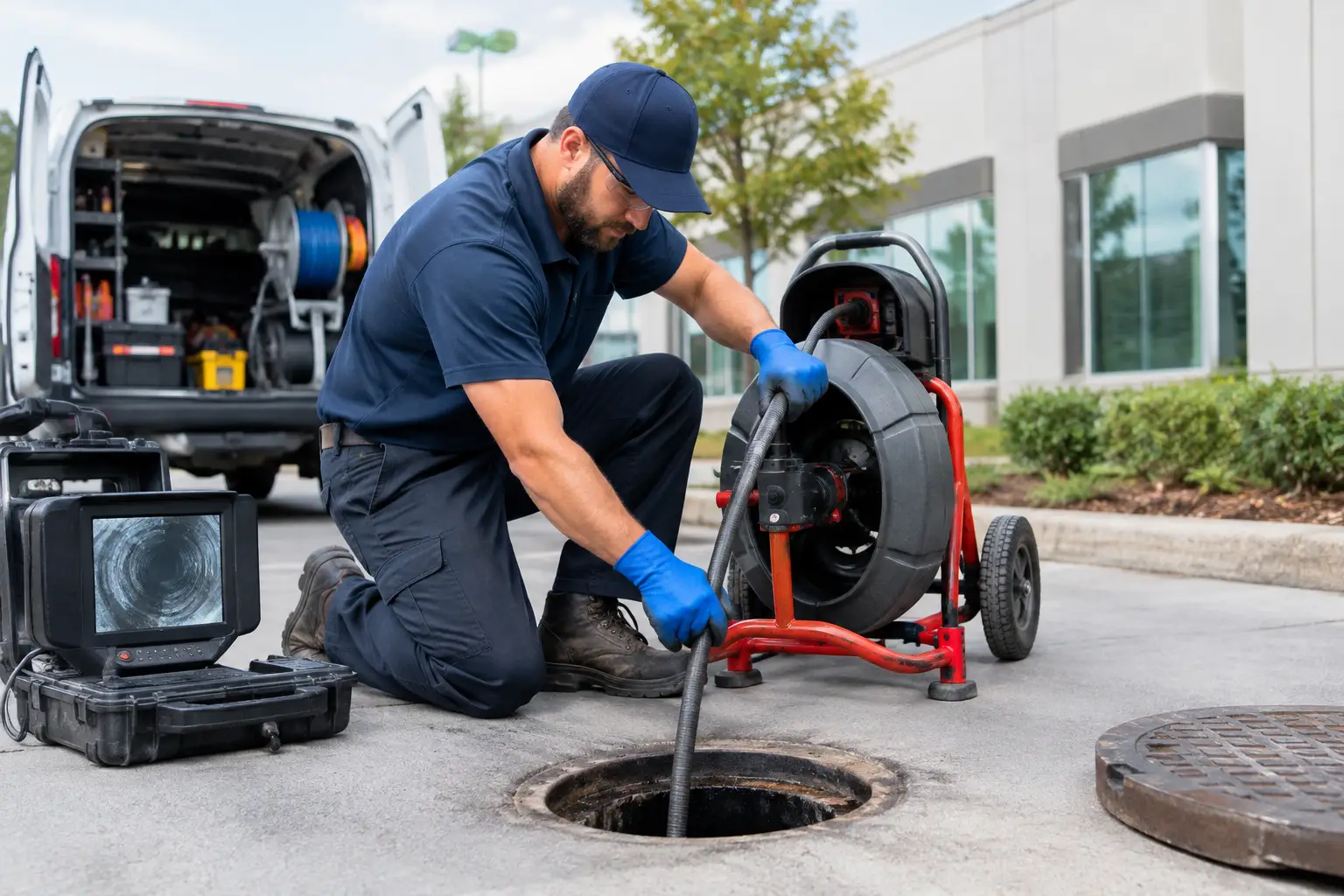
A restroom backing up during a lunch rush, a floor drain overflowing in a tenant space, or sewage odors reaching customers can shut down normal business fast. The top commercial sewer problems rarely start as a major emergency. More often, they build quietly inside a drain or main sewer line until normal water use pushes the system past its limit.
Commercial properties put different demands on plumbing than a typical home. More people use the fixtures, kitchens create heavier waste loads, and older buildings may have aging pipe materials below the slab or outside the property. Getting the right diagnosis matters. Clearing the immediate blockage is necessary, but understanding why it formed helps prevent the same downtime from returning next month.
The Top Commercial Sewer Problems to Watch For
Grease buildup in kitchen drain lines
Grease is one of the most common causes of commercial drain trouble, especially for restaurants, cafeterias, break rooms, and food-service operations. Hot grease may look harmless when it goes down the drain, but it cools as it moves through the line. It sticks to pipe walls and catches food debris, soap residue, and other waste until the opening becomes too narrow for normal flow.
A grease-related blockage often starts with slow sinks or a floor drain that drains poorly. If ignored, it can turn into a kitchen backup at the worst possible time. Snaking may punch an opening through the buildup, but it does not always remove the grease coating along the pipe. Hydro jetting is often the better choice when the line needs a thorough cleaning, provided a camera inspection confirms the pipe is in suitable condition.
Heavy scale inside older pipes
Many commercial buildings in Northern Virginia have older cast-iron drain lines. Over time, cast iron can corrode internally and develop heavy mineral scale. That rough buildup reduces the inside diameter of the pipe and gives paper, grease, and waste something to grab onto.
The result can look like a simple recurring clog, even when the real issue is the condition of the pipe wall. Descaling with professional equipment can remove corrosion buildup and restore more usable flow in appropriate lines. A sewer camera inspection shows whether scale is the main concern or whether the pipe has cracks, offsets, or other damage that calls for repair.
Flushable wipes and restroom blockages
Commercial restrooms see a lot of use, particularly in offices, retail spaces, medical buildings, gyms, and restaurants. Paper towels, hygiene products, wipes, and other items that do not break down properly can catch in bends, damaged pipe sections, or existing scale. Products labeled “flushable” can still cause real trouble once they meet grease, roots, or rough cast iron.
These blockages may affect one restroom group or several fixtures at once, depending on where they are located. If multiple toilets and drains are slow or backing up, the issue may be in a shared branch line or the main sewer line rather than a single fixture. That distinction matters because the wrong repair wastes time and can leave the underlying problem in place.
Tree root intrusion in underground sewer lines
Roots naturally seek moisture. Even a small opening at a pipe joint or crack can attract roots, which then grow inside the sewer line and trap solids. This is common in older properties with mature landscaping, but it can happen anywhere a buried line has a vulnerable joint or damaged section.
Root cutting can reopen the line and restore drainage, but roots will return if there is an opening for them to enter. A camera inspection after cleaning helps identify where the intrusion is occurring. From there, a property owner or manager can make an informed decision about ongoing maintenance or a targeted sewer line repair.
Damaged, shifted, or sagging sewer pipes
Not every commercial sewer problem is a blockage. Ground movement, age, poor installation, traffic loads, and settling can cause a line to crack, shift apart, or develop a low area called a belly. Waste and water can collect in that low spot instead of moving consistently toward the sewer connection.
A damaged line may cause recurring backups even after professional cleaning. It may also produce sewer odors, wet areas outside, or a camera inspection that shows standing water and separated joints. Cleaning can provide temporary relief, but a structural problem needs an honest repair recommendation. There is no value in repeatedly treating the symptom when the line itself is failing.
Main sewer line blockages
The main sewer line carries wastewater away from the building. When it clogs, the effects can spread quickly across the property. Toilets may gurgle when sinks drain, floor drains may overflow, or wastewater may back up at the lowest fixture first.
Main line problems can be caused by grease, roots, wipes, scale, damaged pipe, or a combination of these issues. In multi-tenant or larger commercial properties, it also depends on which fixtures connect to the affected line. A proper diagnostic process identifies the blockage location, clears the line with the right method, and verifies the result rather than guessing from the surface.
Warning Signs That Should Not Wait
Commercial sewer issues tend to get more expensive once wastewater reaches a floor, customer area, storage room, or work space. Calling for service early can help minimize disruption and protect the property.
Watch for these signs:
- Multiple slow drains or toilets in the same building area
- Gurgling sounds from toilets, sinks, or floor drains
- Sewage odors near restrooms, utility rooms, or exterior cleanouts
- Water or wastewater coming up through a floor drain
- Repeat clogs after previous drain cleaning
- A sudden backup when the kitchen, laundry equipment, or several restrooms are in use
One slow sink may be a local drain issue. Several affected fixtures usually point to a larger branch or main line concern. That is when professional sewer diagnostics become especially valuable.
Why Commercial Sewer Problems Keep Coming Back
A recurring blockage is a message, not bad luck. The line may have been opened without being fully cleaned, or the visible backup may be only one symptom of grease, scale, roots, or pipe damage farther down the system.
The right method depends on the cause and the pipe condition. A cable machine can be effective for certain obstructions. Flex-shaft cleaning can remove buildup in smaller drain lines. Hydro jetting uses high-pressure water to clear grease, sludge, and debris from pipe walls. Pipe descaling addresses corrosion buildup that standard drain cleaning may leave behind. A sewer camera inspection gives the technician a view inside the line so recommendations are based on what is actually there.
There are trade-offs. Hydro jetting is highly effective for heavy buildup, but a severely damaged or compromised pipe should be evaluated before high-pressure cleaning. Root cutting can restore flow, but it does not repair the opening where roots entered. Descaling can improve an older cast-iron line, but it cannot fix a pipe that has collapsed or separated. A straightforward explanation of these limits helps businesses choose the right next step instead of paying for repeat service that does not solve the cause.
A Better Response to Commercial Sewer Trouble
When a sewer problem affects a business, speed matters, but so does proof. A professional service visit should start with the symptoms: which fixtures are affected, when the problem occurs, whether it has happened before, and what type of waste enters the line. From there, the line can be cleaned using the method that fits the obstruction and accessed through the appropriate cleanout whenever possible.
After flow is restored, a camera inspection can confirm whether the line is clear and reveal conditions that need attention. That is especially useful for property managers planning maintenance, restaurant owners dealing with repeat grease issues, and landlords trying to separate a tenant-use problem from an aging sewer line.
For businesses in Gainesville, Bristow, Haymarket, Manassas, and surrounding Prince William County communities, Titan Jetters provides commercial drain cleaning, hydro jetting, sewer camera inspections, descaling, and sewer diagnostics focused on finding the real cause. The goal is simple: restore flow, explain what was found, and give you clear options before a small drain issue turns into a disruptive backup.
A commercial sewer line does not need to fail completely before it deserves attention. If drains are slowing down, odors are showing up, or a clog keeps returning, addressing it now can protect your customers, staff, and operating schedule. Contact a local sewer specialist before the next busy day puts that line to the test.
