
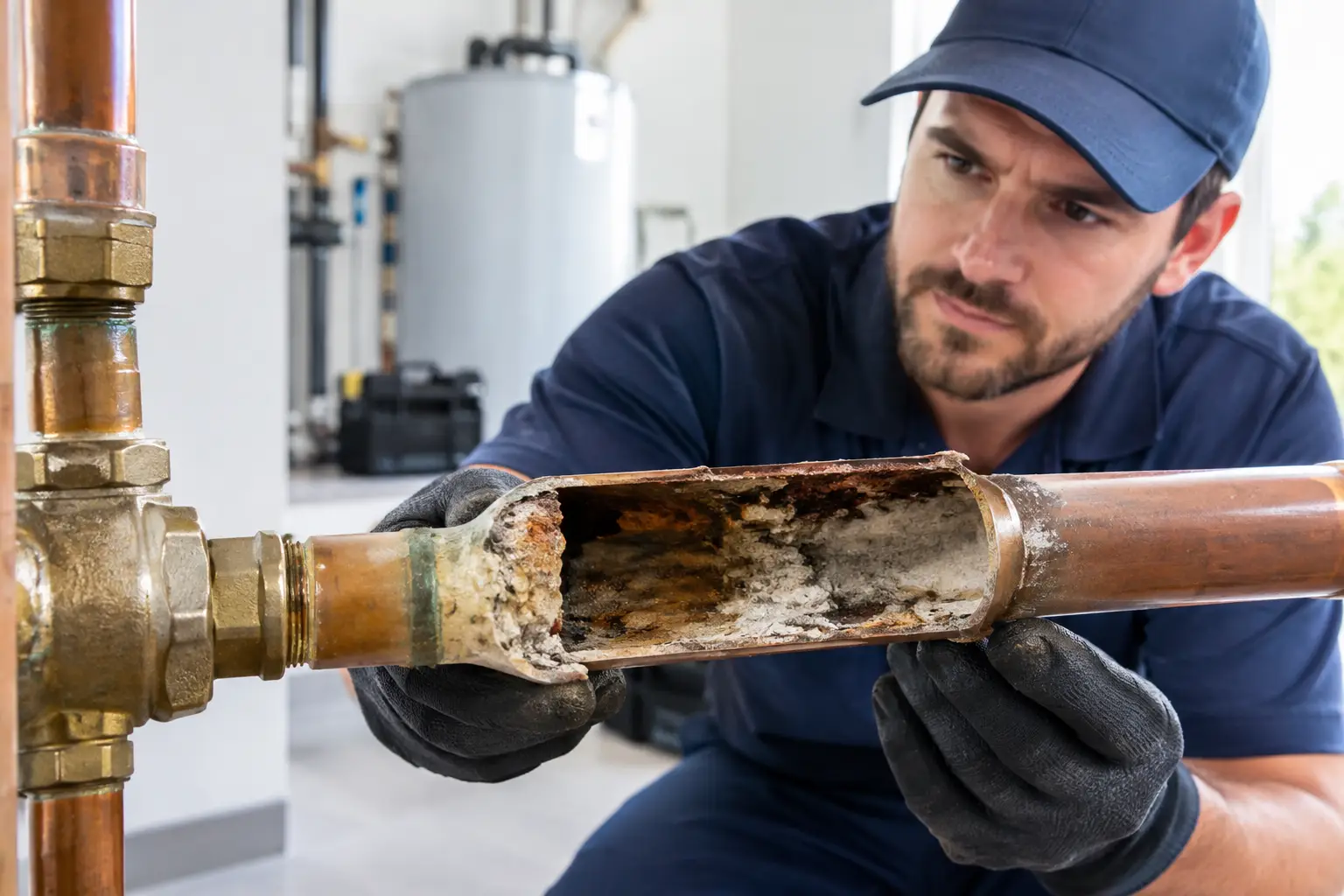
A drain that keeps slowing down after it has been cleared is rarely just having a bad week. For many Northern Virginia homes and commercial buildings with older cast iron drain lines, the question is when should pipes be descaled – not whether another basic drain cleaning will temporarily get water moving again. Scale can narrow a pipe from the inside, snag waste and paper, and turn small drainage issues into recurring backups.
Professional descaling is a targeted service for pipes with internal buildup and corrosion. It is not the right answer for every clog, but it can be the right answer when a sewer camera inspection shows that the pipe walls themselves are causing the problem.
What pipe descaling actually removes
Descaling removes hard, rough buildup from the inside of a drain or sewer line. In older cast iron piping, moisture and age can lead to corrosion that forms thick, flaky deposits. Those deposits are often called scale. They reduce the usable diameter of the pipe and create a jagged surface where toilet paper, wipes, grease, soap residue, and other debris can catch.
A line can still look intact from the outside while being severely restricted on the inside. That is why repeated snaking may restore flow for a while without solving the reason the line keeps clogging. A cable can punch through a blockage. It does not necessarily remove the rough buildup that caused the blockage to form.
Descaling typically uses professional mechanical cleaning equipment, often followed by a camera inspection to verify the condition of the line. Depending on the pipe material, condition, and blockage, hydro jetting may also be part of the recommended solution. The right method depends on what the camera shows.
7 signs pipes should be descaled
1. The same drain or sewer line clogs repeatedly
A recurring clog in the same area is one of the strongest warning signs. If the kitchen drain, basement drain, or main sewer line has been cleared several times but slows down again within weeks or months, there may be more than a simple blockage in the pipe.
Scale creates a surface that holds debris. Until that surface is cleaned, ordinary use can quickly rebuild the restriction. Recurring clogs deserve a diagnosis, not another guess.
2. Multiple fixtures drain slowly at once
One slow sink may be a local drain issue. But when toilets gurgle, tubs drain slowly, or water backs up in a shower while another fixture is running, the problem may be farther down the system. A restricted main drain or sewer line can affect several fixtures at the same time.
This does not automatically mean the pipes need descaling. It could be roots, grease, a damaged section of pipe, or a blockage farther out. A sewer camera inspection separates those possibilities quickly.
3. Your home has older cast iron drain piping
Cast iron drain lines are durable, but age eventually catches up with them. Many older homes in Manassas, Gainesville, Bristow, Haymarket, and surrounding Prince William County communities may have cast iron sections that have developed interior corrosion over decades of use.
If the line is cast iron and you are dealing with repeated drain problems, descaling should be part of the conversation. It can help restore usable pipe diameter when the pipe is structurally sound enough to clean.
4. A drain cleaning provides only short-term relief
A basic drain cleaning is effective for many everyday clogs. Hair, grease, soap buildup, and isolated obstructions can often be removed without more extensive service. The concern starts when the relief does not last.
If a line starts draining normally after service but quickly becomes slow again, the pipe walls may be holding onto debris. In that case, descaling can address the condition that keeps trapping waste inside the line.
5. Toilets flush weakly or need frequent plunging
A toilet that requires repeated plunging is not always a toilet problem. If more than one toilet seems sluggish, or if flushing causes gurgling in a nearby tub or shower, the restriction may be in the branch line or main sewer line.
Scale is especially disruptive because paper can catch on it before it has a chance to move through the system. That pattern often creates frustrating, intermittent clogs that seem to disappear and return without warning.
6. You have frequent backups in lower-level fixtures
Water appearing in a basement shower, floor drain, or lower-level tub when laundry runs or toilets flush is a serious sign of a downstream restriction. The lowest fixture is often where a main-line backup shows up first.
At this point, it is smart to stop treating the issue as a minor drain clog. A camera inspection can show whether buildup, roots, a belly in the line, or pipe damage is behind the backup. If scale is the cause, prompt descaling may help prevent a mess inside the home.
7. A sewer camera shows heavy interior scale
The clearest answer to when pipes should be descaled comes from inside the line. A sewer camera inspection allows a technician to see whether the pipe is narrowed by corrosion and buildup, whether debris is collecting on the walls, and whether the pipe has cracks, offsets, or other damage.
This matters because descaling is not a cure for every sewer problem. If the line is collapsed, badly separated, or significantly damaged, cleaning alone may not be the most responsible recommendation. A camera prevents spending money on the wrong service.
When descaling is better than another drain cleaning
Drain cleaning and pipe descaling serve different purposes. Standard drain cleaning focuses on removing the active blockage so water can flow. Descaling focuses on cleaning the pipe interior where corrosion and buildup have created a long-term collection point for future blockages.
For a first-time clog caused by grease or a single obstruction, routine drain cleaning may be all that is needed. For a repeat problem in an older cast iron line, descaling can offer a more lasting improvement because it removes the material that is reducing the pipe’s effective opening.
There is a trade-off. Descaling is more involved than clearing a simple clog, and it should be performed only after the line’s condition has been evaluated. Aggressive cleaning is not appropriate for every aging pipe. That is why an honest diagnosis comes first.
What to expect from a professional descaling assessment
The process should start with questions about the problem: which fixtures are affected, how often backups occur, whether the issue is new or recurring, and the age of the property. From there, a camera inspection can identify the actual condition inside the drain or sewer line.
If scale is present, the technician can explain how much of the pipe is restricted and whether descaling is a practical option. After cleaning, running the camera again helps verify the results. You should be able to see what was found and understand why a particular solution was recommended.
At Titan Jetters, the goal is not to sell a bigger service than the line needs. It is to identify whether scale, roots, grease, damage, or another issue is causing the problem, then provide a clear path to restored flow.
Don’t wait for a full sewer backup
Pipe scale builds gradually, but the disruption it causes can arrive all at once. A busy morning, a load of laundry, or a weekend gathering can be enough to turn a restricted sewer line into a backup. Restaurants and other businesses can face the same issue when grease and heavy use meet a rough, narrowed drain line.
If your drains are repeatedly slow, toilets are gurgling, or a previous cleaning did not hold, schedule a professional sewer camera inspection before the next backup decides the timing for you. A clear look inside the line gives you the facts needed to make the right call and keep your property flowing properly.
