
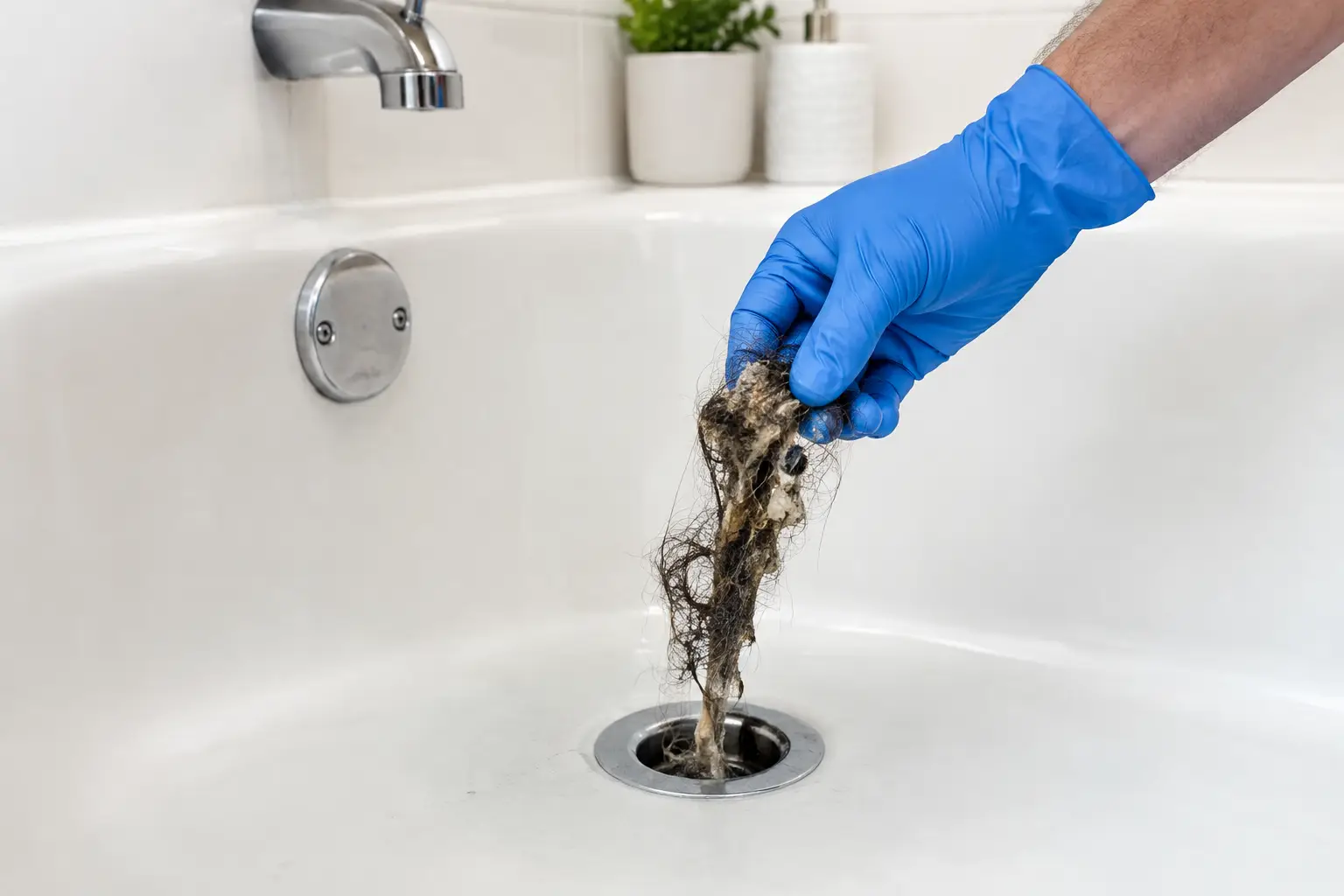
A bathtub that drains slowly can turn a normal morning routine into a frustrating wait. The top causes of bathtub drain clogs are usually close to the surface at first – hair, soap residue, and bath products – but a clog that keeps returning can point to a deeper problem in the drain line. Knowing the difference helps you avoid a messy backup and get the right fix the first time.
Top Causes of Bathtub Drain Clogs
Hair and soap scum
Hair is the most common culprit in a bathtub drain. It does not always create a blockage on its own. Instead, strands catch on the stopper, crossbars, or rough spots inside the pipe, then collect soap scum, skin oils, and lint until water has less and less room to pass.
This is why a tub may start draining slowly long before it stops draining altogether. One long-haired household member can produce enough buildup to affect the drain, but short hair, pet hair, and normal bathing debris can create the same problem over time.
Soap makes the blockage denser. Traditional bar soaps can leave behind a sticky film that grabs hair and holds it in place. In homes with hard water, mineral deposits can combine with that film and make the inside of the pipe even narrower.
Bath products, oils, and heavy residue
Bath bombs, bath oils, body scrubs, thick conditioners, and shaving products can leave more behind than most homeowners realize. Oils can coat the drain line. Granules from scrubs may settle in low spots. Wax-like or heavy product residue can bind with hair and create a stubborn mass near the tub trap.
A single use usually will not cause a major backup. The issue is repeated buildup. If the tub drains poorly after baths but seems to improve temporarily, residue may be accumulating just beyond the drain opening.
Mineral scale in older plumbing
Northern Virginia homes can have a mix of plumbing materials, and older lines may develop interior buildup that is not visible from the bathroom. Mineral scale can form over time, particularly in aging metal pipes. The rougher pipe surface catches hair and soap more easily, so a small amount of debris becomes a recurring clog.
This is one reason repeated snaking is not always a complete answer. A cable may punch a path through the buildup, but it does not necessarily remove the scale or clean the full diameter of the pipe. When the line itself is narrowed, the right professional method depends on the pipe material, the extent of buildup, and what a proper inspection shows.
A clogged or corroded drain stopper assembly
Sometimes the blockage is right at the top of the drain. Pop-up stoppers, toe-touch stoppers, and older linkage assemblies collect hair, soap, and debris around parts that homeowners cannot fully see. Corrosion can also cause older components to move poorly or restrict flow.
If water pools quickly and the issue appears limited to one bathtub, the stopper area is a likely place to investigate. But visible debris does not rule out a deeper blockage. It is common to find buildup at the stopper and further down the line at the same time.
Small objects and bathroom debris
Children’s toys, razor caps, pieces of broken bottles, washcloth fibers, and other small items can enter a tub drain. These objects may lodge at a bend in the piping, where they catch hair and turn a minor obstruction into a full blockage.
This type of problem can be deceptive. The tub might drain slowly for weeks, then suddenly stop after one more shower sends enough hair into the line. If the clog appeared abruptly after an item went missing, a professional drain evaluation is the safer choice than forcing chemicals or tools into the pipe.
When a Bathtub Clog May Be a Bigger Drain Problem
A clog isolated to one bathtub is often in that fixture’s drain or trap. Still, certain warning signs suggest the issue may extend farther into a branch line or the main sewer line.
Pay attention if more than one fixture is draining slowly, if the toilet bubbles when the tub drains, or if water backs up into the tub when another fixture is used. Those symptoms can indicate a shared drain blockage rather than a simple bathtub clog. They deserve prompt attention because wastewater can back up into the lowest fixture in the home.
Recurring clogs are another red flag. If the bathtub has been cleared several times and slows down again soon afterward, the original work may have opened only a small channel through the blockage. There could be heavy buildup farther down the line, pipe scale, a damaged section of pipe, or a main sewer issue that needs to be diagnosed rather than guessed at.
For landlords and property managers, this distinction matters even more. A slow-draining tub can be a tenant inconvenience one day and an after-hours backup the next. Documenting the actual condition of the line can help determine whether the problem is routine maintenance, a fixture-level blockage, or a larger repair concern.
Why Chemical Drain Cleaners Can Make Things Worse
Store-bought chemical cleaners are tempting when water is standing in the tub, but they are not a reliable solution for a heavy hair clog or recurring blockage. They may fail to reach the full clog, especially when standing water dilutes the product. Even when they create temporary flow, the remaining hair and residue can quickly catch more debris.
Harsh chemicals can also create a safety issue for anyone working on the drain later. They may be hard on certain older pipes and fixtures, and they do not tell you why the drain clogged in the first place. Pouring in more product after the first attempt fails often adds risk without solving the problem.
A professional drain cleaning approach starts with the location and type of blockage. That matters because a tub drain, a shared bathroom line, and a main sewer line require different equipment and different decisions.
How Professionals Find the Real Cause
Effective drain service is not just about getting water moving for the moment. It is about determining what is inside the line and choosing a method that clears it without unnecessary work.
For a localized bathtub clog, professional drain cleaning can remove hair, soap buildup, and obstructions from the fixture drain. When recurring problems point farther down the line, a sewer camera inspection can show whether buildup, scale, pipe damage, or another obstruction is limiting flow. That visual confirmation helps avoid treating every slow drain like the same problem.
In lines with heavy grease, sludge, or buildup, hydro jetting may be appropriate. In older cast iron drain lines affected by internal scale, pipe descaling or flex-shaft cleaning may provide a more thorough result than repeatedly opening a small hole through the blockage. The correct option depends on the pipe and the diagnosis – not a one-size-fits-all recommendation.
That is the value of working with a drain and sewer specialist. Titan Jetters focuses on finding the source of recurring drainage trouble, explaining what is happening inside the line, and verifying that flow has been restored.
When to Call for Bathtub Drain Cleaning
Call for professional help when the tub is holding water, the clog returns after a short time, multiple fixtures are affected, or you notice gurgling and backups. These are not problems to wait out, especially if wastewater is appearing in the bathtub.
Homeowners in Gainesville, Bristow, Haymarket, Manassas, and nearby Prince William County communities can benefit from fast diagnosis before a slow drain becomes a bathroom backup. A clear explanation of the cause gives you a better basis for deciding what needs to be cleaned, inspected, or repaired.
A bathtub should empty without turning every shower into a test of patience. If yours is slow, recurring, or backing up, addressing the cause now can protect your bathroom, your schedule, and the rest of your home’s drainage system.
