
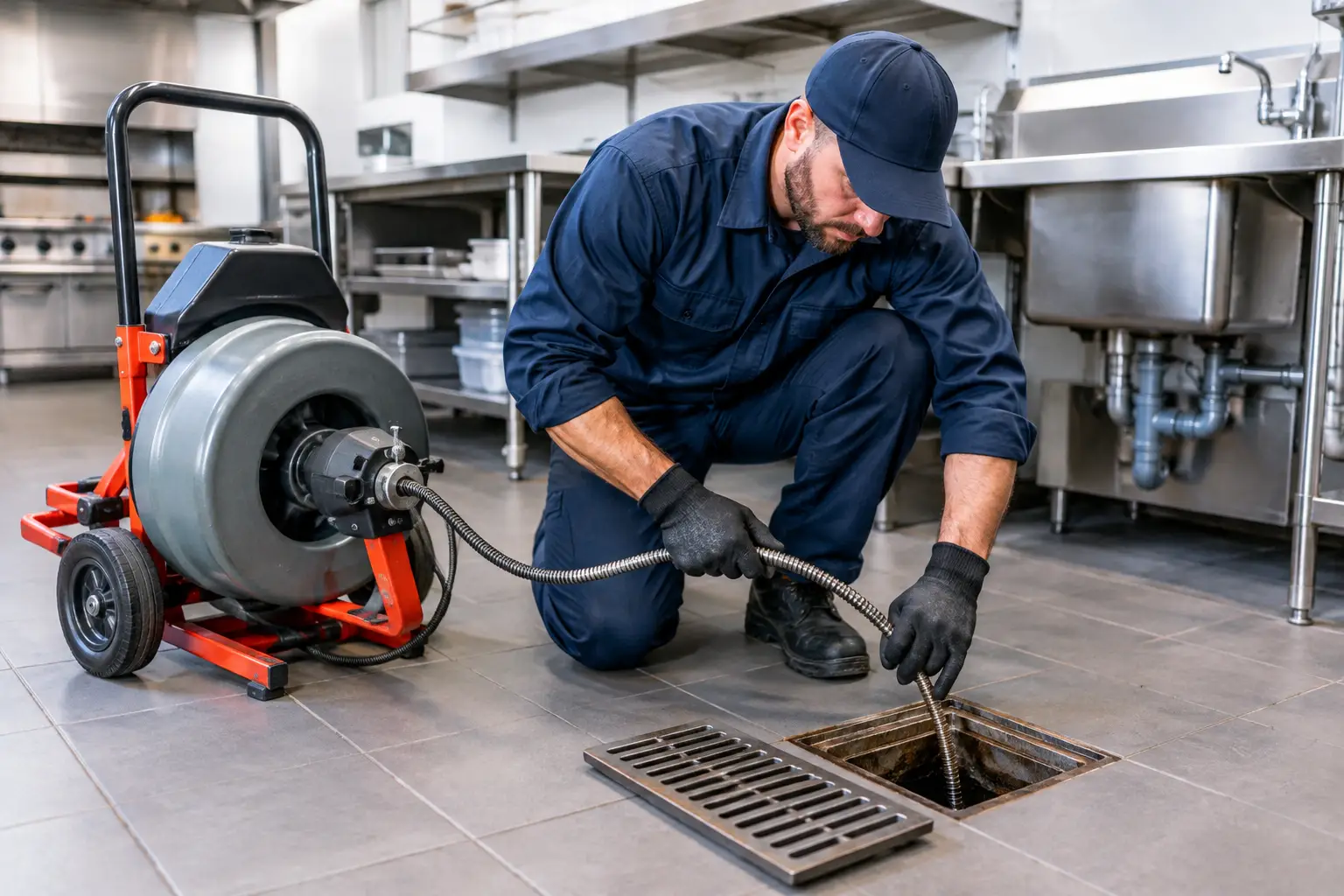
A busy kitchen floor drain that starts holding water, a restroom sink that gurgles between flushes, or a sour sewer smell near the mop sink can become a business interruption fast. The top commercial drain warning signs are easy to dismiss when the building is busy, but waiting can turn a manageable cleaning job into a backup, sanitation issue, or lost operating time.
Commercial drain systems handle a much heavier workload than a typical home. Restaurants deal with grease and food debris. Offices, retail spaces, and multi-unit properties see constant restroom use. Older buildings in Gainesville, Bristow, Haymarket, and Manassas may also have scale buildup, aging pipe materials, or root intrusion affecting the main sewer line. The right response depends on what is happening inside the pipe, which is why a professional diagnosis matters.
Top Commercial Drain Warning Signs That Need Attention
Slow drains in more than one area
One slow sink can be a localized issue. When several fixtures drain slowly at the same time, the concern is larger. A restroom sink, toilet, floor drain, or breakroom sink may all connect to a shared branch line or the main sewer line. As buildup closes the pipe, water has less room to move and drainage gets slower.
This is especially common in high-use restrooms, commercial kitchens, and older properties with cast iron piping. Cast iron can develop internal scale over time, creating a rough surface that catches waste and reduces the usable diameter of the line. Clearing the opening without addressing heavy scale may provide temporary relief, but recurring problems are likely.
A sewer camera inspection shows whether the issue is grease, scale, roots, a damaged pipe, or a blockage farther down the line. That information helps determine whether drain cleaning, hydro jetting, flex-shaft cleaning, or a repair is the responsible next step.
Recurring clogs after plunging or basic clearing
A clog that keeps returning is not normal. It usually means the blockage was opened just enough for water to pass, while the material causing the restriction remained in the pipe. In a restaurant, grease buildup can quickly trap food particles and create another blockage. In a commercial restroom, paper products, hygiene items, or accumulated debris can catch on scale or a damaged section of pipe.
Repeated clogs can also point to a line with poor flow because of a bellied section, root intrusion, pipe separation, or a partially collapsed sewer line. More force is not automatically the answer. The line needs to be inspected so the cleaning method matches the condition of the pipe.
Gurgling drains and toilets
Gurgling is a warning that air is being displaced incorrectly as water moves through the drainage system. You may hear it in a toilet after a sink drains, from a floor drain when equipment discharges water, or in a restroom during busy periods.
Sometimes gurgling is related to a venting issue, but it can also happen when a partial blockage restricts the line. Water and air compete for space in the pipe, creating the bubbling or glugging sound. If the noise is new, happens repeatedly, or comes with slow drainage, it is time to have the system checked before wastewater starts coming back up.
Foul odors near drains or utility areas
A sewer odor inside a business is more than an unpleasant customer experience. It can signal standing waste in a blocked line, a dry floor drain trap, a compromised connection, or a sewer backup developing below the surface.
Floor drains deserve special attention because they are often out of sight until there is a problem. In kitchens, mechanical rooms, restrooms, and janitorial areas, they can collect grease, sediment, soap residue, and debris. If a floor drain smells bad, drains slowly, or leaves water sitting around the grate, schedule service before the drain becomes an overflow point.
Odors can have different causes, so a clear diagnosis matters. Cleaning may resolve buildup. A camera inspection may reveal a damaged line or an issue farther along the sewer system. Guessing wastes time when customers, staff, and tenants are affected.
Water backing up from floor drains or low fixtures
This is one of the most urgent commercial drain warning signs. When wastewater rises through a floor drain, toilet, shower, or other low fixture, there is usually a significant restriction downstream. The system cannot carry water away, so it finds the lowest available exit.
Do not keep running water or sending wastewater into the system to see if it clears. Limit water use in the affected area and call for professional drain and sewer service. A backup can spread quickly, damage flooring and inventory, create cleanup issues, and force part of your operation to shut down.
Frequent toilet overflows or weak flushing
A toilet that overflows once may have a fixture-level clog. Several toilets that flush weakly, bubble, or overflow at different times point toward a shared line issue. The same applies when a toilet causes nearby drains to gurgle or back up.
For property managers and business owners, this is a situation where the pattern matters. Note which fixtures are affected, when the problem occurs, and whether the issue worsens during peak traffic. Those details help a drain specialist narrow down whether the restriction is in a branch line or the main sewer.
Grease-related trouble in commercial kitchens
Grease does not stay liquid once it moves through a drain line. As it cools, it sticks to pipe walls and catches food waste, soap, and other debris. Over time, the opening gets smaller until a sink drains slowly, a floor drain holds water, or the kitchen experiences a backup during service.
A grease-heavy line may need more than a cable through the center of the clog. Hydro jetting uses controlled high-pressure water to clear buildup from the pipe walls, while a camera can verify the condition and flow path afterward. The best method depends on the pipe material, the severity of buildup, and whether the line has damage that requires a different approach.
Unexplained wet spots or sewage outside
A wet patch near the building, a soft area in landscaping, or sewage odor outdoors can indicate a sewer line problem. Roots may have entered through a joint or crack. A line may have shifted, separated, or deteriorated. In some cases, a buried blockage is forcing wastewater toward an opening underground.
This is not a problem to watch for a few more weeks. A camera inspection can locate the issue and provide a clearer picture of whether cleaning can restore flow or whether a repair should be considered. Early action can reduce the chance of a more disruptive failure.
Why Commercial Drain Problems Get Worse Quickly
Commercial properties put more volume through their plumbing systems, often within a short window. A restaurant may send dishwater, grease, and food residue through the kitchen line during a rush. An office building may see dozens of flushes in a short period. A retail location cannot afford a restroom closure during its busiest hours.
That volume turns a partial obstruction into a full blockage faster than many owners expect. It also means a small warning sign can affect customers, employees, tenants, inventory, and daily operations. Waiting may feel convenient, but it often leaves fewer options and more cleanup.
The Right Fix Starts With the Cause
There is no one-size-fits-all commercial drain service. Cabling can be effective for certain obstructions. Flex-shaft cleaning can remove tough scale and buildup in appropriate lines. Hydro jetting is often a strong option for grease, sludge, and debris when the pipe condition supports it. A sewer camera inspection provides the proof needed to make that call.
The trade-off is straightforward: clearing a blockage quickly may restore use, but a recurring issue needs a deeper look. If a line has roots, heavy scale, broken sections, or poor grade, cleaning alone may not solve the underlying problem. A qualified technician should explain what the camera shows, what options make sense, and what work is actually necessary.
Titan Jetters helps Northern Virginia businesses identify what is causing the drain problem, not just push the immediate clog farther down the line. From commercial drain cleaning and hydro jetting to camera inspections and sewer diagnostics, the goal is restored flow with a clear explanation of what was found.
If your business is seeing slow drains, odors, repeat clogs, or early backup symptoms, act before the next busy shift turns the warning into an emergency. A prompt inspection can protect your property, your schedule, and the people who rely on your facility every day.
