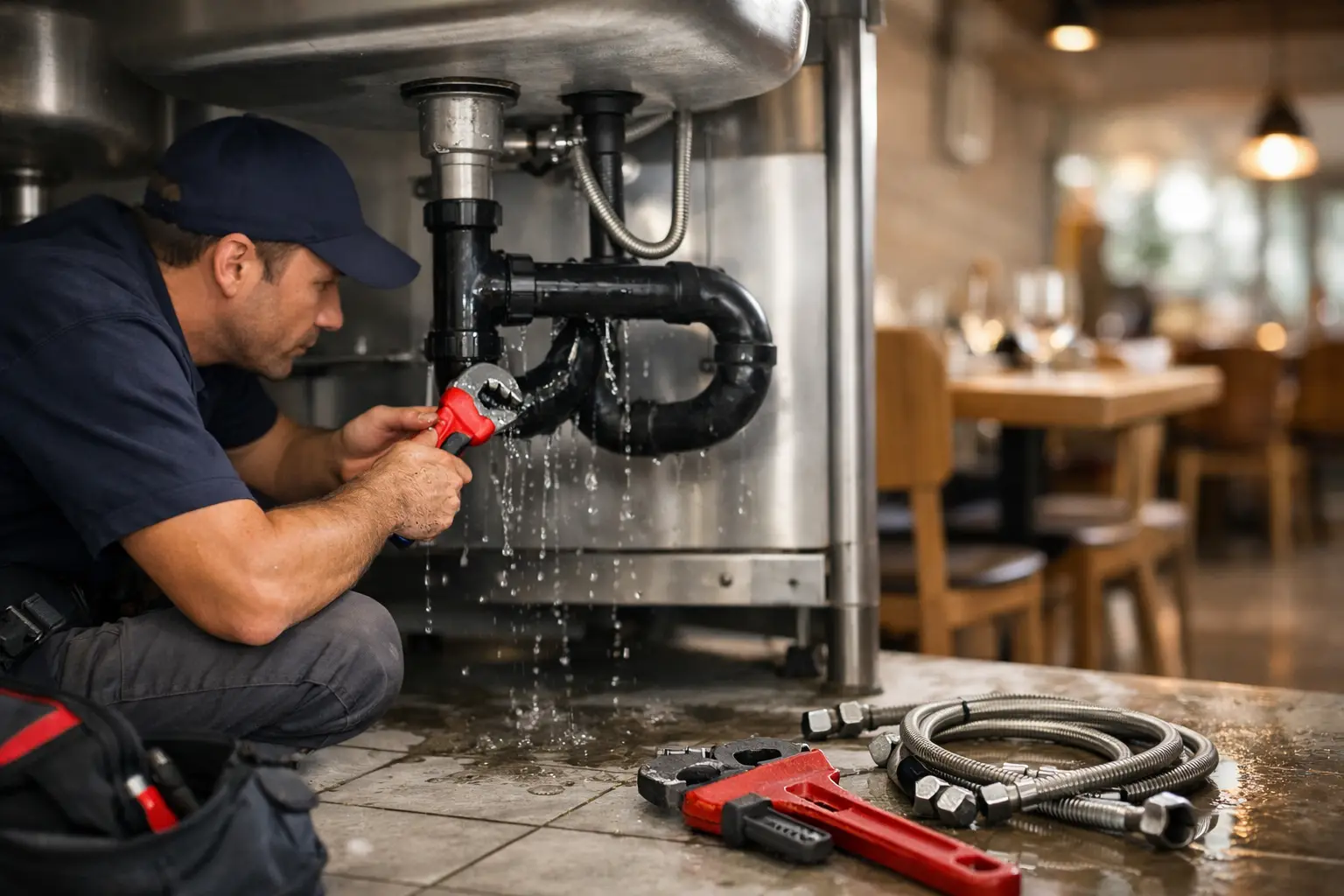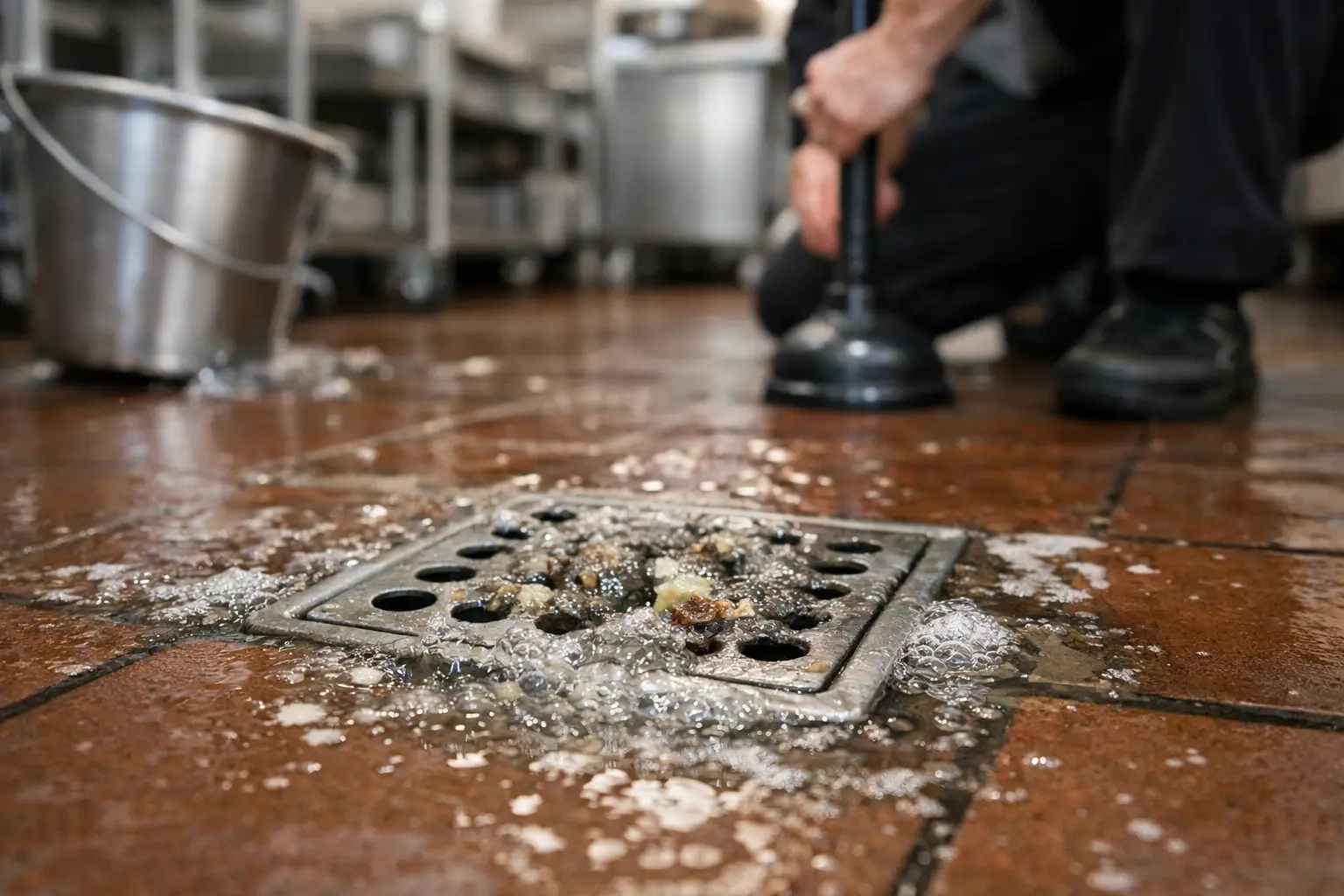
A busy kitchen can go from full service to full stop in minutes when a floor drain backs up behind the line. It usually starts small – slower sink drainage, a sour smell near the mop sink, water pooling where it should not. Then the dish pit stalls, staff starts working around the problem, and a plumbing issue turns into lost time, health concerns, and frustrated customers.
That is why commercial drain cleaning for restaurants is not just a maintenance item. It is part of keeping service moving, protecting the kitchen, and avoiding the kind of disruption that hits during the worst possible hour.
Why restaurant drains fail faster than other commercial systems
Restaurant plumbing deals with a different kind of load than most buildings. Grease, food solids, starches, soap residue, and heat all move through the system every day. Even when staff is careful, that combination builds up inside drain lines over time.
Kitchen sink lines often collect grease along the pipe walls. Floor drains take on everything from mop water to food scraps and sediment. In older buildings, cast iron lines can also develop heavy scale, which narrows the pipe and gives debris more surface to stick to. Once that starts, clogs tend to come back faster and more often.
We see this pattern a lot in older restaurant spaces around Northern Virginia, especially where a new tenant takes over a kitchen with existing plumbing. The drains may still be working, but not at full carrying capacity. That is when recurring slow drains, odors, and surprise backups start showing up.
What commercial drain cleaning for restaurants should actually include
Not every drain problem needs the same approach. A basic clog is one thing. A grease-heavy kitchen line with years of buildup is another. Good commercial drain cleaning for restaurants starts with understanding what is in the line, how far the problem goes, and whether the pipe itself is still in serviceable condition.
Hydro jetting for grease and sludge buildup
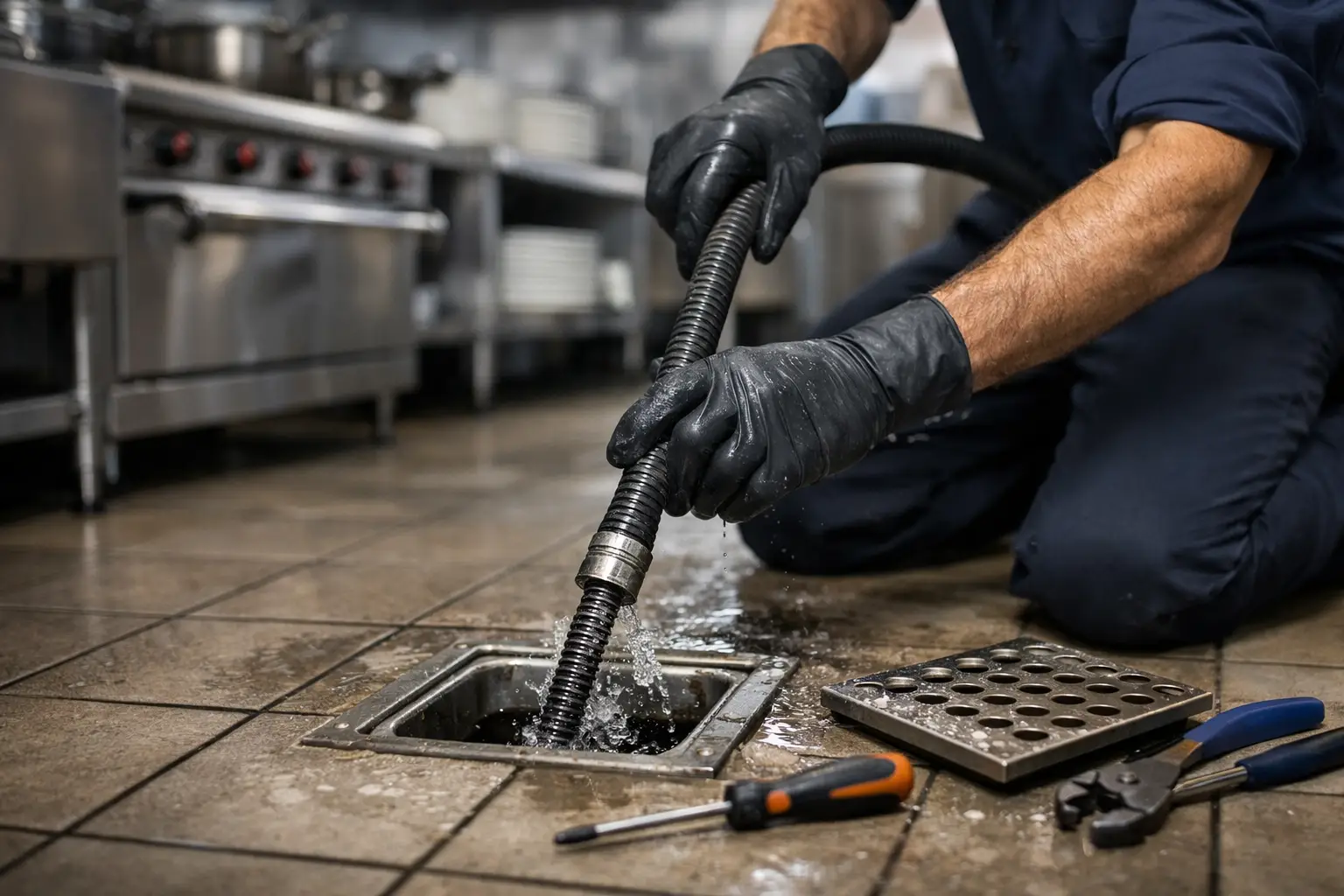
Hydro jetting uses high-pressure water to clear the full inside diameter of the pipe. For restaurant lines, that matters. Punching a hole through a clog may get the sink draining again for the night, but it does not remove the grease coating the walls. Jetting is designed to cut through that buildup and flush it out of the line.
This is often the right fit for kitchen branch lines, main drain lines, and floor drain connections that have collected heavy organic waste. It can restore flow in a way that lasts longer because it addresses the material lining the pipe, not just the blockage point.
That said, jetting is not a one-size-fits-all answer. Pipe condition matters. If a line is badly damaged, offset, or near failure, the safer move may be to inspect first and clean with the right level of force for that pipe.
Descaling for older cast iron drains
In older restaurant buildings, especially in parts of Manassas and other established commercial corridors, cast iron drain lines can build up thick internal scale. This is different from grease alone. Scale hardens on the pipe wall, reduces flow, and catches debris continuously.
Descaling with professional equipment can break that material loose and reopen the line. In many cases, this makes a dramatic difference in drainage speed and helps reduce repeat stoppages. It also gives a clearer picture of the pipe once the buildup is removed.
Camera inspection for verified results
A sewer camera inspection is one of the most useful tools in restaurant drain work because it removes the guesswork. It helps confirm whether the issue is grease, scale, a sag, root intrusion, or a broken section of line. It also verifies that the cleaning actually solved the problem.
For operators, that matters. If you are managing a restaurant, you do not want vague answers. You want to know what caused the backup, whether the line is clear, and whether there is a bigger issue that could affect operations later.
The warning signs restaurant owners should not ignore
Most major drain failures give some warning before they turn into a shutdown. The trouble is that restaurant staff often work around the issue until it becomes urgent.
If a three-compartment sink drains slowly at the end of every shift, that is not normal wear. If floor drains gurgle when nearby sinks empty, that may point to a restricted branch or main line. If odors are hanging around the dish area or prep sinks, buildup inside the drain may already be significant.
Intermittent backups are another red flag. A line that clogs, gets opened, and clogs again usually has more material left in the pipe than a simple snaking cleared. In a restaurant, repeat drain problems are rarely random. They usually mean the system needs a more thorough cleaning and a closer look at pipe condition.
Why fast response matters in food service
A drain issue in a home is disruptive. In a restaurant, it can stop revenue. That is the difference.
When kitchen drains are down, staff productivity drops immediately. Sanitation risk goes up. The dining room may still look fine, but the back-of-house operation starts getting strained fast. If wastewater backs up near food prep or warewashing areas, the problem can escalate beyond inconvenience.
That is why response time matters so much for restaurants in places like Gainesville, Haymarket, and throughout Prince William County. You need a contractor who shows up ready to diagnose the issue, explain it clearly, and do the work cleanly. In a commercial kitchen, there is no room for a long guessing game.
Preventive service is usually cheaper than emergency downtime
The hardest part about drain maintenance is that when things are flowing, it is easy to push it off. But restaurant lines do not clean themselves. Every week of normal use adds more buildup, especially in high-volume kitchens.
For many restaurants, scheduled drain cleaning makes more sense than waiting for a backup. The right interval depends on the menu, volume, age of the plumbing, and history of grease-related stoppages. A small cafe and a high-output fried food kitchen will not need the same maintenance plan.
That is where experience matters. A contractor who works on restaurant drains regularly can spot patterns and recommend a practical schedule based on what the line is actually doing, not a generic timeline. Sometimes the answer is periodic jetting of kitchen lines. Sometimes it is adding camera verification after repeated trouble in the same section. It depends on the system and how the business uses it.
What a clean, professional job looks like
Restaurant operators are not just hiring for technical ability. They are hiring for reliability, communication, and respect for the space.
A professional drain cleaning visit should be organized and efficient. The tech should explain what is happening in plain language, protect the work area, and leave the kitchen cleaner than they found it. If a camera inspection is part of the job, the findings should be clear and useful, not buried in jargon.
That is especially important for local businesses that cannot afford repeated disruption. At Titan Jetters, that means using the right equipment for the condition of the line, verifying results when needed, and focusing on long-term flow instead of a temporary patch.
Choosing the right partner for commercial drain cleaning for restaurants
Restaurants need more than a company that can respond to a clog. They need a drain specialist who understands grease-heavy systems, older commercial piping, and the pressure of keeping a kitchen operational.
Look for a company that handles hydro jetting, descaling, and camera diagnostics as part of the same conversation. Those services work best together. Cleaning clears the line. Inspection confirms the cause and the result. If there is a structural issue, you find that out before the next dinner rush forces the problem back to the surface.
It also helps to work with a local team that knows the mix of older and newer commercial plumbing found across Northern Virginia. A restaurant in a newer retail center may have very different drain issues than one operating in an older standalone building. Experience with both makes a difference.
If your kitchen drains are slowing down, backing up, or giving off odors, do not wait for a full stoppage to force the decision. Getting ahead of the problem protects your staff, your schedule, and your business reputation. If you need fast, verified help, contact us today or book service at https://www.titanjetters.com.