
A leak rarely starts with water pouring through a ceiling. More often, it starts with a water bill that creeps up, a cabinet floor that feels damp, or a patch of drywall that looks slightly darker than it did last week. This plumbing leak detection guide explains what those early warnings can mean, when the situation needs fast attention, and how a professional diagnosis finds the real source without guesswork.
For homeowners, landlords, and business owners, catching a leak early can mean the difference between a targeted repair and extensive damage to floors, walls, fixtures, or tenant spaces. The key is knowing which signs point to a plumbing problem and which ones need a closer look.
The warning signs that deserve attention
Not every plumbing leak is visible. Water can travel along framing, behind walls, under slab floors, or through a ceiling before it shows up where you can see it. That is why the location of a stain is not always the location of the leak.
A sudden increase in your water bill is one of the clearest signals. If household water use has not changed but your bill has, water may be running somewhere it should not. A toilet that continues to run can cause this, but so can a hidden supply-line leak, a damaged pipe, or an underground service-line problem.
Pay attention to the sound of water as well. Hissing, dripping, or the faint sound of water moving when no faucet, appliance, or fixture is in use is worth investigating. The same goes for reduced water pressure at one fixture or throughout the property. A pressure change does not automatically mean a leak, but it can be part of the picture.
Visible clues matter too. Watch for discoloration on ceilings or walls, bubbling paint, peeling wallpaper, warped flooring, mildew odors, or soft spots near tubs, toilets, sinks, and water heaters. In commercial properties, damp areas around restrooms, kitchens, mechanical rooms, or utility closets should be addressed before they disrupt operations or damage finished spaces.
Outside, unexplained wet ground, unusually green patches of grass, pooling near the foundation, or water appearing around the meter can point to a buried line issue. In Northern Virginia, freezing temperatures and shifting ground can add stress to older piping and connections, especially where a small weakness already exists.
A plumbing leak detection guide starts with the water meter
Your water meter can provide useful information without requiring you to take anything apart. First, make sure water is not being used inside or outside the property. Do not run faucets, flush toilets, operate a washing machine, or use irrigation during the check.
Look at the meter’s low-flow indicator, if it has one, or note the meter reading. If the indicator continues moving or the reading changes after a period with no water use, water may be escaping somewhere on the property. That result does not identify the exact source, but it gives you a strong reason to schedule professional leak detection.
There are limits to this check. A meter test will not tell you whether the issue is under a slab, behind a wall, near a fixture, or outside in the service line. It also cannot rule out every intermittent leak. A toilet may leak only after a flush, for example, or a connection may drip only when water pressure rises. Think of the meter as an early warning tool, not a final diagnosis.
Visible fixture leaks versus hidden pipe leaks
Some leaks are straightforward. Water collecting under a sink, around a toilet base, beneath a water heater, or at an exposed valve needs prompt attention. Even a slow drip can damage cabinets, flooring, and subfloor materials over time.
Other leaks are harder to pin down. A ceiling stain below an upstairs bathroom might be caused by a supply pipe, a drain connection, a toilet seal, a shower leak, or water escaping around the fixture. These problems can look similar from the outside, which is why replacing a visible part without diagnosing the source can waste time and money.
Drain leaks and water supply leaks behave differently. Supply lines are pressurized, so they can leak continuously even when no fixture is in use. Drain lines usually leak when a sink, shower, appliance, or toilet is draining. A qualified plumber can use those patterns, along with the location of damage and testing, to narrow down the cause.
If you have a recurring clog, backup, sewer odor, or slow drain along with damp areas or damaged flooring, the issue may involve more than a simple leak. A damaged or offset drain line, corroded pipe, or sewer line problem may require a camera inspection to see what is happening inside the line.
When a sewer camera inspection makes sense
A sewer camera inspection is not needed for every plumbing leak. It is most valuable when the problem appears connected to a drain or sewer line, especially if there are repeat backups, multiple slow drains, foul odors, or unexplained moisture near plumbing fixtures.
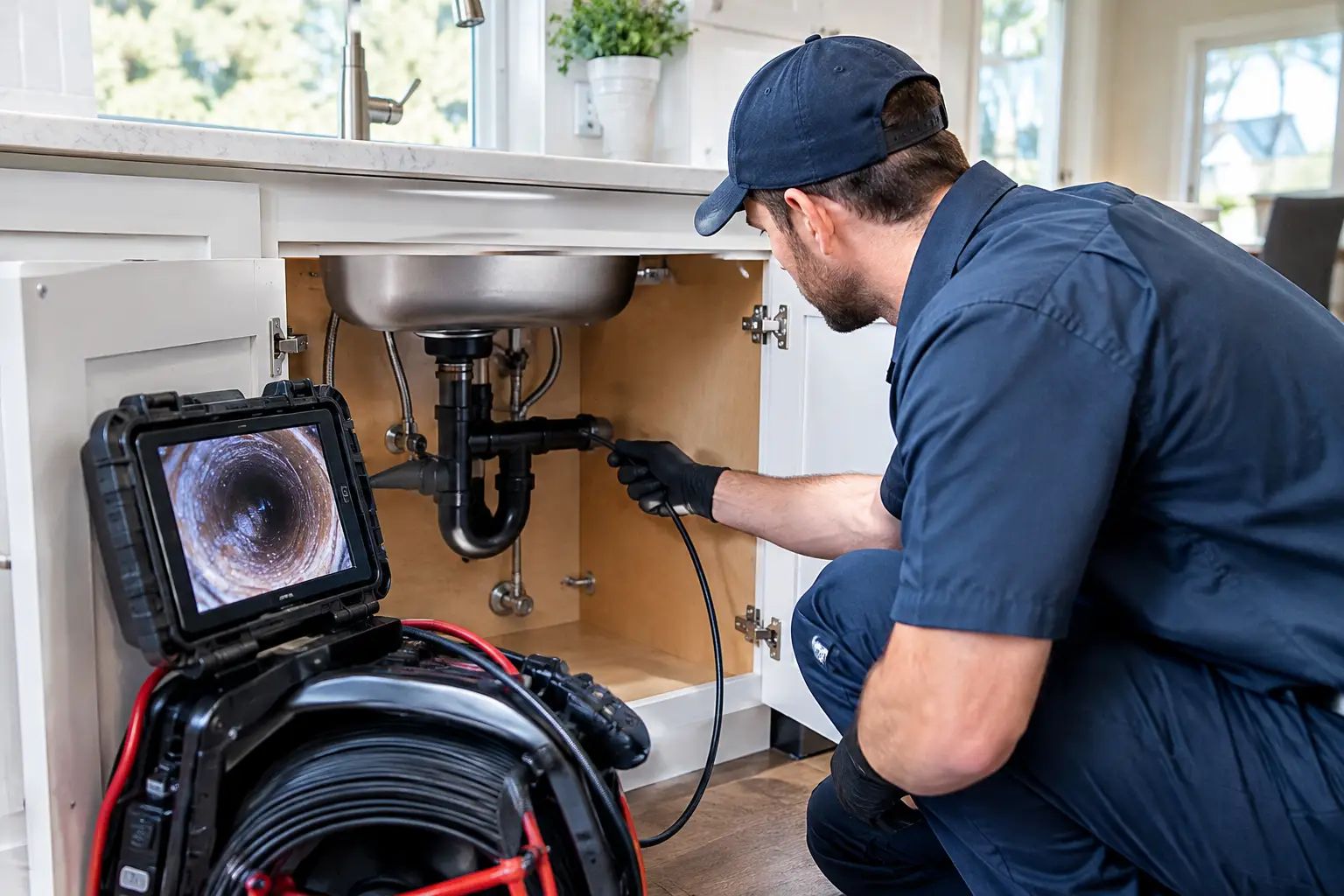
The camera allows a technician to inspect the inside of the pipe instead of making assumptions based on surface symptoms. It can help identify cracks, separated joints, root intrusion, heavy buildup, pipe corrosion, or a line that is holding water because of a belly or poor slope.
For older properties with cast-iron drain lines, corrosion and scale can narrow the inside of the pipe and hide developing trouble. In those cases, pipe descaling or professional drain cleaning may be part of the solution, but only after the condition of the line is confirmed. Cleaning a damaged pipe without understanding its condition is not the same as solving the problem.
This is where accurate diagnostics save customers from unnecessary work. The right solution depends on what is actually inside the line, where the defect is located, and whether the pipe can be cleaned, repaired, or needs a more involved plan.
What to do when you suspect a leak
Start by protecting the property and limiting water exposure. Move belongings away from wet areas when it is safe to do so, and avoid using the fixture or appliance connected to the suspected leak. If water is actively flowing, shut off the nearest fixture valve if you know it is functioning properly. For a major active leak, use the main water shutoff if necessary and call for emergency plumbing service.
Do not ignore water near electrical outlets, panels, or appliances. Keep clear of the area and get professional help right away. Water damage can spread quickly, and the visible wet spot may be smaller than the affected area behind the wall or ceiling.
Take note of what you have observed: when the issue started, whether it happens only when a certain fixture is used, where stains or moisture appear, and whether you have noticed changes in water pressure or your bill. Those details help the technician diagnose the issue faster.
Avoid treating a hidden leak as a cosmetic problem. Painting over a stain or placing a bucket under a drip may hide the symptom, but water can continue damaging materials behind the surface. Fast action is usually the lower-cost decision.
Why professional leak detection is worth it
Leak detection is about finding the source before deciding on the repair. A good diagnosis considers the plumbing layout, water use patterns, pressure, fixture condition, drainage behavior, and the location of visible damage. For drain and sewer concerns, camera diagnostics can provide direct evidence of what is happening inside the pipe.
That process matters because the least expensive-looking fix is not always the best value. Replacing a faucet part will not solve a broken pipe in a wall. Clearing a drain may restore flow temporarily, but it will not correct a cracked sewer line or severe internal scale. The right repair begins with proof, not a guess.
For property managers and business owners, quick diagnosis also reduces downtime. A leak in a restroom, kitchen, utility room, or tenant area can interrupt normal operations and create a larger cleanup issue if it is left unresolved. Clear findings and practical options make it easier to act quickly.
Get a clear answer before damage spreads
If you see a new water stain, smell persistent mildew, hear water when everything is off, or notice a bill that does not match your usage, do not wait for a small problem to announce itself in a bigger way. Titan Jetters provides straightforward plumbing diagnostics, leak repair, drain service, and sewer camera inspections for homeowners and businesses in Gainesville, Bristow, Haymarket, Manassas, and nearby Northern Virginia communities.
A clear diagnosis gives you the next right step – whether that means repairing a leak, inspecting a drain line, cleaning buildup, or addressing a sewer issue before it turns into a backup. Contact a local professional when the signs first appear, and you can protect your property with facts instead of guesswork.
