
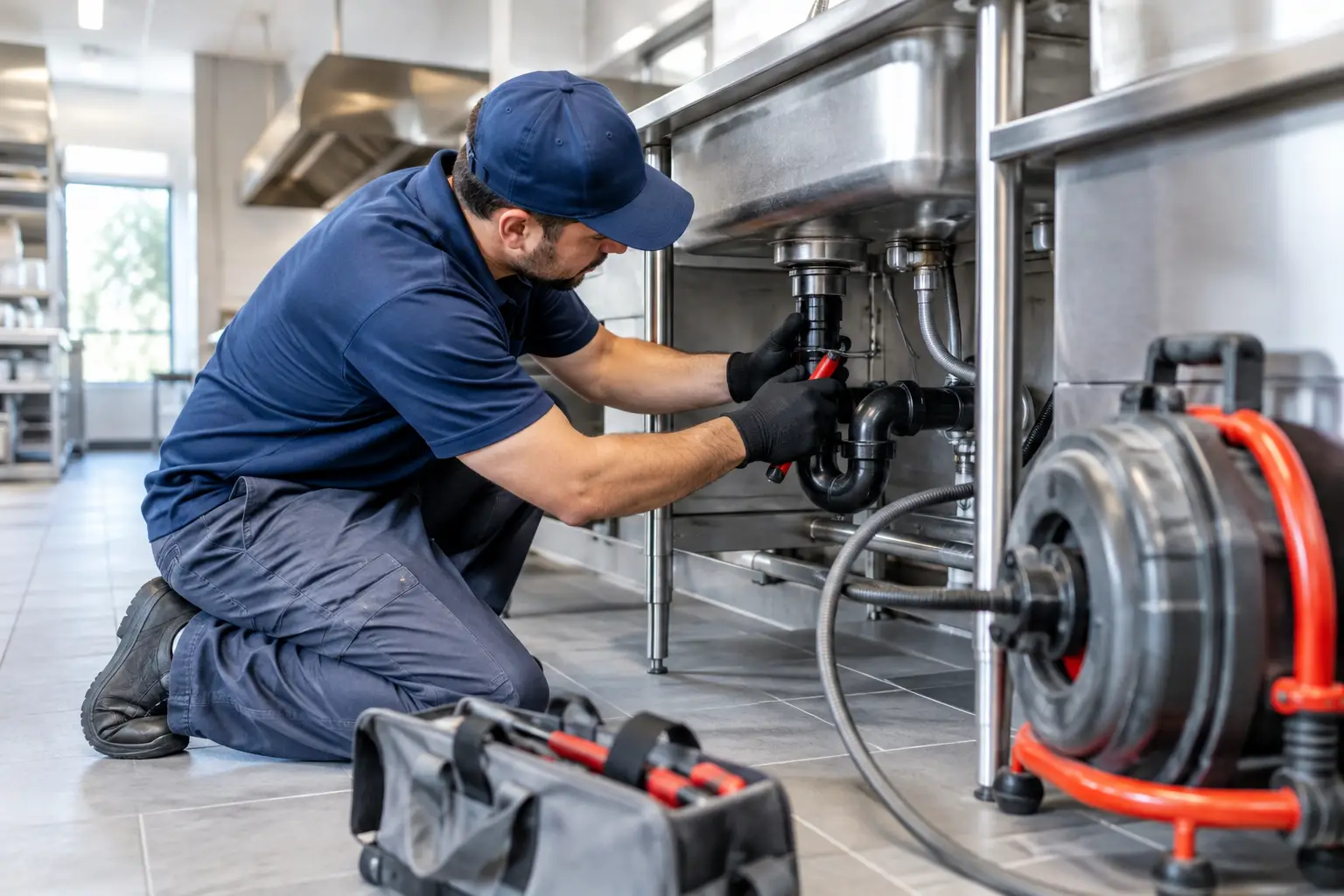
A slow floor drain, a backed-up restroom, or a kitchen sink that will not clear can interrupt business fast. Commercial plumbing is not just about fixing a fixture – it is about protecting your staff, customers, property, and operating hours when water or sewer problems get in the way.
For restaurants, retail spaces, offices, rental properties, and other commercial buildings, plumbing systems work harder than most people realize. Higher daily traffic, grease, paper products, mineral buildup, and aging piping can turn a minor drainage issue into a messy shutdown. The right response starts with finding the actual cause, not simply clearing the symptom.
What Commercial Plumbing Covers
Commercial plumbing includes the water, drain, sewer, and fixture systems that keep a business functional. Depending on the property, that may mean restroom toilets and sinks, employee break rooms, commercial kitchen drains, floor drains, water heaters, supply lines, grease-heavy waste lines, or the main sewer connection leaving the building.
The work can range from a straightforward leak repair to diagnosing a recurring main line backup. What makes a commercial issue different is the impact. A clogged sink at home is frustrating. A clogged restroom or kitchen line at a business can affect customers, create sanitation concerns, delay employees, and cost revenue.
That is why commercial properties need a plumbing company that can respond promptly, communicate clearly, and recommend work based on what the line actually needs. A quick clear may be appropriate for some clogs. In other cases, recurring trouble points to grease accumulation, scale inside older pipes, roots, damaged pipe, or a blockage farther down the sewer line.
Why Drains Fail in Commercial Buildings
Most drain problems build over time. Water may still go down the pipe, just more slowly each week. Then a busy lunch rush, a heavy restroom day, or a large volume of wastewater pushes the line past its limit.
In restaurants and food-service spaces, grease is a common culprit. Grease may leave the sink hot and liquid, but it cools as it moves through the line. It sticks to pipe walls, catches food debris, and gradually reduces the opening inside the drain. A basic cable can punch through a portion of the blockage, but it may not remove the buildup coating the pipe.
In office buildings, stores, and rental properties, restroom drains can be affected by excess paper products, wipes, and foreign objects. Floor drains can collect dirt, debris, and sediment. Older cast iron piping may develop heavy scale, which creates a rough interior surface that snags waste and restricts flow.
A backup is also not always located where the water appears. When multiple fixtures drain slowly or water comes up at a lower drain, the main sewer line may be the problem. That is a situation where accurate diagnostics matter before anyone assumes the fix.
Recurring Clogs Are a Warning Sign
A drain that clogs once may have had an isolated obstruction. A drain that clogs repeatedly is telling you something different. Repeated chemical treatments, temporary snaking, or waiting for the next backup can allow the underlying issue to grow.
Recurring problems are often caused by buildup that was never fully removed, a sagging or damaged section of pipe, roots entering a sewer line, or internal deterioration in older piping. Clearing the line without confirming its condition can mean paying for the same service again after the next busy day.
A sewer camera inspection gives a clear view inside the pipe. It can help identify where the blockage is located and whether grease, scale, roots, damage, or another condition is contributing to the problem. For a property manager or business owner, that information makes it easier to choose the right repair or cleaning method with confidence.
Choosing the Right Drain Cleaning Method
There is no one-size-fits-all answer to commercial drain cleaning. The right method depends on the pipe material, the type of blockage, the condition of the line, and what a camera inspection shows.
For some localized clogs, mechanical drain cleaning can restore flow efficiently. For heavier grease, sludge, and debris buildup, hydro jetting may be the better option. Hydro jetting uses high-pressure water to clean the interior walls of a pipe, helping remove the material that ordinary cabling may leave behind. It is especially useful for commercial kitchen lines and drains that repeatedly collect grease.
Pipe descaling may be recommended when cast iron or older metal piping has thick mineral and rust buildup inside. This is not just a cosmetic issue. As scale narrows the pipe and roughens its surface, waste catches more easily and backups become more likely. Removing that buildup can improve flow and give a clearer picture of the pipe’s remaining condition.
The trade-off is simple: the fastest-looking fix is not always the longest-lasting one. A professional should inspect the line, explain the findings, and recommend only the level of service the condition calls for. If a line has structural damage, aggressive cleaning alone may not solve the problem. If the pipe is sound but coated with grease or scale, cleaning the full interior can be a practical way to prevent repeat interruptions.
When a Commercial Plumbing Problem Needs Immediate Attention
Some issues can be scheduled before they affect operations. Others should be addressed right away. Water backing up through a floor drain, sewage odors, multiple slow drains, an overflowing toilet, a burst supply line, or a loss of hot water can quickly become a health, safety, or property-damage concern.
Do not wait for a line to fail completely if employees or customers are already seeing warning signs. A drain that gurgles, toilets that bubble when nearby fixtures run, persistent odors, or water pooling near a floor drain can indicate a developing sewer issue. Early diagnostics can often reduce downtime and help prevent a more disruptive backup.
For businesses in Gainesville, Bristow, Haymarket, and Manassas, local response matters when a plumbing issue is affecting the workday. Titan Jetters provides professional drain and sewer diagnostics, cleaning, and plumbing service with a focus on identifying the source of the problem and showing customers what is happening inside the line.
Preventing Downtime Starts With a Plan
Commercial plumbing maintenance is not about scheduling unnecessary work. It is about paying attention to the systems that take the most daily abuse and addressing known trouble spots before they force a closure.
A restaurant with a history of grease-related drain clogs may benefit from planned line cleaning based on its usage. A commercial building with older cast iron may need periodic camera inspections and descaling recommendations as conditions change. A property manager dealing with repeat tenant complaints may need a main sewer inspection rather than another temporary drain clear.
Keep a record of when and where problems occur. If the same restroom, kitchen drain, or floor drain keeps coming up, that pattern helps a technician narrow the diagnosis faster. It also helps determine whether the issue is inside a branch line, farther down the main line, or connected to the overall condition of the sewer system.
What to Expect From a Professional Visit
Good commercial plumbing service should be straightforward. The technician should listen to what has been happening, assess which fixtures are affected, and use the appropriate equipment to locate the issue. If a camera inspection is needed, the findings should be explained in plain language.
From there, you should receive clear options based on the condition of the line. That may mean drain cleaning, hydro jetting, descaling, repair, or further sewer diagnostics. The goal is not to sell the biggest job. It is to restore dependable flow while giving you an honest picture of what may need attention next.
If a drain, sewer, leak, or water heater issue is disrupting your business, contact a qualified local professional before it becomes a larger interruption. Fast action and a correct diagnosis can keep a plumbing problem from taking over the day.
