
A five-star rating feels reassuring when a kitchen sink is backing up or a toilet is threatening to overflow. But drain cleaning reviews are most useful when they explain what happened before, during, and after the service call. The difference matters. A company can arrive quickly and clear a clog, yet fail to identify the grease buildup, root intrusion, scale, or damaged pipe that keeps bringing the problem back.
For homeowners, landlords, restaurants, and property managers in Northern Virginia, the goal is not simply to find someone who can make water drain again. It is to hire a professional who can diagnose the cause, use the right equipment, and explain the results clearly. That is what turns a stressful plumbing call into a lasting solution.
What Good Drain Cleaning Reviews Actually Tell You
Start with the details, not the star count. A short review that says, “Great service” is positive, but it does not tell you whether the technician solved a recurring main sewer line issue or just opened a single fixture drain. Look for reviews that describe the customer’s original problem, the diagnostic process, the work performed, and whether the customer understood the recommendation.
The strongest reviews often mention that a technician listened first. A recurring shower clog, several slow drains, sewer odors, or water coming up through a floor drain can point to very different issues. A professional should ask when the trouble started, which fixtures are affected, whether the problem returns, and whether there has been a backup. Those details help determine whether the blockage is local or farther down the line.
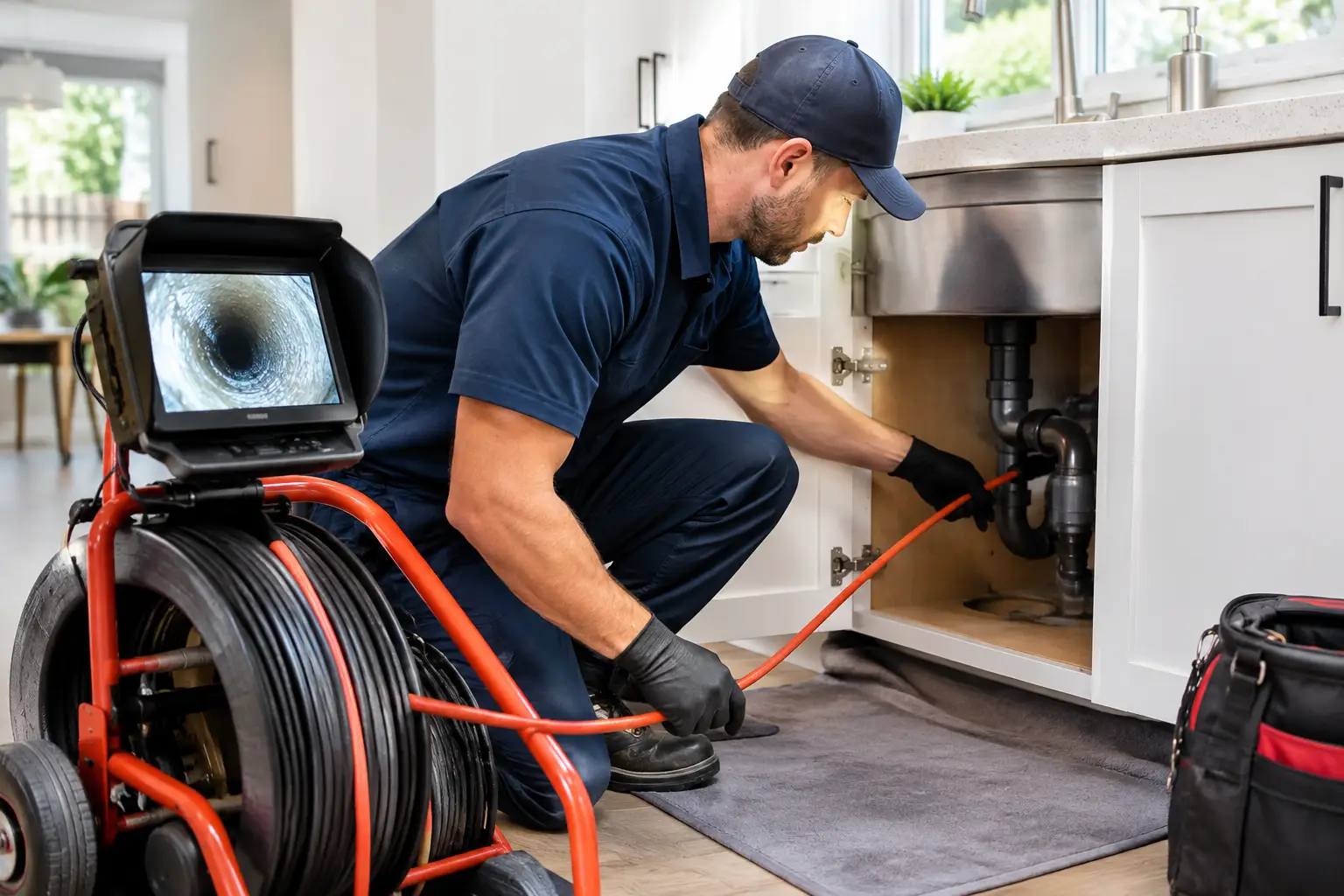
Reviews are especially valuable when they show that the company did not guess. If a customer mentions a sewer camera inspection after repeated backups, that is a sign the technician looked beyond the immediate clog. A camera can help confirm grease buildup, roots, pipe scale, a break, a belly, or another condition that ordinary drain cabling may not reveal.
Look for Proof of Diagnosis, Not Just Fast Results
Fast service matters when a sink, toilet, or sewer line is out of commission. Still, speed alone is not the whole job. A drain may flow after a cable passes through it, but the line can remain coated with grease, mineral scale, or debris. That residue can catch new waste and create another blockage sooner than anyone wants.
When reading drain cleaning reviews, pay attention to the method used and why it was recommended. Hydro jetting uses high-pressure water to clean buildup from inside suitable pipes. It can be an effective option for heavy grease in kitchen lines, recurring sludge, and certain main sewer line blockages. Flex-shaft cleaning and pipe descaling may be a better fit when hard scale has narrowed a cast-iron line. The right answer depends on the pipe material, line condition, location of the blockage, and what the camera inspection shows.
A trustworthy review may not use technical terms perfectly, and that is fine. What matters is the outcome: the customer understood the condition of the line, received clear options, and knew why a specific service was recommended. A good technician should be able to explain the issue in plain language without talking over you or pushing work that does not match the problem.
Signs a review describes quality work
The most helpful customer feedback often includes several practical details. It may say the technician arrived when expected, protected the work area, explained the findings, and tested the drain after cleaning. For sewer work, it may mention camera verification or a clear explanation of what was visible inside the pipe.
Also look for comments about recurring issues. If a customer had the same drain clog several times and the company identified the underlying cause, that is more meaningful than a review about a one-time slow drain. Recurring problems are where real diagnostic skill shows up.
For commercial properties, reviews should also reflect an understanding of downtime. Restaurants, offices, rental properties, and retail spaces need drain service that addresses the issue efficiently and helps prevent a repeat interruption. A backed-up kitchen line or main sewer line can affect customers, staff, tenants, and daily operations.
Read the Response, Not Only the Review
No service company receives only positive feedback forever. Plumbing emergencies are stressful, access can be difficult, and some sewer problems uncover larger repairs than a customer expected. One negative review is not automatically a reason to move on.
Instead, read how the company responds. A professional response should be respectful, specific when appropriate, and focused on making things right. Defensive replies, blame, or vague copy-and-paste responses can tell you as much as the original complaint. So can silence, especially when a review raises a legitimate concern about communication, cleanup, or billing clarity.
Pay attention to patterns. If multiple reviews mention late arrivals, unclear recommendations, surprise charges, or a clog returning right away with no follow-up explanation, take that seriously. On the other hand, a consistent pattern of clear communication, clean work areas, accurate arrival updates, and detailed diagnostics is a strong trust signal.
Questions Reviews Cannot Answer for You
Reviews can narrow the field, but they cannot inspect your pipes. Before you schedule service, explain what is happening as clearly as possible. Let the company know whether one fixture is slow or whether multiple drains are affected. Mention sewage backups, gurgling toilets, foul odors, recent construction, frequent clogs, or a history of older cast-iron piping.
You should also ask what diagnostic approach makes sense for your situation. If the problem keeps returning, ask whether a sewer camera inspection is appropriate. If a company recommends hydro jetting, ask what buildup it is intended to remove and whether the line condition has been evaluated. If a repair is recommended, ask what the camera or inspection showed that led to that recommendation.
Clear answers are a good sign. Plumbing is not always simple, and responsible professionals will not promise an exact diagnosis before seeing the line. But they should explain the next step, the reason for it, and the options available once they have the facts.
Why Local Experience Makes a Difference
Northern Virginia homes and commercial properties do not all have the same plumbing challenges. Older properties may have cast-iron lines with scale buildup. Tree roots can affect underground sewer lines. Busy kitchens can develop grease-heavy drain problems. Rental properties may need fast attention when a backup affects tenants.
That is why a local drain and sewer specialist can be a practical choice. The right company understands that a slow drain in a Gainesville home may be a simple branch-line clog, while several fixtures backing up in a Manassas property may point to a main sewer line issue. The response should be based on the symptoms and the condition of the system, not a one-size-fits-all sales pitch.
Titan Jetters focuses on that diagnostic-first approach. Whether the problem calls for professional drain cleaning, hydro jetting, camera inspection, descaling, or a broader sewer repair discussion, the work should begin with finding the actual cause and showing the customer what was found.
Use Reviews to Set the Right Standard
The best drain cleaning reviews do more than praise friendly service. They show accountability. They describe a technician who arrived prepared, treated the property with respect, identified the problem carefully, explained the work, and verified that the line was flowing properly.
When you are dealing with a slow drain, a recurring clog, or a sewer backup, do not settle for vague promises or a quick fix with no explanation. Look for the evidence that a company does the job correctly: honest communication, appropriate equipment, and a commitment to solving the problem in front of them. A drain that stays clear is worth more than a review that only sounds good.
