
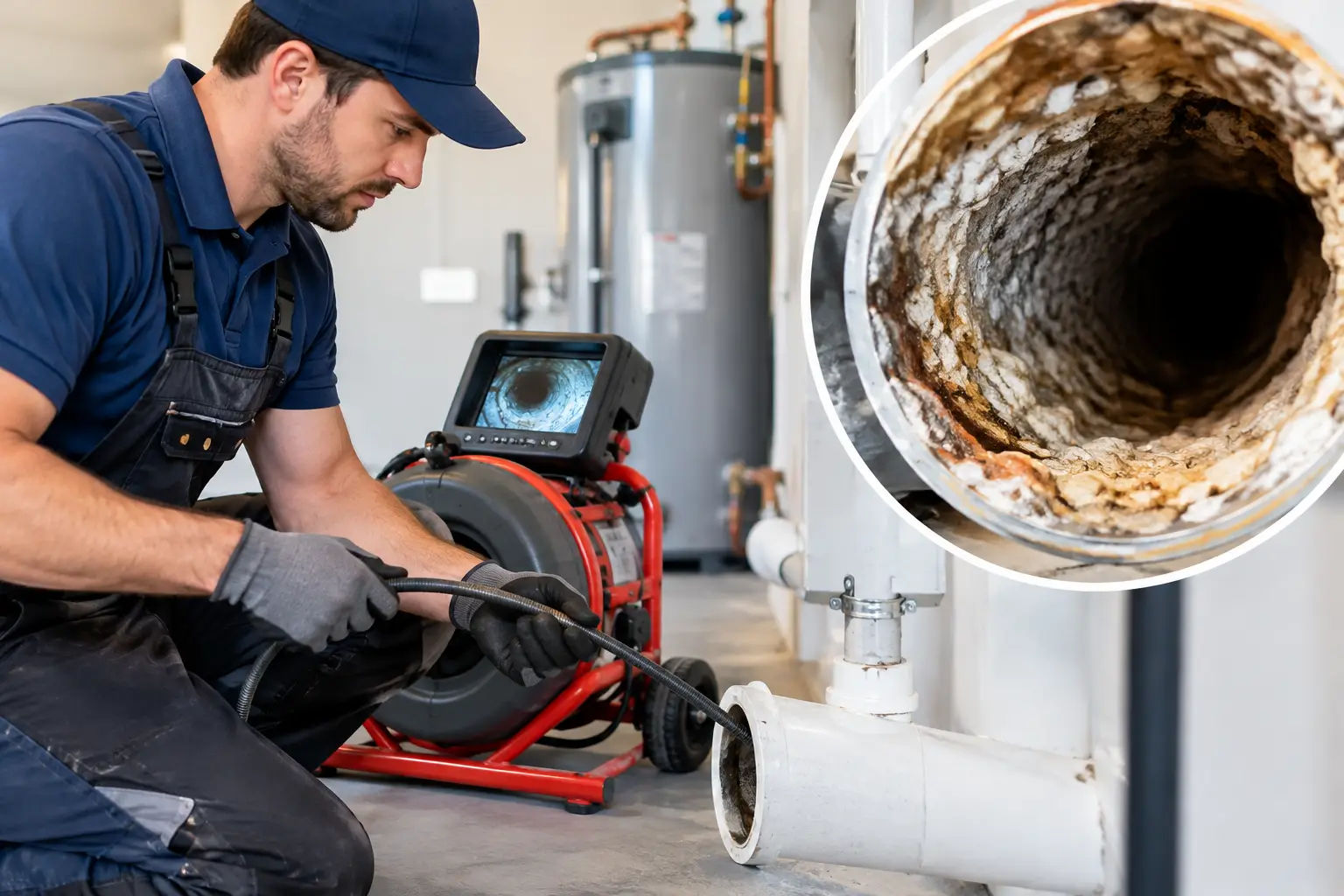
A drain can still pass water while scale buildup is quietly shrinking the pipe from the inside. That is why the best solutions for scale buildup are not always the same as the right fix for a simple clog. If drains are slowing down repeatedly, toilets are bubbling, or a main line backs up more than once, the issue may be mineral deposits and corrosion inside the pipe – not just debris sitting in one spot.
For homeowners and property managers, the goal is straightforward: restore the usable diameter of the line, confirm what condition the pipe is in, and avoid paying for a temporary clearing that leaves the real restriction behind. The right service depends on the pipe material, the severity of the buildup, and whether the line has cracks, offsets, or other damage.
What Scale Buildup Does Inside a Pipe
Scale is a hard mineral deposit that can form as water moves through plumbing lines over time. In older cast iron drain pipes, the problem is often more than minerals alone. The interior surface can corrode, become rough, and collect layers of rust, scale, soap residue, grease, and waste. Instead of a smooth pipe wall, you are left with a narrowed, uneven passage that catches everything moving through it.
That rough surface is why a drain may seem clear after a basic clog removal but slow down again soon after. Hair, grease, paper products, and solids have more places to snag. In commercial kitchens, grease can build on top of existing scale and create a serious restriction fast. In homes, older main sewer lines often show the same pattern after years of normal use.
Common warning signs include recurring clogs in the same fixtures, several drains slowing at once, sewage odors, frequent plunging, or backups that return after a prior drain cleaning. None of these symptoms confirms scale on its own. A proper diagnosis matters because roots, a sagging line, a broken pipe, or a heavy blockage can create similar problems.
Start With a Sewer Camera Inspection
Before deciding on a treatment, a sewer camera inspection gives a clear look inside the line. This is the practical first step when scale is suspected, especially in older homes or buildings with cast iron piping. A camera can show whether the pipe is coated with buildup, how much of the opening remains, and whether there is damage hidden behind the restriction.
The inspection also helps separate a cleaning issue from a repair issue. If the pipe is structurally sound but narrowed by scale, professional descaling may be a strong option. If the camera shows a collapsed section, major separation, or a pipe that has deteriorated beyond effective cleaning, forcing aggressive cleaning through it may not be the responsible answer.
Camera work should also be used after cleaning when conditions allow. Seeing restored flow and a more open pipe gives the customer proof of what was done. It replaces guesswork with an actual view of the line.
The Best Solutions for Scale Buildup
There is no one-size-fits-all answer, but professional pipe descaling, flex-shaft cleaning, and hydro jetting are the primary methods used to address buildup in drain and sewer lines. Each works differently, and each has a place.
Flex-shaft descaling for hard deposits
Flex-shaft cleaning is often the right choice for stubborn scale in cast iron pipe. The equipment uses a rotating cable with a specialized chain or cleaning head designed to break up buildup along the interior wall. Rather than simply punching a path through the center of the blockage, the goal is to remove material from the pipe wall and recover as much usable diameter as the pipe condition allows.
This method is particularly useful when a camera inspection shows heavy scale, rust flakes, or rough corrosion inside a line. It can also be more targeted than relying on water pressure alone for hardened deposits. The technician controls the cleaning process based on the pipe size, material, and condition, then checks the result rather than assuming the line is clear because water started moving.
Descaling does have limits. It improves the inside of a serviceable pipe, but it cannot rebuild metal that has already deteriorated or correct a separated joint. A trustworthy recommendation should explain that difference plainly.
Hydro jetting for grease, debris, and remaining residue
Hydro jetting uses high-pressure water to cut through grease, sludge, loose scale, and debris while flushing the line. It is especially effective for kitchen drains, commercial grease buildup, and sewer lines where buildup is spread over a longer section of pipe. After mechanical descaling loosens hard material, jetting may help carry that material out of the system.
Hydro jetting is not just a stronger version of a drain snake. It is a cleaning method that addresses the pipe wall over a broader area. That makes it valuable for recurring drain problems caused by grease and residue that ordinary cable cleaning may leave behind.
Still, high-pressure water is not appropriate for every line. A damaged, fragile, or severely compromised pipe needs to be evaluated before jetting. This is exactly why camera diagnostics come first. The best result is not the most aggressive cleaning method. It is the method that cleans effectively without taking unnecessary risks with the line.
Drain cleaning when scale is not the main problem
Not every slow drain is a descaling job. A localized clog from hair, wipes, food waste, or an object in the line may only need professional drain cleaning. If the issue is isolated and the camera does not show significant buildup, a focused cleaning can restore flow without adding services the line does not need.
That distinction matters for both cost and long-term results. A professional should explain whether the problem is a one-time obstruction, a buildup pattern, or a structural sewer concern. Clear options let you make the right call for the property instead of paying for a generic solution.
When Cleaning Is Not Enough
Scale buildup can hide serious pipe problems. As corrosion progresses in old cast iron, the pipe wall may become thin, pitted, or misshapen. Cleaning can remove the material restricting flow, but it cannot fix a broken line, a belly that holds waste, intrusive roots, or a section that has collapsed.
If a camera inspection reveals structural damage, sewer line repair may be the more dependable path. That does not mean replacement is automatically needed whenever scale is present. Many lines can benefit from cleaning and monitoring. The decision comes down to how much functional pipe remains, where the damage is located, how often backups occur, and whether the property is facing repeated disruption.
For landlords, restaurant operators, and property managers, this assessment is especially important. Repeated emergency calls, tenant complaints, business downtime, and cleanup costs can add up quickly. A documented camera inspection and a clear recommendation make it easier to plan maintenance or repair before the next backup becomes a larger problem.
How to Prevent Buildup From Becoming a Backup
Once a line has been professionally cleaned, prevention is mostly about reducing what sticks to the pipe and catching recurring symptoms early. Grease should never be poured into kitchen drains. Food solids, wipes, and heavy paper products can catch on rough pipe walls even when they are labeled flushable. For commercial properties, scheduled drain cleaning can be a practical way to manage grease before it shuts down a kitchen or restroom line.
Older homes with known cast iron piping may also benefit from periodic camera checks, particularly if slow drains return. There is no universal schedule because usage, pipe condition, and past problems vary. A home with one minor slowdown is different from a busy restaurant or a multi-unit property with a history of main line backups.
Get a Clear Answer Before the Next Backup
When scale is reducing pipe capacity, waiting for a full sewer backup rarely makes the repair easier. A camera inspection can show what is happening inside the line, while professional descaling, flex-shaft cleaning, or hydro jetting can be selected based on what the pipe actually needs.
Titan Jetters helps homeowners and businesses in Gainesville, Bristow, Haymarket, and Manassas diagnose recurring drain and sewer problems with straight answers and professional equipment. If your drains keep slowing down, contact us today to get the line inspected and the right solution on the schedule.
