
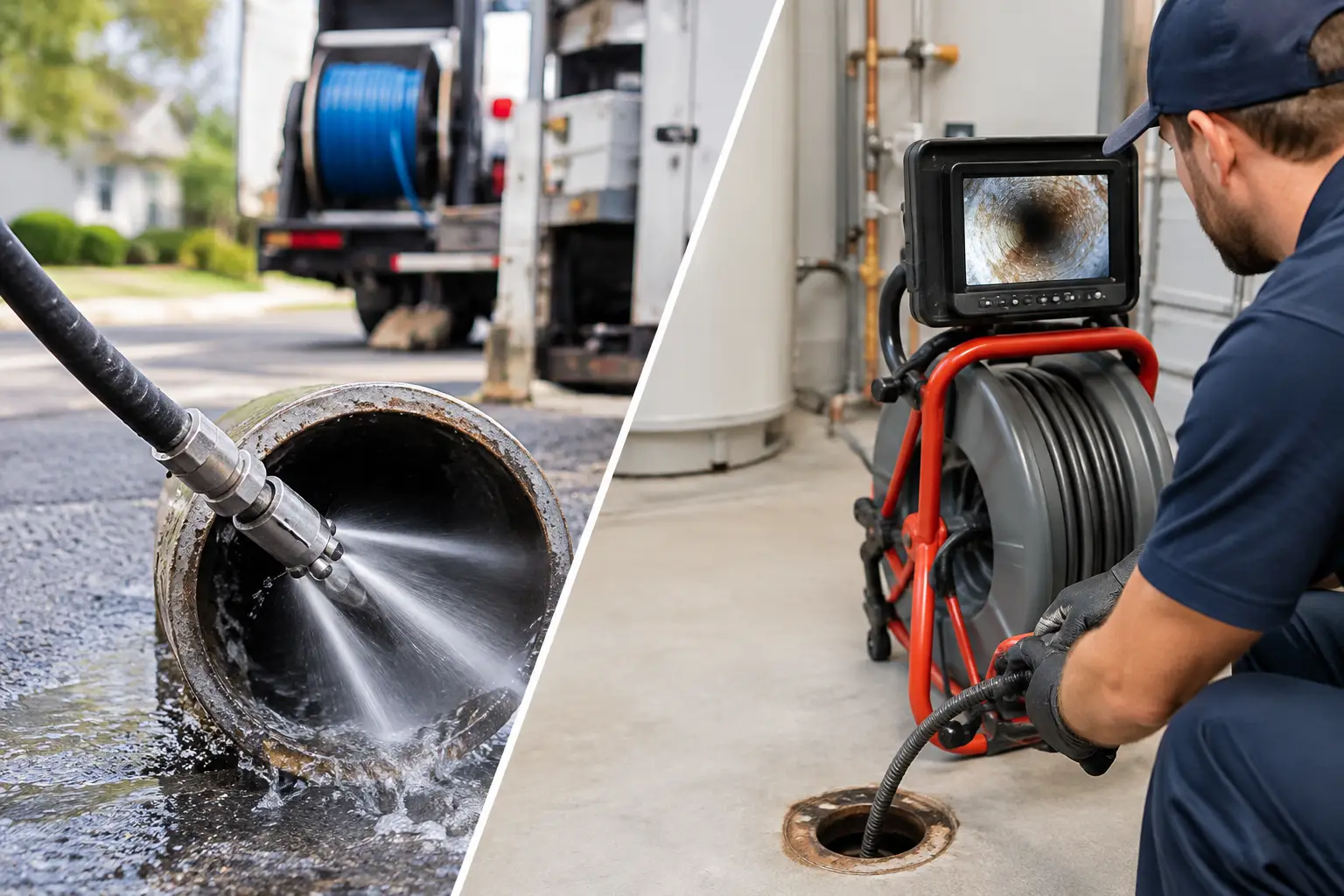
A drain can be open enough to pass water and still be in bad shape. That is why hydro jetting versus pipe descaling is not a simple choice between two ways to clear a clog. The right method depends on what is stuck to the pipe walls, where the restriction is, and whether the pipe itself is sound.
For homeowners, landlords, restaurants, and property managers, recurring slow drains are usually a sign that a basic cable cleaning is not addressing the full problem. Grease, sludge, mineral scale, rust, and debris can leave a line narrowed long after water starts moving again. A professional diagnosis helps identify the cause, select the right cleaning method, and confirm the line is flowing properly before the job is finished.
Hydro Jetting Versus Pipe Descaling: The Core Difference
Hydro jetting cleans a drain or sewer line with highly pressurized water. The water scours the inside of the pipe, breaks apart soft blockages, and flushes loosened material through the line. It is especially effective for grease, soap residue, food waste, sludge, roots, and heavy organic buildup.
Pipe descaling is designed for hard deposits attached to the inside of a pipe, most often in aging cast iron drain lines. Those deposits may include mineral buildup, rust scale, and corrosion flakes. Descaling mechanically removes that rough material so the pipe has more open space and waste can travel through it more reliably.
Both services can improve flow. The difference is what they are built to remove. Water pressure is excellent at flushing and cleaning soft buildup. It is not always the best answer for hard scale that has become part of the pipe’s interior surface. On the other hand, descaling is not a substitute for flushing a line packed with grease or loose debris.
When Hydro Jetting Is the Better Choice
Hydro jetting is often the right solution when a line is clogged or restricted by material that can be cut apart and carried away with water. Kitchen drain lines are a common example. Over time, grease coats the pipe, catches food particles, and creates a thick restriction that can bring recurring backups even after a conventional drain cleaning.
A hydro jetting service can also make sense for main sewer lines with sludge, paper buildup, root intrusion, or repeated blockages. Instead of only punching a small opening through the clog, the goal is to clean more of the pipe wall and restore stronger flow.
For commercial properties, hydro jetting is frequently useful in kitchen and restroom drain systems where high use creates regular buildup. Restaurants, in particular, can develop serious grease restrictions that lead to downtime, odors, and messy backups. Cleaning the line thoroughly can reduce the chance of another problem arriving during a busy shift.
That said, more pressure is not automatically better. Before hydro jetting, the condition of the line matters. A damaged, collapsed, severely offset, or failing pipe may need a different solution. A sewer camera inspection gives a plumber a direct look at the line so the cleaning method fits the actual condition underground or behind the walls.
Signs hydro jetting may fit the problem
Hydro jetting may be recommended when drains repeatedly slow down, a main sewer line backs up, kitchen lines collect grease, or a camera inspection shows soft buildup and debris along the pipe. It can also be a smart maintenance option for high-use commercial drain systems that need more than an occasional quick clog removal.
The key is diagnosis. If roots are entering through a damaged joint or a pipe has a structural defect, cleaning can restore flow temporarily, but it will not repair the reason the roots are getting inside.
When Pipe Descaling Is the Better Choice
Pipe descaling is commonly associated with older cast iron pipes. Cast iron was widely used in older properties, but it can corrode from the inside over decades of use. As corrosion develops, the pipe wall becomes rough and uneven. Scale builds up, waste catches on it, and the usable inside diameter of the pipe gets smaller.
The result can look like an ordinary clog: slow tubs, toilets that do not flush normally, frequent backups, or drains that need attention again and again. But if the line is heavily scaled, simply opening a path through the buildup may not provide a lasting improvement.
Professional descaling uses specialized equipment to remove hard scale from the interior of the pipe. The objective is to knock down the rough deposits that trap waste and restrict flow. In many situations, descaling is followed by flushing and camera verification so the technician can see the results and determine whether the pipe remains a good candidate for continued use.
Descaling is not a promise that every old cast iron pipe can be restored. If corrosion has left the pipe thin, cracked, separated, or deteriorated beyond practical cleaning, repair or replacement may be the more responsible recommendation. A clear camera inspection keeps that decision grounded in what is actually happening inside the line, not guesswork.
Signs pipe descaling may fit the problem
Consider descaling when a camera inspection shows significant rust scale or mineral deposits, especially in an older cast iron drain system. It is also worth discussing when the same line clogs repeatedly despite previous clearing, or when rough, corroded pipe walls are catching toilet paper and waste before it can reach the sewer.
For a landlord or property manager, identifying this issue early can help avoid repeated service calls and tenant disruption. For a homeowner, it can provide a clearer path forward than continually treating the symptom of a slow or clogged drain.
Why a Camera Inspection Comes First
The best comparison of hydro jetting versus pipe descaling starts with a camera, not an assumption. Slow drainage can come from grease, scale, roots, a sagging pipe, a broken fitting, or a combination of problems. The symptoms alone do not tell the whole story.
A sewer camera inspection allows the technician to locate the restriction, evaluate the pipe material and condition, and see whether the line has structural concerns. It also helps determine whether the blockage is in a branch drain, the main sewer line, or farther out toward the connection.
Just as important, a post-cleaning camera inspection can show whether the work achieved the intended result. Customers should not have to take anyone’s word that a line is clean or flowing better. Seeing the condition of the pipe helps explain the recommendation and supports smarter decisions about maintenance, repair, or replacement.
Can Hydro Jetting and Descaling Be Used Together?
Sometimes, yes. A line with old scale can also hold loose debris, sludge, or residue. In those cases, descaling may address the hard material while hydro jetting helps flush away what has been removed. The order and approach depend on the pipe condition and the results of the inspection.
This is why a one-size-fits-all drain cleaning recommendation can cost more over time. Choosing the wrong method may provide short-term relief without correcting the restriction that keeps causing the backup. A professional should explain what is in the line, why a particular service is recommended, and what the camera reveals about the pipe’s remaining condition.
What Northern Virginia Property Owners Should Watch For
In Gainesville, Bristow, Haymarket, and Manassas, recurring drain trouble deserves attention before it turns into a sewer backup. Gurgling fixtures, water rising in a tub when a toilet flushes, multiple slow drains, sewage odors, and repeat clogs in the same area can all point to a larger drain or main line issue.
Do not wait until a busy morning, a tenant move-in, or a packed restaurant shift turns a slow line into an emergency. Early diagnostics can often narrow down the issue while access is simpler and damage is limited.
Titan Jetters approaches drain and sewer problems by finding the cause first, then matching the cleaning method to the line. Whether the answer is hydro jetting, pipe descaling, targeted drain cleaning, or a repair recommendation, the goal is straightforward: restore dependable flow and give you a clear picture of what comes next.
If a drain keeps slowing down after it has been cleared, ask for a camera-based diagnosis. The right cleaning method can make the difference between another temporary opening and a line that is ready to work the way it should.
