
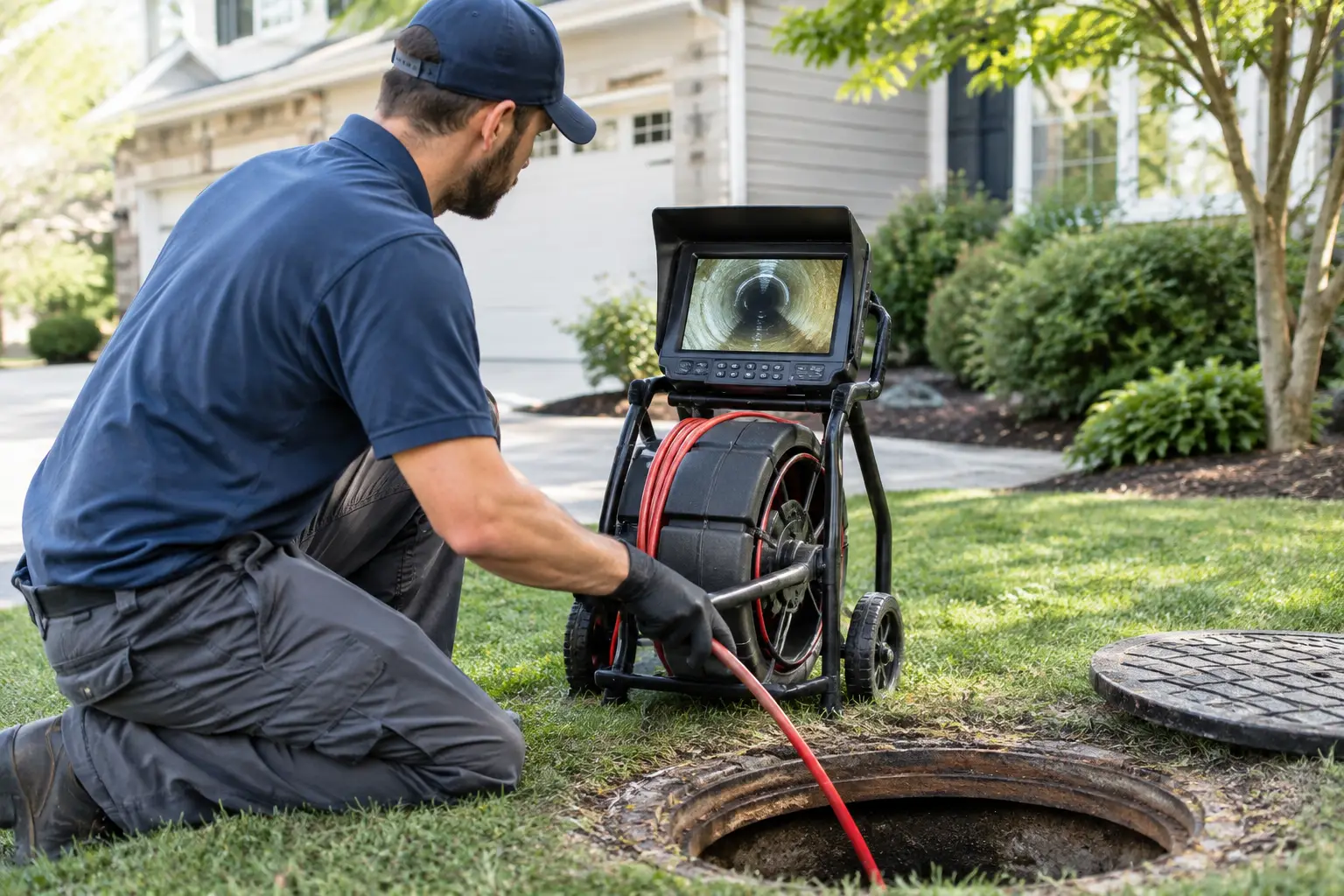
A main sewer line can be building toward a backup long before wastewater reaches a floor drain or toilet. That is where the top sewer inspection benefits matter most. A professional sewer camera inspection shows what is actually inside the pipe, so you can make a decision based on evidence instead of guesses, repeated drain snaking, or a problem that keeps coming back.
For homeowners and businesses in Northern Virginia, that clarity can prevent a messy interruption, protect the property, and point the repair or cleaning work in the right direction from the start. A camera does not fix a sewer line by itself. What it does is reveal the cause, location, and condition of the issue so the next step makes sense.
1. Find the Real Cause of Recurring Clogs
A drain that clogs once may be a simple blockage near a fixture. A drain or main line that repeatedly slows down, gurgles, or backs up is different. Repeated symptoms often mean there is buildup, root intrusion, scale, a damaged section of pipe, or another restriction farther down the line.
Without a camera, clearing the blockage may restore flow temporarily without showing why it formed. With a sewer inspection, the technician can see whether grease is coating the pipe, roots are catching debris, or an old cast-iron line has heavy internal scale. That distinction matters because each condition calls for a different solution.
For example, hydro jetting may be a strong fit for grease and accumulated debris in a structurally sound line. Pipe descaling may be needed when corrosion has narrowed the inside of older cast iron. If the camera reveals a crack, offset joint, or collapse, cleaning alone will not be a long-term answer.
2. Pinpoint the Problem Before Digging or Repairing
One of the most practical top sewer inspection benefits is avoiding blind repair work. Sewer lines are buried, and no property owner wants a yard, driveway, or slab opened up based on a hunch.
A camera inspection helps locate the trouble area and identify what the pipe is doing at that point. Is it holding water because of a low spot? Is a joint separated? Is there a dense root mass? Is there simply a blockage that can be removed through existing access? Seeing the line first makes it easier to choose the least disruptive appropriate option.
There is a trade-off here. A camera can show the interior condition of accessible pipe, but the final recommendation still depends on what the inspection finds and how the line responds to cleaning. A line packed with debris may need to be cleared before the full condition can be verified. That is still far more informed than treating an underground sewer issue as a guessing game.
3. Catch Root Intrusion Before It Becomes a Backup
Tree roots naturally seek moisture, and small openings at sewer joints can give them a way inside. Once roots enter, they trap toilet paper, wipes, grease, and other debris moving through the line. The result is a restriction that tends to get worse, not better.
A sewer camera can show whether roots are light and scattered or thick enough to block the pipe. That helps determine whether professional cutting and cleaning may restore flow or whether the pipe itself has a larger defect that needs repair. It also gives owners a clear reason to address the issue before the next heavy use period turns it into a sewage backup.
Root problems are especially easy to overlook because the drains may work normally between blockages. If you have had a main line clog more than once, an inspection is often the smart next move.
4. Verify That Cleaning Actually Solved the Problem
Professional drain cleaning should not end with, “It seems to be draining now.” Restored flow matters, but a post-cleaning camera inspection can confirm whether the blockage is gone and whether another condition remains inside the line.
This is valuable after hydro jetting, main sewer line cleaning, or descaling. The camera can show whether heavy buildup was removed, whether roots are still present, or whether the pipe has damage that needs attention. It provides a clearer picture of the result and helps prevent a customer from paying for repeated cleanings when a repair issue is the real concern.
For restaurants and other commercial properties, verification can be especially useful. Grease buildup can return quickly when a kitchen line is under daily demand. Knowing the condition of the line allows managers to plan cleaning based on real usage and buildup, not wait for a disruption during business hours.
5. Protect Your Property From Messy, Expensive Damage
A sewer backup can affect floors, walls, belongings, and business operations. The cost is not limited to clearing the line. Cleanup, lost time, and damage from wastewater can create a much bigger problem than the original clog.
Camera inspections help identify warning signs before the line fails completely. Slow drains throughout the house, water appearing around a basement floor drain, toilets bubbling when another fixture drains, and recurring main line clogs all deserve attention. These symptoms do not always mean a broken sewer pipe, but they are strong reasons to inspect the line rather than wait.
A proactive inspection is not necessary for every minor sink clog. If one bathroom sink drains slowly and no other fixtures are affected, the issue may be local to that drain. But when multiple fixtures are involved or backup symptoms are present, inspecting the main sewer line can save time and reduce the chance of a much larger mess.
6. Make Smarter Decisions About Older Pipes
Older homes in Gainesville, Bristow, Haymarket, Manassas, and surrounding communities can have pipe materials and conditions that are not obvious from inside the home. Cast iron can corrode and build up scale. Clay lines can be vulnerable at joints. Aging connections can shift or separate over time.
A camera inspection helps turn uncertainty into a usable plan. You may find that the line needs a thorough cleaning and periodic maintenance, not replacement. Or you may learn that damage is advanced enough that continuing to clear blockages would only delay a needed repair. Either way, you can prioritize the work based on what is happening underground.
That is the difference between reacting to each clog and managing the condition of the system. Property managers and landlords can use that information to reduce surprise maintenance calls. Homeowners can budget with a clearer understanding of the issue. Business owners can plan service around operating hours whenever possible.
7. Get Clear Documentation When the Property Changes Hands
A sewer camera inspection can also be useful when buying, selling, or taking over management of a property. Standard property checks do not always reveal the interior condition of an underground sewer line. A line can appear to function during a brief visit while still having roots, scale, cracks, or a developing restriction.
Video evidence gives buyers and owners more information before they inherit a costly issue. For a seller, it can help answer questions about a line that has recently been cleaned or repaired. For a landlord or commercial property manager, it establishes a baseline condition that can be useful when planning future maintenance.
When to Schedule a Sewer Camera Inspection
Consider a professional inspection when the problem points beyond one fixture. Four situations deserve prompt attention:
- Multiple drains are slow or backing up at the same time.
- A toilet gurgles, bubbles, or changes the water level when nearby fixtures drain.
- Main sewer line clogs return after previous clearing.
- You notice sewage or wastewater coming up through a floor drain, tub, or shower.
If sewage is already backing up, the priority is fast service to stop the immediate problem and diagnose the line correctly. If the issue is recurring but not yet an emergency, scheduling an inspection now gives you time to choose the right solution without the pressure of an active backup.
Titan Jetters uses sewer camera inspections to show customers what is happening inside the line, explain the findings in plain language, and recommend only the work that fits the condition of the pipe. When your drains keep giving you the same warning, get the line inspected before the next clog turns into a cleanup job.
