
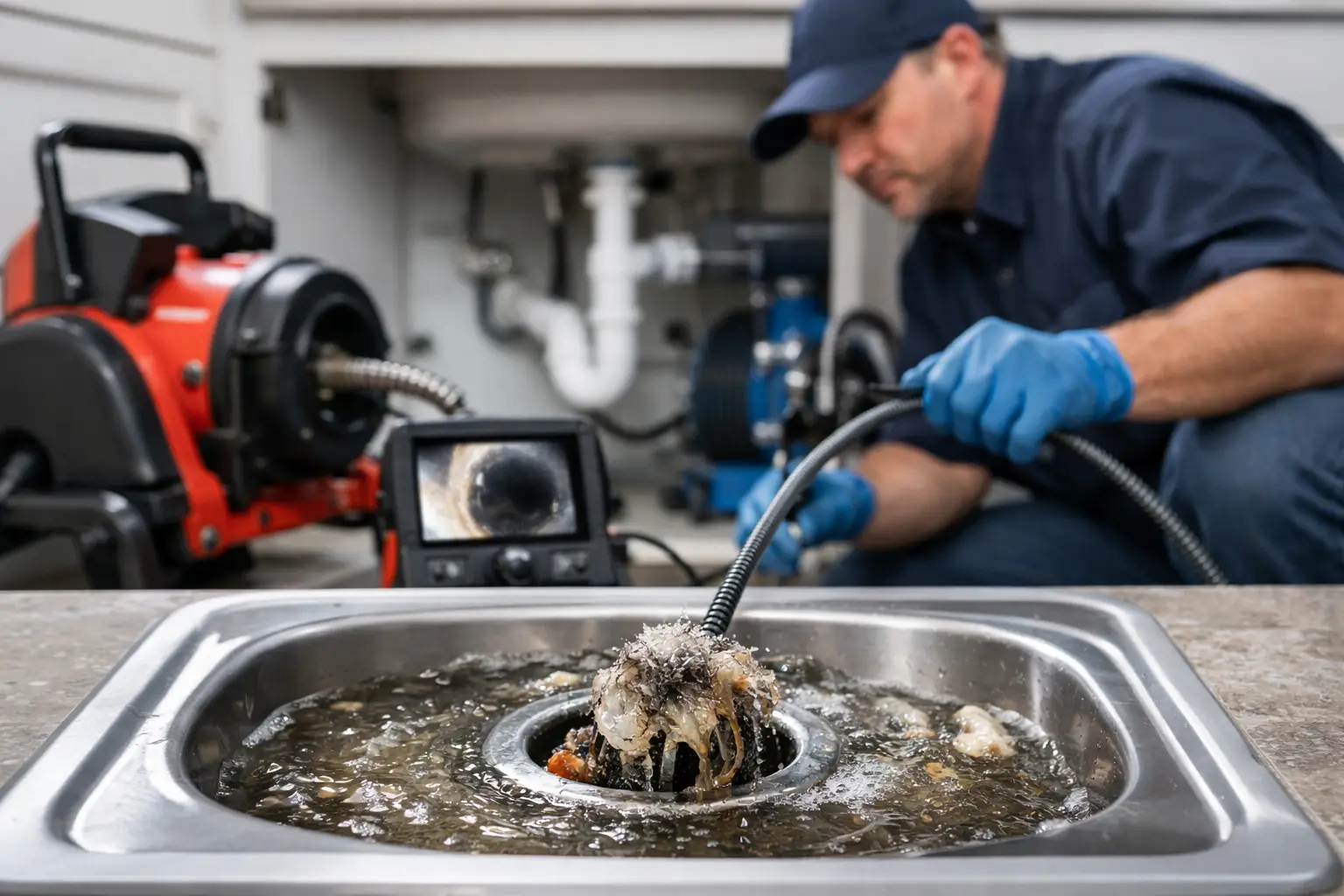
A drain that clogs once can be a nuisance. A drain that backs up again days or weeks after being cleared is telling you something else is going on. If you are asking, “why do drains clog repeatedly,” the answer is usually not that the clog was bad luck. More often, the line was only opened temporarily, while the buildup, pipe condition, or sewer problem behind it remained.
Recurring drain trouble deserves a real diagnosis. It can mean repeated sink backups, a shower that drains slowly after every cleaning, toilets that gurgle, or water coming up in a lower-level tub when the washing machine runs. The longer those signs are ignored, the more likely a simple drainage issue turns into messy downtime or a main sewer backup.
Why Do Drains Clog Repeatedly Instead of Staying Clear?
A drain cleaner may make water move again without removing the full obstruction. That is the difference between punching a small opening through a blockage and restoring the pipe to a clean, usable condition. Water can pass through a narrow channel for a while, but soap residue, grease, paper, and debris quickly catch on what is left behind.
The right solution depends on where the problem is and what is inside the line. A kitchen sink with grease buildup needs a different approach than an older cast iron sewer line with heavy scale. A bathroom drain with recurring hair buildup is different from several fixtures backing up at once. Good drain service starts by identifying that difference instead of treating every clog the same way.
The line was not fully cleaned
This is one of the most common reasons for repeat clogs. Basic snaking can break through soft material or create a path through the center of a blockage. It is useful in the right situation, but it may not remove grease coating the pipe walls, hardened scale, or dense buildup farther down the line.
When the pipe walls stay dirty, the next clog forms faster. This is especially common in kitchen lines, commercial sinks, and older drain piping. Professional drain cleaning equipment, including hydro jetting or flex-shaft cleaning when appropriate, is designed to remove buildup rather than simply make a hole through it.
Grease, soap, and everyday debris keep building up
Kitchen drains are not built to carry cooking grease, food scraps, coffee grounds, or thick residue. Grease may go down warm and liquid, then cool and stick to the pipe. Over time, it traps other debris until the opening becomes too small for normal use.
Bathroom lines have their own pattern. Hair combines with soap film, toothpaste, shaving products, and mineral residue. A shower may seem fine after a quick clearing, then start draining slowly again because the material farther inside the branch line was never removed.
For restaurants and other commercial properties, recurring grease blockages can create downtime at exactly the wrong time. The issue may be daily use, but it still requires a cleaning method that matches the amount of buildup and the condition of the drain line.
Scale is narrowing older pipes
In many Northern Virginia properties, older cast iron drain or sewer lines can develop internal scale. Rust, mineral deposits, and corrosion build up inside the pipe and create a rough surface. That rough surface catches paper and waste much more easily than a smooth pipe.
This is why an older line can seem to clog more often even when nothing has changed in the household. The pipe has less usable space than it once did. A cable may restore flow for a short time, but descaling or specialized cleaning may be needed to address the material attached to the pipe walls.
The pipe has a structural problem
Not every recurring clog is caused by what goes down the drain. Sometimes the pipe itself is the problem. Cracks, separated joints, a sagging section of line, offsets, or damage from shifting soil can create a spot where waste and water collect.
Tree roots are another frequent concern in sewer lines. Roots seek moisture and can enter through vulnerable joints or cracks. Once inside, they catch debris and create repeat backups. Cutting through roots can restore flow, but the condition of the pipe still needs to be evaluated so you know whether the issue is likely to return.
A sewer camera inspection is valuable here because it shows what is actually happening in the line. It helps distinguish a routine blockage from root intrusion, pipe damage, heavy scale, or a belly in the sewer line. That evidence matters before deciding whether cleaning is enough or a repair should be considered.
The Location of the Backup Matters
One slow fixture often points to a local branch drain problem. For example, a shower that drains poorly while every other fixture works normally may have buildup in that bathroom line.
Multiple fixtures acting up at the same time is more serious. If toilets gurgle when a sink drains, water rises in a tub after flushing, or several drains slow down together, the blockage may be in the main sewer line. A main line clog affects the pipe carrying wastewater from the home to the municipal sewer or septic connection.
A lower-level fixture is often the first place a main sewer backup shows itself because it sits at the lowest point in the home. Do not wait for wastewater to come up through a floor drain, shower, or tub. Prompt sewer diagnostics can limit the mess and help protect the property.
Why Chemical Drain Cleaners Often Make Repeat Problems Worse
Store-bought chemical cleaners can seem like a quick answer, but they rarely solve a recurring drain problem. They may not reach the true blockage, especially when the obstruction is farther down the line. They also do little against roots, scale, damaged pipe, or thick grease deposits.
There is another concern: harsh chemicals can sit in a blocked drain and create a safety hazard for anyone working on the line later. They can also be tough on certain pipes and fixtures. When a drain keeps clogging, putting more chemicals into it usually delays the diagnosis rather than fixing the cause.
Professional Cleaning Is Not One-Size-Fits-All
A good drain specialist should explain what method fits the problem and why. Cable cleaning can be effective for certain blockages. Flex-shaft cleaning can remove stubborn buildup in smaller lines. Hydro jetting uses high-pressure water to clean grease, sludge, and debris from the pipe walls, but it should be used only after considering the pipe material and condition.
That is where camera inspection and line diagnostics earn their value. Seeing the inside of the pipe helps confirm whether the line is clean, where a blockage is located, and whether there is damage that cleaning alone cannot correct. It replaces guesswork with clear information.
For homeowners, landlords, and property managers in Gainesville, Bristow, Haymarket, and Manassas, this approach can prevent repeated service calls for the same unresolved issue. Titan Jetters focuses on finding the reason drainage problems keep coming back, then presenting clear options based on what the line actually needs.
When to Call for Recurring Drain Service
A single slow drain may not be an emergency, but repeat symptoms should not be brushed off. Schedule professional service when a drain clogs again soon after clearing, foul odors return, water drains slowly in more than one fixture, or toilets begin gurgling. Call promptly if water is backing up into a tub, shower, floor drain, or sink.
The goal is not just to get water moving for the afternoon. It is to determine whether the line needs thorough cleaning, descaling, camera inspection, or sewer repair. A properly diagnosed drain problem gives you a better chance of restored flow that lasts and fewer surprises when the plumbing is under pressure.
If a drain keeps coming back, trust the pattern. Repeated clogs are usually a signal that the pipe needs more than another temporary opening.
