
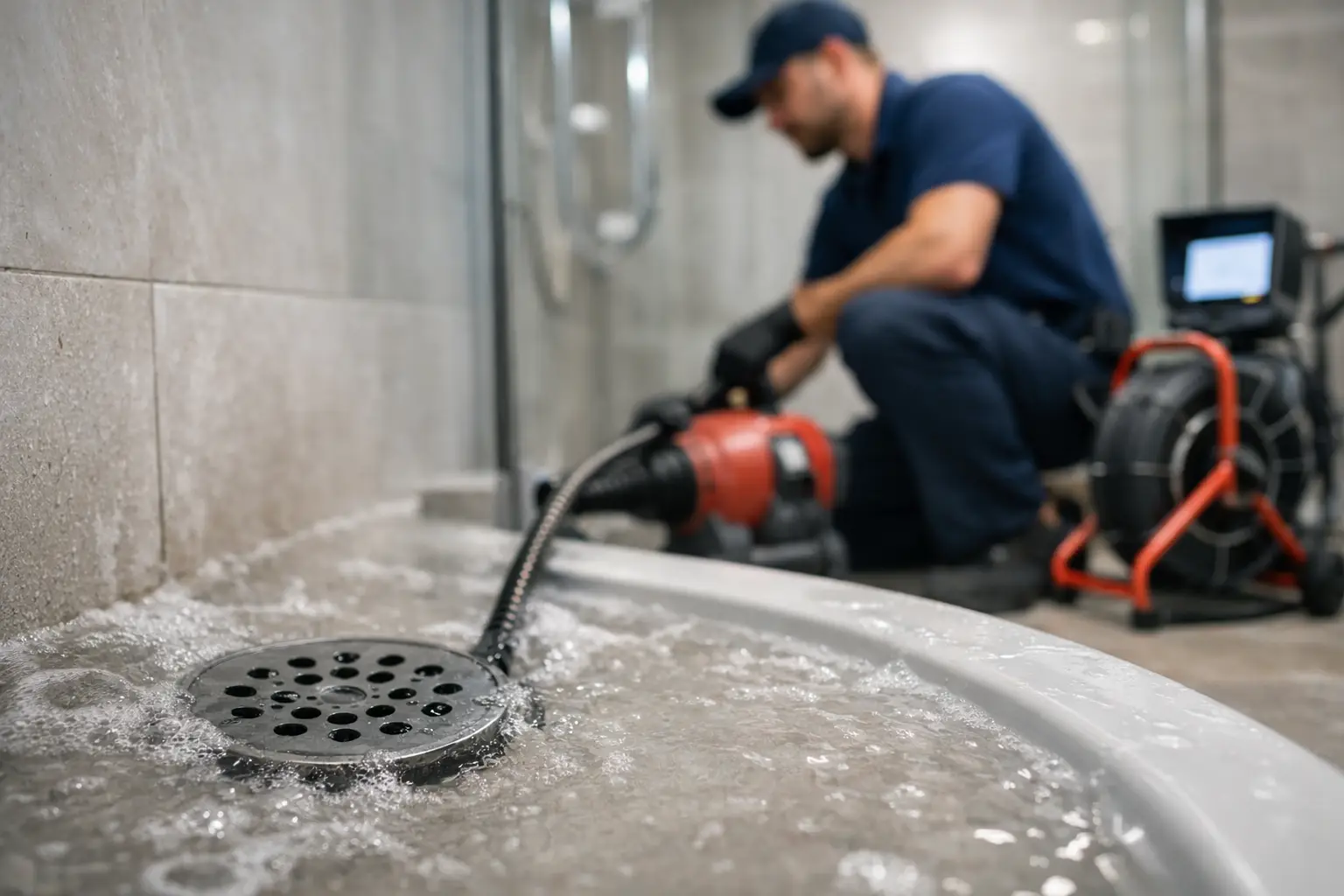
A shower that leaves water pooling around your feet is more than an annoyance during the morning rush. If you are asking, “why does shower drain slowly,” the answer is usually buildup inside the drain line. Sometimes, though, that slow drain is the first warning that a deeper plumbing or sewer problem is developing.
The key is knowing the difference. A minor blockage near the shower drain may be limited to that fixture. A drain that repeatedly slows down, affects other fixtures, or comes with odors and gurgling deserves a professional diagnosis before it turns into a backup.
Why Does a Shower Drain Slowly?
Your shower drain is designed to move a steady flow of water through the trap and into the branch drain line. When anything narrows that path, water cannot leave as quickly as it enters. The result is standing water, slow drainage, and eventually a complete clog.
Hair is often the main culprit, but it rarely acts alone. Soap residue, shampoo and conditioner buildup, body oils, and mineral deposits can collect around hair and form a dense blockage. Over time, that material sticks to the pipe walls and steadily reduces the available opening.
In Northern Virginia homes, the age and material of the plumbing system also matter. Older pipes may have rough interiors, scale buildup, or sections that no longer drain at the proper slope. A shower may be the first place you notice the issue because it sends a concentrated mix of hair and soap through a relatively small drain opening every day.
Hair and soap buildup near the drain
Most single-shower slow drains begin close to the drain opening or in the trap below it. Hair catches on the drain assembly, then holds soap residue and other debris in place. What starts as a small restriction can become a stubborn mass that ordinary rinsing will not move.
This is especially common in homes with long hair, multiple people using the same shower, or products that leave heavier residue. The problem may seem to come and go at first. Water drains acceptably after the shower has been off for a while, then pools again once a full stream is running.
Mineral scale and pipe buildup
Not every shower blockage is soft debris. Mineral deposits can build up inside aging pipes, particularly cast iron lines. Scale creates a rough surface where hair, soap, and debris can catch. It also reduces the inside diameter of the pipe, so the line loses capacity even when there is no single, obvious clog.
A drain cable may create a temporary opening through this kind of buildup, but it may not remove the material attached to the pipe wall. For recurring slow drains tied to scale, proper diagnostics and professional pipe descaling can make a more meaningful difference.
A blockage farther down the branch line
If the drain slows shortly after it has been professionally cleared, the restriction may be farther down the bathroom branch line. Several fixtures can connect to the same line before it reaches the main sewer. Debris can accumulate beyond the shower trap, where it is not visible from above.
This is one reason a quick surface-level attempt does not always solve the problem. The water may drain for a few days or weeks, then slow again because the real blockage was never fully cleared.
Signs the Slow Shower Drain Is a Bigger Problem
A slow shower drain does not automatically mean you have a main sewer issue. But certain symptoms point beyond the shower itself and should not be ignored.
Pay attention if the shower drains slowly while a nearby sink, toilet, or tub is also sluggish. Gurgling from the toilet when the shower runs, water rising in another fixture, sewage odors, or repeated backups are stronger signs that the problem may be in a shared branch line or the main sewer line.
A recurring problem is another red flag. If the drain has been cleared before but keeps slowing down, there may be heavy buildup, scale, a damaged section of pipe, root intrusion, or an issue with the line’s condition. Continuing to treat the symptom can delay the real repair and increase the chance of a messy backup.
For landlords and property managers, repeated bathroom drain complaints are worth taking seriously. A slow shower may be isolated, but in multi-unit properties it can also point to a shared-line restriction that affects more than one tenant. Fast diagnosis protects the property and reduces downtime.
Why Chemical Drain Cleaners Can Make Things Worse
When water starts pooling in the shower, it is tempting to reach for a chemical drain cleaner. The problem is that these products often provide inconsistent results against hair and dense soap buildup. They can sit in standing water without reaching the full blockage, leaving the pipe only partially open.
Harsh chemicals can also be a concern in older or already compromised plumbing. If the drain still needs professional service afterward, the technician may be working around chemicals left in the line. That creates an unnecessary safety issue without addressing the underlying reason the drain keeps slowing down.
A professional drain cleaning service focuses on removing the obstruction rather than attempting to dissolve a path through it. The right method depends on where the blockage is located, what the pipe is made of, and whether the drain issue is isolated or part of a larger system problem.
How Professionals Diagnose a Slow Shower Drain
Good drain service starts with determining what is actually causing the restriction. A technician should ask when the problem began, whether other fixtures are affected, whether the drain has clogged before, and whether there are odors, noises, or backups elsewhere in the home.
For a localized shower clog, professional drain cleaning equipment can remove hair and buildup from the trap and line. When the issue is deeper, a cable machine or flex-shaft cleaning may be appropriate to cut through and remove stubborn material.
If symptoms suggest a larger or recurring issue, a sewer camera inspection can show what is happening inside the line. Camera diagnostics help identify heavy buildup, scale, pipe damage, offsets, roots, or other conditions that cannot be confirmed by guesswork. You can see the condition of the line and make a decision based on facts.
For heavier buildup in suitable drain and sewer lines, hydro jetting uses high-pressure water to clean the pipe wall and restore flow. It is not a one-size-fits-all answer. The line needs to be evaluated first, especially if it is older or potentially damaged. The right service is the one that clears the problem safely and addresses why it happened.
When to Call for Shower Drain Cleaning
Call for professional help when the shower is draining slowly despite basic maintenance, when the problem returns, or when more than one fixture is involved. Do not wait for water to stop draining completely. A slow drain is often easier and cleaner to address before it becomes a full backup.
You should also contact a drain specialist promptly if you notice sewage smells, gurgling, water backing up into the tub or shower, or a toilet that reacts when another fixture drains. Those symptoms may indicate a shared-line or sewer issue that needs immediate attention.
Titan Jetters provides drain cleaning, sewer camera inspections, hydro jetting, and line diagnostics for homeowners and businesses in Gainesville, Bristow, Haymarket, Manassas, and surrounding Northern Virginia communities. The goal is straightforward: identify the cause, explain what is happening inside the line, and provide a clear solution that restores dependable flow.
A shower should drain without leaving you standing in dirty water. If yours is slowing down more often, treat it as useful information from your plumbing system – and get the cause checked before a small restriction becomes a bigger interruption.
