
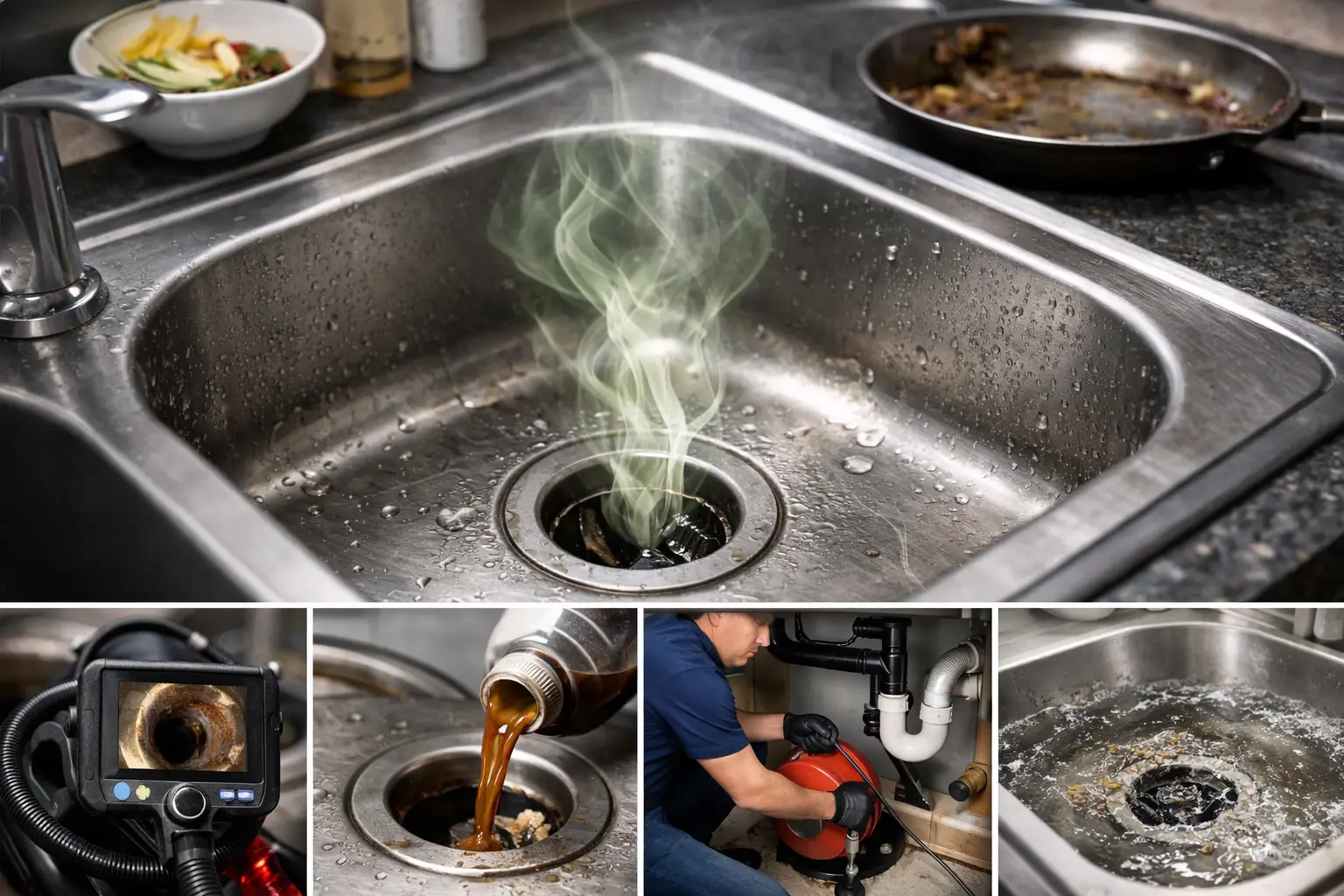
That smell that hits when you walk into the kitchen is more than an annoyance. It can point to decomposing food, grease buildup, a partial blockage, or in some cases, sewer gas entering through the drain. If you are asking what causes kitchen drain odors, the answer usually comes down to material collecting inside the line or a problem with the plumbing system that is allowing odors to travel back into the room.
A kitchen drain can still carry water while holding enough buildup to smell bad. That is why a sink may seem to work normally at first, then develop slow drainage, recurring odors, or a complete backup later. Finding the real source matters. Covering the odor with cleaners or air freshener does not restore proper flow or correct the underlying issue.
What Causes Kitchen Drain Odors in Most Homes?
Kitchen drains handle more grease and food residue than nearly any other drain in the house. Even homes that are careful about what goes down the sink can develop buildup over time. The smell often gets stronger after running water, using the dishwasher, or leaving the sink unused for several days.
1. Grease and food buildup inside the drain line
Cooking grease is one of the most common causes of a foul kitchen drain. It may go down warm and liquid, but it cools as it moves through the pipe. Grease then sticks to the pipe walls and catches coffee grounds, food scraps, soap residue, and other debris.
As that layer thickens, bacteria feed on the organic material. The result can be a sour, rancid, or rotten-food smell coming from the sink. A partial grease blockage can also slow drainage and make the odor worse because dirty water and debris remain in the pipe longer.
This is especially common in older homes, rental properties, and busy kitchens. Restaurants and commercial kitchens can build up grease much faster, but a household kitchen line can develop the same issue over time.
2. Residue in the garbage disposal
A garbage disposal grinds food, but it does not make food waste disappear. Small particles can remain on the grinding chamber, splash guard, and drain connection. If residue sits there, it begins to break down and produce a strong odor.
The key distinction is whether the smell is limited to the disposal or continues after the disposal area is cleaned and water is run. A lingering odor often means the problem has moved beyond the unit and into the branch drain line. Repeatedly treating only the disposal will not remove heavy buildup farther down the pipe.
3. Biofilm inside the pipes
Biofilm is a slimy layer of bacteria, soap, grease, and organic residue that forms along the inside of drain pipes. It is not always a major clog, but it can smell surprisingly strong. Because it coats the pipe rather than sitting in one visible spot, the odor may return quickly after surface cleaning.
Biofilm can develop in newer plumbing as well as older systems. The difference is often how the kitchen is used, what enters the drain, and whether the line has enough flow to carry waste away effectively. A slow-draining sink paired with recurring odor is a strong sign that the drain needs more than a temporary treatment.
4. A partial clog holding dirty water
A kitchen drain does not have to be fully blocked to cause trouble. A partial obstruction can trap food particles and wastewater in the line. You may notice water draining slowly, gurgling sounds, or an odor that gets worse after doing dishes.
Partial clogs are often difficult to judge from the sink alone. The visible drain opening may look clear while the restriction sits several feet down the line, at a bend, or where the kitchen branch connects to a larger pipe. Professional drain cleaning removes the material causing the restriction instead of simply opening a narrow channel through it.
When a Kitchen Drain Smell May Be Sewer Gas
Not every kitchen odor is caused by food residue. A sewer-like smell, often described as rotten eggs or stagnant sewage, deserves prompt attention. Sewer gas should stay inside the plumbing system and exit through the vent system, not come back through a kitchen sink.
A dry or compromised drain trap
The curved pipe beneath the sink, called a P-trap, holds water. That water creates a seal that blocks sewer gas from entering the kitchen. If a sink is rarely used, the water in the trap can evaporate. A damaged, improperly installed, or leaking trap can also fail to hold the seal.
This is more likely in a vacant property, a rarely used kitchenette, or after a plumbing change. If the odor appears suddenly from a sink that is not used often, the trap is one possibility. If the smell keeps returning despite regular sink use, a closer plumbing inspection is warranted.
Venting or main sewer line problems
Drain and vent systems work together. As water moves through the pipes, the venting system helps maintain proper pressure and protects the water seal in traps. A vent issue can contribute to gurgling drains, changing water levels in the sink trap, and sewer odors.
A problem in the main sewer line can also affect the kitchen, particularly if multiple fixtures are slow, gurgling, or backing up. When a kitchen sink odor comes with toilet bubbling, tub drainage problems, or sewage backup, it is no longer a simple kitchen drain concern. It needs a prompt sewer diagnostic.
Why the Odor Keeps Coming Back
Recurring drain odors are a useful clue. They usually mean the source has not been removed, or the source is farther down the plumbing system than expected. A drain may smell better for a day or two after a cleaner is used, then return because the grease layer, scale, or blockage remains attached to the pipe walls.
Chemical drain products are also not a dependable answer for a recurring odor. They may not reach the buildup evenly, and they do not provide a clear diagnosis. In some situations, harsh chemicals can create additional concerns for aging pipes and leave a technician dealing with hazardous residue during service.
The right solution depends on what is inside the line and the condition of the pipe. A heavy grease blockage may require professional drain cleaning. Thick buildup in older cast iron may call for descaling. If the problem has returned several times or there are signs of a larger sewer issue, a camera inspection can show where the restriction is, what it is made of, and whether the pipe itself has damage or deterioration.
Signs It Is Time to Call a Drain Professional
A one-time mild odor may be limited to disposal residue or temporary buildup. But certain symptoms point to a drain problem that should be professionally evaluated:
- The kitchen sink drains slowly or backs up when the dishwasher runs.
- The odor returns soon after cleaning the sink or disposal.
- Water gurgles, rises in the sink, or drains inconsistently.
- More than one fixture in the home is slow or making unusual sounds.
- The smell is distinctly sewer-like, especially with a backup or leak under the sink.
For landlords and property managers, fast diagnosis also helps prevent a small tenant complaint from becoming a messy backup or water-damage issue. For restaurants and local businesses, odor and slow-flow problems can disrupt operations and create an unpleasant customer experience.
Professional Cleaning Gets to the Source
A professional diagnosis begins with the symptoms, but it should not end there. The goal is to identify whether the odor is coming from the disposal, the kitchen branch line, a grease obstruction, pipe scale, a failed trap, or a larger sewer problem.
Titan Jetters uses professional drain cleaning and sewer diagnostic methods to address the actual condition inside the line. For recurring or unclear issues, a sewer camera inspection can verify flow and reveal buildup, damage, or obstructions that cannot be seen from the sink. Hydro jetting can be a strong option for appropriate lines with heavy grease and debris, while flex-shaft cleaning or descaling may be better suited to certain pipe conditions.
The method matters because forcing a small opening through a clog is different from thoroughly cleaning the pipe. A clear explanation of what was found and why a specific option fits the line gives homeowners and property managers a better basis for deciding what comes next.
If your kitchen sink smells bad, drains slowly, or keeps developing the same problem, do not wait for a full backup. A proper inspection can replace guesswork with a clear answer and get your kitchen flowing cleanly again.
