
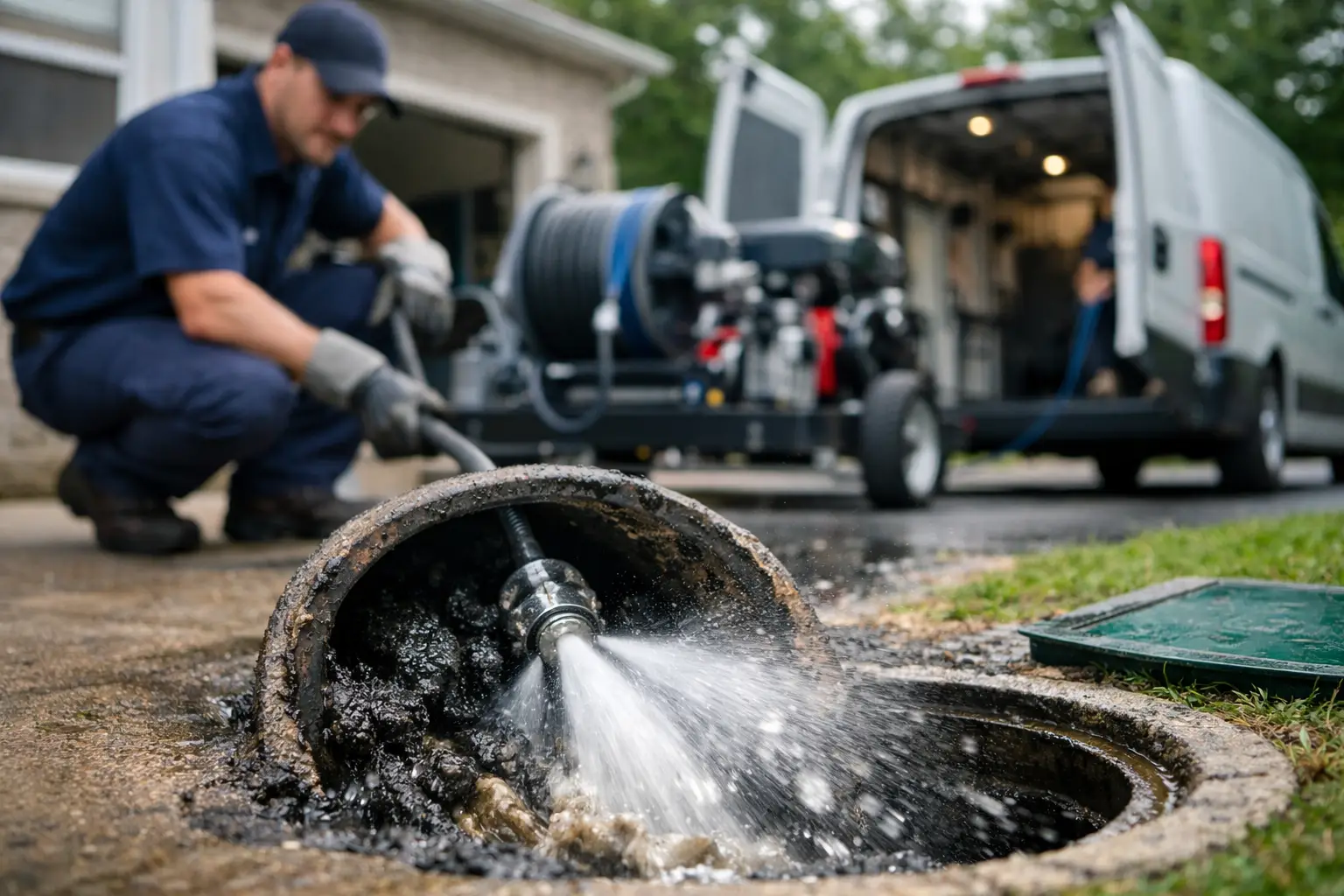
A drain can look clear at the fixture while a thick layer of sludge is still narrowing the pipe behind the wall or under the yard. That buildup is why many homeowners ask how hydro jetting removes sludge and whether it can solve a recurring clog for good. The short answer: a professional hydro jet uses controlled, high-pressure water to scour the inside of a drain or sewer line, breaking up buildup and carrying it out of the system.
For homes, restaurants, rental properties, and commercial buildings in Northern Virginia, that difference matters. A basic drain clearing may restore flow through one opening in the buildup. Hydro jetting is designed to clean more of the pipe wall itself when the line and the problem call for it.
What Sludge Is Doing Inside Your Drain Line
Sludge is not usually one single material. In a kitchen line, it often starts with grease, cooking oil, soap residue, and food particles. Grease may go down warm and liquid, then cool and stick to the pipe. Each new use of the sink adds another layer until the opening becomes smaller and water starts draining slowly.
Bathroom and laundry drains develop their own version of sludge. Soap scum, detergent residue, hair, body oils, lint, and mineral deposits can combine into a sticky coating. Main sewer lines can also collect waste, paper products, scale, silt, and debris moving through the system.
The result is not always an immediate, total blockage. More often, the pipe slowly loses capacity. You may notice a kitchen sink that backs up during dishwashing, a tub that drains slowly after every shower, foul odors near a drain, or a main line that backs up again a few months after it was cleared. Those are signs the issue may be buildup along the line, not just one isolated clog.
How Hydro Jetting Removes Sludge From Pipe Walls
Hydro jetting starts with a specialized hose and nozzle inserted into an appropriate access point in the drain or sewer line. The nozzle sends high-pressure water forward and backward. Forward jets help break apart the obstruction ahead, while rear-facing jets propel the hose through the pipe and wash loosened material back toward the access point.
The water does more than poke a path through the center of a clog. As the nozzle travels through the line, the streams strike the inside walls and cut through soft sludge, grease, soap buildup, and loose debris. The force lifts material off the pipe surface, breaks it into smaller pieces, and flushes it downstream for removal.
That pipe-wall cleaning action is the reason hydro jetting can be a better fit than simply opening a small channel through a heavy grease blockage. If most of the buildup remains attached to the pipe, the line may flow for a while but can clog again quickly. A properly performed jetting service targets the material causing the restriction across a larger area of the pipe.
The Nozzle Matters
Not every drain problem needs the same nozzle or cleaning approach. Nozzles are selected based on the line size, the type of buildup, the direction of access, and the goal of the service. A grease-heavy commercial kitchen line calls for a different strategy than a residential main sewer line carrying accumulated debris.
This is one reason professional diagnosis matters. More pressure is not automatically better. The goal is to use the right equipment and method to clean the line effectively without treating your plumbing like a guessing game.
Water Clears What the Nozzle Breaks Loose
Hydro jetting works as a cleaning process, not a one-second blast. The technician advances and retrieves the hose as needed so water can continue to wash dislodged sludge and debris out of the line. If the line is heavily coated, multiple passes may be needed to restore better flow.
The final result depends on what is inside the pipe. Soft grease and organic sludge often respond very well. Dense mineral scale, especially in older cast-iron piping, may require pipe descaling or another targeted method alongside hydro jetting. Roots, broken pipe, separated joints, or a sagging sewer line are structural problems. Water pressure cannot repair those conditions, although cleaning and a camera inspection can reveal them clearly.
Why a Sewer Camera Inspection Comes First
Before hydro jetting a sewer line, a camera inspection can answer the questions that matter: What is causing the backup? Where is it located? Is the pipe intact enough for jetting? Is there grease, scale, roots, debris, or damage hiding below the surface?
This step helps avoid applying the wrong solution. For example, a line that repeatedly clogs near the same location may have a broken section, an offset joint, or root intrusion. Clearing sludge can improve flow, but it will not correct a damaged pipe. On the other hand, a camera may show a serviceable line with thick buildup and no major defects, making hydro jetting a practical cleaning option.
A post-cleaning camera inspection can also provide proof of the result. Instead of being told the line is clear, you can see whether the buildup has been removed and whether another issue is still present. That level of verification is especially valuable for property managers, restaurants, and homeowners dealing with repeat backups.
When Hydro Jetting Is the Right Choice
Hydro jetting is often recommended when a drain or sewer line has recurring clogs, slow drainage across multiple fixtures, heavy grease accumulation, or buildup that keeps returning after standard clearing. It is particularly useful for kitchen drains and main sewer lines where years of residue have reduced the inside diameter of the pipe.
For restaurants and other food-service properties, regular professional cleaning can help manage grease before it causes downtime, odors, or a messy backup. For homeowners, hydro jetting may make sense after a sewer camera identifies heavy buildup as the cause of a recurring main line problem.
Still, it depends on the pipe condition. Older lines, compromised pipes, and certain known damage situations need a careful evaluation first. A trustworthy drain specialist should explain what the camera shows, why jetting is or is not appropriate, and what alternatives make sense. There is no benefit in selling a cleaning service when the real need is repair.
Hydro Jetting vs. Basic Drain Clearing
Basic drain clearing and hydro jetting are both useful, but they solve different levels of the problem. A cable machine can cut through a blockage and restore flow quickly. That can be the right first response for many clogs, especially when the obstruction is localized.
Hydro jetting is more focused on cleaning. It is commonly chosen when grease, sludge, and residue coat the line and keep causing trouble. Think of it this way: opening a hole through buildup gets water moving; removing more of the buildup from the pipe walls gives the line a better chance to stay open.
Neither method replaces a proper diagnosis. If a sewer line is damaged or invaded by roots, the right answer may involve cleaning followed by repair. If a bathroom drain is clogged with hair close to the fixture, hydro jetting may be more than the situation requires. The best service is the one that addresses the cause without adding unnecessary work.
Signs Sludge May Be Building Up
A single slow drain can be a local issue, but repeated symptoms deserve attention. Watch for kitchen sinks that drain slowly or smell unpleasant, backups that return after prior drain cleaning, gurgling from nearby fixtures, water rising in a tub when a toilet is flushed, or several drains slowing down at once.
For commercial properties, frequent calls for the same kitchen or floor drain are a clear warning. Waiting until the line closes completely can mean lost business, cleanup costs, and disruption for customers or tenants. Cleaning the line before a full backup is often easier to schedule and easier on the property.
Get the Cause Checked Before the Backup Gets Worse
When sludge is restricting a drain line, the goal is not just to get water moving for the afternoon. The goal is to find out what is in the pipe, clean it with the right method, and verify the result. Titan Jetters provides professional drain diagnostics, sewer camera inspections, drain cleaning, hydro jetting, and pipe descaling for property owners who need a clear answer and dependable work.
If your drains are slow, your kitchen line keeps clogging, or your main sewer line is backing up in Gainesville, Bristow, Haymarket, Manassas, or nearby Prince William County, contact a local drain and sewer specialist before a partial blockage turns into a full one.
