
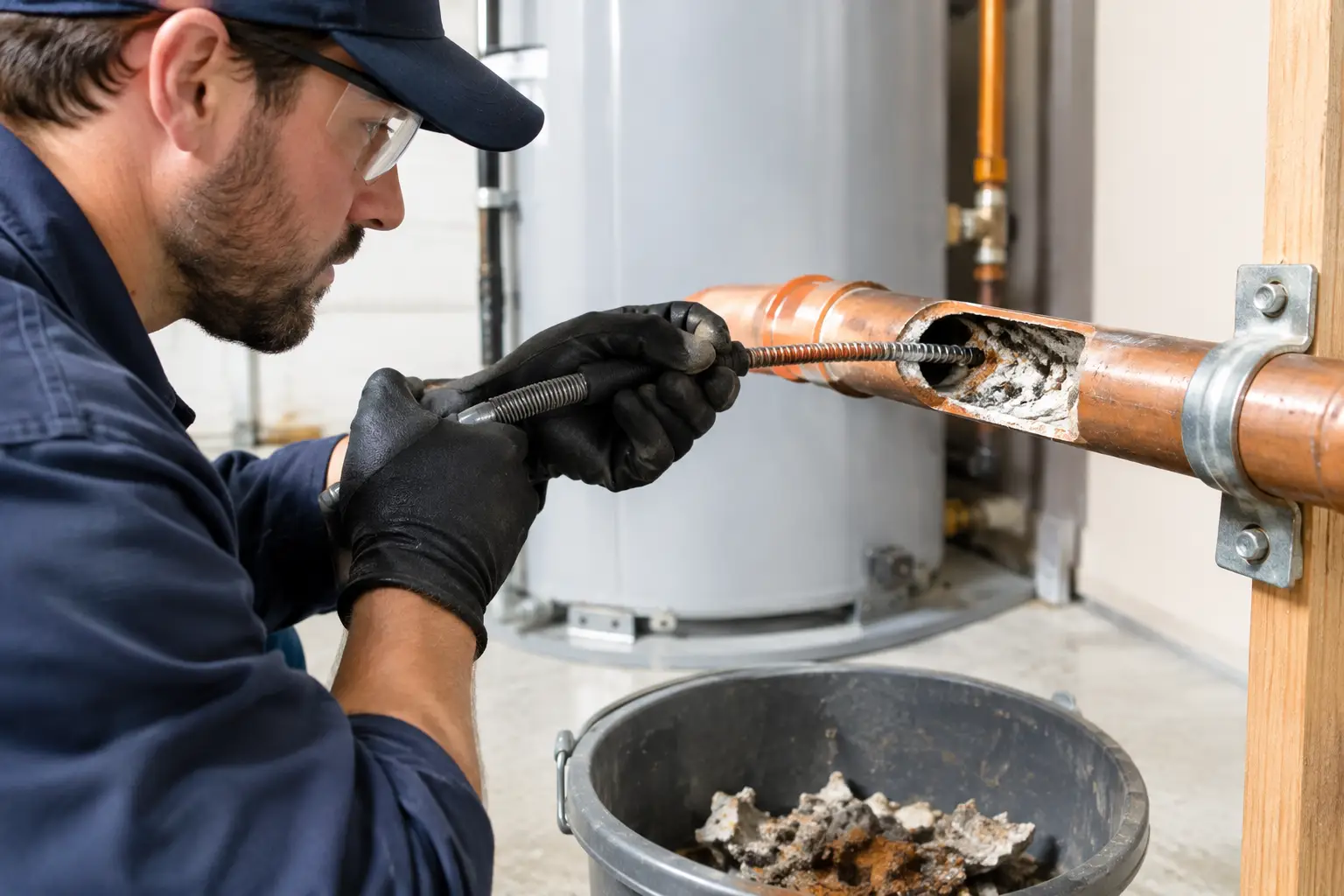
A drain can be technically open and still perform poorly. That is often the frustrating reality behind recurring slow drains, toilet backups, and sewer odors in older homes and commercial buildings. This guide to pipe scale removal explains what is happening inside the line, why ordinary drain cleaning may not last, and how a professional diagnosis identifies the right fix.
Pipe scale is not always a single clog. It is a hard, rough buildup that narrows the inside of a pipe and gives waste, paper, grease, and debris something to catch on. Left in place, it can turn a minor flow problem into repeat backups and expensive disruption.
What Pipe Scale Is and Why It Causes Problems
In many older Northern Virginia properties, scale is associated with aging cast iron drain or sewer pipes. Cast iron can corrode over time from the inside out. The corrosion creates rough deposits, flakes, and raised ridges that reduce the pipe’s usable diameter. Every flush or drain cycle then has less room to move wastewater through the line.
Mineral buildup can also form in plumbing systems, especially where water conditions contribute to deposits. But when customers call about recurring main sewer line clogs, the concern is often corrosion scale in a drain or sewer pipe rather than a simple mineral film.
The rougher the pipe wall becomes, the more readily debris accumulates. Toilet paper can snag on protruding scale. Grease from a kitchen line can cling to it. In commercial settings, food waste and grease can build up faster than a conventional cable cleaning can address. The blockage may clear temporarily, then return because the underlying pipe condition remains unchanged.
Signs You May Need Pipe Scale Removal
A single slow sink can be a localized clog. Several fixtures draining poorly at once, especially on the lowest level of a home, point more toward a main line problem. Scale becomes more likely when the same issue returns after the line has already been cleared.
Watch for symptoms such as drains that repeatedly slow down, toilets that gurgle or flush weakly, backups in a tub or shower when another fixture is used, and recurring sewer odors. Property managers may also notice repeated maintenance calls for the same stack, bathroom group, or kitchen line.
Age alone does not prove that a pipe is scaled. Neither does a backup. Roots, grease, bellies in the line, cracked pipe, wipes, and foreign objects can create similar symptoms. That is why guessing based on the age of the building can lead to the wrong service and another problem a few months later.
Why a Sewer Camera Inspection Comes First
The right pipe scale removal plan starts with seeing inside the line. A sewer camera inspection lets a technician identify whether the pipe is narrowed by corrosion, coated in grease, invaded by roots, damaged, or holding standing water because of a slope issue.
The camera also helps determine how much scale is present and whether the pipe is structurally sound enough for cleaning. A heavily deteriorated line may need a different conversation than a solid cast iron pipe with years of accumulated scale. Cleaning a pipe without evaluating its condition is not a responsible recommendation.
A proper inspection also gives you proof of what is causing the trouble. Instead of hearing that a line is “probably clogged,” you can see the issue and understand why a particular service is being recommended. After cleaning, a follow-up camera view can verify improved flow and confirm whether additional repair should be considered.
Professional Options for Pipe Scale Removal
Pipe descaling is not a one-size-fits-all service. The best method depends on the pipe material, its condition, the type of buildup, access points, and the severity of the restriction.
Flex-Shaft Descaling
Flex-shaft cleaning is often used to mechanically break up hard scale on the inside of certain drain and sewer pipes. A rotating chain or specialized head is guided through the line to remove corrosion buildup and smooth the interior surface as much as the pipe condition allows.
This approach can be effective when cast iron scale is creating a rough, restrictive surface. It is not simply about punching a hole through a blockage. The goal is to remove the material that keeps catching debris and causing repeat clogs.
The trade-off is that descaling cannot restore metal that has already deteriorated or correct a pipe that has collapsed, separated, or developed a serious belly. It improves the interior of a viable pipe. It does not turn a failing sewer line into a new one.
Hydro Jetting
Hydro jetting uses high-pressure water to clear grease, sludge, loose debris, and buildup from drain and sewer lines. It can be an excellent follow-up or companion service where debris needs to be flushed out after mechanical cleaning, or where grease is the primary issue.
Hydro jetting is powerful, which is exactly why it should follow an evaluation of the line. The condition of older pipe matters. A camera inspection helps determine whether hydro jetting is appropriate and how the cleaning should be performed.
For restaurants and other commercial properties, planned hydro jetting can help manage grease-heavy lines before they become a downtime problem. For homeowners, it may be the right choice when the line is structurally sound but repeatedly collects grease, sludge, or debris.
Main Sewer Line Cleaning
Sometimes the immediate priority is restoring service after a backup. Main sewer line cleaning can remove an active obstruction and get fixtures flowing again. If the clog is caused by scale, however, clearing the blockage alone may be only the first step.
That is where the camera findings matter. If the line is still rough and narrowed, a technician can explain whether descaling, hydro jetting, ongoing maintenance, or repair makes the most sense. Clear options beat a temporary answer presented as a permanent one.
What to Expect During a Professional Descaling Visit
A professional visit should begin with questions about the symptoms, where backups occur, how long the problem has been happening, and whether the line has been serviced before. Those details help narrow down whether the issue is likely in a branch drain, a main sewer line, or a shared commercial line.
The technician should then inspect the line when access and conditions allow. Once the cause is confirmed, you should receive a plain-language explanation of what is inside the pipe, what can be cleaned, and what limitations exist. If the pipe is too compromised for aggressive cleaning or shows damage that cleaning will not solve, that should be clear before work begins.
During service, the work area should be treated with care. Drain and sewer work can be messy by nature, but the process should be controlled, respectful of the property, and focused on getting the system back to dependable operation. Verification after cleaning is valuable because it shows whether the restriction has been removed and whether the line has remaining concerns.
When Pipe Descaling Is Worth It
Pipe descaling is often worth considering when a camera confirms scale buildup in a pipe that is still structurally serviceable. It can improve flow, reduce the surface area where debris catches, and help delay larger sewer work when repair is not yet necessary.
It may not be the right answer if the pipe has major cracks, missing sections, severe corrosion damage, offset joints, or a collapsed area. In those situations, cleaning may restore flow briefly but will not address the reason the line keeps failing. A trustworthy recommendation accounts for the whole condition of the pipe, not just what can be cleared that day.
For landlords, property managers, and business owners, the decision also comes down to downtime. Repeated emergency calls, tenant disruption, closed restrooms, and cleanup costs can add up quickly. A documented camera inspection and targeted cleaning plan make maintenance decisions easier to defend and budget for.
Get a Clear Answer Before the Next Backup
Recurring clogs are rarely solved by doing the same thing harder. If an older drain or sewer line keeps backing up, ask for a camera inspection and a clear explanation of whether scale is part of the problem. Titan Jetters helps homeowners and property owners in Gainesville, Bristow, Haymarket, Manassas, and nearby Northern Virginia communities identify the cause, clean the line appropriately, and verify the result.
The best time to address pipe scale is before the next backup turns into a cleanup. A professional diagnosis gives you a practical path forward, whether that means descaling, hydro jetting, repair planning, or simply knowing the line is in better condition than expected.
