

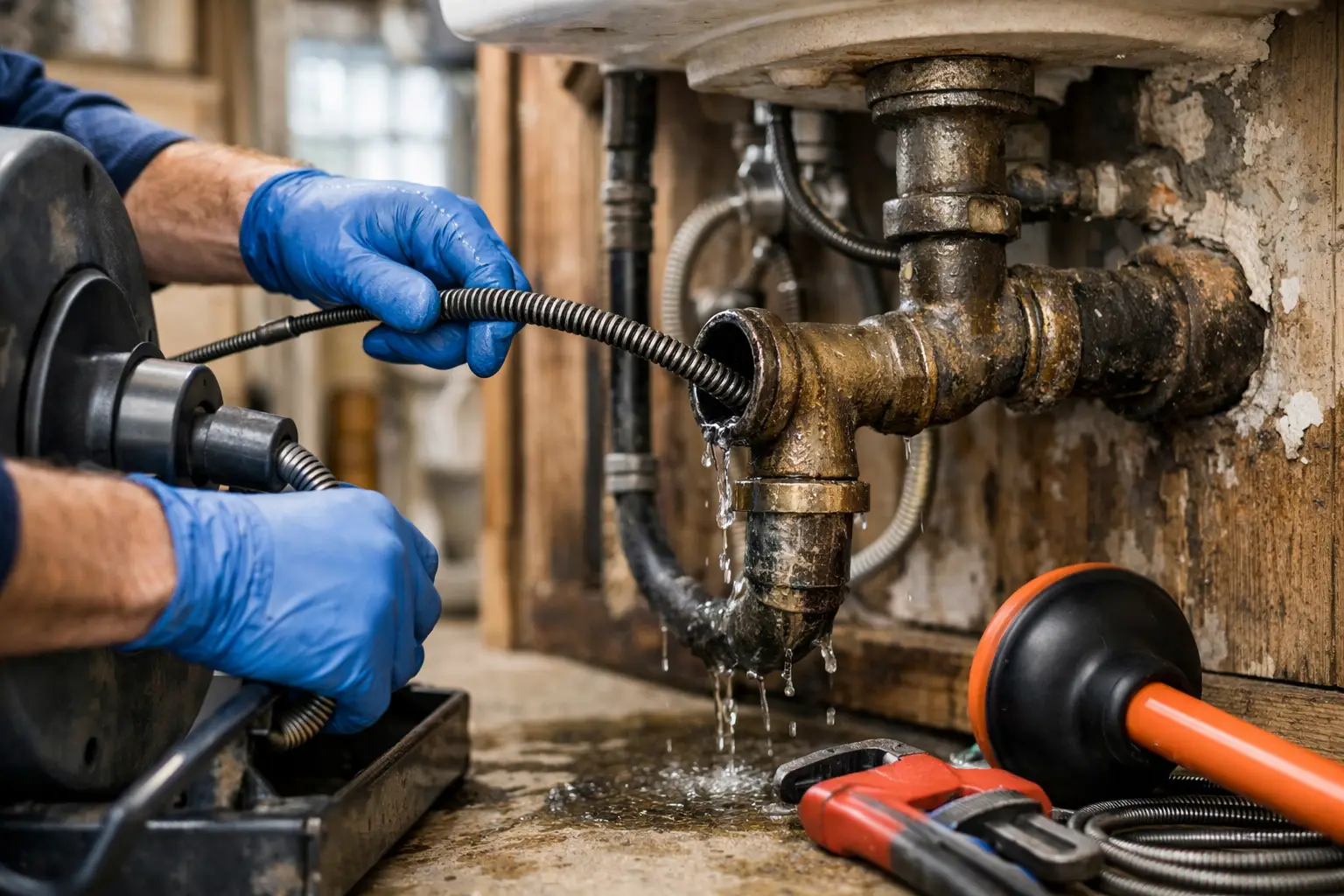
That slow kitchen sink or first-floor shower drain is often the first warning sign. In older homes, a clog is not always just a clog. The best drain cleaning for older homes starts with knowing what the pipe is made of, how much buildup is inside, and whether the line can handle an aggressive cleaning method without creating a bigger problem.
That matters because older plumbing systems come with history. Cast iron can scale from the inside out. Galvanized lines can narrow over time. Older clay sewer lines may have root intrusion or shifted joints. Even a home that looks well maintained on the surface can have drain lines that are rough, restricted, and close to failure underground or behind walls.
What makes drain cleaning different in older homes
Newer drain lines are usually smoother and more predictable. Older lines are rarely that simple. Years of soap residue, grease, paper, mineral buildup, and corrosion can reduce the inside diameter of a pipe so much that normal use starts causing repeated backups.
The biggest mistake is treating every slow drain the same way. A quick cable pass might poke a hole through a blockage and get temporary flow back, but it may leave heavy buildup on the pipe walls. In an older home, that often means the problem returns fast. On the other hand, going too aggressive too soon can be the wrong call if the pipe is badly deteriorated.
That is why the right process matters more than the fastest-sounding fix. A professional should identify the condition of the line first, then choose the cleaning method that fits the pipe instead of forcing one tool onto every job.
Best drain cleaning for older homes starts with diagnosis
Before choosing hydro jetting, descaling, or mechanical cleaning, the line needs a clear look. A sewer camera inspection is usually the smartest first step in an older home because it shows what is actually happening inside the pipe.
A camera can reveal whether the issue is grease, roots, scale, wipes, a partial collapse, or standing water from poor grade. It can also show if the line material is cast iron, PVC, clay, Orangeburg, or something else. That changes the cleaning plan.
If the camera shows a structurally solid pipe with heavy buildup, thorough cleaning may restore excellent flow. If it shows cracked sections, separated joints, or a line that is already failing, the priority may shift from aggressive cleaning to protecting the pipe and planning the next repair step.
For homeowners, this is where a lot of frustration disappears. Instead of guessing, you get an answer you can understand and work from.
The best methods depend on the pipe condition
Hydro jetting for strong, stable lines
Hydro jetting is one of the most effective drain cleaning methods when the pipe is in suitable condition. It uses high-pressure water to scour the inside of the line, cutting through grease, sludge, and soft blockages while flushing debris out of the system.
For older homes, hydro jetting can be an excellent solution when the pipe walls are stable enough to handle it. This is especially true for kitchen lines with years of grease buildup or main sewer lines with recurring organic debris. When done correctly, jetting cleans far more thoroughly than a basic snaking service.
But this is where experience matters. Not every old pipe is a good jetting candidate. If the line is brittle, split, or already compromised, the safest approach may be different. The value of hydro jetting is not just the equipment. It is knowing when to use it and when not to.
Descaling for cast iron buildup
Many older homes have cast iron drain lines, and cast iron develops a rough, flaky scale on the interior over time. That scale catches waste and paper, reduces flow, and creates recurring stoppages that never seem fully resolved.
In those cases, descaling is often the best drain cleaning for older homes with cast iron piping. A professional flex-shaft descaling system can knock scale off the pipe walls more precisely than a standard cable. It is designed to restore usable diameter inside the line and improve long-term flow.
Descaling is especially useful when a camera inspection shows the pipe is still serviceable but heavily restricted. It is a targeted solution for a very common older-home problem. It also gives a more meaningful result than just opening a small path through the blockage and calling it done.
Mechanical drain cleaning for isolated stoppages
A traditional drain machine still has its place. If the issue is a localized blockage, such as a hair clog in a bathroom line or a soft obstruction near the access point, mechanical cleaning may be enough.
The trade-off is that cabling often restores flow without fully cleaning the walls of the pipe. In an older home with recurring backups, that can make it a short-term fix rather than a lasting one. It is useful, but it should not be treated as the answer to every recurring drain problem.
How to know which option is right
The right cleaning method depends on three things: pipe material, pipe condition, and the kind of blockage involved.
If the line is older cast iron with interior scale, descaling may give the best result. If the line is structurally sound and loaded with grease or sludge, hydro jetting may be the strongest option. If the problem is a simple, isolated stoppage, mechanical cleaning may be appropriate.
There is also an it-depends factor with root intrusion. Hydro jetting can clear roots in some situations, but if roots are entering through broken joints or cracks, cleaning alone will not solve the underlying problem. The line may work again for now, but the roots will likely return until the entry point is addressed.
That is why homeowners should be cautious about one-size-fits-all drain cleaning. The best drain cleaning for older homes is not a buzzword service. It is the method that matches the actual condition of the line.
Warning signs older drains need more than a quick clearing
Some symptoms point to a deeper issue than a basic clog. If multiple fixtures back up at once, if you hear gurgling when water drains, or if backups keep returning in the same area, the problem may be in the branch line or main sewer rather than the fixture drain.
You should also pay attention to drains that improve briefly after service and then slow down again within weeks. In many older homes, that pattern means the pipe walls are still heavily coated with buildup, or the line has a structural defect that was never identified.
Another red flag is foul odor coming from drains or around the yard. That can indicate sewer gas escaping through a line issue or waste sitting in a badly restricted section of pipe. A proper inspection helps separate a routine cleaning issue from something more serious.
What good drain service looks like in an older home
Homeowners do not just need a drain opened. They need the problem diagnosed correctly, the right tool used, and the result verified.
That means showing up with more than one option. It means explaining what the camera sees in plain language. It means being honest if a line is too damaged for aggressive cleaning. And it means leaving the area clean after the work is done, not turning a drain problem into a bigger mess inside the home.
For older properties in places like Gainesville, Bristow, Manassas, and the surrounding Northern Virginia area, that level of care matters. Many homes in the region have aging drain systems, and those systems need a more informed approach than a generic unclogging visit.
A specialized drain company should be able to clear the blockage, explain why it happened, and help prevent the same issue from coming right back. That is the difference between temporary relief and real correction.
Why the cheapest fix often costs more later
Older plumbing punishes shortcuts. If a service only punches a narrow hole through years of buildup, the line may drain for a little while, but the buildup remains. Waste catches again, flow slows again, and the callback becomes inevitable.
The same goes for skipping inspection. Without seeing the inside of the line, nobody can say with confidence whether the issue is scale, roots, grease, misalignment, or damage. Guessing may feel faster in the moment, but it usually delays the right fix.
A thorough drain cleaning service should solve the immediate problem and give you a clear picture of what comes next. Maybe the line is in good shape and just needed a proper cleaning. Maybe it needs ongoing maintenance because of age and material. Maybe there is damage that should be addressed before it becomes an emergency. All of that is useful information when you own or manage an older property.
If your home has aging drains, the smartest move is not the loudest tool or the fastest promise. It is a careful inspection, the right cleaning method for the pipe, and work done by a team that can prove the line is flowing the way it should.
