

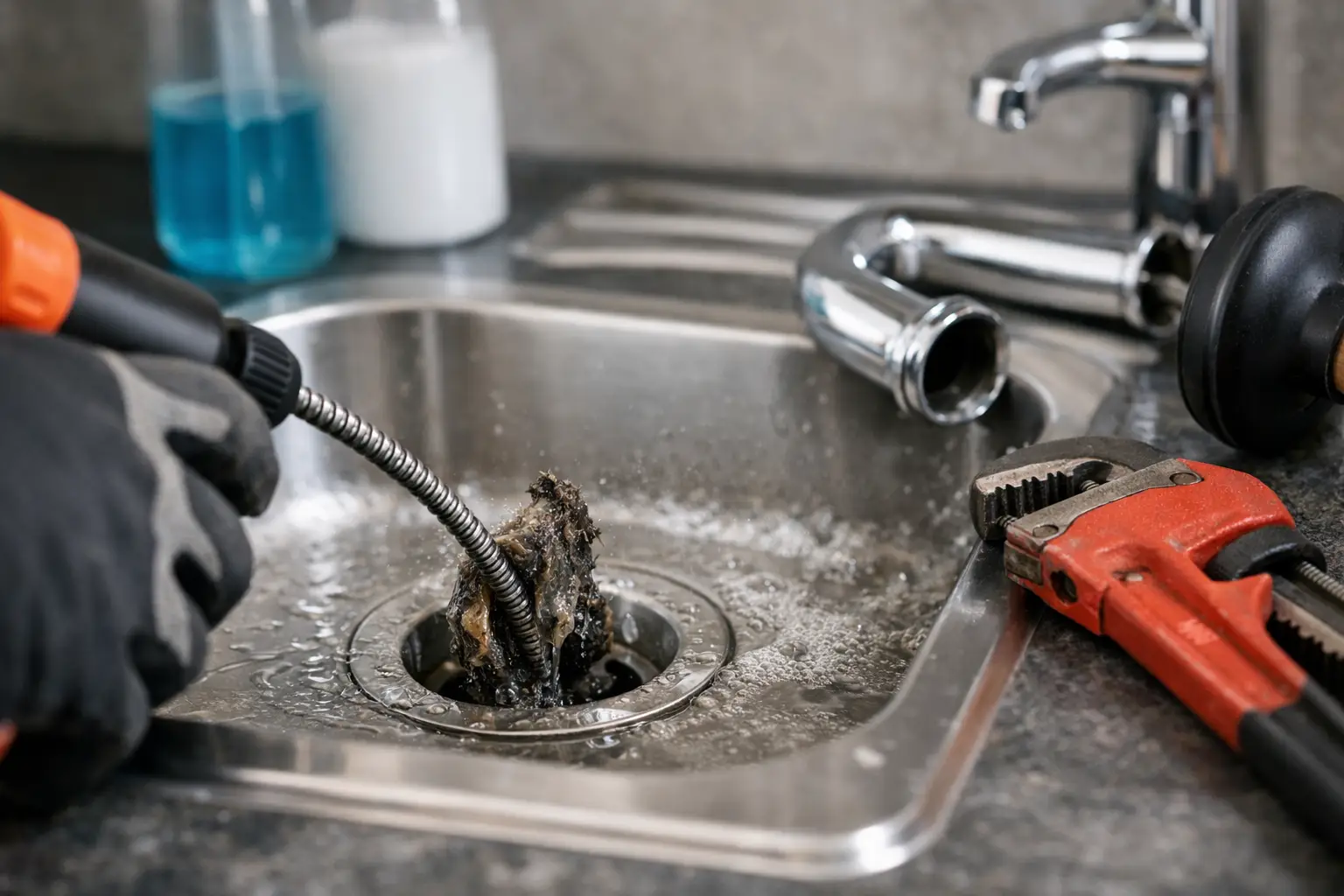
A drain that backs up once is a nuisance. A drain that clogs every few weeks is a pattern, and patterns usually mean the real problem was never fully cleared. If you’re wondering how to stop recurring drain clogs, the short answer is this: stop treating the symptom and find out what is happening inside the line.
That matters because repeat clogs rarely come from one random event. More often, they come from buildup that keeps catching debris, pipe scale that narrows the opening, grease lining the walls of a kitchen drain, or a sewer line issue farther down the system. You can get temporary relief when water starts moving again, but temporary relief is not the same as a clean pipe.
Why recurring drain clogs keep coming back
Most repeat clogs are caused by restriction, not a complete one-time blockage. In other words, the line may still be partially open, but the inside diameter has been reduced enough that normal waste, soap residue, grease, hair, or paper starts hanging up again.
In bathroom drains, that restriction is often a mix of hair, soap scum, and residue stuck to the pipe wall. In kitchen lines, grease is the usual problem. It does not just wash away because hot water went down the sink once or twice. It cools, sticks, and keeps collecting more debris over time.
Older homes can have another issue – scale buildup inside cast iron or galvanized drain lines. The pipe may technically still be intact, but the interior can become rough and tight enough that waste catches repeatedly. This is one reason recurring clogs are so common in older properties across Northern Virginia. The problem is not always what went down the drain last night. Sometimes it is years of buildup inside the pipe.
Then there are sewer line problems. If multiple fixtures are slow, or if lower-level drains back up first, the issue may be deeper in the main line. Root intrusion, offsets, bellies, and heavy debris buildup can all create repeat stoppages that seem random from the homeowner’s point of view.
How to stop recurring drain clogs at the source
The right fix depends on what is actually causing the obstruction. That is where many drain problems go sideways. A line can be opened just enough to restore flow, but if the buildup is still attached to the pipe walls, the clog is already on its way back.
Clear the full line, not just a hole through the clog
There is a big difference between punching a small opening through a blockage and cleaning the pipe wall to wall. The first gets water moving. The second is what helps keep it moving.
For grease-heavy kitchen lines, professional hydro jetting is often the most effective solution because it scours the inside of the pipe instead of simply poking through the center of the clog. For scale and hardened buildup, flex-shaft descaling may be the better fit. It depends on the pipe material, the condition of the line, and what is built up inside it.
This is where a specialist approach matters. You want the line cleaned in a way that matches the actual problem, not a one-size-fits-all attempt that leaves half the restriction behind.
Verify the condition of the pipe
If a drain keeps failing, guessing is expensive. A sewer camera inspection shows what is actually inside the line and whether the issue is grease, roots, scale, a broken section, or something else.
This matters for two reasons. First, it confirms whether cleaning is enough or whether the line has a structural issue. Second, it helps prove the result after the work is done. A clean drain should not be based on hope. It should be verified.
For landlords and business owners, this is especially useful. Repeat drain calls cost time, disrupt tenants or customers, and create avoidable headaches. Seeing the line condition clearly helps you make the right decision the first time.
The warning signs you should not ignore
Recurring clogs usually give you advance notice before a full backup. Slow draining water is the obvious one, but it is not the only sign.
Gurgling sounds after flushing or draining, water backing up in a nearby fixture, foul odors near a sink or floor drain, and repeated plunging with only short-term results all point to a line that is not truly clear. If the same tub, shower, kitchen sink, or floor drain acts up over and over, there is a reason.
Pay attention to the pattern. If only one bathroom sink is slow, the issue may be isolated to that branch line. If the shower, toilet, and sink in one area all seem affected, the restriction may be farther down. If the lowest drain in the building backs up first, that often points toward a larger drain or sewer line problem.
The details matter. They help narrow down where the blockage is forming and what kind of solution will hold up.
Prevention is not one-size-fits-all
People often ask for a simple rule that prevents every clog. There is no single rule because not all drains fail for the same reason.
A busy household with long hair, kids, and heavy shower use has different drain demands than a rental property with older cast iron lines. A commercial kitchen or break room sink has different risks than a bathroom lavatory. The best prevention plan depends on what the line handles and what condition the pipe is already in.
What does stay true is this: recurring clogs become less likely when the line is fully cleaned and the underlying condition is identified. If the pipe is structurally sound, maintenance cleaning at the right interval can prevent buildup from reaching the failure point again. If the pipe is damaged, no amount of wishful thinking will turn a broken line into a reliable one.
That is why honest diagnosis matters. Sometimes the answer is cleaning. Sometimes it is descaling. Sometimes it is camera verification and a larger repair plan. A good drain specialist explains the difference clearly.
Why temporary fixes often waste time
The frustrating part about repeat clogs is that they can make you think the issue is minor because the drain keeps coming back, at least for a while. But a line that repeatedly clogs is usually getting worse, not better.
Temporary fixes tend to leave residue behind. That residue grabs the next wave of debris and starts the cycle again. Over time, stoppages can become more frequent, backups can become messier, and what started as a slow sink can turn into a bigger sanitation issue.
There is also the risk of misreading the problem. A kitchen sink that keeps clogging may seem like a simple grease line issue, but if the branch drain ties into a larger line with heavy buildup, treating only the sink opening will not solve much. The same goes for bathroom backups that appear isolated but are really connected to a partially blocked main.
When a drain keeps failing, speed matters, but accuracy matters more. Fast service is only valuable if the diagnosis is right.
When to call for professional drain cleaning
If the same drain has clogged more than once in a short period, or if more than one fixture is involved, it is time to stop hoping it clears on its own. The same goes for backups in lower-level drains, strong sewer odors, or any situation where wastewater is coming back into the home or building.
Professional equipment makes a difference because stubborn buildup often needs more than a basic clearing method. High-pressure jetting, flex-shaft cleaning, and sewer camera inspections allow a technician to remove buildup thoroughly and confirm the condition of the line. That is how you move from temporary relief to a longer-lasting result.
For property owners in places like Bristow, Gainesville, Haymarket, and Manassas, that can be especially important in older neighborhoods where aging drain lines and scale buildup are common. The goal is not just to get through today’s clog. It is to restore reliable flow and reduce the chance of another disruption next week.
Titan Jetters approaches recurring drain problems that way – identify the cause, clean the line properly, and verify what is going on inside the pipe so the customer knows exactly what was done.
The real fix is knowing what your drain is telling you
A recurring clog is not bad luck. It is a signal. The line is telling you there is buildup, damage, or a restriction that was never fully handled. Once you treat it that way, the next step becomes clearer.
If you want to stop dealing with the same drain over and over, focus on proven cleaning, proper diagnostics, and a solution that matches the condition of the pipe. A drain should not just work for a day. It should keep working when real life hits it again tomorrow.
