
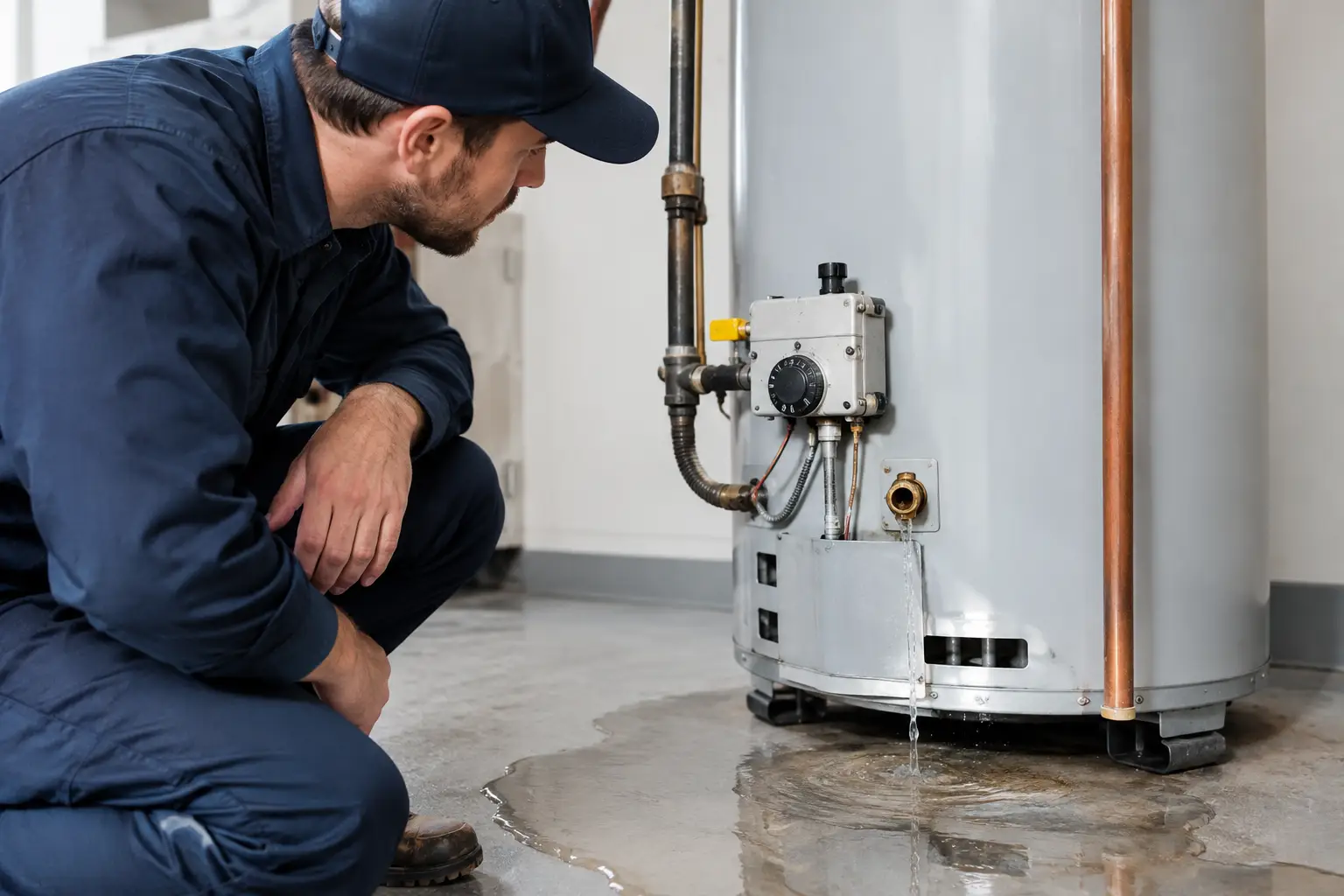
A puddle beside a water heater is never something to ignore. The reason why water heater leaks can range from a loose connection that needs prompt attention to a failing tank that cannot be repaired. Where the water is showing up matters, and so does how quickly it returns after being cleaned up.
A water heater can continue supplying hot water while a serious problem is developing. That is why a small drip deserves a real diagnosis before it turns into water damage, mold, lost hot water, or an emergency replacement. For homeowners and property managers, the goal is simple: identify the source, stop the damage, and make the right repair decision based on the condition of the unit.
Why Water Heater Leaks: The Location Tells a Story
Water does not always leak directly from the failed part. It can run down pipes, collect on top of the tank, or travel along the outside jacket before reaching the floor. A professional inspection starts by identifying the true source rather than assuming the tank itself is bad.
Water on top of the heater
Water around the top of the unit often points to the cold-water inlet, hot-water outlet, or pipe connections above the tank. These fittings can leak because of corrosion, worn sealing material, high pressure, or movement in the piping. On electric units, the top access area may also need attention if moisture has reached electrical components.
A leak at a connection may be repairable, but it should not be written off as harmless. Repeated moisture can corrode fittings and damage the area around the heater. If water is coming from overhead plumbing rather than the heater, that still needs to be confirmed. A nearby pipe leak can look exactly like a tank problem from the floor.
Water at the temperature and pressure relief valve
The temperature and pressure relief valve, often called the T&P valve, is a safety device. It is designed to release water if temperature or pressure inside the tank rises beyond a safe level. Water dripping from this valve or its discharge pipe can mean the valve is worn out, but it can also signal excessive water pressure or overheating.
That distinction matters. Replacing a valve without addressing the reason it opened can leave the real problem in place. Pressure issues may be connected to the home’s water pressure, a failed expansion tank, or a control problem with the heater. This is not a component to cap, block, or ignore. It requires prompt professional evaluation.
Water near the drain valve
The drain valve sits low on the tank and is used when the heater is serviced or drained. A slow drip here may come from a worn valve or a valve that is not sealing correctly. It can look minor, but even a slow drip can cause ongoing floor damage and may get worse over time.
The drain valve area can also be misleading. Water from the tank itself may run down and appear near the valve, so the source needs to be verified before deciding a simple repair will solve it.
Water from the bottom of the tank
When water is coming from underneath the water heater, the news is more serious. Condensation, a nearby plumbing leak, or a relief-valve discharge line can sometimes create water at the base. But if the tank has rusted through internally, water will leak from the bottom and the heater typically needs replacement.
A tank leak is not usually a repair situation. The steel tank has an inner lining, and once that lining and tank wall fail, patching the outside does not restore its integrity. Waiting can mean a larger leak, more property damage, and a rushed replacement decision.
Common Reasons a Water Heater Starts Leaking
Most leaks come down to age, corrosion, pressure, installation conditions, or a failed part. The right answer depends on the heater type, its age, the water conditions in the property, and the exact leak location.
Internal corrosion and sediment buildup
Storage-tank water heaters work hard every day. Minerals in the water settle at the bottom of the tank over time, creating sediment. That buildup can reduce efficiency, contribute to overheating at the base of the tank, and speed up wear on internal components.
The sacrificial anode rod is designed to corrode before the tank does. Once it is depleted, the tank becomes more vulnerable to rust. Northern Virginia homes can also have water conditions and plumbing layouts that affect how quickly a heater ages. A professional can assess the heater’s overall condition instead of treating every leak as an isolated issue.
Excessive water pressure
Your home’s plumbing system is built to operate within a safe pressure range. When pressure is too high, it puts extra stress on supply connections, valves, fixtures, and the water heater. Hot water expands as it heats, and a properly functioning expansion tank may be needed to manage that change in a closed plumbing system.
Signs of pressure trouble can include repeated relief-valve discharge, leaking fittings, or more than one plumbing fixture developing issues. Fixing the visible water heater leak without testing the system pressure can lead to another failure later.
Loose or corroded connections
The connection points at the top of a water heater handle constant temperature changes. Metal expands and contracts. Over time, fittings can corrode or lose their seal. This is one of the more repairable reasons a water heater leaks, provided the tank and surrounding piping are otherwise in good condition.
The trade-off is that a leak at one fitting can reveal wider corrosion in older plumbing. A technician should evaluate the condition of the connection, the shutoff valve, and the nearby pipe instead of replacing one part without looking at the full picture.
A failed valve or faulty heating component
Drain valves, T&P valves, thermostats, and heating elements all have different failure patterns. Electric water heaters may leak around a heating element gasket. Gas water heaters can have issues connected to the tank, drain valve, or relief valve, while condensation around the unit can complicate the diagnosis.
The key is not to guess. Water and electricity do not mix, and gas-fired equipment also requires proper safety checks. If the source is not obvious, a trained plumber can isolate the cause without putting your home or equipment at greater risk.
When a Water Heater Leak Is an Emergency
Some water heater leaks can wait for a scheduled repair if they are small, contained, and confirmed to be from a minor connection. Others need immediate attention. A growing puddle, active flow from the tank, water near electrical equipment, or a relief valve that is discharging continuously should be treated as urgent.
You should also act quickly if the heater is in a finished basement, utility closet, attic, or any area where water can damage flooring, drywall, stored belongings, or another unit below. For landlords and commercial property managers, a leak can affect multiple tenants and interrupt operations fast.
If it is safe to do so, turn off the water supply to the heater and keep the area clear until a plumber arrives. Do not tamper with the relief valve, gas controls, or electrical connections. A fast diagnosis is safer than trial-and-error repairs around a water heater.
Repair or Replacement: How to Make the Call
A repair often makes sense when the tank is in good shape and the problem is limited to a fitting, valve, supply line, or serviceable component. Replacement is usually the practical choice when the tank itself is leaking, corrosion is extensive, or the unit is nearing the end of its useful service life.
Age matters, but it is not the only factor. A newer heater with a failed valve may be worth repairing. An older heater with recurring leaks, rusty water, reduced hot-water performance, and visible corrosion may cost more in repeated repairs than it is worth. The best decision comes from a clear inspection and straight answers about the condition of the equipment.
Get the Leak Diagnosed Before It Gets Worse
A leaking water heater is not just a hot-water problem. It can be a plumbing pressure issue, a corroded connection, a safety-valve concern, or a tank failure waiting to become a larger cleanup. Titan Jetters provides responsive plumbing and leak repair for homeowners and property managers in Gainesville, Bristow, Haymarket, Manassas, and surrounding Northern Virginia communities.
A proper visit should identify where the water is actually coming from, explain whether repair is realistic, and give you clear options without guesswork. When water is already on the floor, getting the right diagnosis early is the simplest way to protect your home and get back to dependable hot water.
