
A sewer backup is not the time for guesswork. When toilets bubble, drains slow down across the house, or wastewater comes back through a low fixture, you need to know whether the line needs cleaning, a repair, or replacement. This sewer line repair options guide lays out the practical differences so you can make a clear decision after the cause has been properly diagnosed.
The right answer depends on what is happening inside the pipe. A recurring clog can look like a broken sewer line from inside the home, but the solution may be professional cleaning rather than excavation. On the other hand, a cleaned line that continues to catch paper, roots, or waste may have damage that needs attention.
Start With the Cause, Not the Repair Method
A main sewer line carries wastewater from your property to the public sewer connection or septic system. When that line cannot flow freely, the symptoms can affect several fixtures at once. A single slow bathroom sink may be a local drain issue. Slow tubs, toilets, and showers throughout the house point more often to the main line.
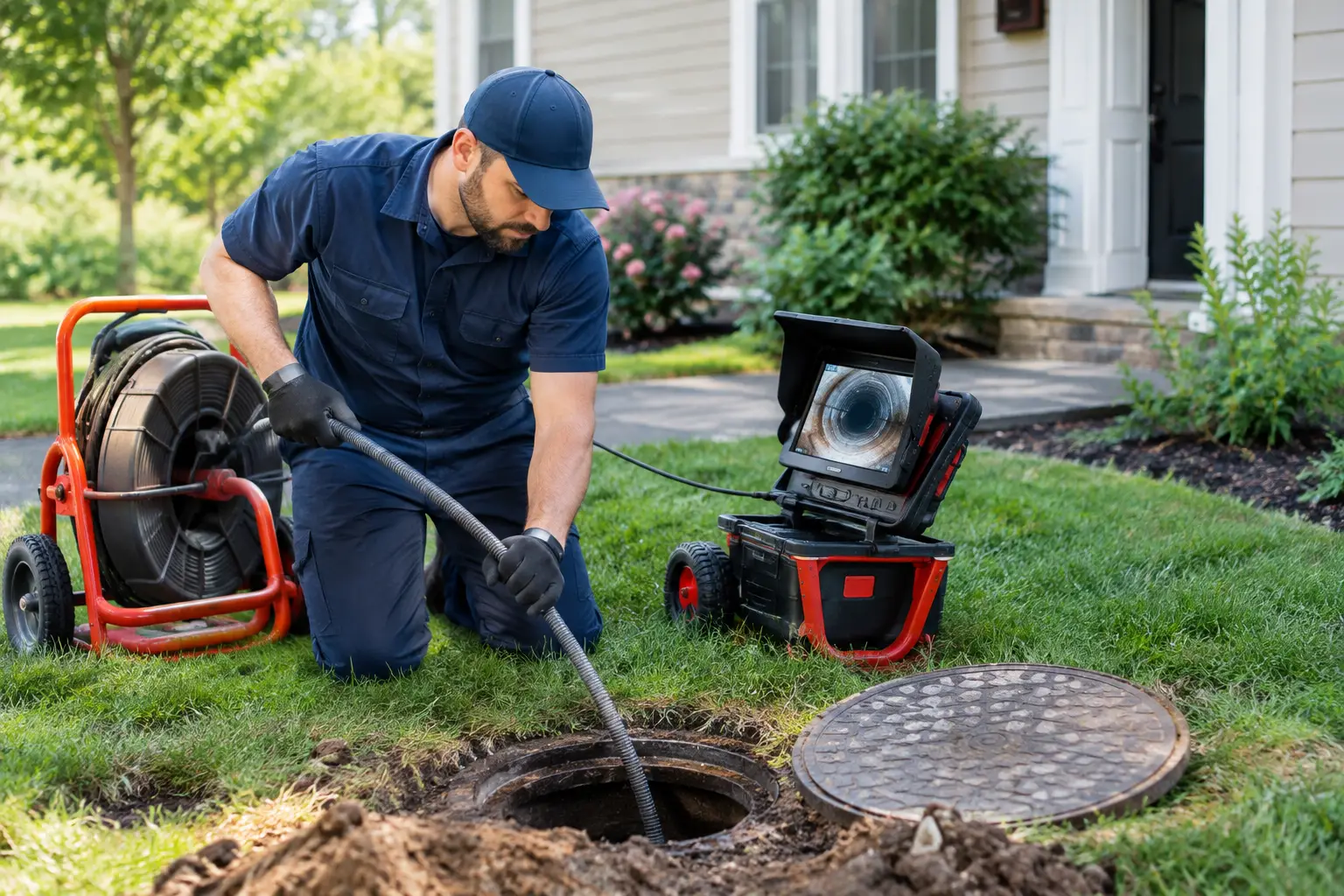
The most reliable first step is a sewer camera inspection after the line is opened or cleared enough to inspect. The camera shows what is actually inside the pipe: grease buildup, scale, root intrusion, a belly where the pipe has sagged, separated joints, cracks, or a collapsed section. It can also help locate the problem area before anyone discusses digging.
That matters because a blockage and a pipe failure are not the same thing. A company that jumps straight to replacement without documenting the condition of the line leaves you with too many unanswered questions. At Titan Jetters, the focus is on identifying the cause, showing the findings when possible, and explaining the options in plain language.
Sewer Line Repair Options Guide: Cleaning, Repair, or Replacement
Most sewer line decisions fall into three categories. Each has a place, and none is automatically the best choice for every property.
Professional cleaning for buildup and blockages
If the pipe itself is intact, professional drain cleaning may restore full flow without a repair. Main sewer lines can collect wipes, paper, grease, sludge, roots, and mineral scale. Older cast iron piping can narrow internally as corrosion and scale build up over time.
Methods such as hydro jetting, flex-shaft cleaning, and pipe descaling are chosen based on the pipe material and the obstruction. Hydro jetting uses high-pressure water to remove heavy buildup from the pipe walls. Flex-shaft equipment can break apart stubborn deposits and root masses, while descaling targets the hard interior buildup often found in aging cast iron.
Cleaning is a strong option when the camera inspection shows a continuous pipe with no major structural damage. It is also useful before evaluating a repair, since a heavily blocked line can hide the condition of the pipe. Still, cleaning is not a permanent fix for a collapsed pipe, an offset joint, or a severe belly that repeatedly holds waste.
Targeted sewer line repair for a defined problem
A localized repair makes sense when the issue is limited to one reachable section of pipe. Examples include a damaged connection, a cracked segment, a separated joint, or a short area compromised by roots. The goal is to correct the failed portion while leaving sound pipe in place.
This option can limit the scope of work compared with replacing the full line. It is often a sensible choice when the camera confirms that the rest of the sewer line is in good condition. However, it is not always the least expensive option over time. If an older line has failures in more than one area, fixing one section may simply move the next problem down the line.
Access also affects the plan. A damaged section under open yard is very different from one beneath a driveway, patio, finished basement, or mature landscaping. A proper diagnosis should include a discussion of the location, depth, condition of the surrounding line, and how the repair area will be accessed.
Full sewer line replacement for widespread failure
Replacement is usually considered when the pipe has extensive deterioration, multiple breaks, repeated root intrusion through failing joints, major offsets, or a collapse. It may also be the practical answer when an old pipe has narrowed so severely that cleaning produces only short-term relief.
Replacing the line is a larger project, but it gives the property a new, properly functioning path for wastewater. For landlords and commercial property managers, that can be preferable to repeated service calls, tenant disruption, and the risk of another backup. For homeowners planning to stay in an older home, replacement can remove a recurring source of stress.
A full replacement should never be treated as a one-size-fits-all recommendation. The line route, pipe depth, access points, local conditions, and camera findings all affect the scope. Ask to understand why replacement is being recommended instead of cleaning or a limited repair.
When a Repair Cannot Wait
Some sewer problems are inconvenient. Others create an immediate sanitation issue. If sewage is backing up into a tub, shower, floor drain, or lower-level bathroom, stop using water fixtures as much as possible and call for professional help. Running a dishwasher, washing machine, or additional flushes can add more water to a blocked main line.
You should also act quickly when you notice sewage odors indoors, wet or unusually green patches in the yard near the sewer route, recurring backups after recent cleaning, or drains that gurgle whenever another fixture is used. These signs do not confirm a broken line on their own, but they are strong reasons for prompt diagnostics.
Fast service does not mean rushed decisions. The immediate objective is to protect the property, restore safe drainage where possible, and determine whether the problem is an obstruction or a damaged pipe.
What Changes the Cost and Scope of Sewer Work
No honest professional can determine the correct repair from a symptom alone. Sewer work varies because the conditions below ground vary. The most significant factors are the type and extent of pipe damage, the depth and location of the line, the pipe material, access to the affected area, and whether the issue is isolated or widespread.
A simple blockage near an accessible cleanout has a very different scope from a failing line that runs beneath hardscape. The age of the property can matter too. In Gainesville, Bristow, Haymarket, Manassas, and surrounding Northern Virginia communities, homes may have different pipe materials and layouts depending on when they were built. The camera findings should drive the recommendation, not assumptions based on the neighborhood or the age of the house alone.
For commercial properties, usage is another major factor. Restaurants can develop heavy grease buildup, while multi-tenant buildings may experience frequent paper and foreign-object blockages. Cleaning and maintenance may be the practical first move when the pipe structure is sound, but repeated downtime calls for a closer look at the entire system.
Questions Worth Asking Before You Approve Work
Before choosing a sewer line solution, ask what the camera inspection showed, where the issue is located, and whether the line was cleaned enough to see the full condition. Ask whether the problem is limited to one area or appears throughout the pipe. You should also understand what symptoms may return if you choose cleaning now instead of repair or replacement.
A good explanation should be specific. “Your line is bad” is not enough. You deserve to know whether the issue is roots, scale, a break, an offset, or a collapse – and why the recommended option matches that finding.
If your drains are slow, your main line is backing up, or you are dealing with the same clog again, do not wait for a bigger mess. Schedule a professional sewer camera inspection and cleaning evaluation. A clear view inside the line is the quickest way to move from uncertainty to the right repair decision.
