
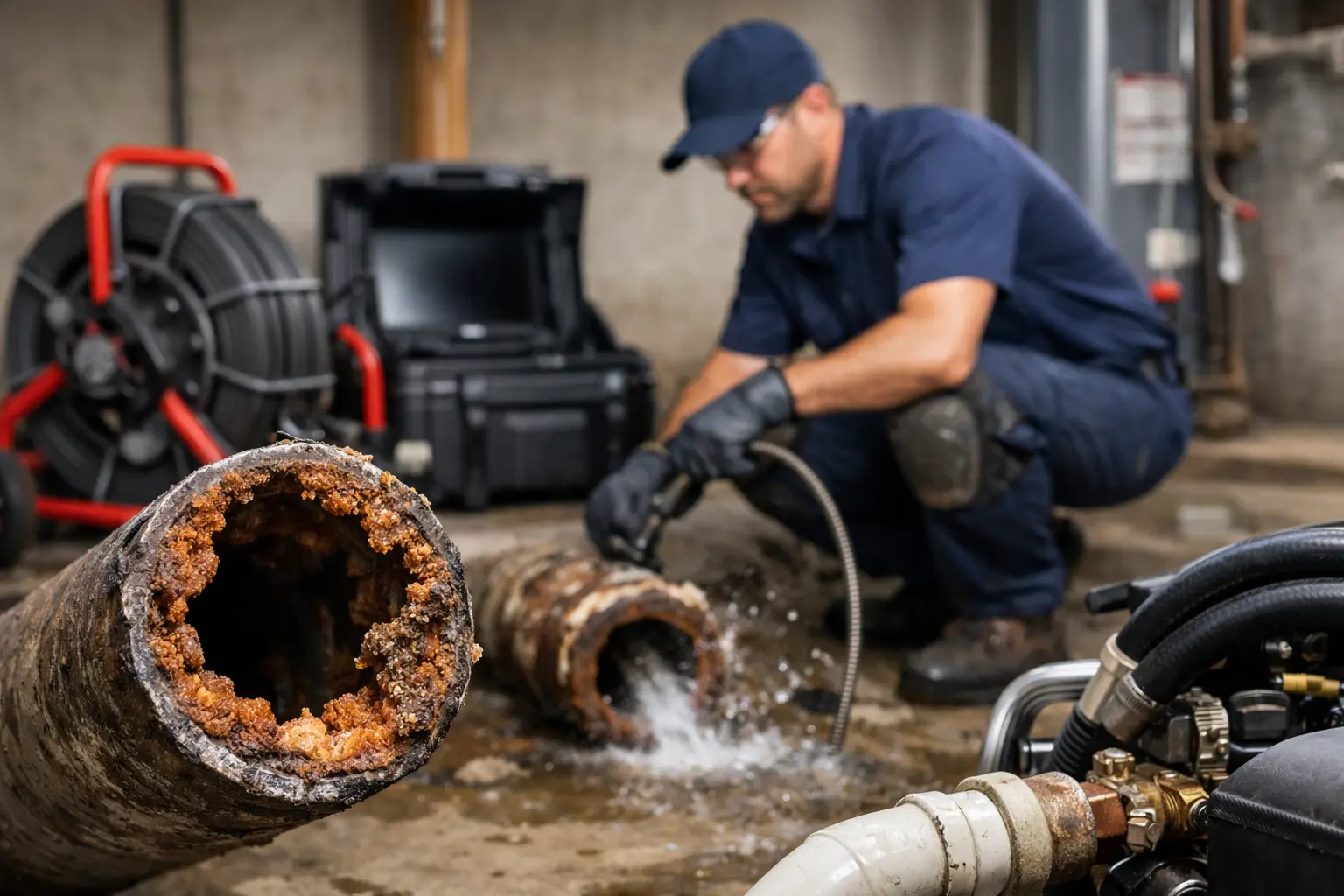
A slow drain is frustrating. A whole house where drains have been getting slower for months is a different kind of problem. For many properties with aging cast iron plumbing, a Manassas pipe descaling service can address the buildup hiding inside the pipe itself, not just push through the latest clog.
Scale does not always create an immediate backup. It often narrows the line gradually, giving waste, toilet paper, grease, and debris more places to catch. By the time a sink, shower, or toilet starts backing up repeatedly, the pipe may have lost a significant amount of usable interior space.
What Pipe Descaling Actually Removes
Pipe descaling is a professional cleaning process designed to remove hardened mineral deposits, corrosion buildup, and rough scaling from the inside walls of a drain or sewer line. It is especially useful for older cast iron pipes, where years of water exposure and corrosion can leave a jagged interior surface.
Think of a healthy drain line as a smooth path. When scale builds up, that path becomes rough and narrow. Material that should move through the pipe can snag on the buildup. A temporary drain clearing may restore flow for a while, but it may not remove the underlying surface that keeps catching debris.
Professional descaling uses specialized equipment to break up and remove that buildup while protecting the line as much as possible. The right method depends on the pipe material, its condition, the location of the buildup, and what a camera inspection shows. That diagnostic step matters. Not every slow drain is a scaling problem, and not every older pipe is a good candidate for aggressive cleaning.
Signs Your Manassas Property May Need Descaling
Scale buildup tends to announce itself through recurring problems rather than one dramatic event. If the same drain keeps clogging after it has been cleared, there may be more going on than a simple blockage.
Common warning signs include slow drains in more than one fixture, frequent toilet clogs, backups that return after standard drain cleaning, gurgling sounds, and water rising in a tub or shower when another fixture is used. Property owners may also notice that a drain seems clear one week and sluggish again shortly afterward.
Older homes and commercial properties can be more likely to deal with scaled cast iron lines, but age alone does not tell the whole story. Kitchen grease, frequent use, pipe slope, past repairs, and the condition of the main sewer line all affect how a drainage system performs.
For restaurants, rental properties, and other businesses, recurring drainage trouble can mean downtime, unhappy tenants or customers, and a problem that gets more expensive when it is ignored. A proper diagnosis helps avoid spending money on repeated quick fixes that do not address the cause.
Why a Camera Inspection Comes First
A sewer camera inspection allows a technician to see inside the line before choosing a cleaning method. That is the difference between making an informed recommendation and guessing from the surface.
The camera can help identify whether the restriction is caused by scale, grease, a foreign object, root intrusion, a damaged section of pipe, or a combination of issues. It can also show whether the line has cracks, separated joints, bellies, or severe deterioration that could change the best course of action.
This is particularly important with old cast iron. Some pipe may have surface scale that can be professionally cleaned to improve flow. Other pipe may be too compromised for cleaning alone to be the right long-term answer. Honest answers protect the property and help you plan for the repair or maintenance that actually makes sense.
After cleaning, a follow-up camera inspection can verify the condition of the pipe and show how much of the interior has been restored. Seeing the line gives homeowners, landlords, and property managers a clearer picture of what was done and what may need attention later.
Descaling, Hydro Jetting, and Standard Drain Cleaning
These services solve different problems. Standard drain cleaning is often the right choice for a localized blockage, such as a clogged bathroom sink, shower drain, or toilet line. It can restore flow quickly when the issue is hair, soap residue, paper buildup, or an obstruction near the fixture.
Hydro jetting uses high-pressure water to clean the inside of appropriate drain and sewer lines. It is highly effective for grease, sludge, soft buildup, and recurring main line clogs. For commercial kitchens and properties with heavy grease accumulation, hydro jetting may be a practical part of ongoing drain maintenance.
Descaling is more targeted at hard, adhered buildup on the pipe wall, commonly found in aging cast iron. In some cases, descaling and hydro jetting can complement each other. The scale needs to be addressed, then loosened debris needs to be flushed from the line. But the sequence and method should be based on what the camera reveals, not a one-size-fits-all service package.
A professional should also consider the line’s material and structural condition before recommending hydro jetting or descaling. Cleaning can improve a line that is restricted by buildup. It cannot repair a collapsed pipe, a major offset, or a section that has deteriorated beyond serviceable condition.
What to Expect From Professional Pipe Descaling
The visit should start with questions about what has been happening: which fixtures are affected, how often the issue returns, whether there have been backups, and whether the property has older plumbing. Those details help narrow down whether the problem is likely in a branch line, main sewer line, or a specific fixture drain.
Next comes inspection and diagnosis. A camera provides the best view of the condition inside the line and helps determine whether descaling is appropriate. If the pipe is a good candidate, the technician can explain the cleaning approach, what results are realistic, and whether other work may be needed.
During the service, the goal is to remove buildup efficiently and restore usable pipe diameter without treating the line carelessly. Once the work is complete, the line should be checked for flow and, when applicable, visually verified with the camera. Clear communication matters here. You should know what was found, what was removed, and whether the inspection revealed any concerns that cleaning will not solve.
Titan Jetters provides drain and sewer diagnostics for Manassas-area homes and businesses with recurring drainage issues. The focus is on identifying the actual source of the restriction, explaining the available options clearly, and using professional equipment to get the line flowing properly.
When Descaling Is Not the Right Answer
Pipe descaling can be valuable, but it is not a cure for every sewer problem. If a camera inspection finds a broken line, major root damage, a collapse, severe channeling, or a pipe that has lost structural integrity, cleaning may only offer short-term relief or may not be recommended at all.
Likewise, a single slow bathroom sink may simply have a localized clog. Descaling a larger line would not be the sensible first step. The best service is the one that matches the problem, whether that means drain cleaning, hydro jetting, sewer line repair, or further diagnostics.
There is also a maintenance question. If an older line has been cleaned successfully but remains rough or has ongoing conditions that encourage buildup, periodic inspection or cleaning may help prevent another emergency. The appropriate schedule depends on the property, how the plumbing is used, and what the camera showed after service.
Do Not Wait for a Full Sewer Backup
A recurring slow drain is often the early warning that a line is narrowing or collecting debris. Waiting until wastewater backs up into a tub, floor drain, or lower-level bathroom turns a manageable service call into a disruptive cleanup situation.
If drains in your Manassas home, rental, restaurant, or business are repeatedly slowing down, ask for a diagnosis that looks beyond the immediate clog. A camera inspection and the right professional cleaning method can provide answers before the next backup forces the issue. Contact a local drain and sewer specialist when the pattern starts, and give your plumbing system a fair chance to keep flowing.
