
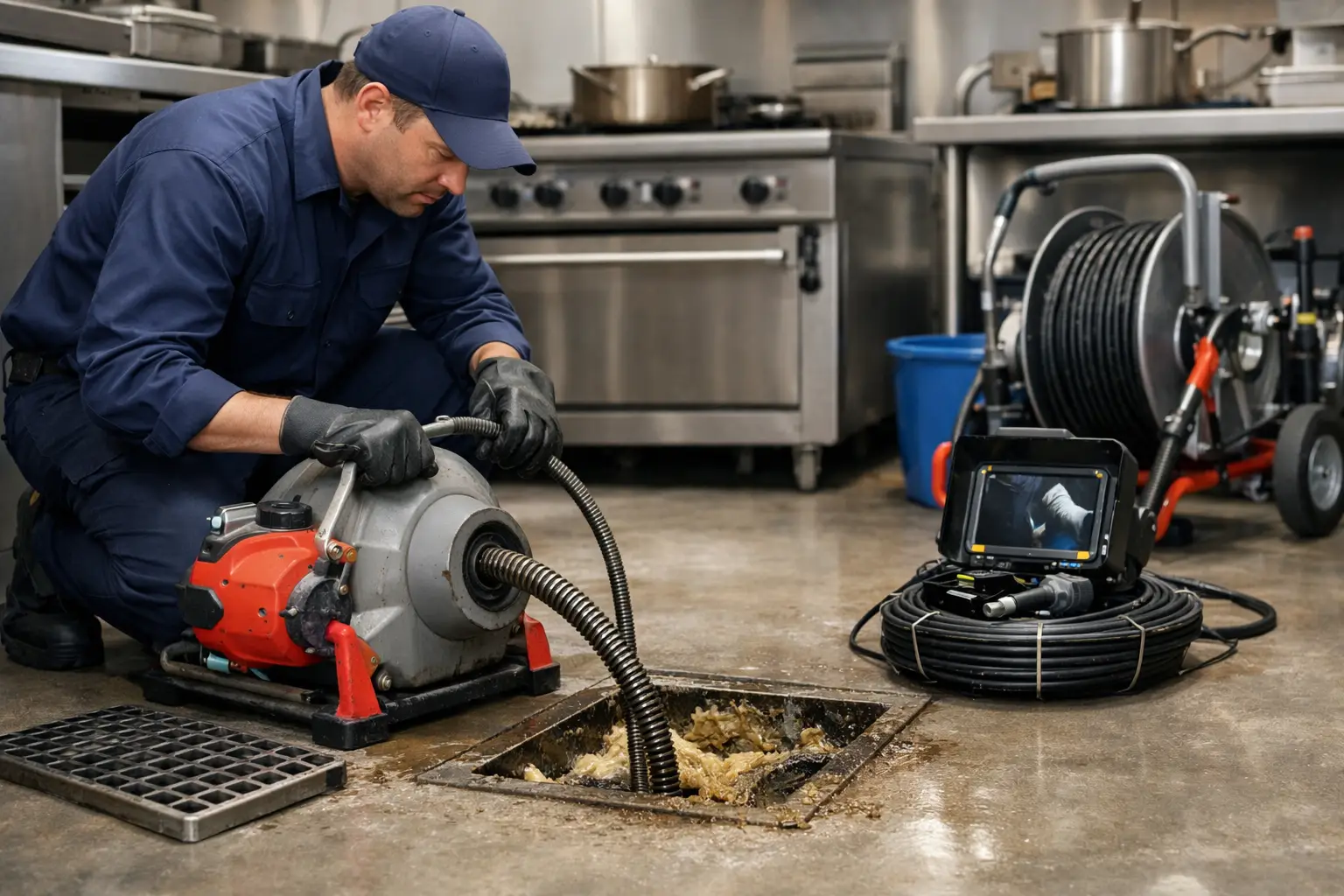
A commercial kitchen can look clean, run a busy shift, and still be building a serious drain problem below the floor. Grease does not usually close a restaurant or commercial property all at once. It collects gradually inside kitchen drain lines, catches food debris, and reduces the pipe opening until a slow sink turns into standing water, foul odors, or a backup during the worst possible hour. To manage commercial grease blockages, the goal is not simply getting water moving again. It is finding the buildup, clearing it thoroughly, and putting a practical maintenance plan in place before downtime costs your business more.
For restaurants, cafeterias, catering operations, apartment communities, and other properties with active commercial kitchens, recurring grease trouble needs professional attention. A cable may punch a temporary opening through a clog, but it may leave a thick layer of grease attached to the pipe walls. That is why the right diagnosis and cleaning method matter.
Why Commercial Grease Blockages Keep Coming Back
Fats, oils, and grease leave the kitchen warm and liquid. As they move through the drain system, they cool and stick to the inside of the line. Food scraps, soap residue, coffee grounds, and other debris catch in that layer. Over time, the line becomes narrower and rougher, making it easier for the next layer of buildup to hold on.
Commercial kitchens put far more volume through their drains than a typical home. Dishwashing, food preparation, mop sinks, floor drains, and grease-producing equipment can all feed the problem. Even a properly installed grease interceptor needs regular service. If grease is getting past the interceptor, if cleaning schedules have slipped, or if a downstream pipe already has heavy buildup, the kitchen line can still clog.
Older properties may have an added issue. Cast iron pipe can develop internal corrosion and scale, creating a rough surface that traps grease faster than a smooth pipe. A recurring blockage may also point to an offset joint, a damaged section of line, poor slope, or a shared building drain carrying more waste than expected. Clearing the symptom without checking the line can lead to another emergency soon after.
Signs You Need to Manage Commercial Grease Blockages Now
Waiting for a full backup is expensive. Kitchen staff lose work space, customers may be affected, and cleanup can interrupt service. Call for commercial drain service when you notice several of these warning signs:
- Floor drains or sink drains that are slow, especially after peak meal periods
- Gurgling sounds, bubbling water, or water rising in a nearby drain when a sink empties
- Persistent sewer or rancid grease odors around drains, mop sinks, or kitchen areas
- Repeated clogs that return after plunging, snaking, or routine grease interceptor service
- Water backing up at a floor drain, cleanout, or lower-level fixture
One slow drain may be a localized obstruction. Several fixtures acting up at the same time often means the blockage is farther down the branch line or building drain. That distinction matters because it changes where the technician needs to inspect and clean.
Start With a Camera Inspection, Not Guesswork
Commercial grease problems are often hidden inside lines that run below slabs, behind walls, or across a large building. A sewer camera inspection gives a clear look at the condition of the pipe and the actual source of restricted flow. It can show whether the line is coated with grease, packed with debris, damaged, scaled, or affected by a structural issue.
This is especially valuable when blockages keep returning. A technician can identify where the grease is collecting and determine whether the issue is limited to a kitchen branch line or extends to the main sewer line. The inspection also helps avoid applying the wrong tool to the problem. If the pipe is compromised or heavily corroded, aggressive cleaning must be approached carefully and based on the pipe’s condition.
A camera inspection is also how results can be verified after cleaning. Water flowing again is good. Seeing that the pipe walls have been properly cleaned is better.
Hydro Jetting Clears More Than a Small Opening
For heavy grease buildup, professional hydro jetting is often the most effective option. Hydro jetting uses controlled high-pressure water to break up grease, flush loose debris, and clean buildup from the inside of the pipe. Instead of merely boring a narrow path through the blockage, the process is designed to restore a much cleaner pipe wall.
That difference affects how long the line stays open. A cable machine can be the right tool for certain obstructions, such as a compact clog that needs immediate access. But if the pipe is lined with grease, a cable may not remove enough material to prevent a fast recurrence. Hydro jetting is often the better long-term cleaning method when the pipe condition and access allow it.
There are trade-offs. Hydro jetting should not be treated as a one-size-fits-all answer. The technician needs to consider pipe material, age, existing damage, and the nature of the blockage. A camera inspection helps make that decision with real information instead of assumptions.
For scaled cast iron lines, pipe descaling may also be needed. Scale creates ridges that hold grease and debris, so removing that internal buildup can improve drainage and make future maintenance more effective.
Prevention Depends on What Your Kitchen Puts Down the Drain
No commercial kitchen can prevent every drain issue, but consistent operating habits dramatically reduce how quickly grease accumulates. Staff should understand that grease belongs in designated collection containers, not in sinks or floor drains. Food scraps should be handled before dishes enter the wash area, and drain screens should be kept in place where appropriate.
Grease interceptors are part of the system, not a substitute for drain cleaning. They need to be serviced on schedule, and the schedule should match the kitchen’s actual volume. A high-volume restaurant may need more frequent attention than a small office break room with limited food preparation. If a grease interceptor is overflowing, undersized, bypassed, or not maintained, grease can move downstream and create a larger pipe blockage.
It also helps to keep a simple record of slow-drain calls, interceptor service, drain cleaning, and backups. Patterns matter. If the same sink line slows every few months, or the same floor drain backs up during busy periods, that is useful diagnostic information. It tells the service technician where to focus and helps property managers plan maintenance before an emergency develops.
Build a Maintenance Plan Around Your Actual Risk
The best schedule depends on the business, the plumbing layout, pipe material, and how often grease-heavy waste enters the system. A restaurant with fryers, dishwashers, and constant food prep has different needs than a community center kitchen used a few times per week. Buildings with older cast iron or a history of recurring backups may need closer monitoring.
A professional maintenance plan may include scheduled drain cleaning, hydro jetting when buildup warrants it, grease interceptor coordination, and periodic camera inspections for lines with a known history. The point is not to sell cleaning that is not needed. It is to address the condition of the line before it becomes a service interruption, sanitation concern, or after-hours emergency.
For landlords and property managers, this is also a way to protect tenants and avoid confusion when multiple spaces share a building drain. A documented inspection can help identify whether a problem originates in one kitchen line, a common line, or a main sewer connection.
When a Grease Clog Becomes an Emergency
A full backup, wastewater coming up through a floor drain, or multiple kitchen fixtures overflowing needs prompt professional service. Stop using affected fixtures if possible. Continuing to run dishwashers, sinks, or equipment can push more water into a blocked line and increase the cleanup area.
The next step is a proper diagnosis, not repeated temporary clearing. Titan Jetters serves commercial properties in Gainesville, Bristow, Haymarket, Manassas, and surrounding Northern Virginia communities with drain cleaning, hydro jetting, camera inspections, and sewer diagnostics. The focus is straightforward: locate the restriction, explain what is happening in the line, clean it correctly, and verify the result.
A grease blockage does not have to become a shutdown. If your kitchen drains are slowing down, odors are building, or clogs keep returning, schedule service before the line makes the decision for you.
