
A sewer backup is the worst time to start hunting for a buried access pipe. These main sewer line cleanout location tips can help you identify where the line is likely accessible before a slow drain turns into wastewater on the floor.
A main cleanout gives a drain and sewer technician direct access to the building sewer – the pipe that carries wastewater from your home to the public sewer or septic connection. Finding it quickly can save time during a camera inspection, drain clearing, or emergency backup. It can also help protect landscaping, finished spaces, and your schedule when a sewer issue cannot wait.
What a Main Sewer Cleanout Looks Like
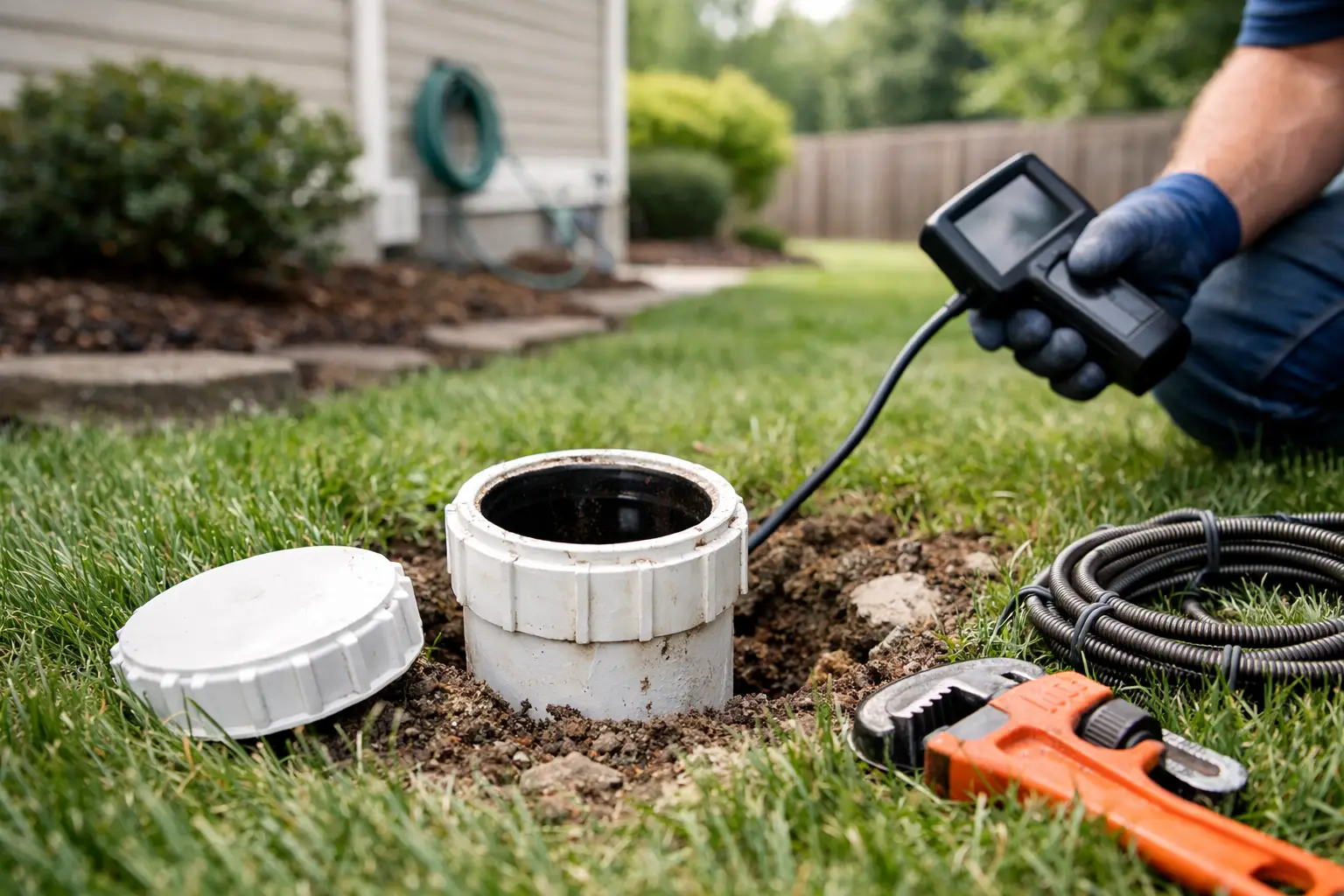
Most main cleanouts are short pipe risers with a removable cap or plug. The cap may be plastic, brass, or cast iron, depending on the age of the home and the material used for the sewer line. You may see a square nut in the center of the cap, a threaded plug, or a larger plastic cap marked with “cleanout.”
The cleanout is not always obvious. Outdoor caps can be covered by mulch, grass, leaves, gravel, or landscaping fabric. Indoor cleanouts may be tucked into a utility room, crawlspace, basement, garage, or mechanical closet. In older Northern Virginia properties, the access point may be part of an aging cast-iron system and blend in with surrounding piping.
Do not confuse a main sewer cleanout with a smaller drain cleanout serving one fixture or branch line. A kitchen, laundry, or bathroom drain may have its own access point, but that does not necessarily reach the full sewer line leaving the house.
Main Sewer Line Cleanout Location Tips Outside the Home
For many homes, the main cleanout is outside near the foundation. Start by looking along the side or front of the house where the sewer line is most likely to exit. It is often within a few feet of the exterior wall, though its exact placement depends on the home’s layout, grade, and local installation practices.
Look for a round cap at ground level, typically two to four inches wide. It may sit inside a small plastic or metal box, extend slightly above the soil, or be flush with the lawn. If the property has been landscaped since construction, the cleanout may be hidden beneath a decorative rock bed or near shrubs.
The route from the house to the street is another useful clue. Municipal sewer connections generally run from the home toward the public main, often located near the street or within a utility easement. The cleanout is commonly positioned along that route, but it will not always create a perfectly straight line from the bathroom to the curb.
Avoid digging or probing aggressively around suspected piping. Sewer lines, water lines, gas utilities, electrical wiring, irrigation systems, and communication lines may all be present. If the cleanout is not visible, a professional can locate the line and determine the best access point without turning a drain issue into property damage.
Check Near These Exterior Areas
A cleanout is often found near an exterior bathroom wall, the garage, a side yard, or the front foundation. Homes with a basement may have the main access indoors instead, while slab homes are more likely to have an exterior cleanout. Townhomes and condos can be different again, especially where sewer systems are shared or access is controlled by an association.
If you have a cleanout near the driveway, keep it visible and protected from vehicles. A cracked cap or damaged riser can allow dirt, runoff, and debris into the sewer line or make future service harder than it needs to be.
Where to Look Inside the Home
When there is no outdoor cleanout, look in practical service areas. Basements, utility rooms, unfinished storage spaces, crawlspaces, and garages are common locations. The cleanout may be mounted low on a vertical stack or positioned near the point where the sewer line leaves the building.
In a finished basement, access could be behind a removable panel, inside a closet, or near a floor drain. It should not be permanently buried behind finished walls without a service opening, but remodeling work sometimes makes access less obvious.
A main cleanout in a crawlspace deserves extra attention during a backup. Limited space, standing water, and poor visibility can make the area unsafe and difficult to work in. When wastewater is involved, keep people and pets away from the affected area and call for professional drain service promptly.
Why the Cleanout Location Matters During a Backup
The main cleanout can reveal whether the problem is inside the home’s plumbing or farther down the main sewer line. When a technician opens and inspects the proper access point, it creates a clearer path for a sewer camera and professional cleaning equipment.
That matters because symptoms can look similar while the cause is very different. Multiple slow drains, toilets that gurgle, water appearing in a tub or shower when another fixture drains, and sewage backing up at the lowest drain often point to a main-line restriction. Common causes include heavy buildup, root intrusion, scale in older piping, damaged pipe sections, or a blockage at the connection.
Using the right access point avoids guesswork. A camera inspection can show what is actually inside the line, where the issue is located, and whether the pipe needs cleaning, descaling, repair, or further evaluation. The result is a targeted plan rather than repeated attempts to clear a symptom from the wrong drain.
Keep the Area Accessible Before You Need Service
Once you locate the cleanout, make a simple note of where it is. A photo showing its position relative to the home, fence, landscaping, or utility equipment can be useful for everyone in the household. Landlords should also keep the location documented for tenants and property managers.
Keep the access point clear of heavy planters, permanent decorations, stacked materials, and dense overgrowth. You do not need to make it an eyesore. The goal is simply to ensure a technician can reach it quickly without moving half the yard or risking damage to surrounding features.
If the cap is broken, missing, loose, or buried, have it evaluated. A cleanout cap is a small component, but it helps keep the sewer system closed and serviceable. Never remove a suspected main cleanout cap during an active backup. Pressure in the line can release wastewater suddenly, creating a serious mess and exposure risk.
When a Sewer Specialist Should Locate It
Call a sewer professional when the cleanout cannot be found, when multiple fixtures are backing up, or when there is a sewage odor or visible wastewater. Fast action matters, particularly in homes with finished basements or businesses where a drain failure can interrupt operations.
Titan Jetters uses camera diagnostics to verify conditions inside the sewer line instead of relying on assumptions. For homeowners and property managers in Bristow, Gainesville, Manassas, and nearby Northern Virginia communities, that means a clearer answer about what is blocking flow and what needs to happen next.
The cleanout is more than a capped pipe in the yard or basement. It is the service doorway to one of the most important systems on your property. Knowing where it is now gives a drain specialist a faster starting point when every minute counts.
