
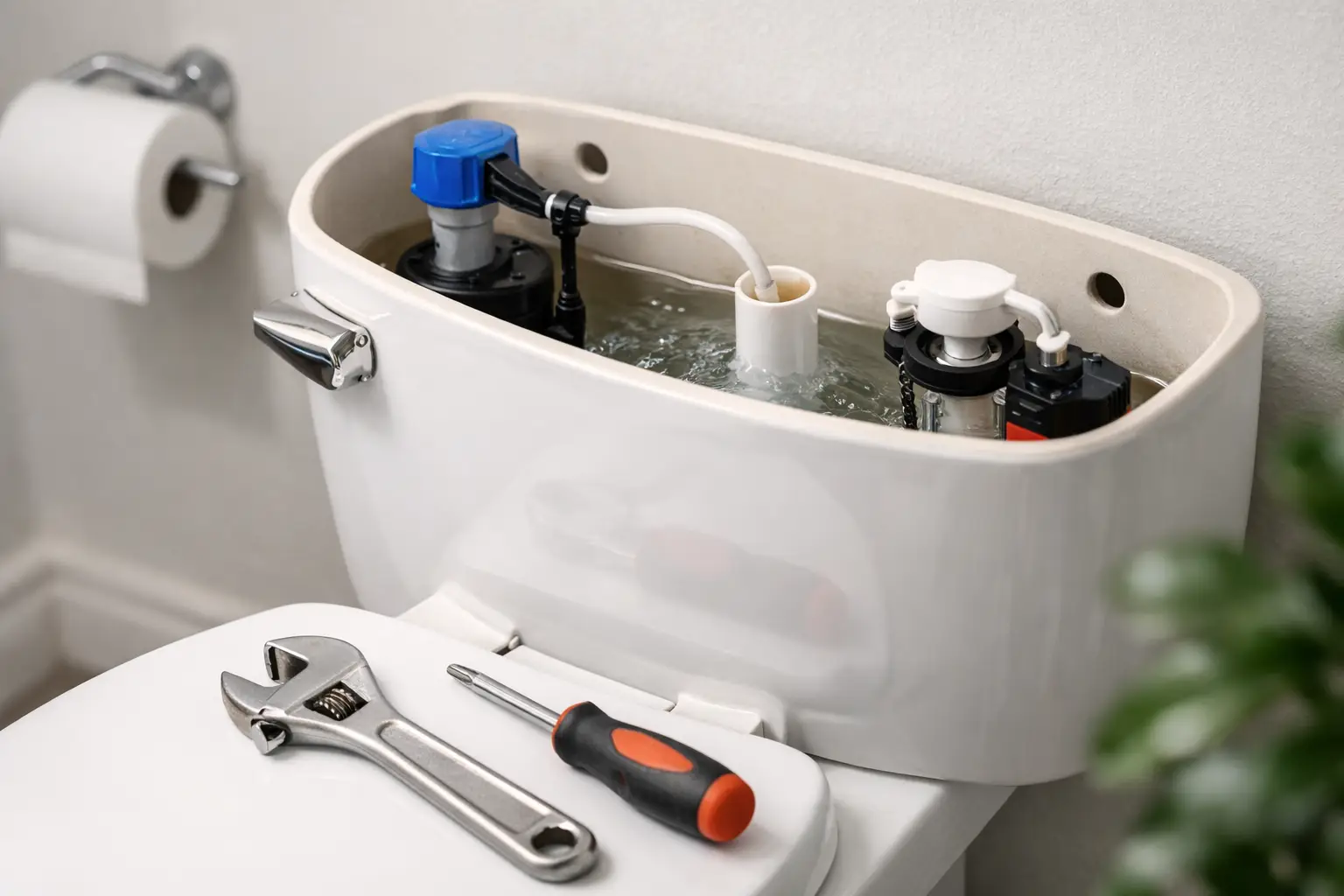
A toilet that refills every few minutes can waste a surprising amount of water without making much of a scene. If you are asking, “why does my toilet keep running,” the answer is usually inside the tank: water is either leaking out when it should stay put, or the valve that controls incoming water is not shutting off correctly.
The good news is that a running toilet is often a contained fixture problem, not a sewer line failure. The bad news is that ignoring it can raise your water bill, wear out internal parts, and eventually turn a minor issue into a leak or overflow. Here is what the sound is telling you and when it is time to have it professionally inspected.
Why Does My Toilet Keep Running After It Flushes?
A toilet works by filling the tank with water, releasing that water into the bowl during a flush, then sealing and refilling the tank to a set level. When everything is working, the refill cycle ends and the toilet stays quiet.
A running toilet means that cycle is not ending. You may hear a steady hiss, an occasional short refill, or water trickling into the bowl long after flushing. Each pattern points to a slightly different failure, but most come back to a few components: the flapper, the fill valve, the overflow tube, or the linkage connecting the handle to the flush valve.
A worn or leaking flapper
The flapper is the rubber seal at the bottom of the tank. It lifts during a flush and drops back into place to hold water in the tank. If it is warped, brittle, coated with mineral buildup, or simply no longer sealing tightly, water slowly slips into the bowl.
As the tank level drops, the fill valve senses the loss and turns on again. That creates the familiar cycle of a toilet that seems to refill on its own. In Northern Virginia homes with hard water or older fixtures, mineral deposits can shorten the life of rubber seals and prevent a clean seal.
A flapper problem may seem small, but it can waste water around the clock. It also deserves a proper diagnosis because a flapper that appears to be the culprit can sometimes be masking a cracked flush valve seat or another issue in the tank.
A fill valve that will not shut off
The fill valve controls the fresh water entering the tank after a flush. Once the water reaches the proper level, the valve should close completely. If it sticks, wears out, or becomes clogged with sediment, it may continue letting water in.
You will often hear a constant hissing sound near the top of the tank. In some cases, water rises too high and runs into the overflow tube. That is not a normal refill cycle. It means treated water is continuously entering the fixture and draining into the bowl.
Fill valve trouble is common in aging toilets and can occur after changes in water pressure or sediment movement in the plumbing system. A technician can identify whether the valve is failing, improperly set, or affected by debris before replacing parts unnecessarily.
Water is entering the overflow tube
The overflow tube is a safety feature. It directs excess tank water into the bowl instead of allowing it to spill over the tank. If water is regularly flowing into that tube, the tank level is too high or the fill valve is not closing when it should.
This is one of the clearest signs that the toilet needs attention soon. A toilet can continue running for days this way, and the extra water may not be obvious unless you remove the tank lid and look inside. If you notice water approaching or flowing into the overflow tube, do not assume the problem will correct itself.
The chain or handle is holding the flapper open
The chain between the flush handle and flapper needs enough slack for the flapper to settle fully after a flush. If the chain is tangled, too tight, or caught under the flapper, the seal may remain slightly open. A sticking handle can create the same result.
This issue can be intermittent. The toilet may flush normally several times, then run after a particular flush because the handle did not return smoothly or the chain shifted. That inconsistency is exactly why it helps to have the tank components inspected rather than relying on a temporary adjustment.
Mineral buildup and aging toilet parts
Toilet tanks are simple, but their internal parts live in water every day. Over time, minerals can collect on valve components, rubber can degrade, and plastic pieces can become brittle. A toilet that has been reliable for years may start running because several parts are nearing the end of their service life at once.
This is especially common in older homes, rental properties, and bathrooms that see heavy daily use. Replacing only the most obvious part can stop the sound temporarily, but a full evaluation can reveal whether the remaining components are likely to fail next.
What the Sound and Timing Can Tell You
The way your toilet runs matters. A steady hiss usually suggests a fill valve or overflow issue. A brief refill every 10 to 30 minutes often points to a slow leak past the flapper. A toilet that runs only after certain flushes may have a handle, chain, or flapper alignment problem.
Pay attention to whether the water level in the bowl changes, whether the toilet flushes weakly, and whether there is any water around the base of the toilet. Those details help separate an internal tank issue from a problem that needs broader plumbing attention.
A running toilet should not cause a drain backup. However, if the toilet is also bubbling, draining slowly, backing up, or making gurgling sounds when other fixtures run, there may be a separate drain or sewer line concern. That is when camera diagnostics can provide a clear view of what is happening inside the line instead of relying on guesswork.
When a Running Toilet Needs Professional Service
A toilet that runs once after flushing and then stops may not be urgent, but repeated or constant refilling is worth addressing promptly. Call for service if water is flowing into the overflow tube, the tank will not stop filling, the toilet is leaking onto the floor, or the issue returns after prior repairs.
It is also smart to schedule an inspection when a running toilet is paired with weak flushing, clogs, recurring backups, or gurgling drains. Those symptoms may be unrelated to the tank components, but they should not be brushed off. A proper diagnosis prevents a homeowner or property manager from paying to fix one problem while another one is developing below the fixture.
For busy households and rental properties, speed matters. A running toilet is easy to postpone because it still flushes, but the water waste continues every hour it is left unresolved. Professional service provides a clear answer on the failed component, a clean repair, and confidence that the toilet is actually shutting off as it should.
Protect Your Home From Water Waste and Surprise Leaks
If the toilet is actively overflowing or water is reaching the floor, stop using the fixture and contact a plumbing professional right away. For a toilet that is simply running, avoid repeatedly flushing it to test the problem. Extra flushes can make a failing part behave differently and add more water loss.
Titan Jetters helps Northern Virginia homeowners and property managers get clear answers when plumbing problems cannot wait. The focus is straightforward: identify the actual cause, explain the condition of the fixture or line, and complete clean, dependable work without guesswork.
A quiet toilet is easy to take for granted. When yours keeps refilling, treat that sound as an early warning – a small repair handled now can prevent wasted water and a much bigger headache later.
