
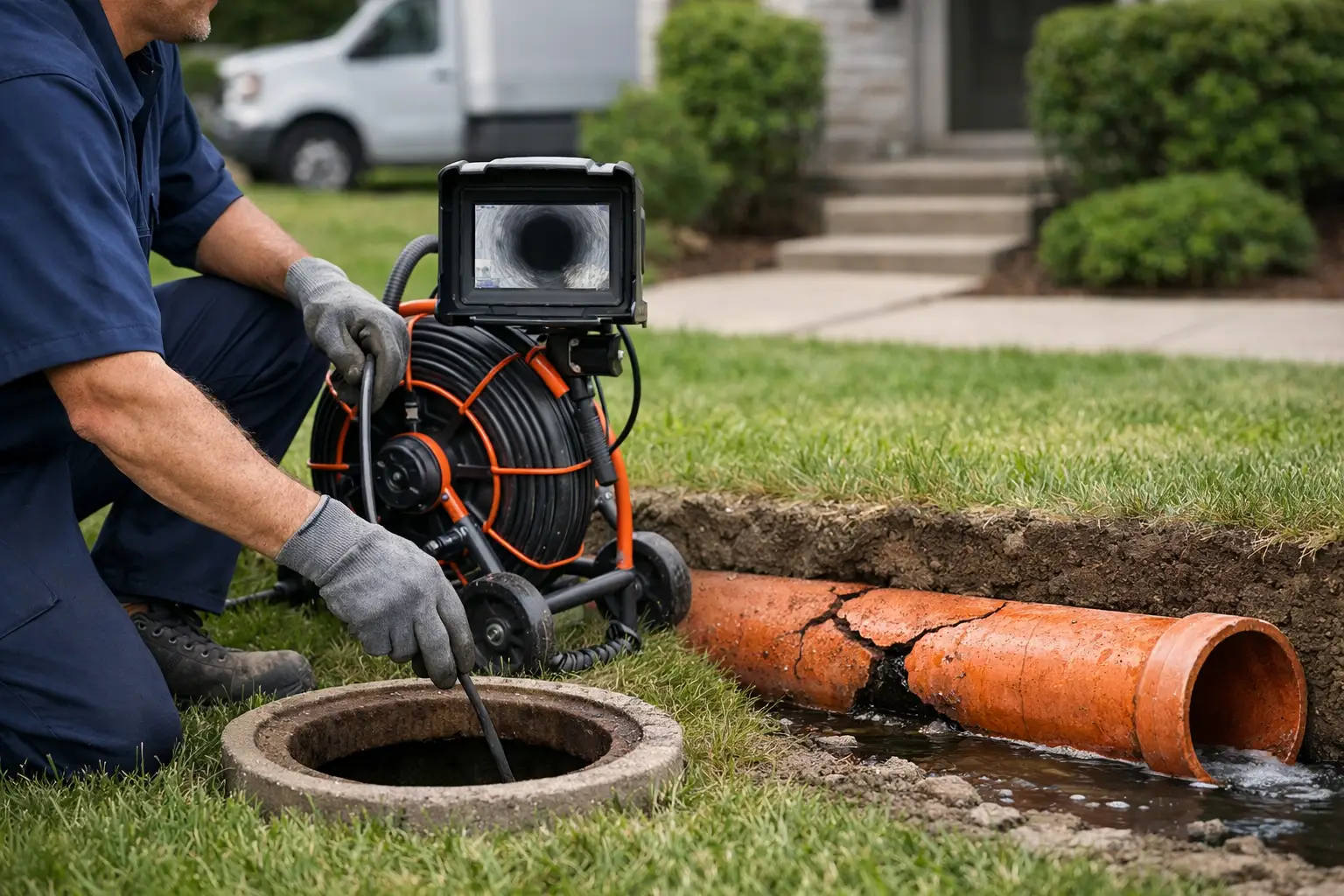
A slow drain is annoying. Multiple slow drains, gurgling toilets, or water backing up into a tub is different – that can point to a problem in the pipe that carries wastewater from your home to the public sewer or septic connection. A main sewer line inspection takes the guesswork out of that situation by showing what is actually happening inside the line before the problem turns into a messy backup.
For homeowners, landlords, and business owners, the value is simple: know the condition of the pipe, know where the problem is, and make decisions based on evidence instead of assumptions. A professional camera inspection can identify a blockage, root intrusion, pipe damage, standing water, or a belly in the line without digging up the yard just to look.
What a Main Sewer Line Inspection Shows
A sewer camera inspection uses a waterproof, high-resolution camera connected to a flexible cable. A technician feeds the camera through an accessible cleanout or another suitable entry point and guides it through the main sewer line. The live video shows the interior of the pipe while a locator helps identify the problem’s location and depth from above ground.
That process matters because similar symptoms can come from very different causes. A toilet that bubbles when the washing machine drains may be caused by a partial main-line blockage. It could also be heavy buildup restricting the pipe, roots entering at a joint, or a damaged section that holds waste and toilet paper. Clearing the line without understanding the reason for the clog can leave the real issue behind.
A proper inspection can reveal conditions such as:
- Root intrusion through joints, cracks, or aging connections
- Grease, scale, sludge, wipes, and other heavy buildup narrowing the pipe
- Offset, cracked, crushed, or separated pipe sections
- Bellies, where a low section of pipe holds water and debris
- Construction debris or foreign objects lodged in the line
- Recurring blockage areas that need targeted cleaning or repair
Not every issue means a sewer line replacement is necessary. That is exactly why camera diagnostics are useful. Some lines need professional cleaning, hydro jetting, or descaling. Others have structural defects that cleaning cannot correct. The camera footage helps separate a serviceable blockage from a pipe condition that requires a longer-term solution.
Signs You Should Schedule a Main Sewer Line Inspection
One isolated slow sink is often a local drain issue. Trouble across several fixtures is more likely to involve the main line. If the lowest fixtures in the home are backing up, such as a basement shower, first-floor tub, or floor drain, treat it as a priority.
Schedule an inspection when you notice repeated backups, sewage odors around drains or outside, frequent plunging that only works temporarily, or drains that gurgle after another fixture is used. Wet or unusually green patches in the yard can also be worth checking, particularly when paired with drainage problems indoors.
The timing matters. Calling after a full backup can mean more cleanup, more disruption, and less flexibility in scheduling the work. Calling when the warning signs first appear gives a technician the chance to inspect, clear, and verify the line before wastewater comes back into the property.
Recurring Clogs Are Not Normal
A drain that clogs once may have had a simple obstruction. A line that clogs every few months is telling you something. Repeated problems often mean the pipe was opened enough to restore temporary flow but was not fully cleaned, or that roots, scale, damage, or a pipe belly is catching debris again.
This is especially common in older Northern Virginia homes with aging cast iron, clay, or Orangeburg sewer piping. Cast iron can develop internal scale that shrinks the usable diameter of the pipe. Clay pipe joints can allow roots in. The right next step depends on what the camera finds, not on the age of the home alone.
Before Buying or Taking Over a Property
A sewer line is easy to overlook during a property transaction because most of it is underground. Yet it is one of the systems that can cause major disruption when it fails. A main sewer line inspection before a purchase, or before a landlord takes on a new rental property, provides a clearer picture of what is below grade.
This is not about expecting every older line to look brand-new. Many older sewer lines continue to operate well. The goal is to identify active root intrusion, serious deterioration, improper connections, standing water, or damage that could lead to near-term problems. Video evidence gives property decision-makers a practical basis for planning maintenance and repairs.
What Happens During the Inspection
The technician first asks about the symptoms: which fixtures are affected, when the problem occurs, whether there has been a recent backup, and whether the line has been cleaned before. Those details help determine whether the main line is the likely source and where to begin.
If the line is blocked, it may need to be cleared enough for the camera to travel through it. A camera cannot see through a solid blockage, and forcing equipment through a severely obstructed or compromised pipe is not good diagnostics. Depending on the pipe material and condition, professional drain cleaning, hydro jetting, or flex-shaft cleaning may be used to restore access and remove buildup.
Once the camera is in the line, the technician watches for changes in pipe condition, flow, joints, and slope. The best inspections are not rushed. They document what is visible, locate meaningful defects, and explain the findings in plain language. You should not be left trying to interpret grainy footage or vague terms on your own.
At Titan Jetters, the focus is on verifying the result after the work is done. If a line is cleaned, a follow-up camera view can confirm that buildup was removed and flow has been restored. If the camera identifies a structural issue, you get a clear explanation of what was found and what options make sense for the property.
Inspection, Cleaning, and Repair Are Different Jobs
These services work together, but they are not interchangeable. An inspection diagnoses the inside of the pipe. Cleaning removes obstructions and buildup. Repair addresses damaged or improperly functioning pipe sections.
A camera may show a pipe full of grease or scale with no major structural damage. In that case, cleaning may solve the immediate issue and help reduce repeat clogs. Hydro jetting is often effective for heavy grease, sludge, and debris when the line is a suitable candidate. Descaling can be the better choice for certain cast iron lines with hard internal buildup.
On the other hand, if the camera shows a collapsed section, major separation, or a severe belly holding water, cleaning alone may only provide short-term relief. A good drain specialist will be direct about that trade-off. There is no benefit in selling a cleaning as a permanent fix when the footage shows a pipe defect that will keep causing backups.
How Often Should a Sewer Line Be Inspected?
There is no single schedule that fits every property. A newer home with no drainage symptoms and a well-functioning sewer line may not need routine camera work. An older home with large trees near the sewer route, a history of roots, cast iron piping, or recurring clogs may benefit from periodic inspection and preventive cleaning.
For commercial properties, the answer often depends on what goes down the drains. Restaurants and food-service operations may need more frequent service because grease and food debris build up quickly. Rental properties can also benefit from proactive inspections after repeated tenant complaints or before turnover, when drainage problems are easier to address without an emergency.
The practical rule is simple: inspect when the system gives you a reason, and use the results to set a maintenance plan that fits the pipe and property. Avoid waiting for repeated backups to become the routine.
Questions to Ask After the Camera Is Run
The video is useful, but the explanation is just as important. Ask where the issue is located, whether the pipe is structurally sound, what material the line appears to be, and whether the problem is likely to return. If cleaning is recommended, ask whether the line can be camera-verified afterward.
You should also ask whether the condition calls for monitoring, maintenance, or repair. Those are different recommendations. A few small roots may call for planned maintenance. Heavy scale may call for cleaning and follow-up verification. A broken or collapsed line may require a repair conversation. Clear answers help you avoid both underreacting and doing work that does not match the actual condition.
When drains start acting up across the property, do not settle for temporary relief and crossed fingers. A camera inspection gives you a look inside the line, a clear explanation of the problem, and a smarter path back to dependable flow. Contact a qualified sewer and drain specialist early, before a warning sign becomes a backup.
