
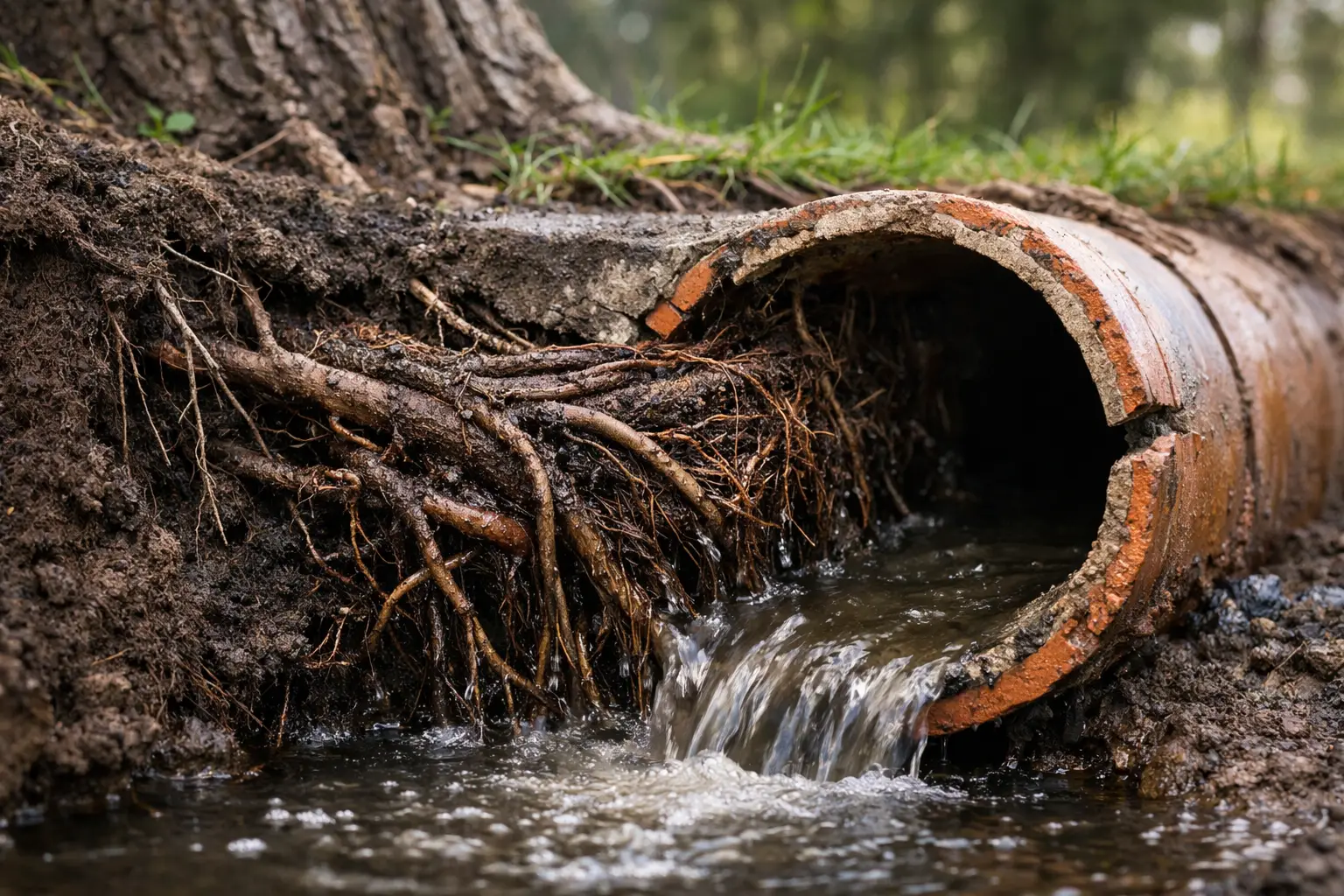
A sewer line can work fine for years, then suddenly start backing up after a heavy rain or a busy weekend at home. That is usually when people start asking how root intrusions block sewers, and the short answer is simple – roots go where water is. If a sewer pipe has even a small gap, crack, offset joint, or weak connection, tree roots will find it, grow into it, and turn a small defect into a serious blockage.
This is one of the most common underground drain problems because it starts quietly. You do not see the roots growing, and the line can still drain at first. Then toilet paper catches, grease hangs up, waste slows down, and the opening inside the pipe gets smaller and smaller until flow is restricted or completely blocked.
How root intrusions block sewers over time
Roots do not usually smash through a healthy pipe wall like people imagine. In most cases, they enter through existing weak points. Older clay pipes, cast iron with compromised joints, Orangeburg, and aging PVC connections are all more vulnerable than a newer, properly sealed line. A tiny opening is enough.
Once roots reach moisture inside the pipe, they keep feeding there. Fine hair-like strands can turn into a dense mass. That root mass traps debris moving through the sewer line. Toilet paper, wipes, grease, sludge, and waste build up around it. What began as a small intrusion becomes a net inside the pipe, and that net keeps collecting more material every day.
The reason this problem gets worse fast is that roots keep growing while the pipe keeps catching debris. A line may go from occasional slow drainage to repeated backups in a relatively short time. That is why a sewer that was snaked months ago can clog again if the actual root problem was never fully diagnosed or verified.
Why roots target sewer lines in the first place
Tree roots are not chasing the pipe itself. They are chasing oxygen, water, and nutrients. A sewer line with a loose joint or crack gives them all three.
That matters because the tree in your yard is not always the only suspect. Roots from large shrubs or neighboring trees can travel farther than most property owners expect. In established neighborhoods across Northern Virginia, mature landscaping is a benefit until root systems meet aging underground piping. Then the problem moves from the yard to the bathroom, kitchen, or floor drain.
It also depends on the pipe material and age. Older sewer lines tend to have more entry points. Soil shifting, freeze-thaw cycles, settlement, and years of wear can open enough space for intrusion. Once that happens, roots do what roots always do – they exploit the easiest source of moisture available.
Signs a sewer line may be blocked by roots
A root intrusion rarely shows up as one isolated symptom. More often, you get a pattern. Drains start gurgling. Toilets may bubble when a sink or shower drains. Water may back up at the lowest fixture first, like a basement drain or first-floor tub. You might notice that problems get worse during heavy water use, not just with one fixture.
Outside, there can be clues too. Soggy patches in the yard, unusually green grass over the sewer path, or recurring sewer odors can point to a compromised line. None of these signs confirm roots on their own, but together they strongly suggest the issue is in the main sewer rather than a simple branch drain clog.
The key difference is repetition. If the same sewer line keeps slowing down or backing up, especially after prior clearing, there is usually a reason. Root intrusion is one of the first things to rule in or rule out with proper diagnostics.
Why a camera inspection matters
When it comes to root problems, guessing is what wastes time. A sewer camera inspection shows what is actually happening inside the line, where the roots are entering, how severe the blockage is, and whether the pipe has structural damage beyond the roots themselves.
That changes the conversation completely. A line with light root intrusion at a joint may respond well to professional cleaning and follow-up maintenance. A line with heavy root growth plus a broken section may need a repair plan. Without a camera, those are two very different situations that can look similar from inside the house.
This is also how you avoid false confidence. A sewer can appear to be draining after temporary clearing, but a camera reveals whether the root mass is truly removed and whether the pipe can carry waste properly. Verified results matter because the goal is not just to poke a hole through the blockage. It is to restore flow and understand what condition the line is in afterward.
The real damage roots can cause
The blockage itself is only part of the problem. Roots can hold moisture against the pipe, widen existing cracks, separate joints further, and contribute to long-term deterioration. In some cases, repeated backups are the first warning sign of a pipe that is also beginning to fail structurally.
That is why root intrusion is not just a clog issue. It can become a sewer repair issue if ignored too long. The longer the roots sit in the line, the more likely they are to create recurring stoppages and ongoing pipe damage. What starts as a drainage nuisance can turn into excavation, property disruption, and major inconvenience.
There is also a sanitation side to this. When wastewater cannot move freely, it does not take much for a backup to affect floors, fixtures, or business operations. For homeowners, that means stress and cleanup. For landlords and commercial properties, it can mean tenant complaints, downtime, and a problem that cannot wait until next week.
How professionals clear root intrusions
Root blockages need more than a basic quick fix. The right method depends on how thick the roots are, what type of pipe is involved, and whether the line also has grease, scale, or settled debris.
Hydro jetting is often one of the strongest options because it does more than open a small path. It uses high-pressure water to cut through root masses and flush debris out of the line. In the right sewer, this can restore much better flow than a simple punch-through. If the line has buildup along with roots, jetting addresses both problems at once.
In some cases, mechanical root cutting or flex-shaft cleaning may also be part of the solution, especially when the line condition calls for a more controlled approach. This is where experience matters. The best result is not about using the most aggressive tool every time. It is about matching the method to the pipe condition and confirming the outcome with a camera.
That last part is where many sewer jobs go right or wrong. If roots are cleared but the technician does not reinspect, you are still left wondering how much was removed and whether there is pipe damage underneath. A professional process should answer those questions before the job is considered finished.
Can roots come back after cleaning?
Yes, they can. If roots entered through a crack, offset, or bad joint, cleaning removes the symptom but not the entry point. That does not mean cleaning was the wrong move. It means the long-term answer depends on what the camera shows after the line is restored.
Sometimes ongoing maintenance is a practical approach, especially if the intrusion is minor and the pipe is otherwise serviceable. In other cases, a targeted repair makes more sense because the roots will keep returning to the same opening. It depends on the age of the line, the severity of the defect, and how often the problem has already happened.
This is where honest guidance matters. Property owners do not need scare tactics. They need a clear picture of the line condition, the likely recurrence risk, and the options for keeping the sewer flowing with the least disruption.
When to act on a suspected root blockage
If multiple drains are slow, if backups keep returning, or if you are hearing gurgling from lower fixtures, it is time to stop treating it like a routine clog. Sewer root intrusions tend to get worse, not better. Waiting usually means a heavier blockage, more cleanup, and a greater chance the pipe itself is compromised.
For homes and businesses in places like Bristow, Gainesville, Haymarket, and the surrounding Northern Virginia area, mature trees and older infrastructure often exist side by side. That makes root-related sewer problems common enough that they should be taken seriously early.
A good sewer specialist will not just clear the line and leave you guessing. They will inspect it, explain what they found in plain language, and verify that the sewer is flowing the way it should. That is how Titan Jetters approaches drain and sewer work – solve the immediate problem, prove the result, and give the customer a clear path forward.
If your sewer keeps acting up, the smartest move is to catch the root problem before it turns into a bigger mess underground.
