
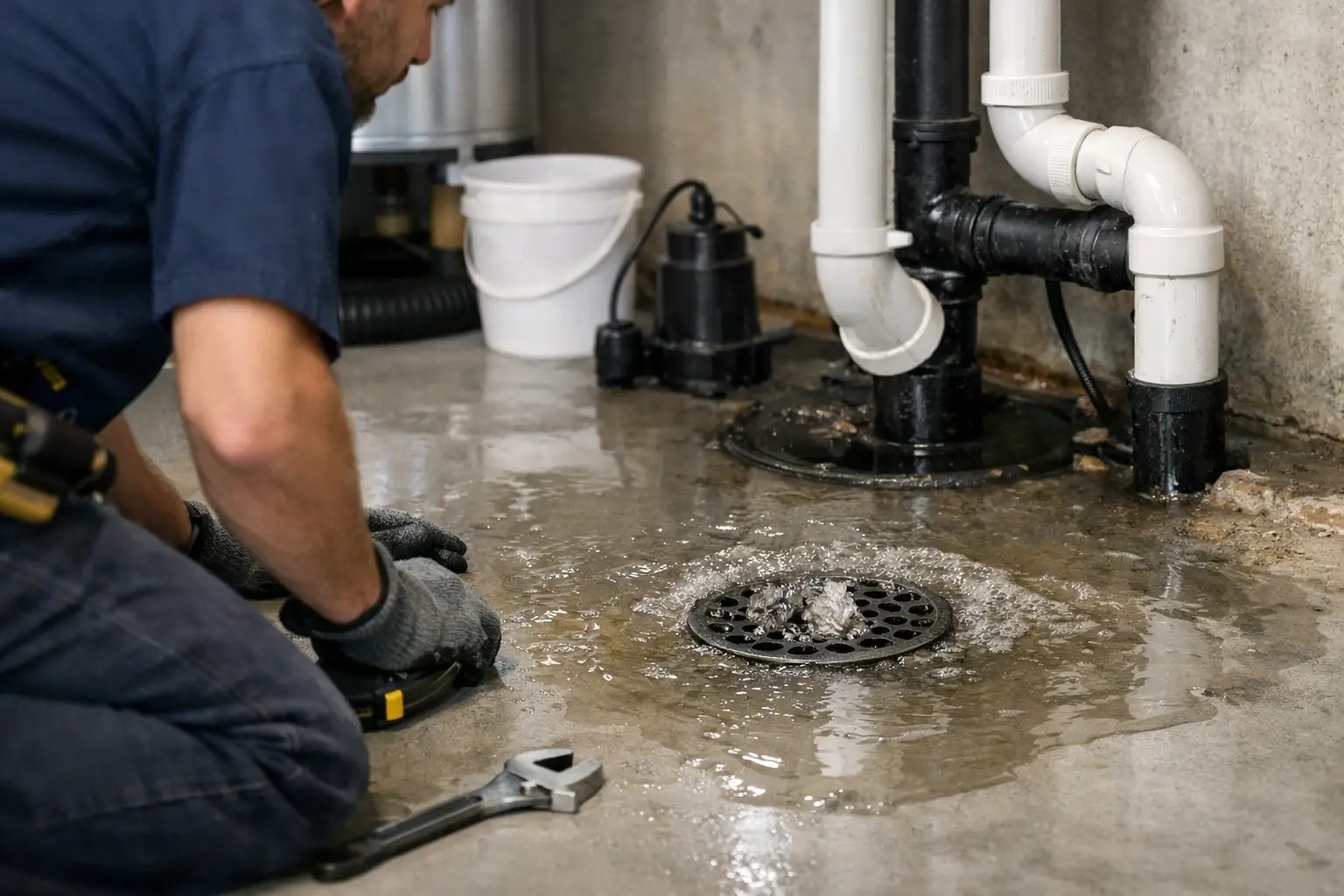
A basement drain backup usually does not start as a dramatic flood. More often, it starts with a slow floor drain, a sewer smell that comes and goes, or water showing up after a heavy rain. If you are wondering how to prevent basement drain backup, the real answer is simple – catch small drainage problems before they turn into wastewater in the lowest part of your home.
Basements are where drainage issues show up first because everything above them flows downward. When a main line starts narrowing from grease, scale, roots, wipes, or sludge, the basement floor drain often becomes the pressure relief point. That is why prevention matters. You are not just trying to avoid a clog. You are trying to avoid property damage, sanitation issues, cleanup costs, and the stress of dealing with an emergency that usually happens at the worst possible time.
Why basement drain backups happen
A basement drain backup is a symptom, not the root problem. In many homes, the real issue is farther down the line. It could be buildup inside the main sewer line, a partial blockage in an older cast iron pipe, root intrusion outside, or stormwater overwhelming the system during heavy rain.
Older homes tend to have more risk because interior drain lines and building sewers may have years of scale and debris narrowing the pipe diameter. Newer homes are not immune, though. Flushable wipes, paper towels, grease, and hygiene products can create the same result in a newer system.
Weather also plays a role. In parts of Northern Virginia, strong storms can expose weaknesses fast. If your line already has limited flow, a period of heavy rain can push it over the edge. What looked like a minor drainage issue last month can become a basement backup this week.
How to prevent basement drain backup before it starts
The most effective prevention plan is a mix of awareness, maintenance, and proper diagnosis. Homeowners often wait until the drain stops completely, but a line usually gives warnings first.
Keep an eye on how your lowest drains behave. If the basement floor drain gurgles when a toilet flushes, if the tub backs up when the washing machine runs, or if you notice standing water near the drain after using plumbing upstairs, that is not random. Those are classic signs that your main line may be struggling to keep up.
What you put down the system matters too. Grease should never go down a kitchen drain, even if you follow it with hot water. It cools, sticks, and starts collecting other debris. Wipes are another major problem. Even products labeled flushable can hang up in the line and create a blockage. The same goes for paper towels, feminine hygiene products, and anything else that does not break down quickly.
Tree roots deserve attention as well. If you have mature trees near your sewer line, roots can work their way into even small cracks or loose joints. Once inside, they trap debris and reduce flow. This is one of those issues that can build slowly for months before it shows up in the basement.
Warning signs you should not ignore
If you want to know how to prevent basement drain backup, start by taking early symptoms seriously. The homes that end up with major messes often had warning signs that were easy to dismiss at first.
Slow drains in multiple fixtures usually mean more than a local clog. One slow sink might be isolated. But if a basement drain, first-floor tub, and toilet all seem off around the same time, the problem may be in the main line.
Recurring clogs are another red flag. If the same drain keeps acting up after being cleared, there is probably an underlying issue that has not been fully addressed. Temporary flow is not the same as a clean, properly functioning line.
Sewer odor in the basement can also point to trouble. Sometimes the issue is a dry trap, but if the smell returns regularly or shows up with slow drainage, it may be a sign of blockage, buildup, or poor flow through the system.
Then there are the sounds. Gurgling drains and bubbling toilets happen when air is displaced by restricted flow. It is your plumbing system telling you something is not moving the way it should.
The value of professional drain maintenance
Not every home needs the same maintenance schedule. That depends on pipe material, home age, tree activity, past backups, and what kind of use the system sees. But if your property has had previous drainage issues, periodic preventive service is usually far less disruptive than an emergency cleanup.
A professional inspection helps because it replaces guesswork with facts. A sewer camera inspection can show whether the problem is grease, root intrusion, scale, offset joints, or a damaged section of pipe. That matters. Different problems call for different solutions, and the wrong approach can leave the real restriction in place.
For heavy buildup, hydro jetting is often the right preventive tool because it cleans the interior walls of the pipe instead of just punching a hole through the blockage. In older cast iron lines, descaling may be needed to remove years of hardened buildup that narrows flow. The point is not just to get the water moving today. It is to restore proper capacity so the line can handle normal use and storm conditions without backing up into the basement.
This is where specialized drain work makes a difference. A proper cleaning followed by camera verification gives homeowners a clear picture of what was done and what condition the line is in afterward.
Basement drain backup prevention for older homes
Older homes need a little more attention because their drainage systems have had more time to collect scale, corrosion, and hidden defects. Cast iron in particular can become rough inside over time, which makes it easier for debris to catch and accumulate.
If you live in an older home and you have never had the sewer line inspected, that is a blind spot worth fixing. Many owners assume the plumbing is fine because water still drains. But a line can be functioning at reduced capacity for a long time before it fully fails.
That does not mean every older line needs replacement. Sometimes the smarter move is targeted cleaning and regular monitoring. Sometimes the camera finds a repair issue that needs attention. It depends on the actual condition of the pipe, not just its age.
Heavy rain, sump systems, and what prevention can and cannot do
Some basement water issues come from sewer backups. Others come from groundwater or stormwater. Sometimes it is both. That distinction matters because the fix is not always the same.
If your basement drain backs up specifically during heavy rain, there may be a capacity issue in the sewer line or surrounding drainage conditions may be contributing. If your basement gets water without any plumbing use, the source may be different. A proper diagnosis helps separate sewer line problems from foundation drainage or sump-related issues.
Prevention is about reducing risk, not pretending risk disappears completely. A clean, verified sewer line is far less likely to back up than one packed with scale and debris, but homes with aging infrastructure or recurring storm exposure still benefit from ongoing monitoring.
When to call for help
The best time to call is before wastewater reaches the floor. If you notice recurring slow drains, basement gurgling, foul odors, backups after laundry, or problems during rainstorms, do not wait for a total stoppage.
A fast response can prevent a messy situation from becoming a major restoration problem. For homeowners and landlords in places like Bristow, Gainesville, Haymarket, and nearby Northern Virginia communities, that matters even more during wet seasons when drainage systems are under extra stress.
A drain specialist should be able to inspect the line, explain what is happening in plain language, and recommend the right corrective or preventive service based on evidence, not assumptions. That is the difference between a temporary patch and a long-term fix.
Titan Jetters works that way because the goal is straightforward – identify the issue correctly, clean or repair what is needed, and verify the result so you are not left wondering if the problem is really gone.
If your basement drain has been giving you small warnings, listen to them now. Preventing a backup is almost always easier, cleaner, and less stressful than dealing with one after the water starts rising.
