

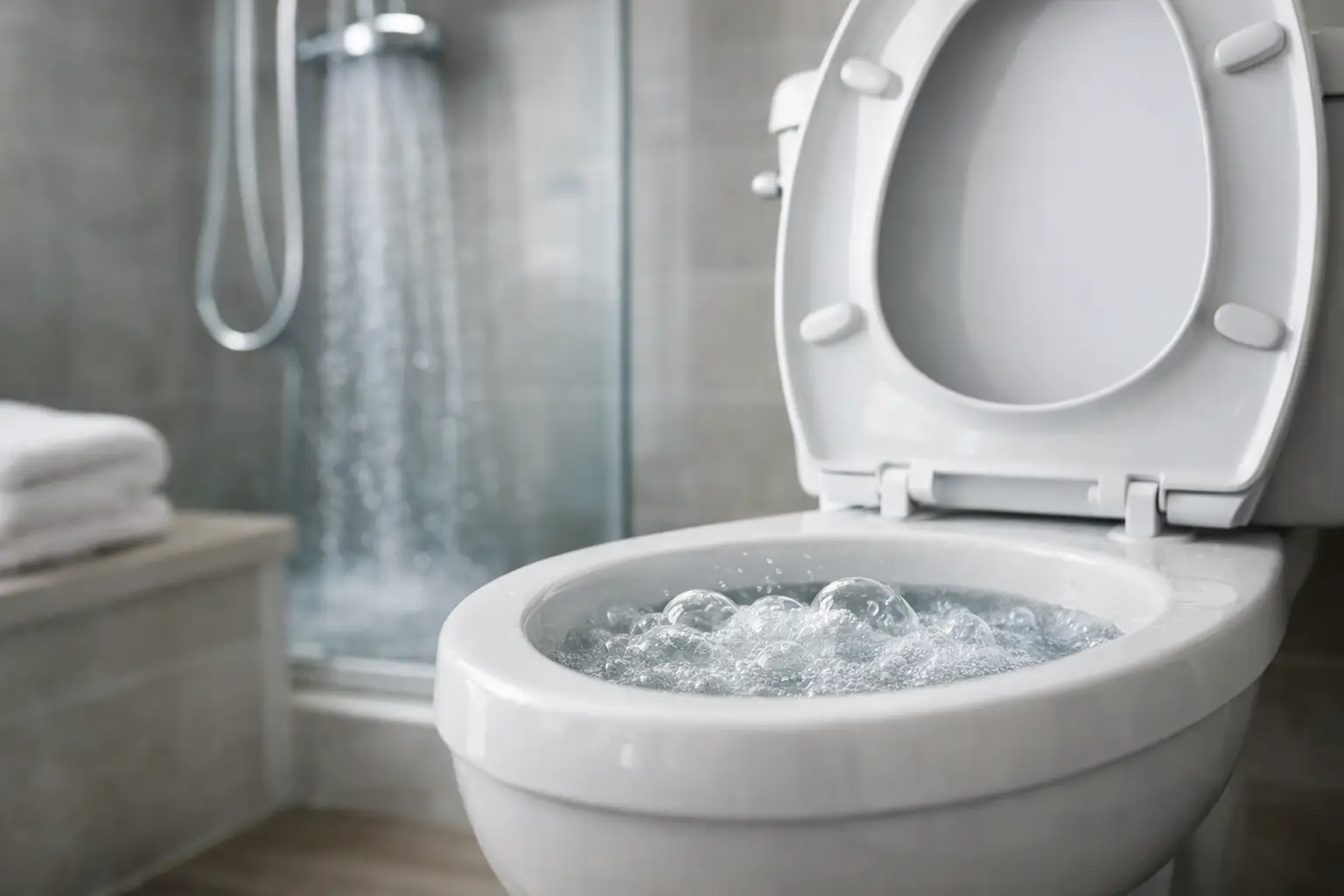
You turn on the shower, and the toilet starts bubbling like it has a mind of its own. If you’re asking why does toilet bubble when shower runs, the short answer is this: your plumbing system is warning you that air and wastewater are not moving the way they should. That usually points to a drain, vent, or sewer line problem that needs real attention before it turns into a backup.
This is not one of those symptoms to shrug off and revisit next month. A bubbling toilet often means your plumbing system is struggling to breathe or drain properly. Sometimes the issue is isolated. Sometimes it is the first visible sign of a larger blockage in the main line.
Why does toilet bubble when shower runs in the first place?
Your toilet, shower, sinks, and other fixtures all connect to a larger drain system. When the shower drains, that water needs a clear path through the branch line and out toward the sewer. At the same time, the plumbing vent system has to balance air pressure so water can move smoothly.
When there is a clog, restriction, or venting issue, the draining shower water can force air back through the nearest fixture. In many homes, that fixture is the toilet. The bubbling you hear is trapped air being pushed up through the toilet bowl because it cannot move through the drain or vent the right way.
That is why the toilet reacts when the shower runs even though the toilet itself may not be the actual source of the problem.
The most common causes
In our experience, the cause usually comes down to one of three issues: a drain line blockage, a vent stack problem, or a developing sewer line restriction.
A partial blockage in the drain line
This is one of the most common reasons a toilet bubbles during or right after a shower. Hair, soap residue, sludge, paper buildup, and other debris can narrow the line enough to disrupt flow. Water still moves, but not efficiently. As it pushes through the restricted section, air gets displaced and escapes through the toilet.
Partial blockages are tricky because they often start with minor symptoms. The shower may seem a little slow. The toilet may gurgle once in a while. Then the signs become more frequent.
A blocked or poorly functioning plumbing vent
Your plumbing system is designed with vent pipes that usually exit through the roof. These vents let sewer gases escape and allow air into the system so drains do not create a vacuum. If that vent is blocked by debris, buildup, or even weather-related obstruction, the system cannot equalize pressure properly.
When the shower drains, that pressure imbalance can show up as bubbling in the toilet. The fixture is not haunted. It is just reacting to bad airflow in the plumbing system.
A main sewer line restriction
This is the one homeowners should take seriously right away. If the main sewer line is beginning to clog or collapse, wastewater from one fixture can affect others across the home. A bubbling toilet when the shower runs can be one of the early signs.
If you also notice slow drains in more than one bathroom, gurgling sounds from other fixtures, sewage smells, or water backing up at the lowest drain in the house, the issue may be in the main line rather than a single branch drain.
What the bubbling is telling you
A bubbling toilet is really an air-pressure symptom. Water should flow out, and air should move through the vent system. When either path is restricted, the plumbing system starts looking for relief wherever it can find it.
That is why you may hear gurgling, see bubbles in the toilet bowl, or notice the toilet water moving when nearby fixtures are used. In plain terms, your drains are competing for space inside a system that is not flowing correctly.
The important part is this: bubbling is usually not the problem itself. It is the visible clue that leads to the actual problem deeper in the line.
When it is a small issue and when it is not
It depends on how many fixtures are involved and how long the problem has been happening.
If the bubbling only started recently and is tied to one bathroom, the issue may be a local drain restriction or a vent problem affecting that fixture group. That is still worth addressing quickly, because partial clogs tend to become full clogs.
If multiple fixtures are acting up, the risk is higher. A shower that drains slowly, a toilet that bubbles, and a sink that gurgles together usually point to a larger drainage issue. In that case, waiting can turn a warning sign into an active backup.
Older homes add another layer. In some Northern Virginia properties, aging drain lines can collect heavy scale buildup inside cast iron piping. That narrows the opening and makes recurring drainage problems more likely. In those situations, clearing the immediate blockage may only solve part of the issue unless the condition of the line is properly checked.
Signs you should not ignore
Some plumbing symptoms are annoying but manageable for a short time. A bubbling toilet is different because it often signals a system-wide problem in progress.
Pay close attention if you notice toilet bubbling paired with recurring clogs, slow drainage in tubs or showers, sewer odor, water levels shifting in the bowl, or backups in lower-level drains. Those signs suggest the system is under strain and may be getting worse.
A single symptom can still be significant. The mistake many property owners make is waiting until wastewater comes back into the home. By then, the repair is more urgent, the cleanup is worse, and the downtime is harder on everyone in the house or building.
How a professional identifies the real cause
The right fix starts with the right diagnosis. Bubbling can come from more than one source, which is why guessing is what leads to repeat problems.
A professional drain and sewer specialist will look at the behavior of the affected fixtures, determine whether the issue is isolated or system-wide, and inspect the line when needed. If the symptoms suggest a deeper restriction, a sewer camera inspection can show what is actually happening inside the pipe. That matters because buildup, root intrusion, bellies, scale, and heavy blockage do not all require the same approach.
For drain line buildup, professional cleaning equipment can restore proper flow. For heavier internal residue or scale, higher-performance methods such as hydro jetting or mechanical descaling may be the better fit. If the problem is in the venting system, that has to be identified separately. The goal is not just to stop the bubbling for a day. It is to correct the condition causing it.
Why this problem often comes back when it is not fully diagnosed
A lot of drain issues seem fixed before they are actually fixed. Water starts moving again, the noise stops, and everyone assumes the problem is gone. Then the toilet bubbles again the next time the shower runs.
That usually happens when only the immediate symptom was relieved but the underlying restriction remained. A line with grease, sludge, scale, or root intrusion can keep narrowing even after some water gets through. Without verifying the condition of the pipe, it is easy to mistake temporary relief for a real solution.
That is why a clear diagnosis matters so much. You want to know whether the line is clean, partially restricted, or damaged. You also want to know whether the fix restored proper flow throughout the system.
Why fast service matters
Drain and sewer problems rarely improve on their own. They usually progress from noise to slow drainage to backup. The earlier the issue is addressed, the more control you have over the situation and the less likely it is to turn into a mess inside the home.
For homeowners, that means protecting bathrooms, flooring, and daily routines. For landlords and business operators, it means reducing tenant complaints, avoiding downtime, and keeping the property functional. A bubbling toilet may seem minor in the moment, but it is often the first sign that the line needs attention now, not later.
If you’re noticing this in your home, the smart move is to have the drainage system checked before the next shower turns a warning into a backup. Titan Jetters helps property owners get clear answers fast, using professional drain cleaning, hydro jetting, and camera diagnostics to find the problem and verify the line is flowing the way it should.
When a toilet bubbles as the shower runs, your plumbing is telling you something useful. Listen early, act quickly, and you have a much better chance of fixing the issue cleanly before it gets expensive, messy, or disruptive.
