

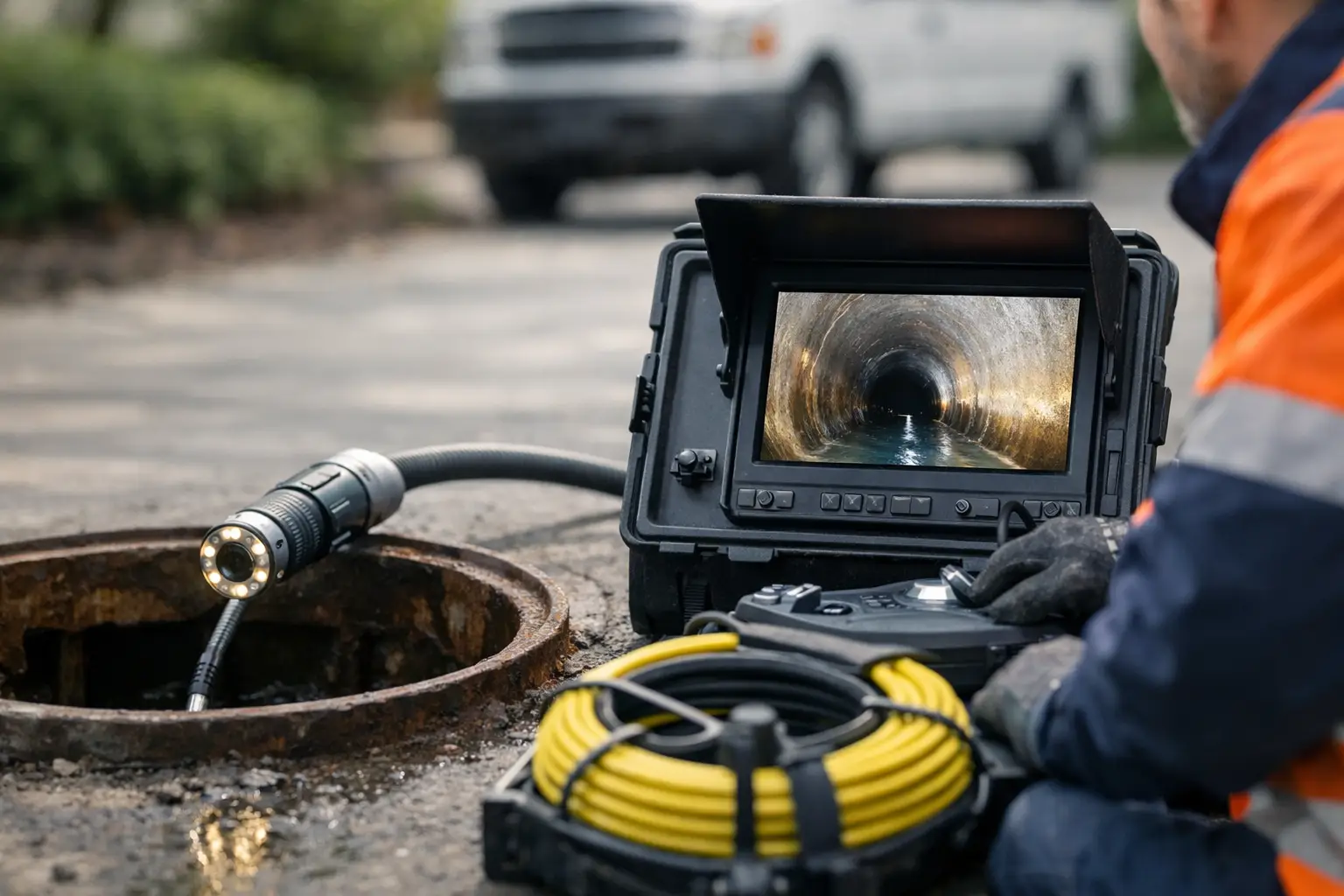
A drain can seem fine the moment water starts moving again. That does not always mean the line is actually clean. Grease can still cling to the walls, roots can still be hanging in the pipe, and scale can still narrow the opening enough to cause another backup next week. That is exactly how sewer cameras verify cleaning – by showing what is still inside the line after the equipment is done.
For homeowners and property managers, that matters because a temporary opening and a properly cleaned pipe are two different outcomes. If you are paying for professional drain service, you want proof that the blockage was removed, the pipe is flowing, and there is not a hidden issue waiting a few feet downstream.
Why flow alone is not enough
A lot of drain problems fool people because they improve before they are truly resolved. Water may start draining after a cable punches a small hole through a blockage, but that only creates a path through the middle. The buildup around the sides can remain in place. In a kitchen line, that often means grease is still coating the pipe. In older cast iron, it can mean scaling and rough interior surfaces are still catching debris.
This is where a camera inspection changes the conversation. Instead of guessing based on how the sink, floor drain, or main line behaves for a few minutes, the technician can actually inspect the inside condition of the pipe. That visual confirmation helps separate a quick reopening from a complete cleaning.
It also protects the customer from false confidence. If the line looks passable but is still badly restricted, that can be explained right away. You are not left waiting for the next backup to find out the original problem was only partly addressed.
How sewer cameras verify cleaning in real conditions
A sewer camera is a specialized inspection tool designed to travel through drain and sewer lines while sending back live video. After hydro jetting, descaling, or other cleaning work, the camera is run through the same line to check the results.
The goal is simple. The technician is looking for open flow, cleaner pipe walls, and any remaining obstructions. If roots were cut, the camera shows whether they were fully removed or if strands are still intruding. If heavy grease was jetted, the camera shows whether the walls are actually clean or still lined with residue. If scale was knocked down in cast iron, the camera helps confirm how much of the pipe diameter has been restored.
That last point is important because cleaning results are not always all-or-nothing. Sometimes a line improves dramatically but still has a structural issue, such as offsets, cracks, or corrosion. A camera does not just confirm what was cleaned. It also reveals whether the line itself is part of the problem.
What technicians look for after cleaning
When professionals inspect a line after cleaning, they are not just checking for standing water or obvious debris. They are reading the pipe condition in context.
A properly cleaned line usually shows smoother interior walls, fewer attached deposits, and a more open path for wastewater and solids to move. In PVC, that may be fairly easy to see. In older cast iron or clay, the interpretation takes more experience because those materials can still look rough even after effective cleaning.
That is one reason camera verification should be paired with a technician who understands drain systems, not just someone pushing a camera into the line. A rough-looking pipe is not always a failed cleaning. On the other hand, a line that appears open on screen can still have enough leftover buildup to cause repeat trouble under real usage.
Good camera verification looks at several things at once: whether the original blockage is gone, whether the remaining pipe diameter is acceptable, whether there are damaged sections, and whether water has a clear route out of the system.
Different cleaning methods leave different visual results
Not every line is cleaned the same way, and that affects what the camera should show afterward.
Hydro jetting is often the strongest option when the goal is to remove grease, sludge, soft blockages, and loose debris from the full inside surface of the pipe. After successful jetting, camera footage typically shows a much cleaner wall and a wider opening. That is why jetting is often used when long-term results matter, not just immediate flow.
Mechanical cabling can restore drainage quickly, but in many cases it creates an opening through the obstruction rather than fully cleaning the pipe. Camera footage after cabling may reveal that the drain is technically open but still heavily coated. That does not mean cabling failed. It means the result may be temporary, and further cleaning could be the better call.
Descaling is its own category, especially in older cast iron lines. The camera may show substantial improvement after scale removal, but those pipes can still have pitting, flaking, or other age-related wear. In those cases, the inspection is doing two jobs at once – confirming the cleaning and documenting the actual condition of the pipe material.
What a camera can catch that cleaning equipment cannot
Cleaning tools remove blockages. Cameras explain why the blockage formed and whether it is likely to return.
For example, a line can be thoroughly cleaned and still have a belly, a crack, separated joints, or root intrusion points. Without a camera, the drain may look fixed until the same issue causes another stoppage. With a camera, that pattern becomes visible right away.
This matters for commercial properties and busy households in particular. If a restaurant kitchen line or a main sewer serving a family home backs up repeatedly, no one wants repeated service calls based on trial and error. Camera verification helps identify whether the line needs more cleaning, a repair recommendation, or ongoing maintenance.
It also reduces unnecessary excavation. If the pipe is structurally sound and the issue was buildup, the camera can support that conclusion. If the line is damaged, the customer gets a clearer explanation before bigger decisions are made.
When camera verification matters most
Some drain calls make camera verification especially valuable. Main sewer backups are a big one, because the consequences of a missed issue are messy and expensive. Recurrent clogs are another, especially when the same fixture or branch line keeps acting up despite prior service.
Older homes often benefit from post-cleaning camera work because cast iron, clay, and aging lines tend to have more than one issue at once. The clog may be removed, but scale, root entry, or deterioration may still be present. A newer line can have problems too, but older systems usually leave less room for assumptions.
Camera verification is also smart after heavy root removal. Roots are rarely just a one-time blockage. They usually point to an opening in the pipe. The camera helps confirm whether the cleaning removed the intrusion and how severe the underlying defect appears.
How sewer cameras verify cleaning without guesswork
The biggest benefit of camera verification is simple: it replaces assumptions with evidence.
That is good for the technician because it supports accurate recommendations. It is even better for the customer because you can see whether the service actually delivered the result you were promised. If more work is needed, there is a reason for it. If the line is clear, that can be shown too.
In a service business, trust usually comes down to whether the explanation matches the evidence. A camera makes that possible. Instead of relying on vague language like cleared, improved, or should be fine, the condition of the pipe can be documented in real time.
For a company like Titan Jetters, that fits the job the right way. The point is not just to get water moving and leave. The point is to clean the line, verify the result, and give the customer a clear picture of what is going on underground or behind the walls.
The trade-off: cameras are powerful, but they do not replace judgment
A camera is one of the best diagnostic tools in drain work, but it is still a tool. It does not clean the pipe by itself, and it does not automatically tell the whole story without proper interpretation.
Visibility can be limited if there is still dirty water in the line. Some defects are easier to identify than others. Pipe material, access points, and line configuration all affect what can be seen clearly. That is why a camera works best as part of a full process that includes diagnosing the symptom, choosing the right cleaning method, and then verifying the result.
That process is what keeps customers from paying for half-fixes. Sometimes the camera confirms the line is in good shape and the problem was isolated. Sometimes it shows the cleaning worked, but a larger repair issue is developing. Both answers are useful because both help you make the next decision with better information.
When a drain problem cannot wait, speed matters. But proof matters too. The best service call is the one where the line is cleaned, the result is verified, and you are not left wondering whether the backup is really gone. That is the real value behind camera verification – confidence you can see.
