

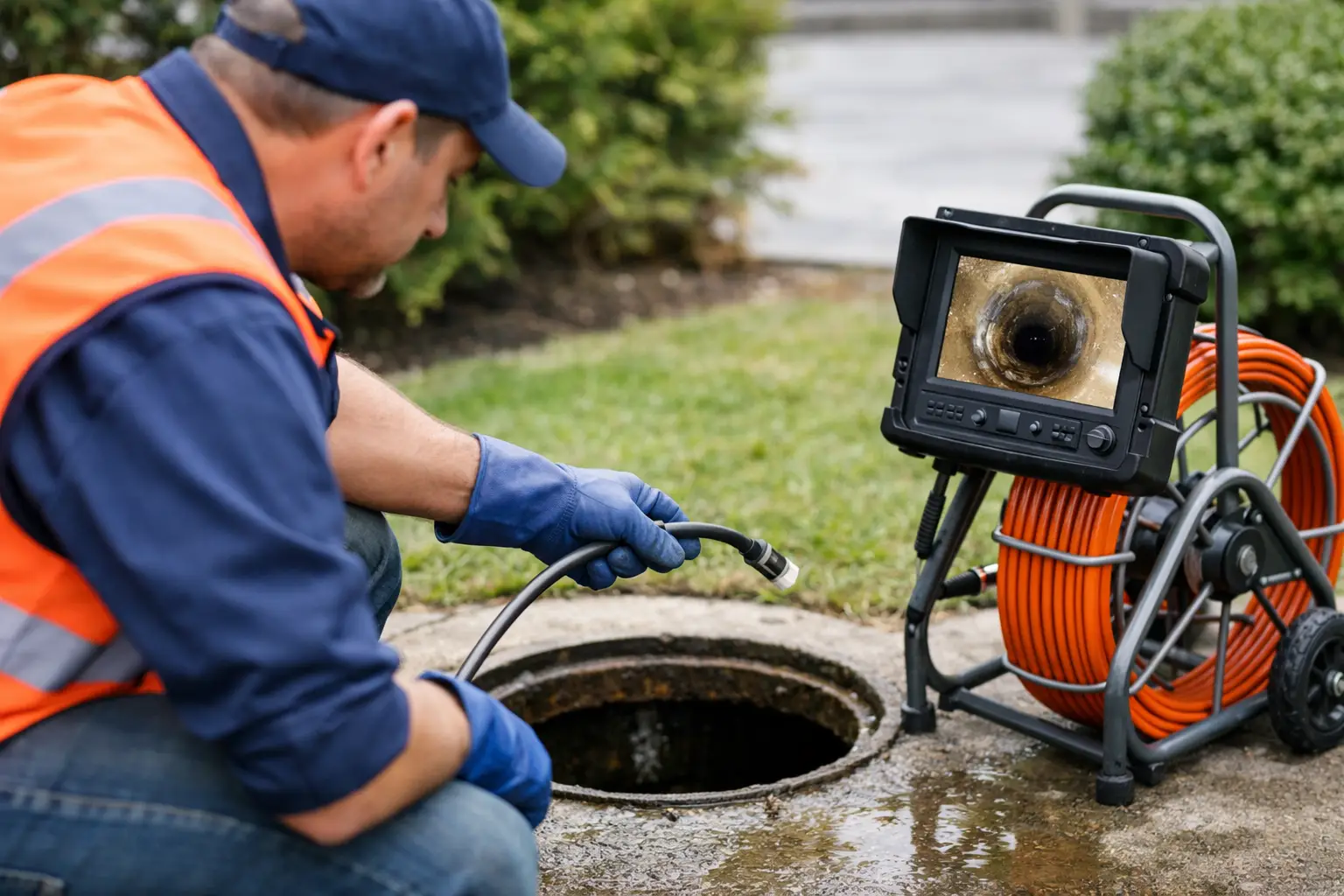
A drain that keeps backing up is frustrating. A drain that keeps backing up after it was already cleared usually means there is more going on inside the line. That is exactly when to get sewer camera inspection instead of guessing, repeating the same service, or waiting for a bigger mess.
A camera inspection is not just about finding a clog. It shows what condition the pipe is in, where the problem sits, and whether the issue is buildup, roots, a belly in the line, cracked pipe, or something else entirely. If you want the right fix the first time, this is often the step that turns a temporary answer into a real one.
When to get sewer camera inspection for recurring drain problems
If the same drain or group of drains keeps slowing down, gurgling, or backing up, a camera inspection makes sense. A basic clearing may restore flow, but it does not always explain why the problem came back. That distinction matters.
For example, a kitchen line may have heavy grease buildup coating the pipe walls. A bathroom branch line may have scale or settled debris. A main sewer line may have roots pushing through a joint. All three can create similar symptoms from the homeowner’s point of view, but they do not call for the same long-term solution.
This is where camera diagnostics earn their keep. Instead of treating every repeat clog like a simple blockage, the inspection shows whether the line needs thorough cleaning, descaling, repair, or just confirmation that the line is now clear.
Slow drains in more than one fixture
One slow sink is annoying. Several slow fixtures at once usually point to a larger drainage issue. If the tub, toilet, and sink are all acting up around the same time, the problem may be farther down the system, often in the main line.
That is a strong time to inspect with a camera. It helps determine whether the restriction is isolated to one branch or affecting the whole sewer path out of the home. That saves time and helps avoid chasing the wrong drain.
Sewage odors with no clear source
Bad smells coming from drains, floor drains, or around the yard are not something to ignore. Sometimes the cause is simple. Sometimes it points to a break, separation, or buildup inside the sewer line.
A sewer camera gives visual confirmation. If there is standing water in a sagging section, heavy organic buildup, or pipe damage, it can usually be identified quickly. Without that visual proof, you are left guessing based on symptoms alone.
Backups after drain cleaning are a major red flag
If a line was recently snaked or cleared and the backup returns soon after, that is one of the clearest answers to when to get sewer camera inspection. The line may have been opened enough to restore temporary flow, but the underlying condition may still be there.
This happens often with roots, scale, and grease. A small opening gets punched through the blockage, water drains for a while, and then the line closes up again. The customer feels like the problem was never really solved because, in a practical sense, it was not.
A camera inspection removes the guesswork. It shows whether the line is truly clean wall to wall or whether there is still debris, structural damage, or another issue waiting to cause the next backup.
Before buying a home, a sewer camera inspection can prevent surprises
A home can look great on the surface and still have a sewer line in rough shape. For older homes especially, a camera inspection before closing can reveal root intrusion, offset joints, cast iron scaling, cracks, or sections holding water.
This is not about being alarmist. It is about knowing what you are taking on. A general home inspection may note signs of drainage concern, but it usually does not provide a view inside the sewer line itself.
For buyers in older parts of Northern Virginia, where mature trees and aging pipe materials are common, this step can be especially worthwhile. It is far better to identify a sewer issue before move-in than after the first shower, load of laundry, and toilet flush all hit a compromised main line.
When yard symptoms suggest a buried sewer problem
Not every sewer issue announces itself indoors first. Sometimes the warning signs show up outside. A soggy patch in the yard, foul smells near the cleanout, or unusually green grass over one section of the line can suggest a leak or break underground.
A camera inspection helps confirm whether the pipe is cracked, separated, blocked, or holding waste where it should not. It is also useful for locating the issue with more accuracy before any repair plan is made. That matters because nobody wants unnecessary digging.
There is some nuance here. A camera does not replace every diagnostic method in every scenario, especially if a line is completely collapsed or inaccessible. But in many cases, it is the fastest way to see what is happening and narrow the scope of the problem.
After heavy root intrusion or repeated tree-related clogs
Roots are one of the most common reasons a sewer line keeps having trouble. Once roots find moisture at a joint or crack, they tend to keep coming back unless the underlying issue is addressed.
If roots have already been cleared from the line once, a follow-up camera inspection can show how severe the intrusion is, whether the pipe walls were damaged, and whether there are offset joints or openings that will continue inviting growth. That is the difference between clearing a symptom and understanding the condition of the line.
For properties with large trees between the house and the street, this is especially relevant. Mature landscaping may look great above ground while creating a real maintenance issue below it.
A camera inspection is also valuable after the line has been cleaned
Many people think inspections are only for diagnosing a problem before work begins. In reality, they are just as useful after cleaning. Verifying the result matters.
If a line has been hydro jetted, descaled, or cleared of heavy buildup, the camera can confirm that flow has been restored and the pipe is in the condition you were told it is in. That level of proof gives homeowners and property managers more confidence that the job was done correctly.
That is a practical benefit, not a sales add-on. When you can actually see the inside of the line, there is less confusion about what was found and what still needs attention.
When older pipes may be part of the problem
Pipe age matters. Older cast iron, clay, Orangeburg, and even some aging PVC systems can develop problems that do not show up until drainage starts getting unreliable.
A camera inspection is smart when a property has a history of old piping and unexplained drain trouble. Cast iron may have scale buildup narrowing the inside diameter. Clay pipe may have shifted joints or root intrusion. A line can still technically drain while being in poor condition overall.
That does not always mean repair is needed right away. Sometimes the right call is maintenance and monitoring. Sometimes the inspection shows the line is in better shape than expected. The point is clarity. You make better decisions when you know what is actually in the pipe.
Commercial properties have even less room for guesswork
For restaurants, offices, retail spaces, and rental properties, sewer trouble becomes a downtime issue fast. Slow drains can affect staff, customers, tenants, and daily operations. Waiting until there is a full backup usually means more disruption and more urgency than anyone wants.
That is why camera inspections make sense not only after a problem but also when there are early warning signs that repeat. If a business has recurring grease issues, floor drain backups, or frequent calls for the same line, the inspection helps identify whether the fix should be cleaning, maintenance, or repair.
For landlords, it also creates a clearer record of what is happening in the line. That helps separate one-time misuse from an ongoing infrastructure problem.
What a sewer camera inspection helps you avoid
The biggest thing a camera inspection prevents is bad assumptions. A slow line is not always just a clog. A cleared line is not always a healthy line. And a cleanout that overflows once may be part of a deeper issue rather than a one-off event.
Without visual inspection, people often spend time and money reacting to symptoms. With inspection, they can make decisions based on evidence. That usually means fewer repeat visits, better-targeted work, and less disruption to the home or property.
Titan Jetters uses camera diagnostics for exactly that reason – to show customers what is going on, explain the options clearly, and verify that the line is flowing the way it should.
If your drains are giving the same warning signs over and over, do not settle for temporary relief and crossed fingers. The right time to inspect a sewer line is usually the moment you realize the problem has a pattern, because patterns rarely fix themselves.
