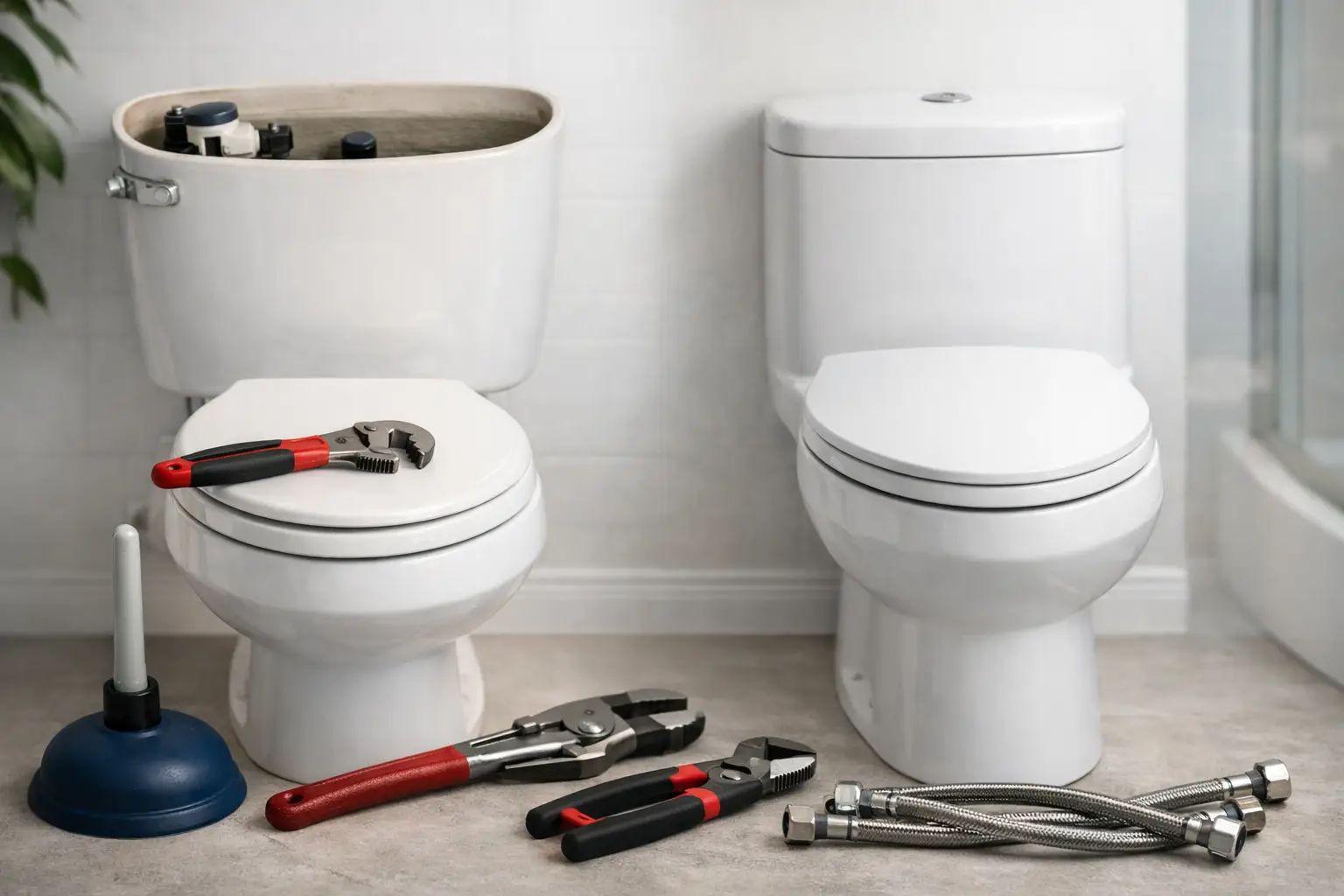
A toilet that runs all night, rocks at the base, or backs up every other week is not just annoying. It is a sign that something is wearing out, failing underneath, or putting stress on the drain system. When homeowners start weighing toilet repair or replacement, the right answer usually comes down to one question – is the problem isolated, or is the fixture becoming a repeat issue?
That distinction matters. A single bad component can often be corrected without much disruption. But when the toilet itself is old, cracked, poorly flushing, or tied to ongoing drain problems, replacement may save time, frustration, and future service calls.
When toilet repair or replacement becomes the real question
Some toilet problems are straightforward. A worn fill valve, a faulty flapper, or a loose handle does not automatically mean the whole fixture is done. If the porcelain is sound and the toilet has been performing well overall, repair is often the practical move.
The conversation changes when the symptoms stack up. Maybe the toilet clogs more often than it used to. Maybe you are seeing water around the base, hearing constant refill cycles, or noticing that flushing power keeps getting weaker. Those are the cases where toilet repair or replacement deserves a closer look, because the issue may be bigger than one replaceable part.
A good diagnosis should separate fixture problems from drain line problems. That is a major point many property owners miss. A toilet that will not flush properly is not always a bad toilet. In some homes, the real problem is buildup, scale, partial blockage, or poor flow in the line downstream.
Signs a repair still makes sense
If the toilet has been reliable for years and one part suddenly fails, repair is usually the sensible first option. Internal tank components wear out over time. That is normal plumbing wear, not necessarily a sign the entire unit needs to go.
A toilet repair tends to make sense when the problem is limited to the tank hardware, minor seal issues, or a small leak that has not damaged the flooring or flange below. In those situations, the fixture itself may still have plenty of life left.
Age matters, but condition matters more. Some older toilets are worth keeping if they are structurally sound and flushing correctly. Others become constant trouble long before they are technically old. The key is whether the repair solves the problem cleanly or just buys a little time.
If a homeowner or landlord is calling for service every few months for the same bathroom fixture, that is no longer a simple repair conversation. That is a reliability problem.
Common repairable issues
Running water is one of the most common examples. It wastes water, creates noise, and usually points to internal tank parts that are not sealing or refilling properly. A weak or incomplete flush can also come from worn components inside the tank.
A loose toilet is another issue that may be repairable, depending on what is happening underneath. If the problem is caught early, the fix may be limited. If movement has been ignored long enough to damage the seal, subfloor, or mounting point, the scope changes fast.
When replacement is the smarter move
There is a point where repairing an aging toilet stops being efficient. Cracked porcelain, chronic clogging, visible wear, outdated performance, or repeated leaks are all strong signs that replacement may be the better long-term decision.
Cracks are a hard stop. Even a hairline crack in the bowl or tank can become a leak problem and should not be brushed off. Porcelain does not heal, and once the fixture is structurally compromised, repair is not the safe answer.
Frequent clogging is another red flag. Some older toilets were never strong performers to begin with. Others lose flushing effectiveness over time as internal passageways collect buildup. If the toilet has become unreliable and the drain line checks out, replacement often makes more sense than continuing to fight poor performance.
Then there is the issue underneath the toilet. A bad wax seal, flange damage, or hidden moisture around the base can turn a simple toilet call into a broader plumbing and drain concern. If the fixture is already near the end of its useful life, replacing it while correcting the underlying issue is often the cleaner decision.
The hidden cost of keeping a bad toilet too long
A failing toilet does not always fail dramatically. Sometimes it just creates small recurring problems – minor leaks, weak flushes, occasional overflows, or constant plunging. Those issues wear people down because they disrupt daily life without seeming urgent enough to address all at once.
But over time, those smaller failures add up. Water around the base can damage flooring. Recurring backups can point to bigger drain issues. A toilet that runs constantly can waste far more water than most people realize. If the fixture is already outdated and underperforming, replacement can reduce both hassle and risk.
The drain line question most people overlook
This is where experience matters. Not every toilet problem starts at the toilet.
If one toilet clogs repeatedly, flushes slowly, gurgles, or backs up while other fixtures are acting strangely, the issue may be in the drain line rather than the fixture itself. Buildup, scale, or partial obstructions in the branch line or main sewer can mimic a toilet failure. Replacing the toilet in that situation may leave the real problem untouched.
That is why serious plumbing work should start with accurate diagnosis, not guesswork. In many Northern Virginia homes, especially older properties, line condition can play a big role in recurring bathroom problems. A camera inspection can verify what is happening inside the pipe, and in the right situation, professional drain cleaning or hydro jetting may restore proper flow.
For homeowners, that means a better answer the first time. For landlords and business operators, it means less downtime and fewer repeat calls.
Repair or replacement depends on the full picture
There is no honest one-size-fits-all answer to toilet repair or replacement. It depends on the toilet’s age, the condition of the porcelain, the reliability of the flush, the presence of leaks, and whether the drain system is part of the problem.
If the fixture is in good shape and the issue is isolated, repair is often the efficient choice. If the toilet is becoming unreliable, showing structural wear, or connected to ongoing problems at the base or in the line, replacement usually gives better long-term value.
The biggest mistake is focusing only on the symptom. A weak flush does not always mean a weak toilet. A clog does not always mean the bowl is the issue. A leak at the base is not always just a seal. The right call comes from looking at the full system, then choosing the option that actually solves the problem instead of delaying it.
What property owners should expect from a professional evaluation
A solid service visit should be clear and direct. The plumber should inspect the toilet, check for visible leaks or movement, and determine whether the problem is fixture-related, drain-related, or both. If there are signs of blockage or poor line flow, that needs to be addressed honestly.
That kind of evaluation matters because it protects you from replacing a fixture that was never the root problem. It also helps avoid patching a toilet that is already on its way out.
At Titan Jetters, the focus is always on diagnosing the issue correctly and presenting clear options without pressure. For customers dealing with repeat toilet backups, poor flushing, or signs of drain trouble, that means looking beyond the bowl and verifying what is happening in the line.
A toilet should work without drama. If yours has become a constant problem, the next step is not guessing between repair and replacement. It is getting the right diagnosis so the fix actually lasts.