If your shower starts gurgling the same week your toilet feels “lazy,” that is not bad luck. That is your plumbing system telling you the main line is struggling to move waste out of the house. A sewer line blockage rarely shows up as one dramatic symptom at first – it usually stacks small warnings until the day everything stops.
Below are the signs homeowners and property managers in Northern Virginia tend to notice first, what they usually mean, and how pros verify what is actually happening before anyone talks about repairs.
What a sewer line blockage actually is (and why it spreads)
Your home has lots of individual drains – sinks, tubs, floor drains, toilets – but most of them eventually tie into one main sewer line leaving the building. When that main line narrows or plugs, everything upstream is affected.
That is why a “clog” that feels like it is in one bathroom can suddenly show up in the basement, the laundry room, or a first-floor toilet. The system is connected. Pressure changes, air has fewer places to go, and water looks for the lowest exit.
A sewer line can block for different reasons: grease and sludge buildup, tree roots, a belly in the pipe holding standing water, scale in older cast iron, or a collapse or offset at a joint. The symptom might look the same, but the fix is not. This is where verified diagnostics matter.
Signs of sewer line blockage you should not ignore
Some warning signs are obvious. Others are easy to brush off until you are dealing with wastewater where it does not belong. The goal is to catch the pattern early.
1) Multiple drains slow down at the same time
One slow sink is usually a local clog. When the tub, toilet, and a nearby sink all start draining poorly within days of each other, that points to a restriction in a shared branch line or the main sewer line.
You might notice the toilet bowl water level rising higher than normal, the shower taking longer to clear, and the bathroom sink “hanging” before it finally drops. That combination is one of the clearest early signs that the problem is bigger than a simple hair clog.
2) Gurgling sounds from toilets or drains
Gurgling is air getting pulled through water because the system cannot vent and flow normally. When a sewer line starts to choke, water pushes and pulls air in odd ways. The result is bubbling in a toilet bowl or a glug-glug noise from a tub drain, especially after you flush or run a washing machine.
Gurgling by itself does not guarantee a main line blockage – venting issues can also cause it – but when it shows up with slow drains or backups, it is a strong clue.
3) Water backs up in the lowest drain first
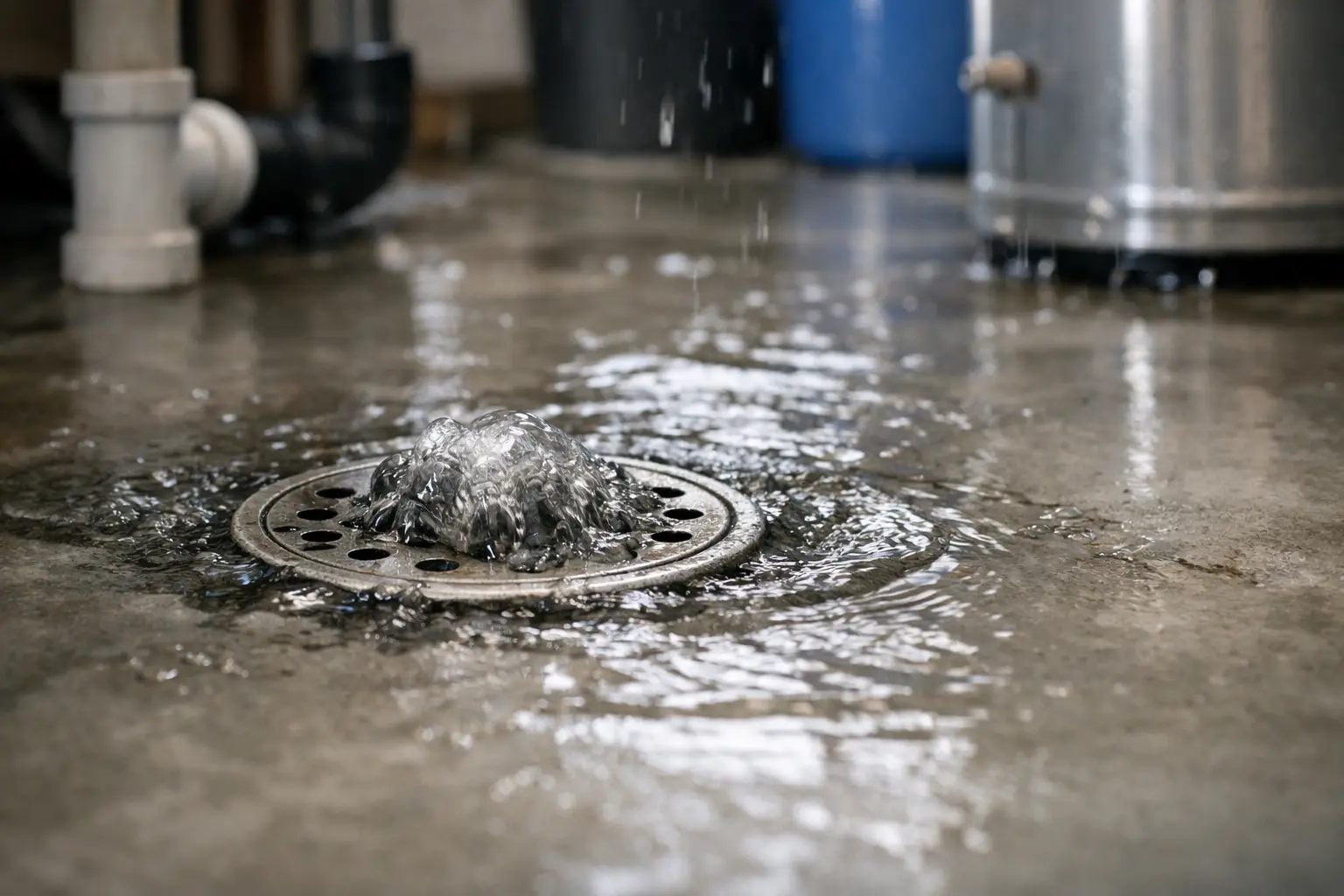
Sewer problems love gravity. If your main line is restricted, wastewater often shows up in the lowest point in the home: a basement toilet, a first-floor shower, a floor drain in a utility room, or a downstairs tub.
This is one of the most important “act now” moments. A backup is no longer a nuisance clog. It is a sanitation and property-damage risk, especially if it happens when the washing machine discharges or when multiple people use water back-to-back.
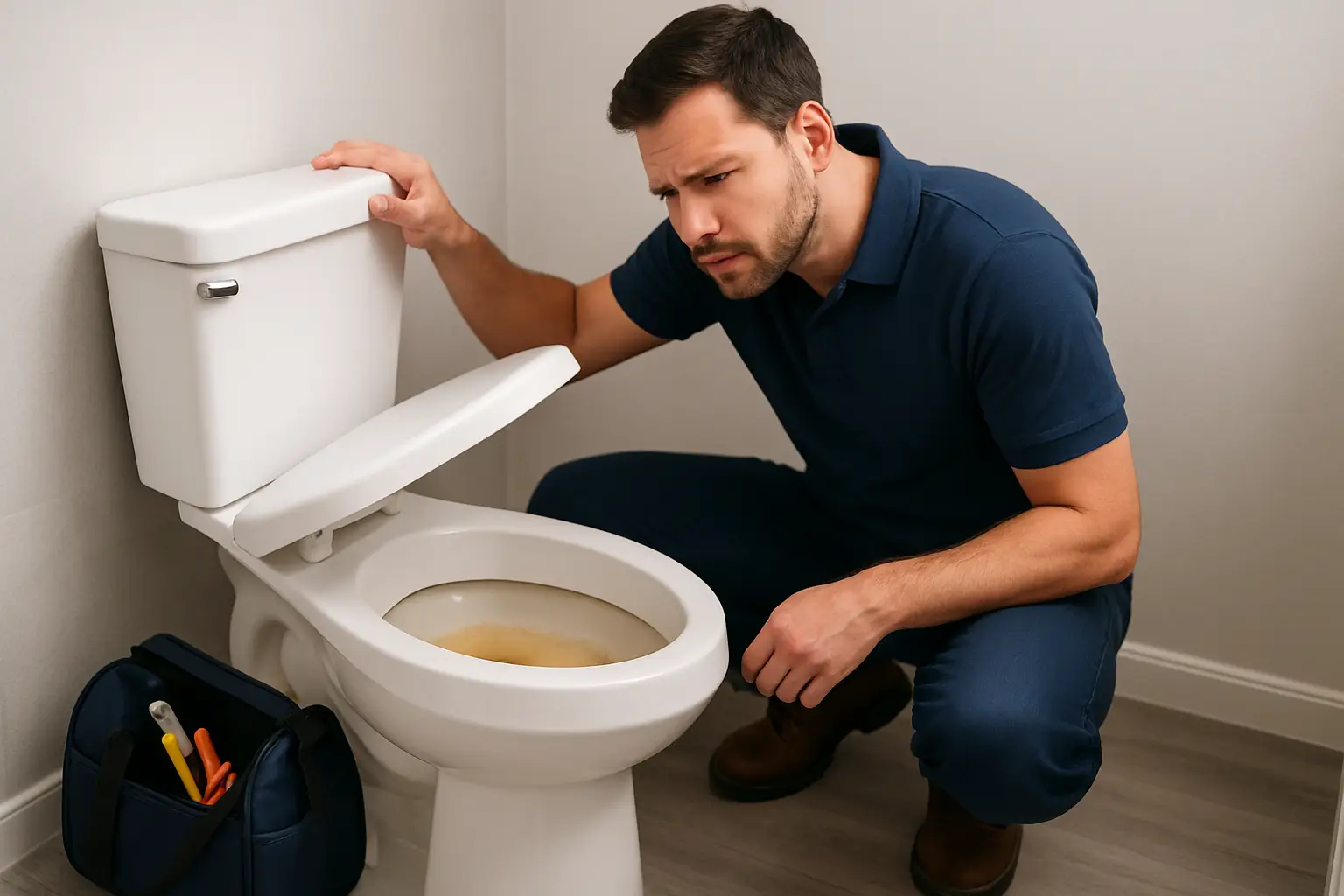
4) Toilet clogs that keep coming back
A toilet that needs plunging once in a while can happen. A toilet that “acts up” every few days, especially alongside other slow drains, often means the main line is not carrying waste away efficiently.
The key detail is repetition. If plunging gives temporary relief but the same toilet (or another one) starts struggling again, the obstruction is likely deeper than the fixture.
5) Sewage smells inside or around the building
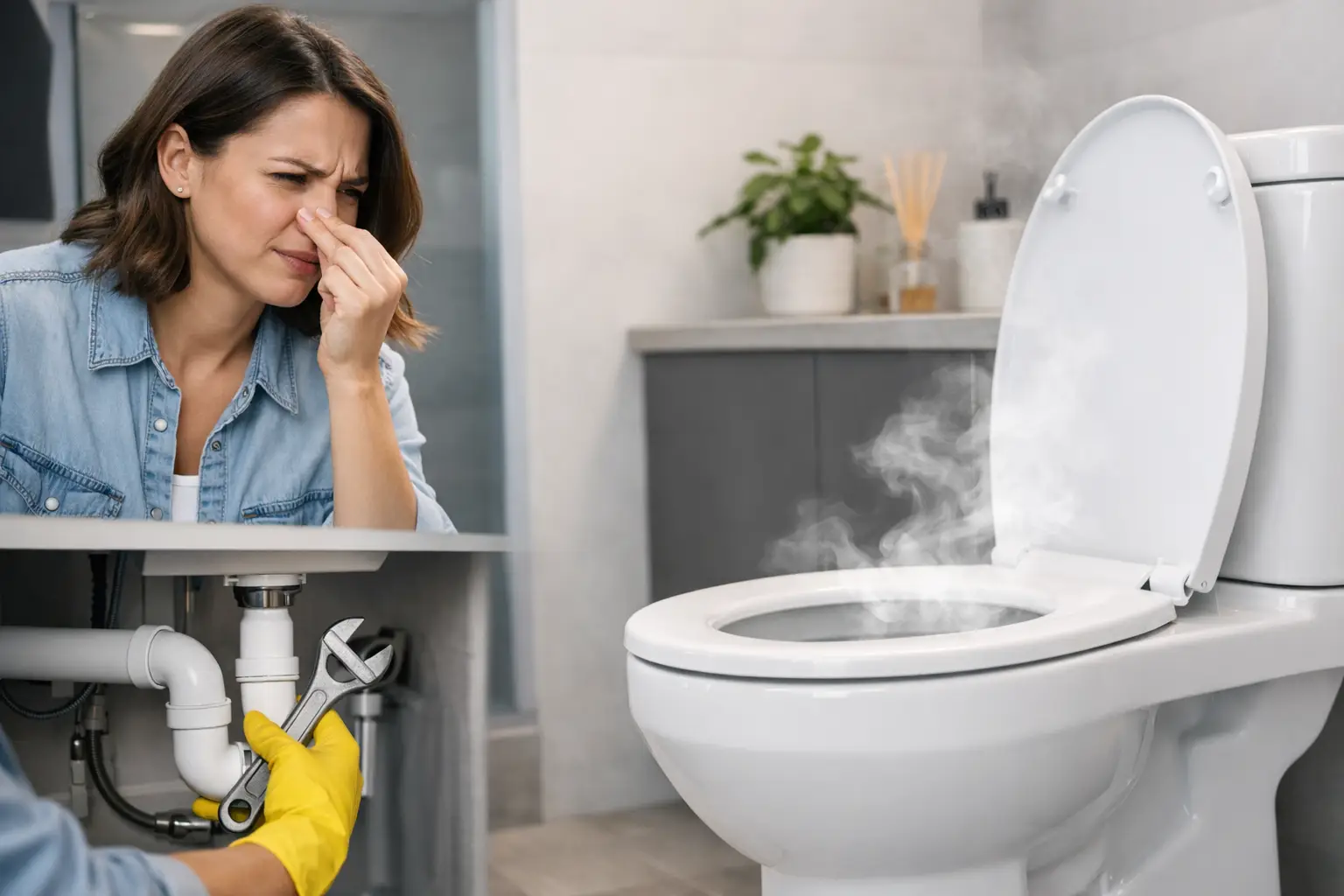
A properly working plumbing system keeps sewer gases in the pipe and vents them safely outside. When a sewer line is partially blocked, gases can push back through drain openings, especially if water traps are being siphoned or disturbed by poor flow.
If you smell that unmistakable sewer odor in a bathroom, laundry area, or near a floor drain, treat it as a real signal. Odors can also come from a dried-out trap in an unused drain, but if the smell is new and persistent, it is worth getting checked.
6) A “too green” patch of yard or soggy area near the line
Not every sewer line issue is a hard clog. Sometimes the line is compromised and leaking, and solids build up at the damaged spot. Outside, that can show up as an area of grass that looks unusually lush or a spot that stays wet even when the weather is dry.
This is one of those it-depends situations. Irrigation leaks and grading issues can cause similar symptoms. The difference is that sewer-related wet areas often come with odor, flies, or a soft, unstable feel underfoot.
7) You see pests that were not there before
Rodents and insects are drawn to moisture and waste. A sewer line issue can create conditions that attract flies, roaches, or rodents, especially near a basement drain, crawl space, or exterior cleanout.
This is rarely the first sign people notice, but when it shows up alongside drain problems, it is another reason not to wait.
8) The washing machine causes drama in other rooms
Laundry discharges a big volume of water quickly. If running the washer makes a nearby toilet bubble, makes a shower drain back up, or causes gurgling, that is a classic “system under stress” indicator.
This is also why some homes only see problems at night or on weekends. Higher water use exposes restrictions that are not obvious when one sink is running.
9) You already had a clog cleared, but the symptoms returned fast
If a line gets snaked and you feel better for a week or two, then the same symptoms return, it often means the obstruction was not fully removed or the pipe has a condition that keeps catching debris.
Tree roots and heavy buildup are common culprits. A cable might poke a hole through and restore flow temporarily, but it can leave walls coated with sludge or leave root masses behind. That is when more thorough cleaning and verification make the difference.
What usually causes these symptoms
Most owners want one simple answer: “Is it roots or grease?” The truth is that the same symptom can come from very different conditions.
In newer neighborhoods, we often see construction debris, wipes, and heavy paper loads creating restrictions. In older homes with cast iron, interior scale can narrow the pipe until it behaves like it is half its original diameter. Tree roots are common anywhere mature trees are near the sewer path. And sometimes the issue is structural – a belly, a shifted joint, or a partial collapse that keeps catching solids.
The trade-off is straightforward: you can guess and keep paying for repeat clogs, or you can verify what is in the line and fix the actual problem.
How professionals confirm a sewer line blockage (without guesswork)
A real diagnosis is more than “it seems clogged.” The cleanest way to know what you are dealing with is to look.
Sewer camera inspection: see the problem, not just the symptom
A sewer camera inspection shows where the blockage is and what it is made of. You can identify roots, heavy grease, scale, standing water from a belly, or a broken section. It also helps confirm whether the restriction is in the building drain, the main sewer line, or further downstream.
For landlords and business owners, this matters because it turns a stressful emergency into documented information you can act on.
High-performance cleaning: clear the line wall-to-wall
When buildup is the issue, professional hydro jetting can scour the interior of the pipe and restore full flow, not just punch through the center. In the right situations, it is the difference between “it drains today” and “it stays clear.”
For cast iron scaling, descaling tools and flex-shaft systems can remove hardened material that cables tend to ride over. The best approach depends on pipe material, pipe condition, and the type of blockage – which is why inspection and an experienced technician matter.
Verification: confirm the line is actually open
The job is not done when the water starts moving. A good crew verifies results, often by re-checking with a camera to confirm the obstruction is gone and the line is flowing the way it should. That protects you from repeat service calls and surprises.
When it is urgent vs. when it can wait
If you have sewage backing up, water coming up in a tub when you flush, or wastewater near a floor drain, treat it as urgent. Limit water use immediately so you do not push more into the system, and get a professional on site.
If you only have a mild slow drain and no other symptoms, it might be localized. But when two or more fixtures act up, or when gurgling and odors join the party, you are in main-line territory more often than not.
What to expect when you call a sewer and drain specialist
The best service calls are calm and methodical. A technician should ask what fixtures are affected, whether the problem is intermittent, and whether it changes with heavy water use. They should protect floors, keep the work area clean, and explain what they found in plain language.
If you are looking for that kind of verified, specialist-level drain work, Titan Jetters focuses on sewer and drain diagnostics and high-performance cleaning for homes and businesses across Northern Virginia, with the equipment to confirm what is going on before and after the work.
If your plumbing is sending you early warnings, listen to them. Catching a blockage when it is still a restriction – not a full backup – is one of the simplest ways to protect your home, your schedule, and your peace of mind.