
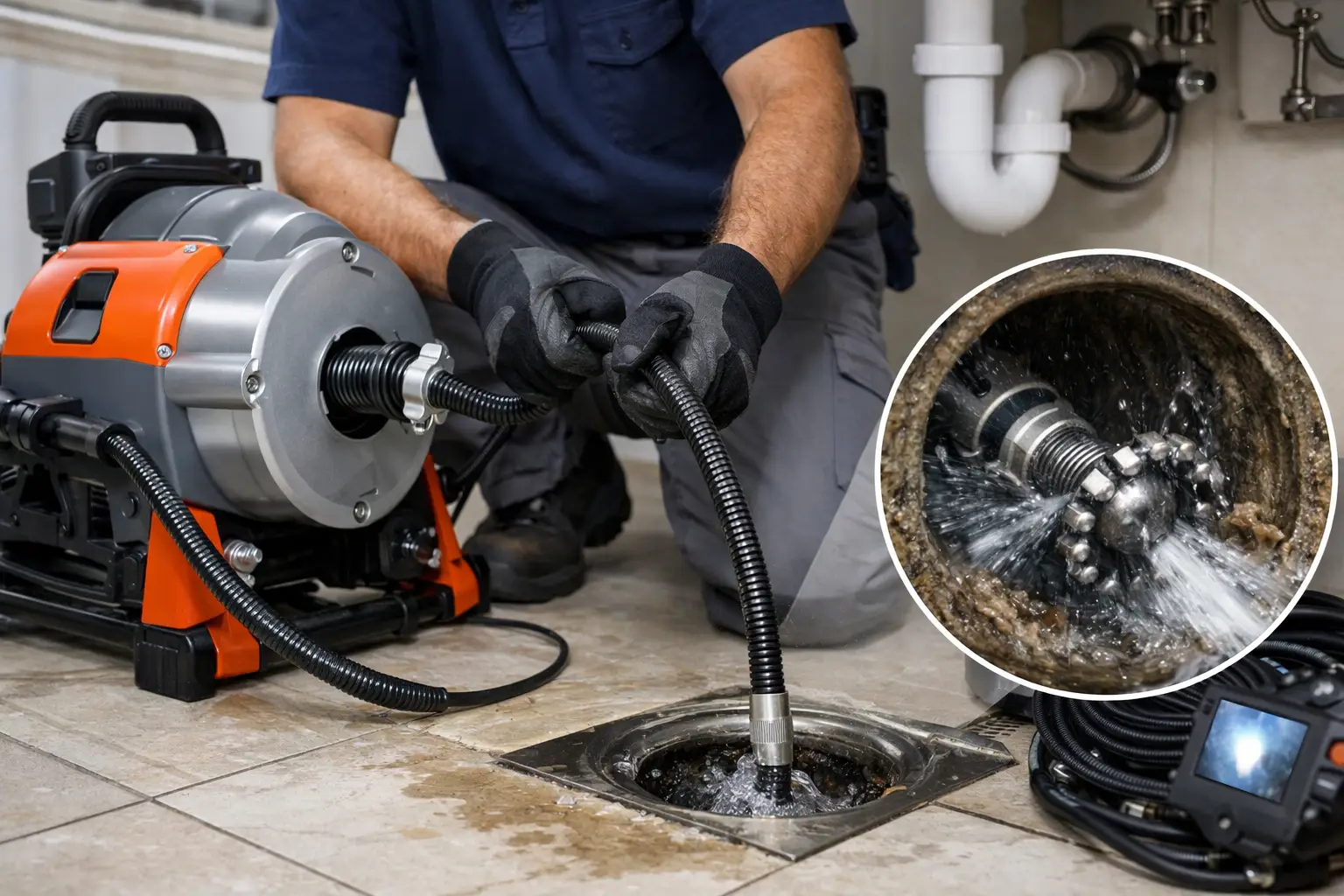
A drain can be open enough to carry water today and still be one meal, load of laundry, or busy restaurant shift away from backing up again. That is where understanding how flex shaft clears drains matters. Instead of simply punching a narrow hole through a clog, a professional flex-shaft machine is designed to clean buildup from the inside wall of the pipe, helping restore the full pathway water needs to move.
For homeowners, landlords, and businesses dealing with recurring slow drains in Northern Virginia, that difference can mean fewer callbacks, less downtime, and a clearer answer about what is actually happening inside the line.
What Is Flex-Shaft Drain Cleaning?
A flex-shaft drain cleaner uses a thin, flexible cable that spins a specialized cleaning head inside a drain line. The cable is protected by an outer sheath, which keeps the rotating component contained while a technician guides the tool through the pipe. At the end, the cleaning head is selected based on the material in the line and the type of restriction being addressed.
As the head rotates, it scrubs, cuts, or breaks up debris attached to the pipe wall. This is different from a basic drain snake, which often focuses on reaching the blockage and opening a route through it. A cable machine can be useful for certain clogs, but it may leave grease, sludge, scale, and other residue behind. That remaining buildup is one reason some drains clog again soon after they were supposedly cleared.
Flex-shaft cleaning is especially valuable when the goal is not just to get water moving, but to improve the condition of the pipe interior without immediately moving to a more aggressive cleaning method.
How Flex Shaft Clears Drains at the Pipe Wall
Most recurring drain problems are not caused by a single solid object sitting in the middle of a pipe. They build gradually. Grease catches food particles in a kitchen line. Soap residue and hair collect in bathroom drains. Mineral deposits narrow older pipes. In commercial settings, heavy grease and organic waste can coat a line until the available opening becomes too small to handle normal use.
A flex shaft addresses that buildup where it lives: against the pipe wall. The rotating head works through the affected section and loosens material so it can be removed or carried downstream appropriately. Depending on the line and the issue, the technician may use a chain-style head, a brush-style head, or another specialized attachment suited to the pipe and the debris.
The result is a more thorough cleaning than simply forcing a hole through the center of the blockage. Water has more room to flow, and there is less residue left behind to grab the next layer of grease, hair, or debris.
That does not mean flex shaft is the right tool for every clog. A drain that is packed with grease may need hydro jetting. A main sewer line affected by root intrusion, a broken pipe, or a severe offset needs a camera diagnosis before anyone claims the line is truly fixed. Good drain cleaning starts with matching the method to the condition of the pipe.
Why a Camera Inspection Changes the Diagnosis
A slow or backing-up drain tells you there is a problem. It does not tell you why it happened. The same symptom can come from buildup, roots, pipe scale, a foreign object, a belly in the line, or damaged sewer pipe.
A sewer camera inspection gives the technician a direct look inside. Before cleaning, the camera can help identify the location and likely cause of the restriction. After cleaning, it can confirm whether the buildup was removed and whether a structural issue remains. This is especially important with recurring main sewer clogs, older cast-iron piping, and commercial drain lines that experience heavy daily use.
Without visual verification, it is easy to mistake temporary flow for a complete repair. The drain may run well while the pipe is still heavily scaled or compromised. A camera helps replace guesswork with clear information and allows the customer to see why a recommended service makes sense.
When Flex Shaft Is a Strong Option
Flex-shaft cleaning is often a strong fit for branch drains and smaller drain lines where buildup is sticking to the pipe walls. Kitchen drains with grease accumulation, bathroom drains affected by soap scum and hair, and certain laundry or floor-drain issues can all be candidates, depending on access and pipe condition.
It can also be useful for descaling sections of older pipe. Cast iron is common in older properties, and its interior can become rough and restricted over time. Scale can trap debris and cause a line to drain poorly even when no obvious clog is present. A flex shaft can clean targeted areas of this buildup, while camera footage helps determine how much of the pipe remains sound.
For restaurants and other commercial properties, the value is often reduced disruption. A drain line that repeatedly slows down can interrupt operations, create sanitation concerns, and put staff in a difficult position. Cleaning the pipe wall more thoroughly can help reduce repeated service calls when buildup is the underlying issue.
When Hydro Jetting or Repair May Be Better
Flex shaft is precise, but it is not a cure-all. Hydro jetting uses high-pressure water to scour a pipe and flush loosened debris through the system. It is frequently the better choice for long runs with widespread grease, sludge, or heavy accumulation. The right approach depends on the pipe material, the severity of the blockage, access points, and what a camera inspection shows.
If the camera reveals root intrusion, a crushed section, separated joints, or a pipe that has deteriorated beyond cleaning, repeated drain service will not solve the core problem. Cleaning may restore temporary flow, but repair or replacement could be the honest next step. A dependable drain specialist explains that distinction instead of selling a cleaning method that cannot deliver a lasting result.
There are also cases where a line has both buildup and damage. In that situation, cleaning can be useful because it allows the camera to clearly inspect the pipe afterward. Once debris is out of the way, the condition of the sewer line is easier to assess and the repair plan can be based on facts.
What Professional Flex-Shaft Service Should Include
The equipment matters, but the technician’s diagnosis matters more. A professional service should begin by listening to what the drain has been doing: whether it is slow, fully blocked, backing up into another fixture, or repeatedly failing after prior cleanings. Those details help narrow down whether the problem is likely local to one fixture or farther out in the sewer line.
From there, the technician evaluates access, pipe size, and likely pipe material before choosing the appropriate cleaning method and head. The line should be cleaned carefully, not rushed. Once flow is restored, camera verification is often the best way to show the result and identify any remaining concern.
At Titan Jetters, the goal is straightforward: diagnose the issue correctly, clean the line with the method that fits, and explain what the camera shows in plain language. For customers in Gainesville, Bristow, Haymarket, and Manassas, that means clear options without guessing or pushing a service the line does not need.
Do Not Wait for a Small Drain Problem to Become a Backup
A slow drain is often an early warning, not a minor inconvenience. Gurgling sounds, water pooling around floor drains, odors near fixtures, or one drain affecting another can signal a restriction that is getting worse. The longer buildup remains in place, the more likely it is to catch additional debris and turn into a full blockage.
If a drain has been cleared before but keeps coming back, ask for a diagnosis that goes beyond getting water to disappear for the moment. Flex-shaft cleaning can be an effective part of that solution when wall buildup is the problem, and camera inspection can show whether the pipe needs a different answer. Getting the right information early can protect your home or business from a messy, disruptive backup later.
