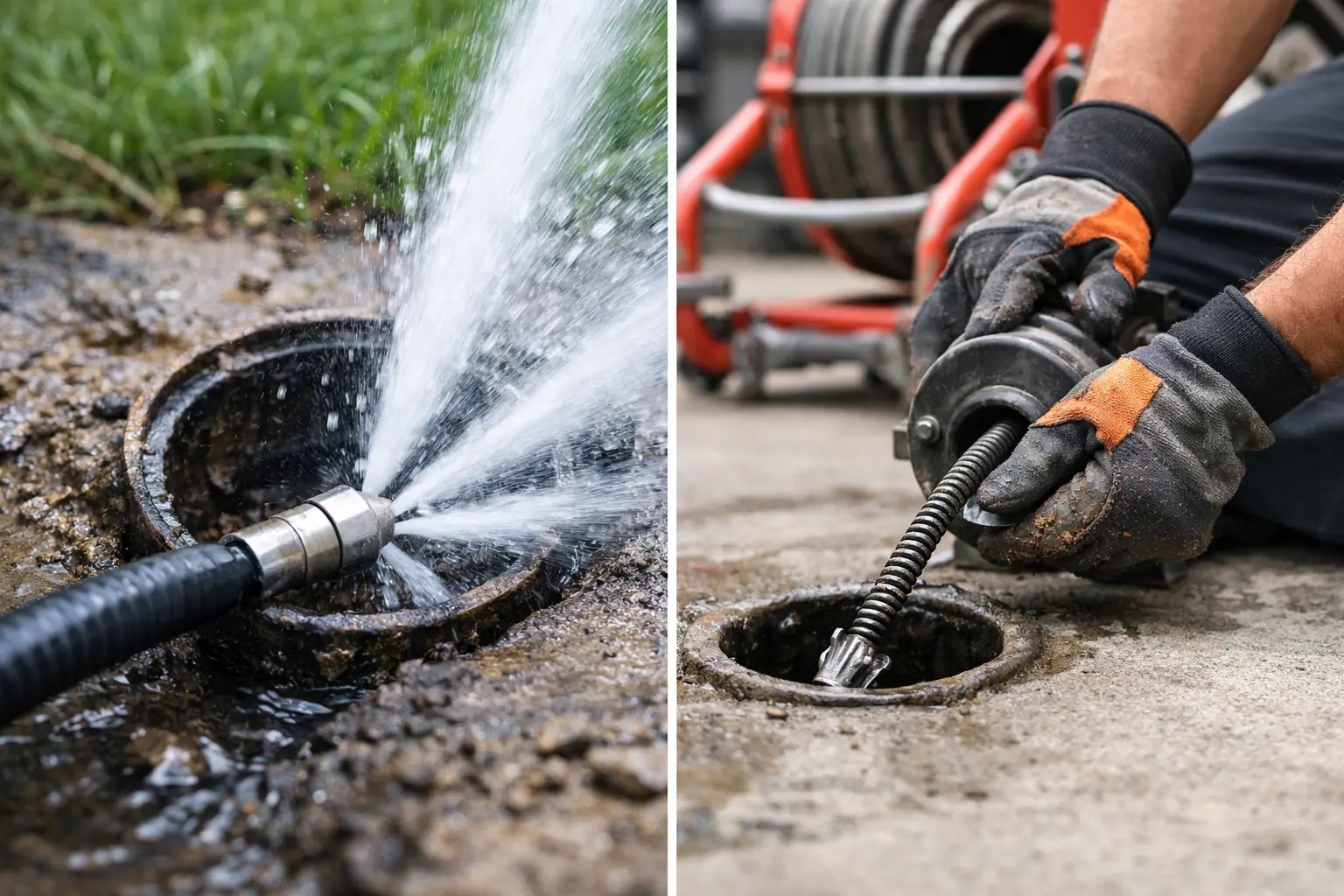
A drain that keeps acting up rarely fixes itself. If you are seeing the best signs your drain needs jetting, the real issue is usually deeper in the line – built-up grease, sludge, scale, or debris that basic snaking only pokes through. That is when a stronger, more complete cleaning method starts to make sense.
Hydro jetting is not the answer to every clog, and any honest drain specialist should tell you that. But when the line is packed with buildup instead of one isolated blockage, jetting can clean the pipe wall far more thoroughly than a temporary punch-through. The key is knowing when your drain is warning you that standard clearing may not be enough.
The best signs your drain needs jetting
1. The clog keeps coming back
A repeat clog is one of the clearest signs there is still material coating the inside of the pipe. Maybe the kitchen sink drains fine for a week after service, then starts gurgling again. Maybe a floor drain clears, then slows down right back up. That pattern usually means the blockage was opened, not fully removed.
This is common in kitchen lines, commercial grease-heavy drains, and older pipes that collect years of buildup. A cable machine can restore flow, but if grease and sludge are still stuck to the walls, water keeps catching debris and rebuilding the restriction. Jetting is often the better fit when the goal is not just to reopen the line, but to actually clean it.
2. Multiple drains are slowing down at once
When one fixture is slow, the issue might be local to that branch line. When several drains in the home or building are acting up together, the problem is often farther down the system. A main line restriction can show up as a slow tub, a sluggish toilet, and a sink that starts backing up around the same time.
That does not automatically mean hydro jetting is the next step. A sewer camera inspection may be needed first to see whether the line is dealing with grease, roots, scale, or pipe damage. But if the restriction is caused by heavy buildup inside an otherwise jettable line, hydro jetting can clear a much larger section of pipe and restore proper flow.
3. You smell sewage or foul drain odors
Bad drain odors are not always caused by a full blockage, but they often point to buildup that should not be there. Organic sludge, grease, food waste, and waste residue can sit inside the pipe and start producing a strong smell long before the drain fully backs up.
This is especially common in kitchen drains, laundry lines, and older sewer lines with scale buildup. If odors keep returning after cleaning attempts, the issue may be the residue left behind in the pipe. Jetting can wash that material out instead of just creating a hole through it.
4. Water backs up before it finally drains
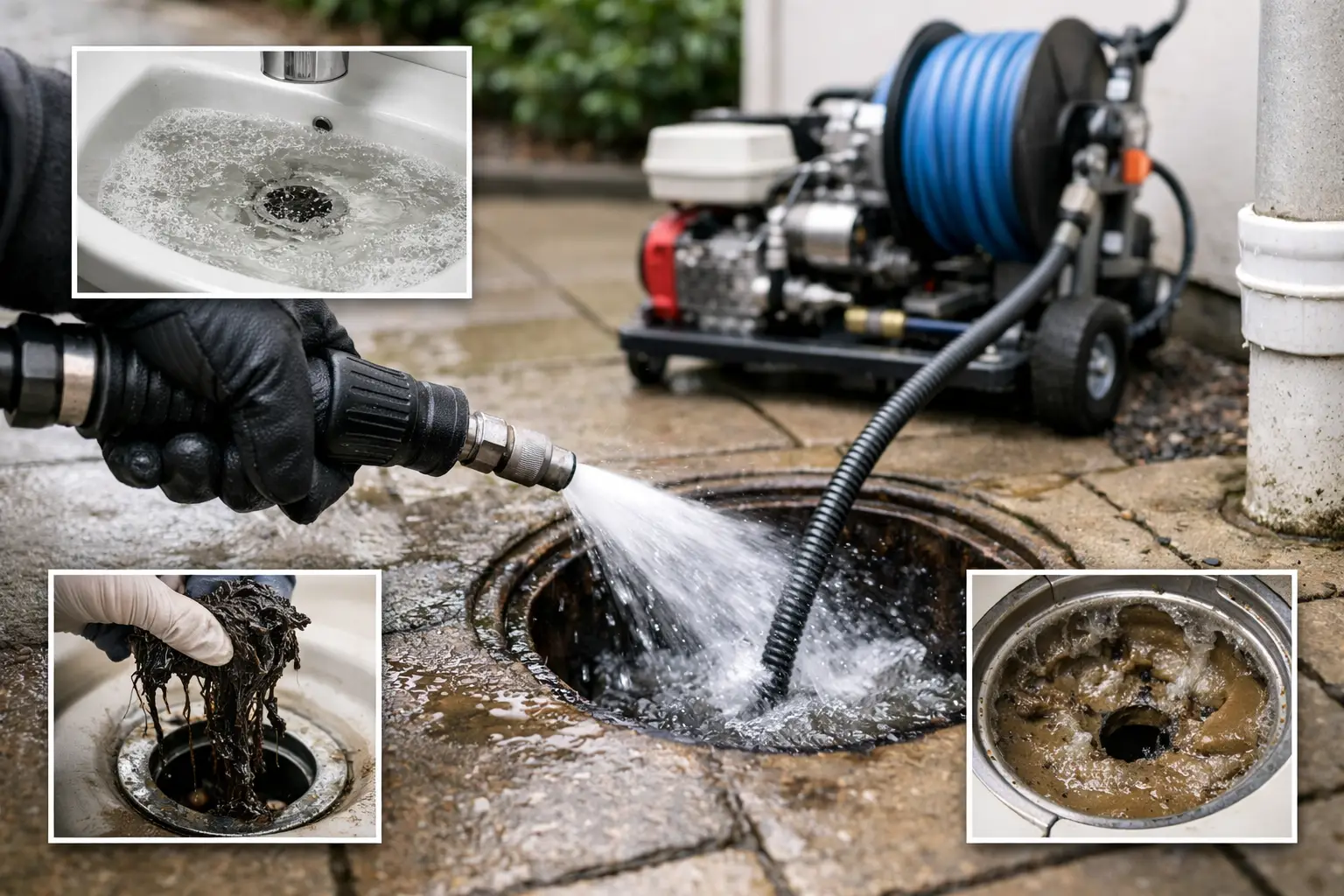
A drain that holds water for a while and then slowly releases it is usually telling you there is a serious restriction in play. You may notice standing water in a sink basin, a shower that fills around your feet, or a floor drain that bubbles before finally moving water. That stop-and-go behavior is often what happens when the pipe has narrowed from buildup.
This matters because backup pressure can get worse fast. What seems like a slow nuisance one day can become a messy overflow the next, especially if the line sees heavy use. If the pipe is structurally sound, jetting can clear the full diameter more effectively than methods that only break through the center.
Why snaking is not always enough
A lot of people hear that the drain was “cleared” and assume the problem is solved. Sometimes it is. If the issue was a simple soft blockage near the opening, a cable may do the job just fine.
But many problem drains are not blocked by one single object. They are narrowed by layers of grease, soap scum, mineral scale, paper residue, or waste buildup. In those cases, snaking can restore movement without restoring the pipe itself. Water gets through, but the walls are still dirty and the line is still vulnerable.
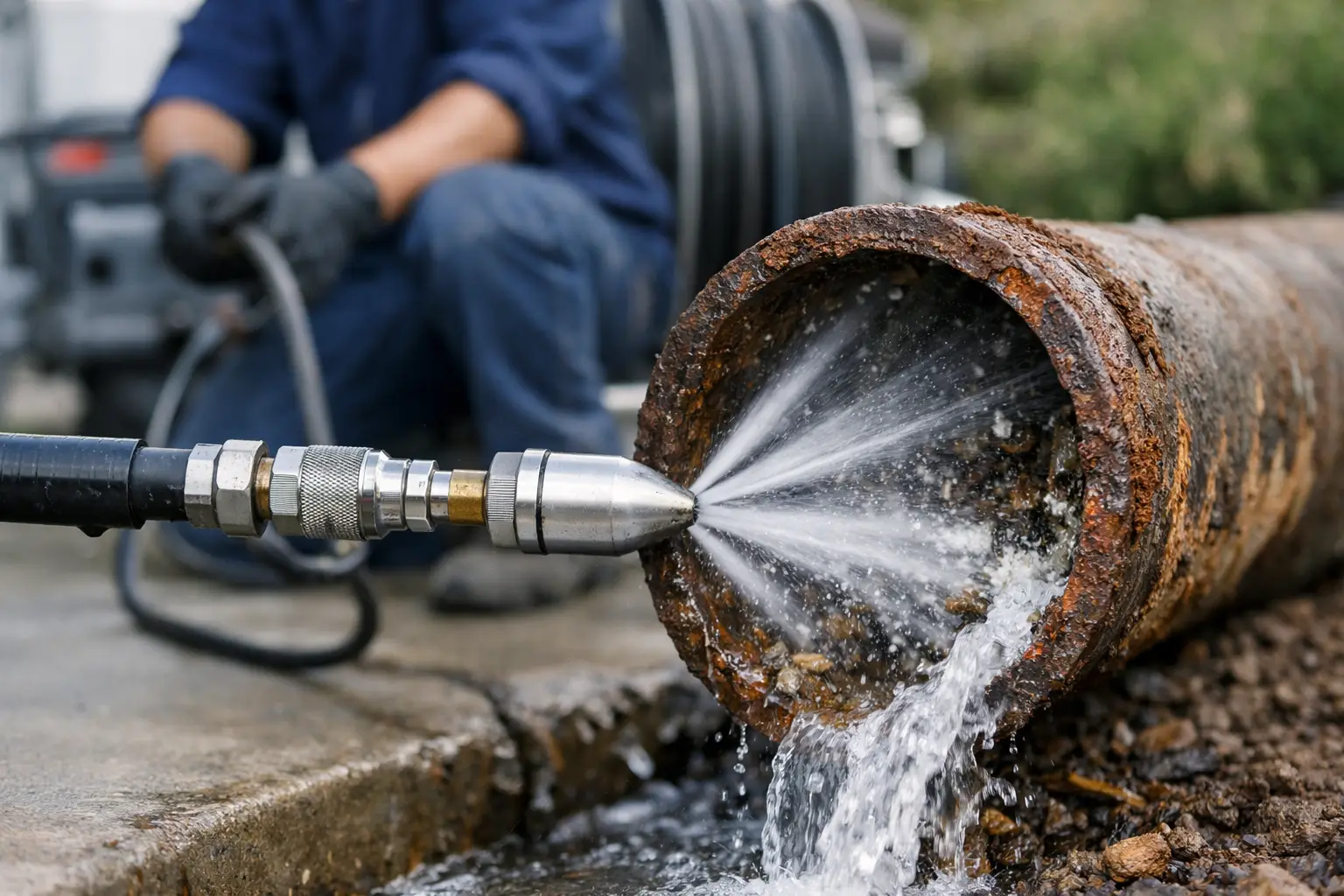
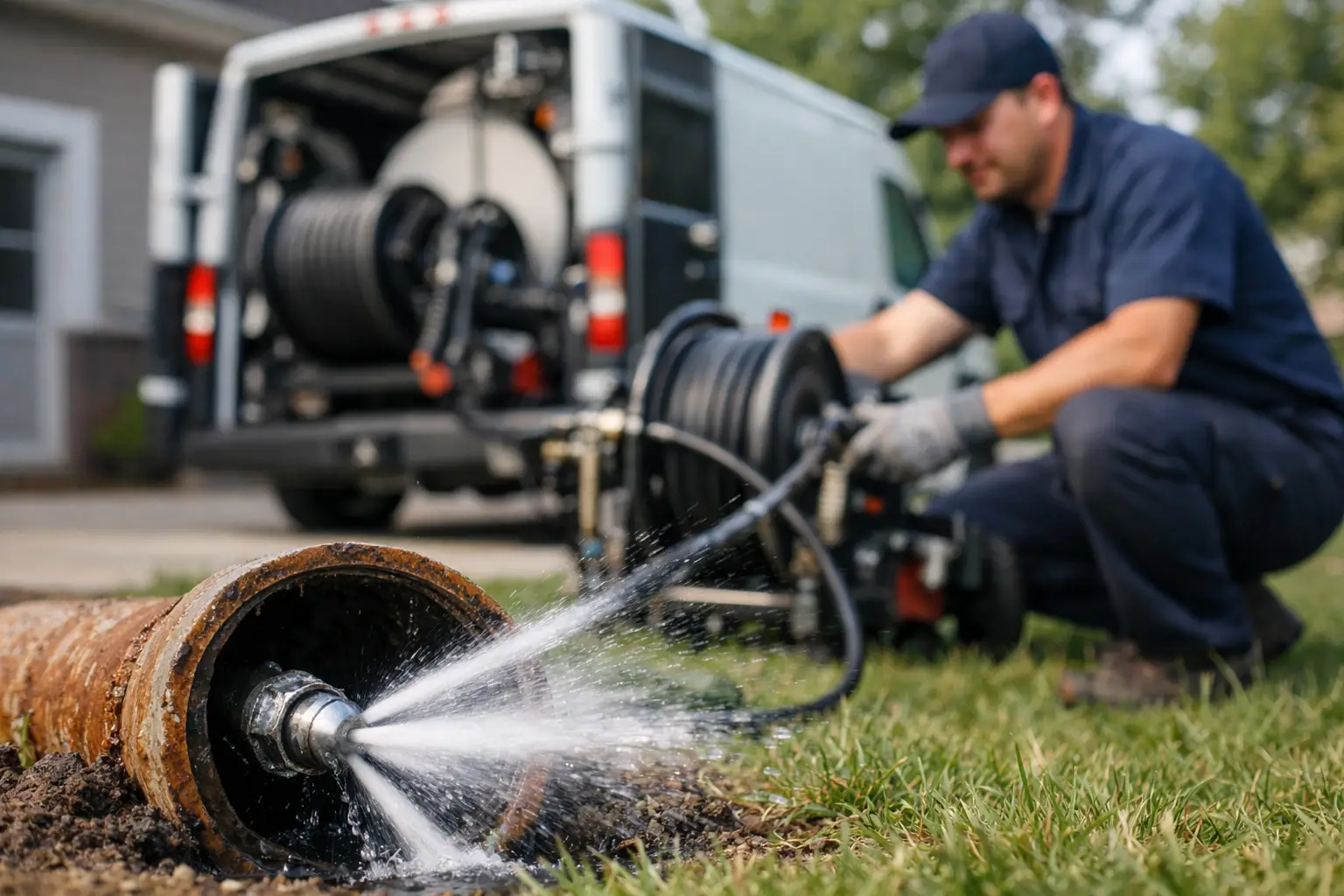
That is why recurring drain trouble often needs a more complete solution. Jetting uses high-pressure water to scour the inside of the line and carry debris out, not just poke a path through it. On the right pipe, that can mean a longer-lasting result and fewer repeat service calls.
Other signs a line may need hydro jetting
Gurgling sounds after you use water
If drains start talking back every time water moves through the system, there may be air getting trapped by a restriction. Gurgling does not always mean jetting is required, but when it shows up along with slow drainage or recurring clogs, it is a strong sign the line needs a closer look.
Grease-heavy drains in kitchens
Kitchen lines take a beating. Even homes that are careful with what goes down the sink can build up grease over time. In restaurants and food service settings, the risk is even higher. Grease does not just sit in one lump. It coats the pipe and narrows it bit by bit.
That is where hydro jetting often shines. It is well suited for removing grease buildup across longer sections of pipe, especially when basic drain cleaning keeps turning into the same callback.
Older cast iron lines with scale
Older cast iron sewer and drain lines can build up rough internal scale that catches waste and paper. That rough surface becomes a constant snag point, which is why some properties deal with repeat stoppages no matter how often they have the line opened.
Jetting can help remove loose buildup and restore better flow, though the right approach depends on pipe condition. In some older systems, a camera inspection is the smart first move to confirm the line can handle the process safely.
The part most homeowners miss – not every line should be jetted
This is where experience matters. Hydro jetting is powerful, and it should be used with judgment. If a pipe is collapsed, badly offset, or already failing, blasting water through it is not the first conversation to have. The line needs to be properly diagnosed.
That is why a professional inspection matters more than guessing based on symptoms alone. A camera can show whether the issue is grease, sludge, roots, scale, or structural damage. It can also verify the result after cleaning, which gives you proof the line is actually open and flowing the way it should.
A good drain specialist does not recommend jetting because it sounds impressive. They recommend it when the condition of the line and the nature of the blockage make it the right tool for the job.
Best signs your drain needs jetting vs. signs it needs a different fix
If your drain is slow, smells bad, and clogs repeatedly, jetting is often worth considering. If several fixtures are affected, that points even more strongly toward a larger line issue. If there is years of grease, sludge, or scale in the pipe, cleaning the pipe wall matters.
On the other hand, if the problem is a broken sewer line, a foreign object lodged in the pipe, or root intrusion combined with damage, jetting may only be part of the answer or not the right answer at all. That is the trade-off people should understand. The goal is not to force one method onto every drain problem. The goal is to diagnose it correctly and fix it with the least disruption and the best long-term result.
For homeowners and property managers in Northern Virginia, that usually comes down to three things: how often the issue happens, how many fixtures are affected, and what the inside of the line actually looks like on camera.
When to stop waiting
Drain problems tend to get more expensive in inconvenience before they become expensive in damage. A sink that drains slowly can usually wait a little. A line that is backing up, affecting multiple fixtures, or producing sewage odor should not.
If you are noticing the best signs your drain needs jetting, waiting for a full backup is rarely the smart move. The better move is to have the line checked, confirm what is inside it, and clean it thoroughly if the pipe condition supports it. That approach saves time, reduces repeat problems, and gives you a clearer answer than trial-and-error drain work.
If the line needs jetting, it should be done cleanly, safely, and with proof that the job worked. That is what gives people real peace of mind – not just hearing the water go down today, but knowing the line was actually cleaned for tomorrow.