
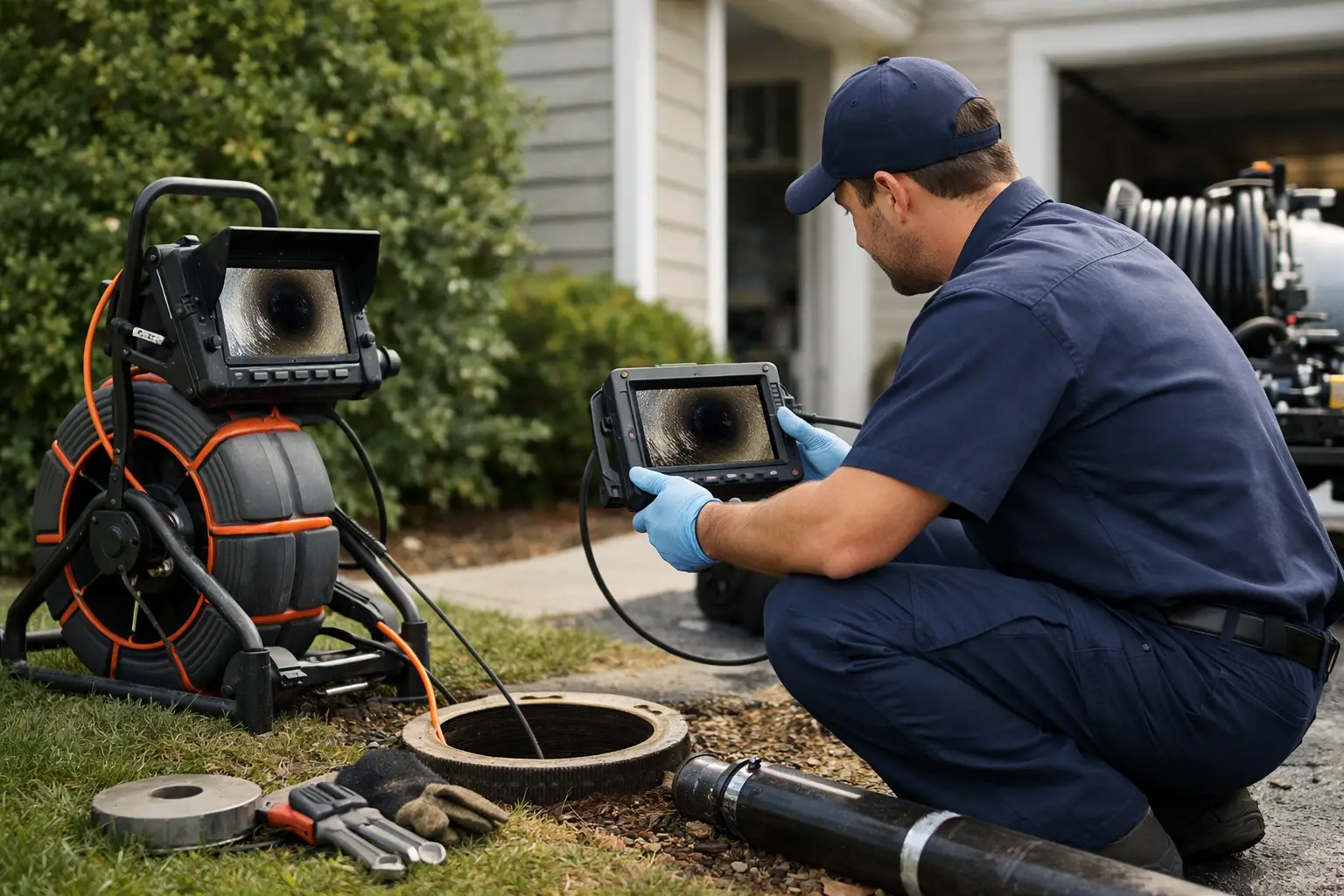
A drain that clears once and clogs again a few weeks later is not a normal inconvenience. It is a sign that something farther down the line may still be restricting flow. When you schedule sewer diagnostics early, you can stop guessing, find the condition inside the pipe, and make a decision based on what is actually causing the problem.
For homeowners, landlords, and business owners, that matters. A kitchen sink backup before guests arrive, a toilet that gurgles during a busy restaurant shift, or sewage appearing in a lower-level drain can quickly turn into property damage and lost time. The right diagnostic work helps separate a simple blockage from a larger main sewer line issue before the situation gets messier.
When to Schedule Sewer Diagnostics
One slow drain by itself may be limited to that fixture’s branch line. Several slow drains at the same time are different. When sinks, tubs, showers, and toilets are all draining poorly, the main sewer line deserves attention. The same applies when flushing a toilet causes water to rise in a tub or when a washing machine discharge backs up through a floor drain.
Recurring clogs are another clear reason to get a professional diagnosis. Clearing a blockage can restore flow, but it does not automatically explain why the blockage formed. Grease, wipes, scale, root intrusion, pipe damage, and a sagging section of line can all create repeat problems. If the cause remains in place, the clog will usually return.
Schedule service promptly if you notice sewage odors indoors or outside near the sewer line, gurgling fixtures, water around a floor drain, or a backup in the lowest drain in the home. These signs do not always mean the pipe needs repair, but they should not be ignored. A small restriction can become a full blockage at the worst possible time.
For commercial properties, timing is often about avoiding downtime. Restaurants may deal with grease buildup in kitchen lines. Rental properties can have repeated drain complaints from multiple units. Offices and retail spaces cannot afford a restroom closure during business hours. Diagnostics give property owners and managers a documented starting point for deciding whether cleaning, maintenance, or repair is the appropriate next move.
Problems That Keep Coming Back Need an Answer
It is tempting to treat repeat clogs as separate events. But if the same bathroom, kitchen, or main line keeps having trouble, the pattern is useful information. A professional technician can evaluate where the issue occurs, how often it returns, and whether multiple fixtures are involved.
This is especially valuable in older Northern Virginia homes with cast iron piping. Cast iron can develop interior scale over time, narrowing the path for wastewater and allowing debris to catch inside the line. In other properties, roots can enter through joints or damaged sections. The symptom may look like an ordinary clog, while the underlying condition requires a more targeted solution.
What Professional Sewer Diagnostics Can Show
Sewer diagnostics are more than running a camera through a pipe and calling it done. A camera inspection is an important tool because it provides a direct view of the line’s interior. It can help identify buildup, roots, offsets, cracks, standing water, bellies, or other visible conditions affecting flow.
The diagnosis also includes the real-world behavior of the system. Which fixtures are affected? Does the line back up only when large amounts of water are used? Is there a history of drain cleaning in the same area? Those details help determine whether the problem is likely in a local drain, the main sewer line, or another section of the plumbing system.
A good diagnostic visit should leave you with a plain-language explanation. You should understand what was found, why it is causing trouble, and what options make sense. Not every issue calls for the same service. Heavy grease or debris may respond well to professional drain cleaning or hydro jetting. Scale inside cast iron may need descaling. A damaged or collapsed section may require sewer line repair instead of repeated cleaning.
That distinction protects your budget. Cleaning is often the right answer when the pipe is structurally sound but obstructed. Repair may be the better investment when the line cannot reliably carry waste because its condition has changed. The goal is not to sell the biggest job. It is to correct the actual problem and verify that the line is flowing properly.
Camera Findings Need Context
A sewer camera can reveal a lot, but a video alone does not always tell the full story. For example, some buildup can look severe while still allowing adequate flow after proper cleaning. On the other hand, a small visible opening through roots or scale can close quickly if the material is not removed thoroughly.
That is why experience matters. The technician needs to connect what the camera shows with the symptoms at the property. They also need to know when to recheck the line after cleaning. Verifying the result is how you know whether the obstruction was removed and whether another condition still needs attention.
Do Not Wait for a Full Backup
Many property owners schedule diagnostics only after sewage backs up into a tub, shower, or floor drain. At that point, the problem has already moved from inconvenient to urgent. Cleanup may be needed, fixtures may be unusable, and normal routines come to a stop.
Earlier diagnostics are usually less disruptive. If a line is still draining but showing warning signs, there may be time to inspect it, clear the restriction, and plan any follow-up work without an emergency hanging over the decision. That can be particularly helpful for landlords coordinating tenant access or businesses trying to schedule service around operating hours.
There are exceptions. A sudden backup, wastewater coming up through a drain, or a toilet that overflows when other fixtures run needs prompt professional attention. Avoid using more water until the source can be evaluated. Continuing to run dishwashers, washing machines, showers, or toilets can add more wastewater to a line that is already struggling to drain.
Choosing the Right Next Step After Diagnostics
Once the cause is identified, the next step should fit the condition of the line. If a main sewer line is blocked by accumulated debris, professional cleaning may restore normal flow. If grease is the issue in a commercial kitchen drain, hydro jetting may be a strong option because it cleans the pipe walls rather than simply opening a small channel through the blockage.
If mineral scale has reduced the inside diameter of aging cast iron, descaling can remove that buildup and improve flow. If a camera inspection finds a broken pipe, severe offset, or section that holds water because it has sagged, cleaning alone may only be temporary. In that situation, a repair discussion is more honest than promising a long-term result from another clog removal.
This is where clear options matter. You should know whether the recommendation is meant to solve an immediate blockage, improve the pipe’s condition, or address a structural defect. The best choice depends on the pipe material, the severity of the issue, the property’s use, and whether the problem has happened before.
Titan Jetters helps customers in Gainesville, Bristow, Haymarket, Manassas, and surrounding Prince William County communities get clear answers when drains and sewer lines stop acting right. The focus is straightforward: inspect the line, explain what is happening, and recommend work that matches the findings.
A sewer issue rarely improves by being ignored. If your drains are slowing down, gurgling, smelling unpleasant, or backing up more than once, book a diagnostic service before the next load of laundry or busy workday turns a warning sign into a cleanup problem.
