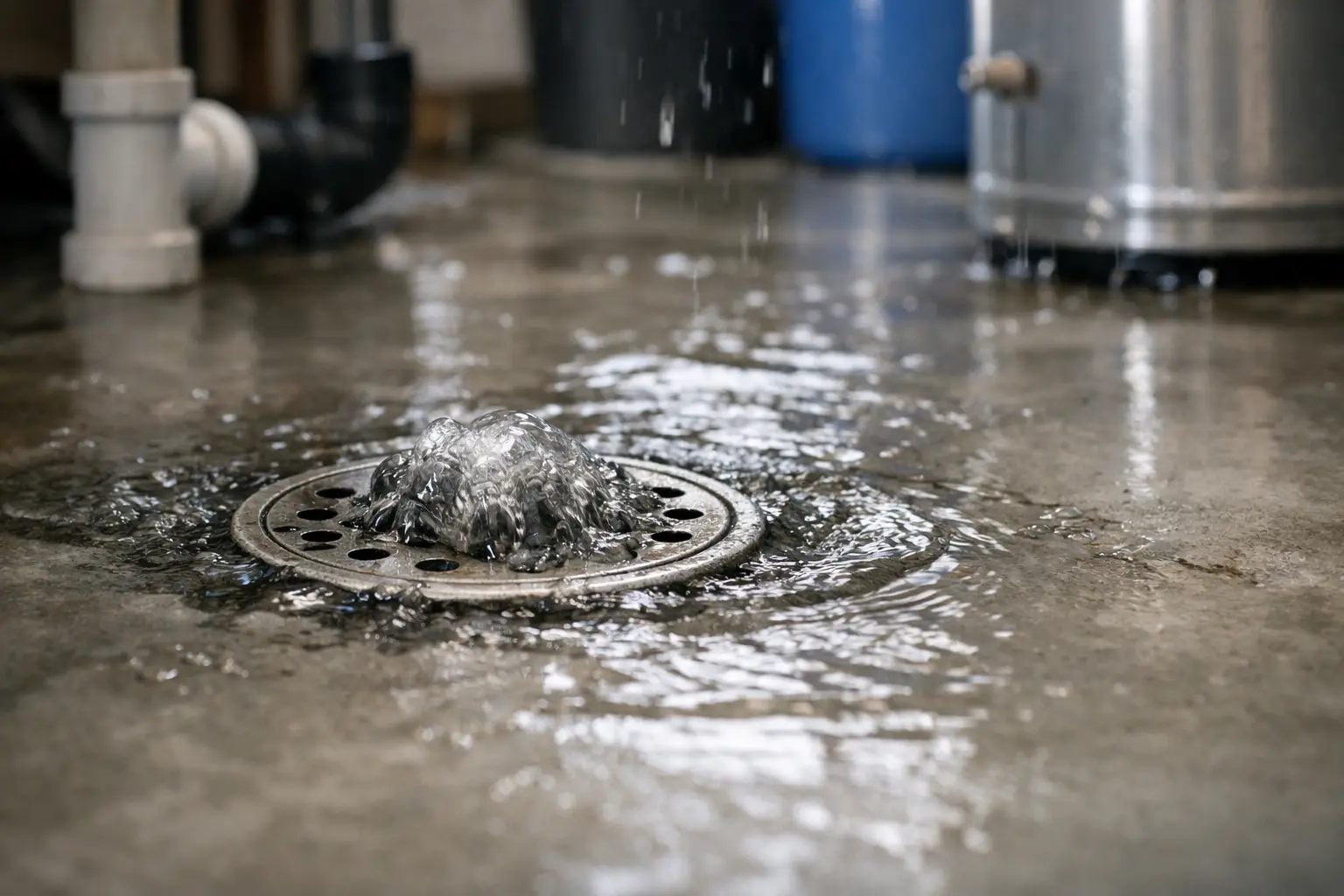
A basement floor drain that gurgles or spills water after a storm is not just bad timing. In most cases, floor drain backing up after rain causes point to a drainage system that cannot handle incoming flow, is partially blocked, or has a defect somewhere underground. The rain is the trigger, but the real problem is usually already sitting in the line.
That matters because a backup after heavy weather is rarely a one-off event. If the drain pushes water once, it can do it again with the next storm, and the mess often gets worse fast. The right response is to figure out whether the issue is storm-related overload, a sewer line restriction, or a damaged pipe that needs to be confirmed with proper diagnostics.
Why floor drains back up when it rains
A floor drain is one of the lowest openings in the building. When the drainage or sewer system outside starts struggling, that low point often becomes the first place water shows up. Instead of wastewater and storm-related flow moving away from the property, pressure builds in the line and forces water back through the drain.
In older neighborhoods, this can happen because municipal systems get overwhelmed during heavy rain. In other properties, the public system may be fine, but the private sewer lateral has a blockage or structural problem that only becomes obvious when extra water enters the system. That difference matters, because the long-term fix depends on where the problem is actually located.
Most common floor drain backing up after rain causes
A partial blockage in the main sewer line
This is one of the most common causes we see. If the main line already has grease, sludge, wipes, roots, or scale buildup narrowing the pipe, normal daily use may still drain slowly enough to go unnoticed. Then a hard rain hits, extra water enters the system, and the line cannot keep up.
That partial blockage creates a choke point. Once flow slows down enough, the lowest drain in the property becomes the relief point. Homeowners often notice dirty water, a sewer smell, or a backup that seems to clear once the rain stops. That does not mean the problem fixed itself. It usually means the line is still restricted and waiting for the next heavy event.
Tree root intrusion
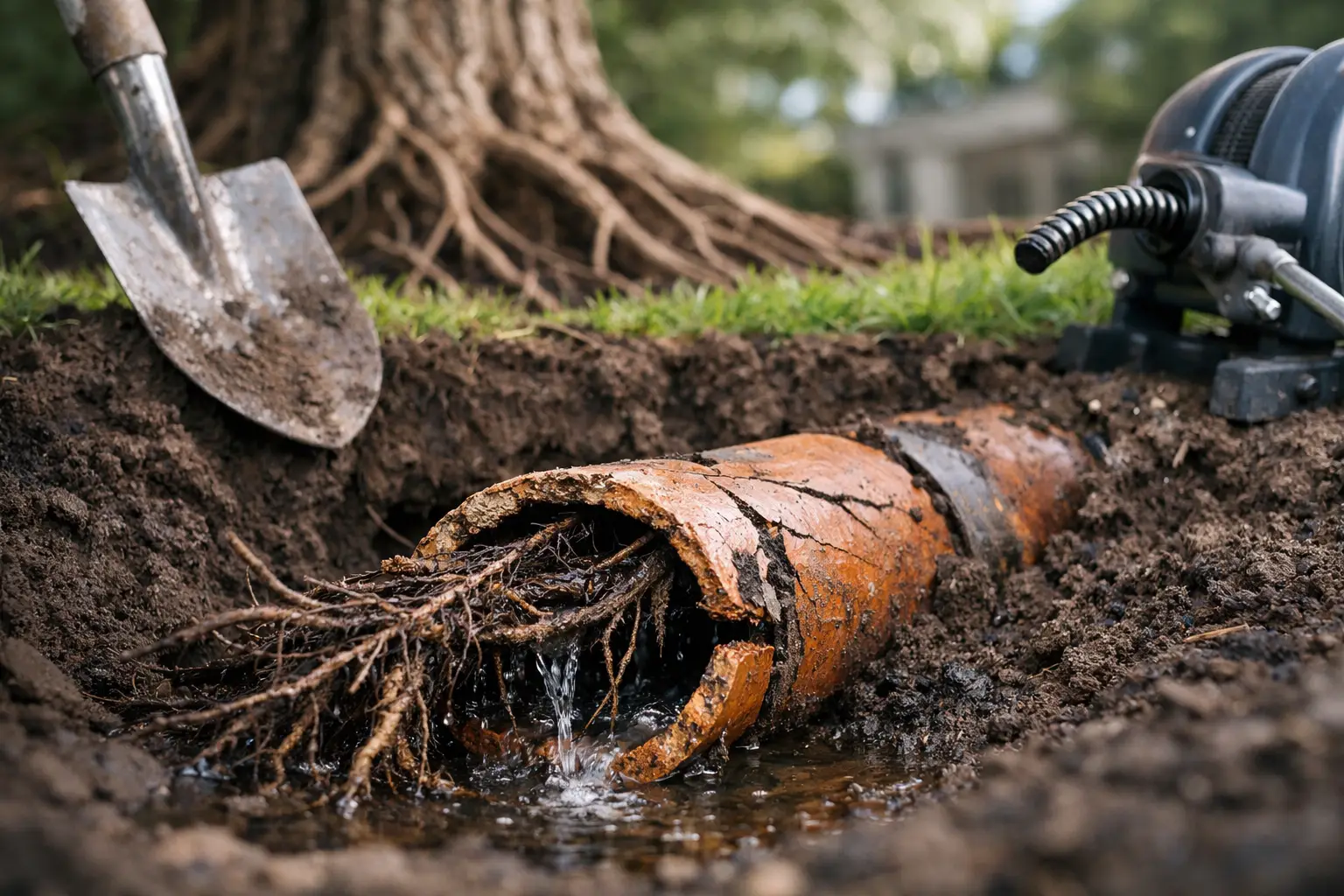
Roots are a major problem in underground sewer lines, especially with older clay or aging pipe connections. They find moisture, slip into tiny joints or cracks, and keep growing. At first, they catch paper and debris. Over time, they can create a thick obstruction that reduces flow and changes how the line handles heavy water volume.
Rain makes that weakness more obvious. Saturated soil and increased system demand can turn a manageable restriction into a full backup. If the property has mature trees and the drain issue tends to show up during wet weather, root intrusion belongs high on the list of suspects.
Pipe damage or a belly in the line
Not every rainy-day backup is caused by buildup. Sometimes the pipe has shifted, cracked, or settled. A sagging section, often called a belly, holds water and waste instead of moving it cleanly downhill. That standing material becomes a collection point for debris, and when rain adds more load, the line can lose capacity quickly.
This is where guesswork causes problems. A cable machine might poke a temporary opening through soft buildup, but if the actual issue is a broken section or a belly, the backup can return soon after. A camera inspection is what tells you whether the line is dirty, damaged, or both.
Stormwater entering the sewer system
Some properties have downspouts, foundation drains, sump connections, or yard drains that are improperly tied into the sewer line. During a storm, that extra water rushes into a system that was never meant to carry that much flow at once. The result can be a backup at the basement floor drain.
This setup is more common in older homes and older modifications where drainage changes were made over the years. The homeowner may not even know those connections exist. When the line gets overloaded only during heavy rain, improper stormwater entry is worth investigating.
Municipal sewer surcharge
Sometimes the issue is beyond the house line. During extreme rain, the city or county sewer system can become surcharged, meaning it is carrying more flow than it can move efficiently. When that happens, water can push backward through connected private lines and appear at the lowest drain.
This tends to show up during major storms rather than every rainfall, and nearby properties may report similar issues. Even then, a private line inspection still matters. A clean, healthy sewer line handles stress better than one that is already restricted.
Signs the problem is in the main line, not just the floor drain
A floor drain backup after rain often gets mistaken for a simple drain clog near the basement. Sometimes it is local, but often the drain is only where the problem becomes visible. If multiple fixtures act up, the main line deserves attention.
Watch for slow toilets, gurgling tubs, water appearing in a basement shower, or a washing machine drain that causes water to rise from the floor drain. Those are strong indicators that the issue is tied to the building drain or sewer line, not just one drain opening.
The timing also matters. If the drain backs up during or right after storms and then seems normal later, that pattern points to a capacity problem in the system. It may still drain in fair weather, but it is already telling you the line is compromised.
Why this problem should not be ignored
Rain-related backups create more than a wet floor. If wastewater is involved, sanitation becomes a real concern. Flooring, drywall, stored items, and lower-level finishes can all be affected, and repeated events can lead to lingering odors and moisture damage.
There is also the bigger issue of escalation. A line that backs up only during heavy storms today can eventually start backing up during routine household use. What begins as an occasional weather-related event can turn into a full-time drainage problem if the underlying cause keeps getting worse.
How professionals identify the real cause
The right diagnosis usually starts with understanding the pattern. Does it happen only in heavy rain, in any rain, or even on dry days when water use is high? Is the backup isolated to one drain, or are multiple fixtures showing signs? Those details help narrow the possibilities, but they are only the starting point.
A sewer camera inspection shows what is actually inside the line. That is how you confirm roots, scale, grease buildup, standing water, offsets, cracks, or a collapsed section. If the line is heavily fouled but structurally sound, hydro jetting or descaling may be the right correction. If the pipe is damaged, cleaning alone will not solve it.
That is the difference between a temporary opening and a real fix. A professional diagnosis should explain what the blockage is, where it sits, whether the pipe itself is sound, and what result was verified before the job is considered done.
It depends on the age of the home and the type of pipe
Older homes often have more than one factor working against them. Cast iron can scale heavily on the inside, reducing flow long before the owner realizes it. Clay pipe is more vulnerable to root intrusion at joints. Orangeburg and other outdated materials can deform or fail under soil pressure and age.
Newer homes are not immune, but the pattern is often different. On newer construction, backups after rain may be tied more to installation issues, improper grading, debris left in the line, or stormwater connections that should not be there. The fix depends on the pipe condition, not just the symptom.
When to call for service
If a floor drain has backed up after more than one storm, that is enough reason to have the line checked. The same goes for any backup involving sewage odor, repeated gurgling, or multiple fixtures draining poorly. Waiting for a bigger storm usually means waiting for a bigger mess.
For homeowners and property managers in Northern Virginia, fast diagnosis matters because weather patterns can repeat quickly and saturated ground can keep the system under stress. A drain and sewer specialist with camera diagnostics can tell you whether the issue is a blockage, roots, scale, structural damage, or overload from stormwater entry.
Titan Jetters handles these situations the way they should be handled – by identifying the actual cause, clearing the line with the right equipment when cleaning is the answer, and verifying what is going on inside the pipe before recommending the next step.
If your basement drain acts up every time the rain picks up, do not treat it like bad luck. The water is telling you something about the line, and the sooner you find out what that is, the easier it is to protect the property before the next storm rolls through.