

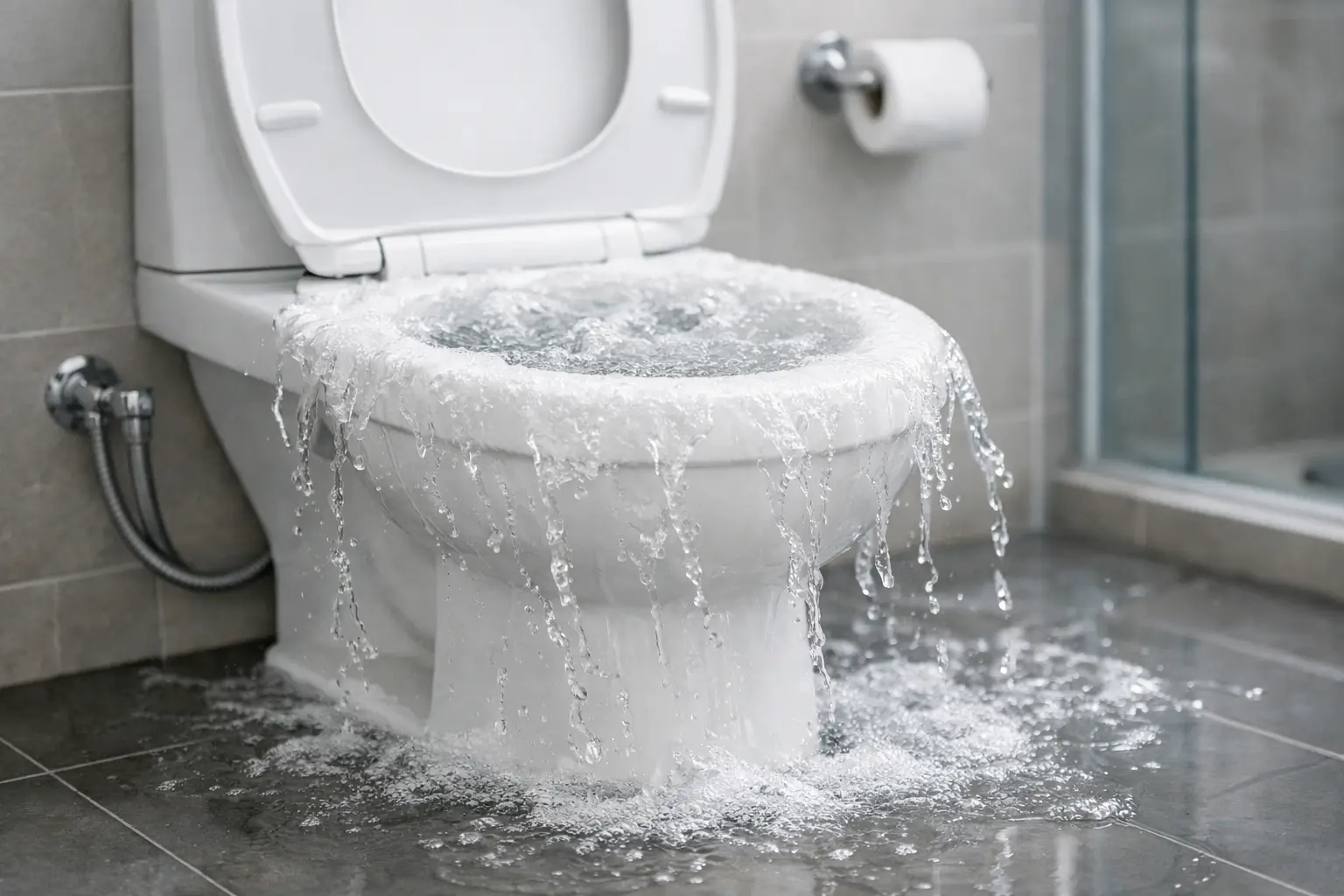
One flush, rising water, and that split second where you hope it stops before it reaches the rim – that is usually how this problem starts. If you are wondering why toilet overflows after flushing once, the short answer is simple: water is entering the bowl faster than waste and paper can leave it. The real issue is figuring out where that restriction is happening and whether it is isolated to one toilet or tied to a bigger drain or sewer line problem.
A toilet that overflows on the first flush is not just annoying. It is a warning sign. In many cases, the line is already partially blocked, and that single flush is enough to expose it. The toilet may have seemed fine the day before, but drain problems often build slowly until they finally show up all at once.
Why toilet overflows after flushing once in the first place
Your toilet is designed to move waste through the trap and into the drain line using a quick rush of water. When that path is narrowed or blocked, the bowl fills but does not drain at the normal rate. Instead of a clean flush, the water rises, swirls, and threatens to spill over.
That blockage might be in the toilet itself, just beyond the toilet in the branch drain, or farther down the main sewer line. A venting issue can also play a role, although that is less common than a straight clog. What matters is that the toilet is not the problem by itself – it is usually reacting to what is happening inside the drain system.
The most common cause is a clog close to the toilet
The most likely reason for a one-flush overflow is a blockage in the toilet trap or the drain immediately behind it. Too much toilet paper, flushable wipes, paper towels, hygiene products, or a small object dropped into the bowl can all create a restriction. Even if water still moves a little, it may not move fast enough to handle a full flush.
This is why some homeowners get confused. The toilet is not always completely stopped up. It may drain slowly after several minutes, which makes it look like a minor issue. In reality, that partial blockage is exactly what causes the bowl to rise when flushed.
If only one toilet in the building is acting up and the nearby sink or tub seems normal, the problem is often local to that fixture. That is usually better news than a whole-house backup, but it still needs prompt attention before the clog gets tighter.
A branch line blockage can make one bathroom act up
Sometimes the toilet itself is clear enough, but the drain line serving that bathroom is restricted farther down. In that case, the toilet may overflow after one flush because the waste has nowhere to go once it leaves the bowl.
This can happen from buildup along the pipe walls, especially in older lines. Soap residue, paper, scale, and waste can narrow the line over time. In homes with aging cast iron, the inside diameter of the pipe may be much smaller than it should be because of corrosion and rough scaling. That creates a snag point where debris catches and starts to build.
A branch line issue often shows up with other clues. You may hear gurgling, notice the tub or shower drain reacting when the toilet flushes, or see repeated backups in the same bathroom. Those signs point away from a simple bowl clog and toward a drainage problem inside the line.
The sewer line may be the real problem
If more than one fixture is slow, backing up, or making noise, the reason why toilet overflows after flushing once may be a main sewer line blockage. This is where the problem moves from inconvenient to urgent.
When the main line is restricted, flushing a toilet sends water into a system that is already struggling to drain. The lowest fixtures in the home usually show symptoms first. A first-floor toilet may overflow, a basement shower may back up, or drains may bubble when water runs elsewhere.
Main line blockages can come from heavy buildup, settled debris, roots, bellied pipe sections, or damaged sewer lines. The exact cause matters because clearing the immediate backup is only part of the job. If the line is broken, offset, or loaded with scale, the problem can come right back unless the condition inside the pipe is properly diagnosed.
Vent problems can cause poor flushing, but they are not always the main issue
Plumbing vents help your drain system breathe. Without proper airflow, fixtures may drain slowly or make gurgling sounds. In some cases, a blocked vent can contribute to weak or inconsistent toilet flushing.
That said, vent issues are often blamed when the real problem is still a clog. A blocked drain line is much more common than a vent stack issue. The key is how the whole system behaves. If the toilet bubbles, drains slowly, and overflows with one flush, a physical obstruction in the waste line is usually more likely than a vent problem alone.
This is where real diagnostics matter. Guessing wastes time. A proper inspection tells you whether the issue is airflow, blockage, pipe condition, or a combination of problems.
Why the problem may seem sudden
A lot of drain problems do not start suddenly – they just become obvious suddenly. A line may have been collecting paper, grease, scale, or debris for weeks or months. The toilet still worked, just a little slower than normal. Then one flush finally pushed the system past its limit.
That is especially common in older homes or rental properties where usage varies and warning signs get missed. What feels like a one-time accident is often the result of an existing restriction that has been building quietly inside the line.
For business owners, this matters even more. A restroom overflow is not just a plumbing issue. It disrupts operations, creates a cleanup problem, and can affect customers and staff right away.
What a professional looks for
A good drain specialist does more than clear the symptom. The goal is to identify where the blockage is, what caused it, and whether the line is likely to fail again.
In some cases, the answer is a straightforward toilet stoppage. In others, the line needs a camera inspection to see what is happening deeper in the system. If the pipe has heavy buildup or scaling, cleaning methods that restore the interior of the line can make a major difference. If the line is damaged, the camera confirms that too.
This is where specialized drain equipment matters. Not every overflow needs the same approach. A soft blockage, hardened scale, root intrusion, and a compromised sewer line are four different problems, even if they all start with the same bathroom mess.
For homeowners in Northern Virginia, especially in areas with a mix of older and newer plumbing systems, verified diagnostics are worth it. Seeing what is inside the line removes the guesswork and helps prevent repeat calls for the same issue.
When it is time to call for service
If the toilet overflows after one flush, treat it as an active drain problem, not a wait-and-see issue. The need for professional service is stronger if the toilet has overflowed before, other fixtures are draining slowly, there is gurgling in nearby drains, or sewage is showing up in tubs or showers.
It is also time to act if the toilet seems to clear temporarily and then backs up again. Recurring behavior usually means the blockage was never fully removed or the pipe condition itself is causing repeat stoppages.
A responsive drain and sewer company should be able to identify the issue quickly, explain it in plain language, and recommend the right fix based on what the line actually shows. That is the difference between a temporary opening and a real solution.
The bigger issue is preventing the next overflow
An overflowing toilet gets your attention fast, but the real value is catching the underlying problem before it causes another backup. A clean, properly flowing drain line should handle a normal flush without hesitation. If it cannot, something is wrong inside the system.
Sometimes the fix is simple. Sometimes it points to a branch line cleaning, descaling, or a sewer camera inspection to confirm the condition of the pipe. Either way, the goal is the same – restore flow, verify the result, and stop the problem from returning.
If your toilet overflows after flushing once, trust what it is telling you. The system is under restriction somewhere, and that restriction usually does not improve on its own. Fast attention now is a lot easier than dealing with a larger backup later.
