

A drain that keeps backing up is rarely a one-time annoyance. It usually means something is still sitting in the line – grease on the pipe walls, roots pushing through a joint, sludge building up in a kitchen drain, or scale narrowing an older sewer line. That is where the choice between hydro jetting vs rooter service starts to matter.
Both methods are used to open clogged drains and sewer lines, but they do very different jobs. If you are a homeowner, landlord, or business owner trying to fix the problem once instead of calling again next month, the right question is not which one is better in general. It is which one matches the condition of your pipe.
Hydro jetting vs rooter service: the real difference
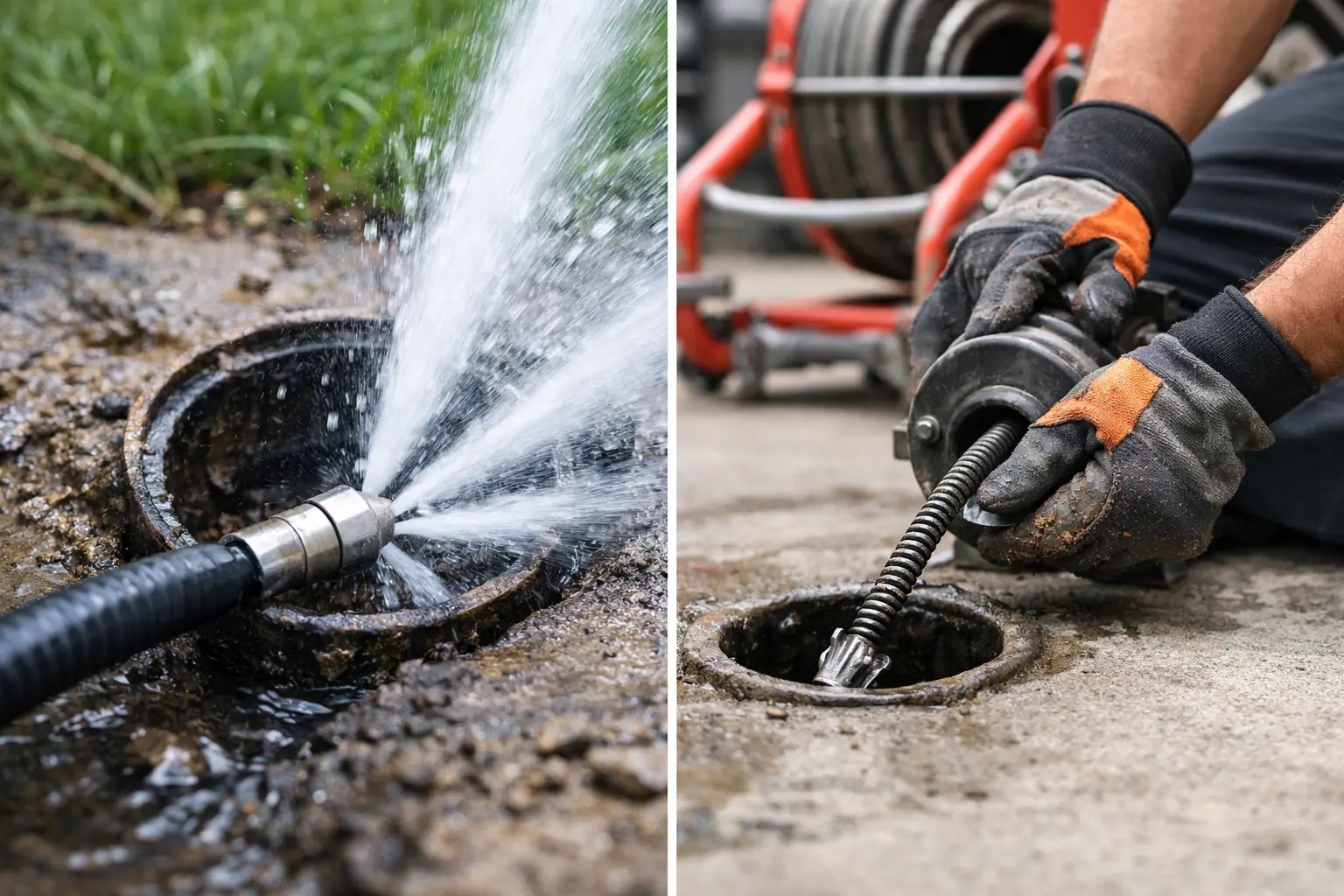
Rooter service usually means using a drain cable or auger to punch through a blockage. It is a mechanical method. The cable spins through the line, breaks apart the clog, and creates an opening so water can flow again.
Hydro jetting uses high-pressure water to clean the inside of the pipe wall. Instead of just making a hole through the blockage, it flushes debris downstream and strips away buildup that sticks to the pipe. When done correctly, it can remove grease, sludge, soap residue, soft root intrusion, and other material that a cable may only partially cut.
That difference matters because many recurring drain problems are not caused by a single object. They are caused by buildup across the full diameter of the line. In those situations, rooter service may restore flow fast, but hydro jetting often delivers the longer-lasting result.
When rooter service makes sense
There is still a clear place for rooter service. If a line is fully stopped and the immediate goal is to reopen it as quickly as possible, cabling can be the right first move. It is especially useful when the clog is localized and the line does not need full-wall cleaning.
For example, a drain cable can be effective on a simple paper blockage, a small obstruction near a fixture, or roots that need to be cut to get the system moving again. It can also be a practical option when a technician needs to regain flow before doing further diagnostics.
That said, rooter service has limits. A cable tends to cut a path through the problem rather than remove everything. If grease is coating the pipe wall or scale has reduced the pipe opening, the line may technically be open but still not truly clean. That is why some customers feel like the clog is fixed, only to have the same issue return weeks later.
When hydro jetting is the stronger solution
Hydro jetting is often the better choice when the line has heavy buildup or repeat stoppages. It is not just opening the drain. It is cleaning it.
In kitchen lines, grease is a common example. A cable can poke through grease, but it usually leaves a layer behind. Water jetting can scour that grease off the walls and carry it out of the system. The same idea applies to sludge, soap buildup, and organic debris in main lines.
Hydro jetting also works well when a property has a history of recurring backups. If a line keeps clogging in the same area, there is usually an underlying reason. Many times, that reason is buildup spread along the pipe, not a single isolated blockage. Jetting addresses the full inside surface, which is why it is often used for more complete drain restoration.
For commercial properties, the advantage is even clearer. Restaurants, multifamily buildings, and high-use facilities put a lot more material through their drains than a typical home. In those settings, cleaning power matters more than a quick opening.
Hydro jetting vs rooter service for tree roots
Tree roots change the conversation. Rooter service can cut through root masses and reopen the line. That can be the fastest way to restore flow when roots are blocking the pipe. But cut roots are not the same as removed roots, and they definitely are not the same as a repaired pipe.
Hydro jetting can clear softer root intrusion and wash out root debris after a line has been opened. In some cases, it does a more complete job of cleaning the affected section than a standard cable alone. But whether jetting is appropriate depends on the pipe condition. If the sewer line is cracked, collapsed, offset, or badly weakened, blasting high-pressure water into it is not the first step.
This is where a sewer camera inspection matters. Before choosing a cleaning method for roots, the line should be checked to confirm what is actually happening inside. If the roots are entering through damaged joints or a broken section of pipe, cleaning helps temporarily, but repair is what solves the source of the problem.
The pipe condition matters more than the tool
A lot of people ask which service is stronger. That is understandable, but strength alone is not the point. The right method depends on the material, age, and condition of the pipe.
A newer PVC line with grease buildup may be a strong candidate for hydro jetting. An older cast iron line with heavy scale may also benefit from advanced cleaning, sometimes along with descaling methods designed for that material. But if a pipe is fragile or already failing, the safest path is to inspect first and clean based on what the camera shows.
That is why experienced drain specialists do not guess. They verify. A line that looks fine from the outside can have serious internal issues – scale, channel rot, root intrusion, offsets, bellies, or years of residue reducing the usable diameter. Choosing between hydro jetting vs rooter service without that information can turn a simple drain call into a repeat problem.
Why some clogs keep coming back
When customers deal with repeat backups, the issue is often not that the drain was never opened. It is that the line was never fully cleaned or properly diagnosed.
A rooter cable can restore flow and still leave grease behind. It can cut roots and still leave a damaged joint where new roots will return. It can pass through sludge and still leave a narrowed pipe that catches debris again the next time heavy use hits the system.
Hydro jetting often reduces those repeat issues because it removes more of the material attached to the pipe wall. But even jetting has limits if the real problem is structural. A low spot in the sewer, a broken section, or a failing cast iron line will not be permanently solved by cleaning alone.
That is why the best service calls are not built around a one-size-fits-all answer. They are built around the actual condition of the drain line and a clear explanation of what was found.
What homeowners and property managers should expect
If you are dealing with a stubborn clog, the most reliable process is straightforward. First, identify the problem. Then choose the right cleaning method. Then verify the result.
That usually means looking beyond the symptom. Slow drains, gurgling fixtures, sewage odors, and backups in the lowest drain in the building can point to a larger issue in the branch line or main sewer. A professional should be able to explain whether the line needs a basic opening, full-wall cleaning, or a camera inspection to rule out damage.
In many Northern Virginia properties, especially older homes or buildings with mature trees, the answer is not always obvious from the surface. That is why companies like Titan Jetters focus on camera-based diagnostics along with high-performance cleaning equipment. It is not about selling the biggest service. It is about matching the method to the line and proving the result.
So which one should you choose?
If the goal is a fast opening for a simple clog, rooter service may be enough. If the line has heavy buildup, recurring stoppages, grease, sludge, or needs a more complete cleaning, hydro jetting is often the stronger option.
If roots are involved, or if the drain keeps failing after previous service, the better move is to stop guessing and inspect the line. That is where real answers come from.
A good drain solution is not just about getting water moving today. It is about knowing why it stopped, cleaning the line the right way, and leaving you with confidence that the problem was handled properly.
