

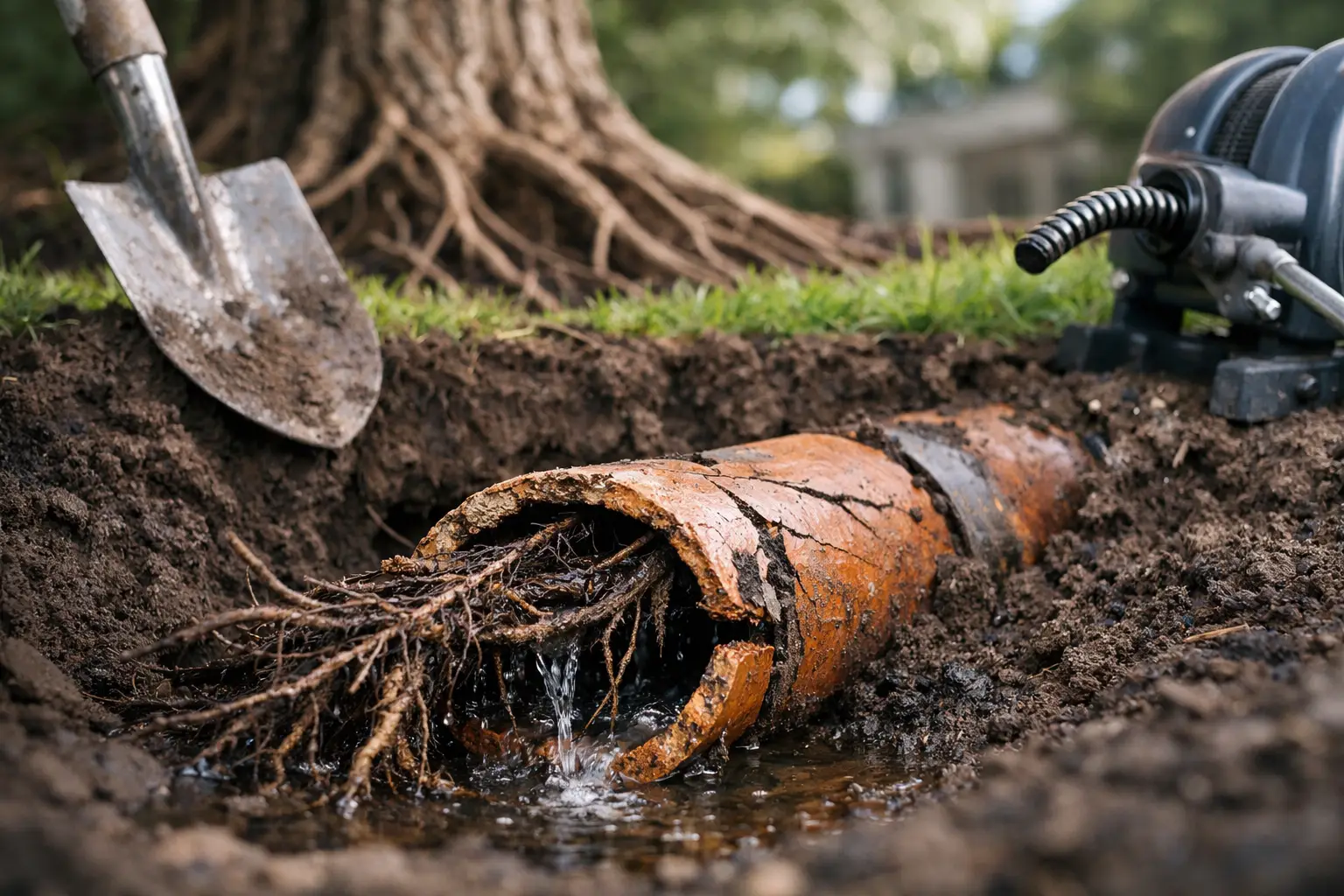
A sewer line can work quietly for years, then one day a toilet starts gurgling, a tub drains slow, or wastewater backs up where it should not. In many cases, the hidden cause is root intrusion. If you are wondering how to prevent tree roots in sewer lines, the real answer is not one product or one quick fix. It is a mix of smart landscaping, early detection, and professional maintenance that keeps small root growth from turning into a broken line.
Roots do not break into healthy pipe material just because they are aggressive. They go where water and nutrients are available. If a sewer line has a loose joint, hairline crack, offset connection, or aging section of pipe, roots will find it. Once they get inside, they keep feeding on moisture and waste, and the blockage gets worse over time.
Why tree roots target sewer lines
Tree roots are always looking for the easiest water source. A sewer lateral gives them exactly that, especially if the pipe is older clay, Orangeburg, cast iron with failed joints, or any line with existing separation. Even a very small opening can attract roots. What starts as thin feeder roots can become a dense mass that catches paper, grease, and debris.
This is why root problems often build slowly before they turn urgent. You may notice repeated clogs that seem to clear, then come back. That pattern matters. A basic stoppage can happen once. A recurring stoppage in the same line usually points to something deeper going on.
In many Northern Virginia neighborhoods, mature trees and older underground infrastructure exist side by side. That combination makes root intrusion more common than many homeowners expect.
How to prevent tree roots in sewer before damage spreads
The best prevention starts with understanding that roots are usually a symptom of a vulnerable pipe, not just a landscaping issue. If the line is already compromised, cutting roots once is rarely the end of it. The goal is to identify where roots are entering, remove the buildup thoroughly, and verify the actual condition of the pipe.
A sewer camera inspection is one of the most useful tools here. It shows whether the line has active root intrusion, standing water, separated joints, cracks, or heavy scale that is helping trap debris. Without that visual confirmation, you are guessing. With it, you can make a decision based on what is really inside the pipe.
For lines with root intrusion but no full collapse, professional cleaning can make a major difference. Hydro jetting is often the right approach because it clears roots and washes the pipe walls far more thoroughly than a simple punch-through. In some cases, a flex-shaft system is also useful for restoring the inside of the pipe and removing buildup that gives roots more places to catch. What matters is matching the method to the pipe material and the actual condition of the line.
Landscaping choices matter more than most people think
Prevention does not start only inside the pipe. It starts in the yard too. Trees planted too close to the sewer path create long-term risk, especially species known for aggressive root systems. That does not mean every tree near a home needs to come down. It means placement and planning matter.
If you know where your sewer line runs, avoid planting new trees or large shrubs directly above or near it. Fast-growing shade trees may look like a good choice today, but over the years their roots can spread far beyond the canopy. A smaller ornamental tree or a planting bed with shallow-rooted options is usually a safer move near underground utilities.
If mature trees are already in place, the next best step is monitoring. A tree that has coexisted with your sewer line for years can still become a problem if the pipe begins to deteriorate. The tree did not suddenly become the issue. The opening in the line did.
Warning signs you should not ignore
Root intrusion usually gives warning before it creates a full backup. The problem is that many people treat those early signs as random plumbing issues instead of a developing sewer line problem.
Pay attention if more than one drain starts slowing down at the same time, especially lower-level fixtures. Gurgling toilets, sewage odors outside, wet spots in the yard, and clogs that keep returning after being cleared all deserve a closer look. If backups happen after heavy water use, that is another sign the main line may be partially blocked.
These symptoms do not always mean roots, but they do mean the line should be checked before the situation gets messier and more expensive to correct.
Why temporary clearing is not the same as prevention
Many sewer stoppages get opened just enough for water to pass again. That can restore flow for the moment, but it does not necessarily solve the problem. When roots are involved, a partial opening often leaves a lot of material behind. The line may drain today and clog again next month.
That is where homeowners get frustrated. They think the problem was fixed, but the root mass was only poked through, not fully removed. Prevention means clearing the obstruction completely, checking the pipe condition, and deciding whether the line needs ongoing maintenance or structural repair.
There is a trade-off here. If the pipe is still structurally sound, scheduled cleaning and inspection may be enough to manage root activity and avoid emergencies. If the camera shows cracked sections, offset joints, or major deterioration, maintenance alone may not hold up long term. The right answer depends on what the inspection shows.
Professional maintenance can stop repeat backups
For properties with a known history of root intrusion, preventative maintenance is often the smartest move. Waiting for another backup usually means more disruption, more cleanup, and more stress. A maintenance schedule gives you a chance to address root growth before it blocks the line again.
This is especially useful for landlords, busy homeowners, and commercial properties that cannot afford downtime. A documented sewer inspection and cleaning plan helps reduce surprises and gives you a clearer picture of whether the line is stable or getting worse.
At Titan Jetters, this is where the right equipment matters. High-performance jetting and camera diagnostics do more than reopen flow. They help verify the result, show exactly what is happening in the line, and remove the guesswork from the next step.
When prevention means repair, not just cleaning
Sometimes the most effective way to prevent tree roots in sewer lines is to fix the reason roots keep getting in. If a pipe has repeated joint failure, cracks, or sections that have shifted, cleaning alone becomes a holding pattern. You may gain time, but you are not eliminating the entry point.
That does not mean every root issue calls for major work. Some lines respond well to routine service for years. Others are too damaged for that to be reliable. A good diagnosis should make that clear without overselling the situation.
If you have an older home, a property with mature trees, or a line that has already had recurring root problems, it is worth getting the condition verified before the next emergency forces the decision for you.
A practical way to lower your risk
If you want a realistic plan, keep it simple. Know where your sewer line runs. Be careful what you plant near it. Do not ignore recurring slow drains or gurgling fixtures. If your property has a history of root intrusion, have the line inspected and cleaned before peak trouble hits.
Most sewer root problems do not start as disasters. They start as small openings, mild symptoms, and delays in dealing with them. Catching the issue early gives you more options, less mess, and a better chance of avoiding serious pipe damage.
A healthy sewer line is not something you think about every day, and that is exactly the point. The right prevention keeps it that way.
